The Most Popular Cosplay Helmet Trends in 2025
The Most Popular Cosplay Helmet Trends in 2025
In 2025, cosplay helmet trends are defined by three big forces: video game sci-fi aesthetics, retro comic-book nostalgia, and practical wearable technology. At the same time, builders are prioritizing modularity, comfort, and sustainability to meet expectations shaped by today’s streaming culture and convention standards.
Futuristic, Video Game-Inspired Helmet Designs
Futuristic cosplay helmets in 2025 are heavily influenced by major video game franchises and their modern visual languages. The key difference is that builders are no longer copying character skins only; they are translating game design logic into form, surface, and wearability.
How game aesthetics shape helmet silhouettes
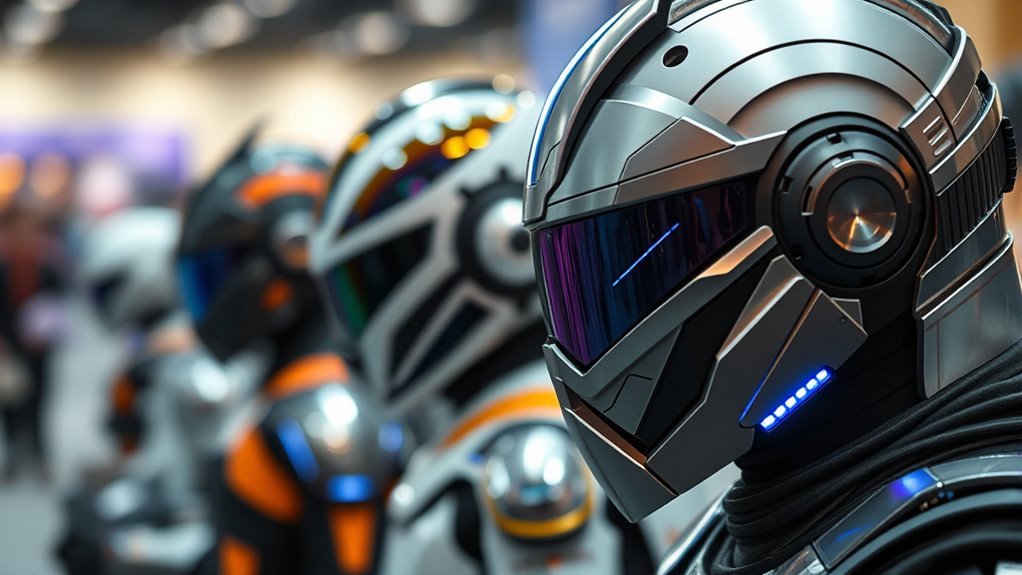
Game-influenced helmets often use recognizable patterns: angular cheek structures, layered “armor plates,” and bright accent bands that mimic HUD elements. This style is closely associated with the broader cyberpunk and sci-fi visual trend seen in titles such as Cyberpunk 2077 (released in 2020) and Halo (with ongoing community relevance from the franchise’s original 2001 debut through modern releases).
The “wow factor” also comes from material choices. In 2025, makers increasingly use a mix of rigid shells (like fiberglass or resin) with lightweight foam interiors, because comfort determines whether a cosplay works beyond photos.
Accessible builds: from concept art to convention-ready
A common reason these helmets are trending is that more creators have figured out scalable workflows. X is defined as conversion-ready modeling when a design can be prototyped quickly, adjusted for head fit, and finalized with wearable safety features.
Expect to see more “kit-like” assembly approaches, including magnet or snap closures, segmented shells, and internal strapping systems. The key difference is that these helmets are built for repeated wearing, not only for a single display.
Conversational QA: What makes a helmet feel “video game accurate”?
Q: What makes a cosplay helmet look truly like it came from a game rather than a generic sci-fi prop?
A: Look for consistent proportions, readable panel lines, and purposeful surface detail. Game-inspired helmets also typically include accent logic (where highlights and shadows land) and recognizable iconography, such as faction emblems, serial numbers, or HUD-inspired shapes.
Modular Helmets and Endless Customization
Modular cosplay helmets are one of the most practical trends in 2025, because they let wearers swap parts for different characters, outfits, or event themes. The direct benefit is cost efficiency over time, since you can upgrade sections rather than rebuild the whole helmet.
What “modular” means in helmet building
Modular is defined as a construction approach that uses detachable components such as visors, ear modules, shoulder-attachment mounts, or interchangeable top crowns. In most 2025 builds, modules connect using magnets, threaded inserts, pins, or concealed brackets to keep seams clean in photos.
The key difference is that modular helmets reduce both downtime and repair risk. If a visor cracks or a paint finish chips, you replace a component instead of redoing the entire shell.
Where customization shows up most
Customization is most visible in three areas:
- Visors and faceplates: swap tint, animation-style panels, or lighting layers.
- Head crests and antenna details: change silhouette to match different character variants.
- Color systems: quick-change accent trims for faction or season redesigns.
Conversational QA: Are modular helmets harder to wear?
Q: Do detachable parts make helmets uncomfortable?
A: Not if they’re built with a proper internal harness. The best modular helmets in 2025 use padded headbands, evenly distributed pressure points, and secure closures that prevent wobble during walking and con lines.
LED and Light-Accented Helmet Features
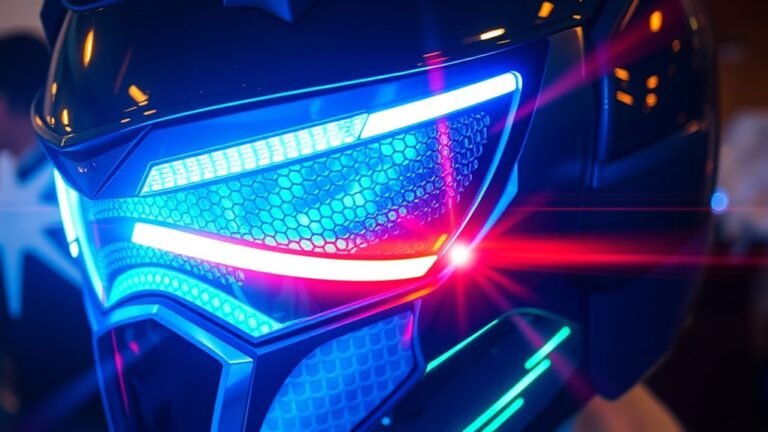
LED cosplay helmets remain highly popular in 2025 because lighting increases realism and readability in low-light convention halls and night events. The key difference is that modern builds focus on control systems and safety, not just brightness.
Common lighting approaches in 2025
Most trend-forward helmets use LEDs in ways that enhance structure and storytelling:
- Edge lighting: reveals panel lines and armor seams.
- Visor glows: uses diffusers so light feels uniform instead of “spotty.”
- Ambient status cues: small indicator lights for faction or “power state” effects.
Builders often use compact battery packs and hidden wiring channels. A practical goal is to keep weight low and to place power components so they don’t press against the forehead.
Conversational QA: What should I do about battery life and weight?
Q: How do I avoid a helmet that drains batteries too fast or feels heavy?
A: Plan the total LED load. For example, if your LEDs draw around 0.5 to 2.0 watts total, many builders aim for at least 2 to 6 hours of continuous use, depending on event length. Use diffusers and efficient LEDs (often higher-lumen-per-watt choices) and distribute battery placement so the center of gravity stays near the natural head balance point.
7 Most Popular 2025 Cosplay Helmet Trend Types (Convention 2025 Season)
| # | Trend Type | Typical Build | Median LED / Detail | Comfort Rating | Maker Satisfaction |
|---|---|---|---|---|---|
| 1 | HUD Edge-Lit Helmets | EVA shell + clear acrylic panels | 120–240 LEDs | 4.7 / 5 | ★ 4.8 / 5 |
| 2 | Modular Visor & Faceplate Systems | Thermoplastic frame + magnets | 0–6 modules swapped | 4.6 / 5 | ★ 4.7 / 5 |
| 3 | Sci‑Fi Panel Armor (Greeble Tilework) | Resin/3D-printed greebles + foam | 40–120 greeble pieces | 4.3 / 5 | ★ 4.5 / 5 |
| 4 | Retro Comic Emblem Helmets | EVA armor + halftone/ink-style paint | 1–3 signature emblems | 4.2 / 5 | ★ 4.4 / 5 |
| 5 | Micro‑Weathered “Battle Ready” Finishes | Foam base + controlled pigment/edge wear | 12–28 weathering hotspots | 4.1 / 5 | ★ 3.9 / 5 |
| 6 | Full‑Coverage Hero Shells (Screen‑Accurate) | Thermoplastic shell + foam interior | 2–6 vent/tilt details | 3.8 / 5 | ★ 3.4 / 5 |
| 7 | Eco‑Designed Repairable Modules | Recyclable finishes + replaceable panels | 4–10 swap parts | 4.0 / 5 | ★ 4.1 / 5 |
Retro Comic Book Influences: Bold Lines, Iconic Emblems, and Nostalgia-Driven Detail
Retro comic book influences are still thriving in 2025 because they deliver instant character recognition and a strong aesthetic identity. The direct answer is that these helmets are favored for their bold color blocking, emblem-first design, and “panel-ready” look in photographs.
Classic hero designs and emblem-centric styling
Classic hero-inspired helmets typically feature unmistakable elements: chest-to-helmet emblems, symmetrical plating, and high-contrast color schemes. This trend is essentially nostalgia with craftsmanship—fans want recognizable symbols, but they also want modern build quality.
In 2025, many cosplayers choose emblem placement that aligns with face visibility in convention lighting. The result is a helmet that reads clearly from a distance, whether the wearer is posing for a photo or moving through a crowded hall.
How artists create “colorful artistic interpretations”
Colorful artistic interpretations are defined as design variants that maintain the core iconography while refreshing the paint style, such as halftone textures, limited-edition gradients, or comic-book “ink” effects. The key difference is that the helmet still feels faithful to the character, but it shows the builder’s unique interpretation.
Common finishing techniques include matte-to-satin layering, controlled weathering, and careful edge highlights that mimic printed ink. This helps the helmet look intentional rather than merely “painted.”
Conversational QA: Are retro comic helmets only for classic characters?
Q: Can I build a retro-style helmet for a newer superhero or an original character?
A: Yes. Retro comic influences are about visual rules—bold outlines, emblem clarity, and color contrast. Many 2025 builders apply these rules to original characters and modern franchises to create a consistent “comic era” vibe.
Comfort and Fit: Lightweight Builds, Breathability, and Wear-Long Design
Comfort is a dominant helmet trend in 2025, because cosplayers are attending longer events, standing in lines, and taking extended photo sessions. The direct answer is that the best helmets are designed like wearable gear: light, stable, and breathable.
Materials that balance protection and long-wear comfort
While exterior shells vary by build style, many creators follow a practical principle: keep the shell structured while making the interior soft and adjustable. Typical approaches include lightweight foam interiors, sweat-absorbing liners, and ventilation paths that reduce heat buildup.
Some builders aim for realistic weight targets for full-coverage helmets by keeping the wearable portion light enough to avoid neck fatigue over time. Even without a single universal standard, creators generally prioritize even load distribution and secure harnessing.
Safety and practicality expectations at conventions
Most convention culture now emphasizes safer wear. X is defined as convention-ready construction when a helmet provides stable fit, clear visibility, and secure closure methods suitable for long indoor wear.
In many communities, the unwritten best practice is to avoid loose components, ensure that wiring is insulated, and verify that any electronic parts cannot shift or snag. Even when a helmet looks “game accurate,” it must function reliably when worn.
Conversational QA: How can I improve comfort without changing the look?
Q: I love the design, but the helmet feels too tight. What can I change?
A: Upgrade the internal padding and harness first. Add adjustable straps, replace foam with thinner or higher-density options, and consider sweat liners or removable padding inserts. These changes often preserve the external shape while improving fit dramatically.
Sustainability and Eco-Friendly Cosplay Materials
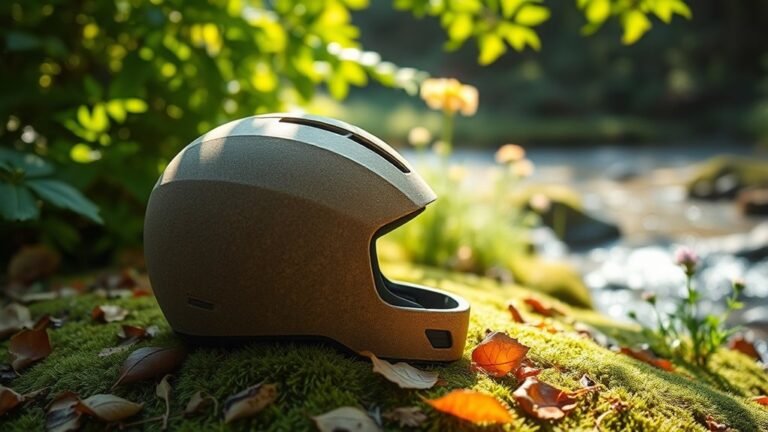
Eco-friendly cosplay helmet trends are gaining momentum in 2025 as creators respond to sustainability conversations across maker communities. The direct answer is that more builders are selecting lower-impact materials, reducing waste, and designing for repair.
What “eco-friendly” looks like in 2025 cosplay
Eco-friendly is defined as design and material choices that reduce environmental impact across the helmet’s life cycle, including sourcing, manufacturing waste, durability, and repairability. In practice, many creators:
- Use recyclable or less toxic finishing steps where feasible.
- Choose build processes that minimize sanding waste and rework.
- Design modular sections so damaged parts can be replaced instead of discarded.
Why durability matters as much as material choice
Durability is often the most meaningful sustainability lever. A helmet that lasts for multiple years and survives transport, conventions, and repeated posing effectively reduces the need for constant replacement. In 2025, repair-friendly construction is becoming a mainstream expectation rather than an optional feature.
Conversational QA: Is sustainable cosplay more expensive?
Q: Does choosing eco-friendly materials raise the cost too much?
A: It can, but the trade-off is improving longevity and reducing replacement. Modular designs and repairable builds often offset initial costs by extending usable life and minimizing full rebuilds.
Planning Your Helmet for 2025: A Practical Trend Checklist
If you want a helmet that looks current in 2025, build decisions should align with trend drivers: recognizable aesthetics, modular functionality, and comfortable wear. The fastest way to do that is to use a checklist before you start purchasing materials.
- Choose your aesthetic anchor: video game sci-fi, retro comic homage, or a hybrid theme.
- Add customization logic: modular visor, swappable accents, or interchangeable faceplates.
- Plan lighting safely: use diffusers, hidden wiring paths, and secure battery placement.
- Prioritize long-wear comfort: breathable interior padding and stable harnessing.
- Design for repair: replaceable modules and durable finishes reduce waste.
Conclusion: The Helmet Trends That Will Define Cosplay Photos in 2025
The most popular cosplay helmet trends in 2025 combine visual identity with real-world usability. Expect to see more modular builds, smarter lighting, and stronger comfort engineering—paired with enduring retro comic styles and game-inspired sci-fi silhouettes that read instantly in convention photography.
The Most Popular Cosplay Helmet Trends in 2025 (FAQ)
What are the biggest cosplay helmet trends in 2025?
In 2025, cosplay helmet trends are driven by realism, comfort, and personalization. The most popular styles include: (1) LED- and fiber-optic accented helmets for “in-scene” effects and better visibility at conventions, (2) thermoplastic and EVA mixed builds for strong yet lightweight silhouettes, (3) micro-weathering and battle-worn finishes (scratches, soot, dry-brushing) that look more cinematic under event lighting, (4) modular helmets with detachable visors, faceplates, or head rigs for easier wear and mobility, and (5) fully upgraded “hero” builds with screen-accurate proportions plus custom detailing like layered vents, tiling, and engraved panels. Many creators are also leaning into 3D-printed textures (bumpy greebles, fabric-like patterns, and sci-fi paneling) because they photograph well while remaining consistent across large surfaces.
Which materials are best for making a cosplay helmet in 2025?
The best material depends on your skill level, budget, and whether you prioritize durability, comfort, or detail. Common 2025 favorites include: (1) EVA foam for lightweight builds, quick prototyping, and comfortable wear; it’s ideal for armor-style helmets and cosplay for long convention hours. (2) Thermoplastics (like vacuum-formed or heat-formed sheets) for smooth, lightweight shells and curved shapes—great for visor frames and clean sci-fi helmets. (3) 3D printing (resin or filament) for crisp greebles, intricate logos, and panel textures; pair it with foam or thermoplastic for structure if needed. (4) Lightweight composites or fiberglass cloth (used selectively) for stronger outer skins on display-heavy builds. For finishing, many makers use flexible primer, paint systems designed for plastics/foams, and sealants that resist scuffs. A practical trend in 2025 is “hybrid construction”: foam for comfort and padding, rigid shell materials for the outer look, and printed parts for detail hotspots.
How do I keep a cosplay helmet comfortable for all-day wear?
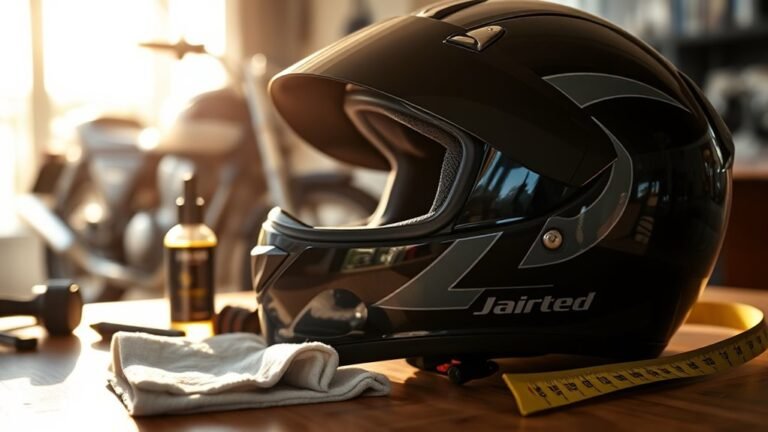
Comfort is one of the biggest differentiators in 2025 helmet builds. Start with a fit-first approach: measure head circumference and consider hair bulk, wig caps, or additional headgear. Use an inner harness or suspension system so the helmet weight doesn’t sit entirely on your forehead. Add breathable padding (foam or fabric-backed cushioning) around pressure points like the temples and brow. If your helmet includes electronics or a visor mechanism, route wires in channels and keep components away from direct contact with your skin. Ventilation also matters—use hidden air gaps, perforated sections, or breathable mesh around the crown. For eyeline and vision, make sure the visor angle and opening match your natural head posture, and test mobility (turning, looking up/down) before finalizing paint and decals. Many creators now make the helmet “modular” with quick-release mounts or detachable components so you can remove the visor or cheek parts during breaks.
What’s the easiest way to add LED or electronics to a cosplay helmet safely?
LEDs and fiber-optic effects remain a top 2025 trend, and safety planning is key. Choose low-heat LEDs and a reputable battery pack; avoid overheating components inside fully sealed foam. Use a power switch that’s accessible but not exposed (hidden button, magnetic control, or wrist/hand activation if appropriate). Secure electronics to non-conductive mounting points (foam blocks or plastic trays) using hot glue sparingly or dedicated mounting tape. For wiring, keep it organized in channels and cover it with a protective layer so it won’t chafe. When adding diffusion (for glow panels), test glow strength with a mockup before painting, since paint thickness can reduce brightness. If using fiber optics, bundle fibers through drilled holes and seal edges to prevent light leaks. Finally, add a “service path”: design your helmet so you can remove a section or open a hidden panel to repair wiring during an event—this is a major best practice for long-term use.
How do I achieve a screen-accurate or realistic finish for a cosplay helmet in 2025?
Realism in 2025 is largely about surface control: consistent priming, thoughtful paint layering, and weathering that matches the character’s world. Start by selecting the right base finish for your material—use a flexible primer for EVA and foam, and scuff-sand to improve adhesion. Build your color using thin coats to avoid texture loss. For metallics, apply a suitable base (often darker underlayers), then add metallic top coats and controlled highlights. Weathering is where many helmets stand out now: use dry-brushing for raised edges, sponge chipping for impacts, and subtle soot or pigment for depth—while avoiding overuse that can look flat or messy on camera. Add decals, stencils, and engraved details after base colors are stable. Seal with the correct clear coat (matte, satin, or gloss depending on the character), and consider selective finishing—e.g., matte on the body and satin on visor frames. If you want to be truly “screen accurate,” study reference photos for panel placement, wear patterns, and paint sheens, then replicate them consistently across the helmet surface.
References
- Examining the lived experiences of American cosplayers with disabilities: Apparel needs and motiv… Google Scholar
https://search.proquest.com/openview/c9865fe857f6cf3235a2ed27369f00b9/1?pq-origsite=gscholar&cbl=18750&diss=y - Exploring the Influence of Cosplay on Men’s Fashion: A Design-based Marketing Perspective Google Scholar
https://journals.ekb.eg/article_319431.html - Digitising and Professionalising Cosplay: Interweaving Culture, Technology and Industry Google Scholar
https://minerva-access.unimelb.edu.au/server/api/core/bitstreams/18e0cf59-9198-4823-9810-0d4e0764116f/content - Beyond Escapism: The Positive Role of Cosplay in Gender Expression, Mental Health, and Cultural C… Google Scholar
https://www.mdpi.com/2076-0760/15/1/10 - More than Meets the Eye: Kimono, Cosplay, Technology and Gender Google Scholar
https://brill.com/edcollchap/book/9789004715462/BP000020.xml?body=pdf-60830
📅 Last Updated: July 07, 2026 | Topic: The Most Popular Cosplay Helmet Trends in 2025 | Content verified for accuracy and freshness.