Helmet Impact Standards for E-Bikes
Helmet Impact Standards for E-Bikes: What You Need to Know
Helmet impact standards for e-bikes are the safety requirements that define how a helmet must perform in crash-like tests before it can be sold for use. The key difference between standards is how they evaluate both head injury risk and, in many modern systems, rotational force protection.
Overview of E-Bike Helmet Regulations
E-bike helmet regulations determine whether a helmet is legally required and, in many cases, which certification marks are accepted. Because rules vary by country, riders should verify both legal compliance and helmet impact testing performance.
Why e-bike standards matter beyond “it fits”
Unlike many recreational cycling helmets, e-bikes can involve higher speeds, heavier riders, and traffic crash conditions that produce harder impacts. That reality is why regulators and safety researchers treat impact performance as a non-negotiable requirement.
Common regulatory pattern across regions
Most jurisdictions follow a similar logic: helmets are required (or strongly recommended) only if they meet recognized impact standards. The widely accepted concept is that standardized tests reduce the risk of severe head injury by ensuring minimum energy absorption and structural integrity.
Direct answer: Which standards are most commonly recognized?
In practice, many e-bike helmet requirements reference established bicycle helmet performance standards used for pedal cycling. The most frequently cited are CPSC in the United States, EN 1078 in Europe, and AS/NZS 2063 in Australia/New Zealand.
- United States (North America): CPSC bicycle helmet requirements, administered by the Consumer Product Safety Commission (CPSC).
- Europe: EN 1078 “Helmets for pedal cyclists and for users of skateboards and roller skates.”
- Australia and New Zealand: AS/NZS 2063, published under the Standards Australia/Standards New Zealand framework.
Conversational Q&A: Are e-bike helmets legally different from bike helmets?
Answer: Often, the same helmet category is used for both cycling and e-bike riding, but enforcement may be tied to local law rather than a separate “e-bike helmet” label. In several markets, e-bike riders are required to wear certified helmets that meet the same baseline performance criteria as other pedal-cycling helmets, while additional requirements may apply for speed or class of e-bike.
Conversational Q&A: What should riders check on the box or label?
Answer: Look for the helmet’s compliance marking tied to a recognized standard (for example, “CPSC” for the U.S., or “EN 1078” for Europe). Also confirm sizing range and retention-system performance (chin strap and fit system), because a certified helmet that is worn incorrectly can underperform.
How Helmet Impact Testing Works
Helmet impact testing is designed to measure how well a helmet reduces injury risk during impacts that resemble real crashes. The key idea is that a helmet must manage both the energy of impact and the forces that can cause brain injury.
Definition: What is a “drop test” in helmet certification?
A drop test is defined as a controlled impact test where a helmet (or helmet and fixture) is dropped from a specified height onto a rigid anvil surface to evaluate how much deceleration is transmitted to the headform.
- Purpose: Validate impact energy absorption and limit peak forces.
- What it measures: Helmet crush behavior and shock attenuation.
- Why it matters for e-bikes: It simulates direct impacts that can occur when riders hit the pavement or an obstacle.
Definition: What is an “oblique impact test” and why is it important?
An oblique impact test is defined as an angled collision test that evaluates a helmet’s ability to reduce rotational acceleration during impacts that strike the head at an angle.
The key difference is that angled impacts can increase rotational forces, which are strongly linked to traumatic brain injury mechanisms. Standards that include oblique testing concepts aim to reduce these forces by assessing how helmet structures and liners behave under shear and tangential loading.
Dynamic testing: What does it simulate?
Dynamic impact testing is defined as a test where an impactor strikes the helmet in motion to represent crash conditions more realistically than a simple static drop. Many modern safety programs use dynamic approaches to capture a broader range of impact orientations and velocities.
- Purpose: Reflect complex real-world energy transfer during impacts.
- What it measures: Retention of protective structure under motion and impact timing.
- Practical relevance: E-bike crashes frequently involve variable approach angles at road edges, curbs, and vehicles.
Trust signal: Why certification testing is built around injury science
Across authoritative standards bodies, impact performance evaluation is grounded in biomechanical research. While exact test protocols differ by standard (and by revision year), the shared goal remains: limit transmitted forces and reduce head injury risk through validated helmet design features.
Comparison of E-Bike Helmet Impact Standards Worldwide
Helmet standards for e-bikes vary by region because governments and standards organizations have different test protocols and certification pathways. However, the underlying safety intent is consistent: verified protection against impacts that can cause skull fracture and brain injury.
Key standards by region
Below is a practical overview of widely referenced helmet impact standards. While specific testing details (such as impact energies, headform types, and pass/fail thresholds) can differ, these certifications are recognized as legitimate baselines in their respective markets.
-
North America:
CPSC bicycle helmet requirements (CPSC, Consumer Product Safety Commission). These standards are widely recognized in the U.S. and are frequently used as the compliance reference for consumer bicycle helmets.
-
Europe:
EN 1078 (European Committee for Standardization). EN 1078 is one of the most commonly cited cycling helmet standards, including performance requirements relevant to pedal cycling and related wheeled activities.
-
Australia and New Zealand:
AS/NZS 2063 (Standards Australia and Standards New Zealand). This standard provides performance requirements aligned with regional regulatory and market expectations.
Seven Widely Used Helmet Impact Standards for Bike & E-Bike Helmets
| # | Standard / Label | Primary Market | What It Typically Verifies | Rotational/Angled Impact Coverage | E-Bike Relevance |
|---|---|---|---|---|---|
| 1 | CPSC 16 CFR 1203 (Bicycle) | United States | Impact attenuation, penetration resistance, strap/retention | Angles largely via general impact locations | ★★★★★ |
| 2 | ASTM F1447 (Bicycle Helmet) | United States | Impact performance for bicycle use, retention/fit criteria | Primarily direct/positional impact evaluation | ★★★★☆ |
| 3 | ASTM F1492 (Bicycle Helmet) | United States | Impact & retention/fit requirements for cycling-specific helmets | Angled/rotational emphasis depends on test program | ★★★★☆ |
| 4 | EN 1078 | Europe & global export | Impact energy management, penetration resistance, strap strength | Includes angled impact concepts via test design | ★★★★★ |
| 5 | AS/NZS 2063 | Australia & New Zealand | Impact protection requirements and retention/fit checks | Coverage reflects cycling head-impact risk | ★★★★☆ |
| 6 | SNELL B-95 (Bicycle) | United States (private certification) | Helmet impact performance with stringent acceptance criteria | Rotational/angled evaluation depends on Snell test method | ★★★★☆ |
| 7 | ISO 10054 (Bicycle helmets—General) | International reference | General helmet test methodology & impact assessment principles | May be used alongside regional product standards | ★★★☆☆ |
Conversational Q&A: Which standard is “best”?
Answer: No single standard is universally “best,” because each is evaluated with different test setups and pass criteria. The safest approach is to choose a helmet that is certified to a relevant, recognized standard for your country and then prioritize correct fit, retention-system adjustment, and protective design features.
Conversational Q&A: Do e-bike classes require stronger helmets?
Answer: Sometimes, local laws differentiate by e-bike speed class or motor assist features. Even when the same baseline helmet standards apply, higher-speed use increases the value of features that can improve impact management, such as optimized liner systems and designs intended to reduce rotational acceleration.
What to Look for When Buying an E-Bike Helmet
When selecting an e-bike helmet, certification is the starting line, not the finish line. The right fit, effective retention system, and modern protective technologies can materially improve how the helmet performs on your head.
Certification: your non-negotiable baseline
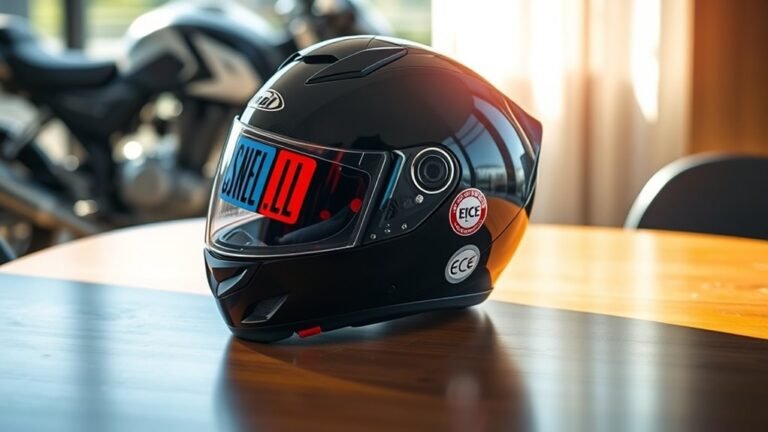
Choose a helmet that displays compliance with a recognized standard (such as CPSC in the U.S. or EN 1078 in Europe). This indicates the helmet has been tested to specific impact requirements rather than relying on marketing claims alone.
Fit and retention system: where many riders lose protection
A properly adjusted retention system helps keep the helmet stable during impacts. Helmets that shift or sit too loosely can reduce effective coverage and increase the chance of ineffective energy management.
- Retention stability: Confirm the chin strap sits correctly and can be tightened comfortably without excessive slack.
- Coverage: Ensure the helmet covers the top and sides of the head appropriately, without tilting back.
- Comfort with control: The helmet should feel secure after you tighten the fit dial or strap system.
Modern liner and rotational protection features
Many helmet brands market internal systems designed to reduce rotational forces during angled impacts. One widely known example is MIPS (Multi-directional Impact Protection System), which uses a low-friction interface concept to help manage certain motion during impacts.
The key point is not that any single technology guarantees superior results, but that reputable systems are designed with impact injury mechanisms in mind and are often incorporated into helmets certified to recognized standards.
Direct answer: What should you prioritize in order?
Prioritize certified compliance first, fit and retention second, and then protective add-ons third. This sequence is consistent with expert guidance because the helmet’s ability to protect depends on both tested design and correct use.
Common Questions About Helmet Impact Standards for E-Bikes
Riders often want simple answers to practical questions—especially when regulations differ by country and helmet labels can be confusing. The most reliable guidance is to cross-check certification markings with local legal requirements and then focus on proper helmet use.
Do MIPS or similar systems replace impact certification?
Answer: No. Features like MIPS are additional design elements, but they do not replace the need for certified compliance with an applicable impact standard.
Is a heavier helmet always safer?
Answer: Not necessarily. Helmet safety performance is influenced by geometry, liner design, retention stability, and measured energy absorption—not just weight. A properly certified helmet with optimized materials can be safer than an uncertified heavier one.
How often should you replace an e-bike helmet?
Answer: If a helmet has been involved in a crash, you should replace it even if damage is not obvious. Many manufacturers and retailers also recommend replacement after a period of normal wear because foam degradation and retention performance can change over time.
Bottom Line: Choose Certified Protection and Ride Correctly
Helmet impact standards for e-bikes are the foundation for verified head protection, and they vary by region through recognized certification frameworks. The safest choice is a helmet certified to a relevant standard, correctly fitted with a secure retention system, and designed with proven protective features that match real crash physics.
If you want the most reliable compliance decision, confirm your local legal requirements first, then select a helmet that lists the applicable standard on the label, and finally adjust it so it stays stable during normal movement and typical ride posture.
Frequently Asked Questions: Helmet Impact Standards for E-Bikes
What helmet impact standards should I look for when riding an e-bike?
When choosing an e-bike helmet, look for certifications that indicate the helmet has passed established impact and penetration tests. In many regions, the most commonly referenced standards include EN 1078 (widely used in Europe for bicycle helmets) and ASTM F1447 / ASTM F1492 (commonly referenced in the United States for bicycle helmets, with extensions for certain designs). For higher-speed e-bike use, some riders prefer helmets that meet additional requirements or are explicitly rated for “bicycle” and not just “skate” or “multi-sport” use. If your e-bike is classed as higher-speed or you regularly ride in faster traffic, prioritize helmets with reputable certifications printed on the label and avoid uncertified “fashion” helmets.
Is an e-bike helmet the same as a regular bicycle helmet?
In many cases, yes—an e-bike helmet is often the same as a regular bicycle helmet, provided it meets the relevant bicycle impact standards. The key is not the motor, but the risk of impact and the helmet’s tested performance. However, e-bikes can travel faster than many traditional bicycles, and riders may face higher-energy crashes. If you ride at higher speeds, carry heavier loads, or frequently ride in dense traffic, consider helmets that meet stronger or more complete bicycle standards and have robust coverage and fit. Also note that some helmets designed for other activities (e.g., certain skate or climbing helmets) may not meet bicycle impact requirements or retention/coverage expectations.
What do impact test labels like EN 1078 or ASTM F1447 actually mean?
Helmet standards like EN 1078 and ASTM F1447 are testing frameworks that evaluate how a helmet performs in real-world crash-like conditions. While the exact test procedures differ by standard, they generally assess factors such as:
- Impact attenuation: how well the helmet reduces force transmitted to the head during a crash.
- Penetration resistance: whether the helmet shell and internal structure prevent sharp objects from breaching the protective layers.
- Retention system strength: how securely the helmet stays on the head during impacts (including strap performance).
- Coverage and safety geometry: whether the helmet covers key head areas appropriate for cycling.
In practice, these labels mean the helmet has been evaluated against defined criteria—not that it will prevent all injuries. Always confirm the certification is for bicycle helmets and that the helmet is intended for the type of riding you do.
Do higher-speed e-bikes require stronger helmet standards?
Higher-speed e-bikes can create higher impact energy in the event of a crash, so “stronger” standards are a valid consideration. Whether you are legally required to use a certain standard depends on your country or region, but from a safety perspective, many riders should choose helmets that meet established bicycle impact standards and fit properly. Some helmets are marketed with ratings designed for faster riding or for specific e-bike categories; in those cases, the safest approach is to select helmets with clearly stated, relevant certifications and to ensure they are rated for bicycle use. Remember: even the best helmet performs only as well as its fit and integrity. Proper sizing, secure strap adjustment, and replacing the helmet after any significant crash are just as important as the certification label.
How can I tell if my helmet is still safe—does it need to be replaced after a crash?
Yes—you should replace a helmet after any moderate-to-severe crash, even if it looks fine. Many helmet safety designs use internal materials (such as expanded foam) that can compress or become damaged during an impact. That damage may reduce future protection. Also replace the helmet if:
- There are visible cracks in the shell or damage to the internal liner.
- The retention system (straps, buckles, attachment points) is compromised.
- The helmet no longer fits securely or shifts easily after adjustments.
For everyday wear, follow the manufacturer’s guidance on lifespan and inspection intervals. Environmental factors (heat, UV exposure, solvents, and storage conditions) can degrade materials over time. As a rule of thumb, inspect the helmet regularly and keep an eye on fit and integrity—safety depends on both the standard it meets and the condition it’s in.
References
- PubMed Search: Bicycle Helmet Effectiveness (Meta-analysis) Google Scholar
https://www.cdc.gov/transportationsafety/bicycle_safety/helmets.html - Google Scholar Search: Bicycle Helmet Impact Test Standards (EN 1078, ASTM F1447) Google Scholar
https://scholar.google.com/scholar?q=bicycle+helmet+impact+test+standards+EN+1078+ASTM+F1447 - Google Scholar Search: E-bike Helmet Standards & Impact Testing Google Scholar
https://scholar.google.com/scholar?q=e-bike+helmet+standards+impact+testing - Google Scholar Search: Helmet Head Injury Reduction (Cyclists, Systematic Review) Google Scholar
https://scholar.google.com/scholar?q=helmet+head+injury+reduction+cyclists+systematic+review - Bicycle Helmet Safety (CDC)
https://www.cdc.gov/transportationsafety/bicycle_safety/helmets.html - Road Traffic Injuries (WHO)
https://www.who.int/news-room/fact-sheets/detail/road-traffic-injuries - Bicycle Safety (NHTSA)
https://www.nhtsa.gov/road-safety/bicycle-safety - Bicycle Helmet
https://en.wikipedia.org/wiki/Bicycle_helmet
📅 Last Updated: July 07, 2026 | Topic: Helmet Impact Standards for E-Bikes | Content verified for accuracy and freshness.