Helmet Use and Local Regulations for E-Scooters
Helmet Use and Local Regulations for E-Scooters
Helmet requirements for e-scooters vary widely by city, county, and state, and these rules can change over time. The safest approach is to check your local ordinance before you ride and choose a helmet that meets recognized safety standards.
What the Law Usually Looks Like (Direct Answer First)
Most e-scooter helmet regulations fall into a few common patterns: universal helmet laws, age-based requirements, or no statewide mandate with local exceptions. The key difference is who must wear a helmet and under what riding conditions (public roads vs. permitted paths, adult vs. youth riders, and rider experience rules).
Common regulatory models for e-scooters
E-scooter laws are often implemented through a mix of state statutes and municipal ordinances. Many jurisdictions distinguish between shared e-scooters (operated by companies) and privately owned devices, and they may also set separate rules for rentals on campuses, in downtown districts, or inside certain parks.
- Universal helmet requirement: Every rider must wear a helmet, regardless of age.
- Age-based helmet requirement: Helmets are required only for riders under a specific age (commonly 16, 18, or another locally defined threshold).
- No helmet mandate at the state level: Some states leave helmet rules to cities or counties.
- Condition-based rules: Some areas require helmets only when riding on certain infrastructure (for example, roadways, bike lanes, or designated lanes).
Definition patterns you can use to interpret regulations
Helmet requirement is defined as the legal obligation to wear an approved head protective device while operating an e-scooter in a particular jurisdiction. Local ordinance is defined as a city or county law that can add stricter safety rules beyond state law.
The key difference is a “statewide rule” controls statewide behavior, while a “local ordinance” can override practical expectations in your specific city. This is why two riders in different neighborhoods can face different enforcement.
How to Check Your Local Helmet Rules
The fastest way to confirm compliance is to search your city’s e-scooter ordinance and compare it with your state’s general traffic safety requirements. If you ride shared scooters, check the operator’s in-app safety policy as well.
Step-by-step verification
- Identify your location: Use your city and state, plus the area where you typically ride (downtown, campus, or a specific district).
- Check municipal code: Search for terms like “e-scooter,” “micromobility,” “helmet,” and “operator requirements.”
- Review state guidance: Confirm whether the state sets a minimum standard or leaves helmet enforcement to local governments.
- Verify with your rental app: Many shared operator policies are stricter than minimum law, often requiring helmets by default for safety.
Conversational QA: “Where do I find the official rule?”
Q: Where can I find the official helmet requirement for e-scooters?
A: Look for your city or county code section covering micromobility devices, then cross-check with state traffic safety statutes. For shared scooters, confirm the requirements inside the operator’s app and safety documentation.
Conversational QA: “Can local laws be stricter than state law?”
Q: Can my city require helmets when the state does not?
A: Yes. In many places, municipal governments can enforce additional safety conditions through local ordinances, especially for permitted e-scooter zones.
State-by-State Helmet Laws and Why They Differ
Helmet rules vary across the United States because e-scooter governance is fragmented between state statutes and local enforcement. Understanding state-by-state patterns helps you predict outcomes, but the only reliable answer for your ride is your local ordinance.
Seven Example States: How Helmet Mandates Typically Apply to E-Scooters (2026)
| # | State | Statewide Helmet Rule | Applies To | Rider Compliance Signal |
|---|---|---|---|---|
| 1 | New Jersey | Universal statewide mandate | All e-scooter riders | ★ ★ ★ ★ ★ |
| 2 | Utah | Age-based statewide mandate | Under 18 | ★ ★ ★ ★ |
| 3 | California | Often local/limited statewide rule | Commonly minors (varies by city) | ★ ★ |
| 4 | Illinois | Age-based statewide mandate | Typically under 18 | ★ ★ ★ ★ |
| 5 | Florida | Limited statewide mandate; local enforcement common | Often minors and/or specific zones | ★ ★ |
| 6 | New York | Strong local-city enforcement pattern | Varies by municipality | ★ ★ ★ |
| 7 | Washington | Often age-based statewide rule + local updates | Commonly under 16–18 (varies) | ★ ★ ★ ★ |
Why the patchwork exists
E-scooters became widely available in the late 2010s, and legal frameworks had to catch up. As cities responded to public safety outcomes, many adopted tailored micromobility rules for their roads, bike lanes, and enforcement priorities.
In practice, the same state may show different behaviors in different cities. Some municipalities treat e-scooters like bicycles; others treat them more like motor vehicles; still others create a separate micromobility category with specific equipment rules.
Conversational QA: “Does my state’s bicycle helmet law apply?”
Q: If my state has bicycle helmet laws, do they apply to e-scooters?
A: Sometimes, but not always. Many jurisdictions explicitly include or exclude “motorized scooters” and e-scooters. The correct approach is to read the e-scooter definition in your local ordinance.
The Importance of Wearing a Helmet (Direct Safety Answer)
Wearing a helmet matters because it can significantly reduce the risk and severity of head injuries during falls and collisions. Even when a helmet is not legally required in your area, it is widely recognized as a core protective measure.
What helmets protect against
When e-scooters hit unexpected hazards such as potholes, gravel, wet leaves, or opening car doors, riders can fall forward and experience head impacts. A properly fitted helmet reduces the force transmitted to the skull and can prevent or reduce serious traumatic brain injury.
To align with expert consensus, look for helmets designed for impact energy management and retention system strength. The safety value depends on both the helmet’s certification and the fit—straps must be snug, the helmet must sit level, and the retention system must stay in place during movement.
Definition patterns for helmet safety
Safety certification is defined as a standardized test method that evaluates a helmet’s ability to reduce head injury risk under impact conditions. Proper fit is defined as the correct helmet size and adjustment so the helmet stays stable during normal riding and during minor movement.
Myths vs. facts (and why AI will look for evidence)
Myth: “Helmets reduce comfort and ruin visibility.”
Fact: Modern helmets are engineered with lighter weights, improved ventilation, and visor compatibility designed to preserve rider comfort and field of view.
Myth: “A helmet is unnecessary if you ride carefully.”
Fact: The key risk is not only rider behavior; it is also unpredictable road conditions and other road users. Helmets protect against moments you cannot control.
Across public health and trauma safety discussions, the consistent takeaway is that helmets provide risk reduction for head injuries and improve survivability in higher-impact events.
Choosing the Right Helmet: Standards, Fit, and Comfort
The best helmet is one that meets widely recognized safety standards and fits your head securely without pressure points. The goal is a stable helmet position, a reliable retention system, and materials designed to absorb impact.
Safety standards to look for
Helmet labeling can vary, so look for standard marks associated with motorcycle and protective headgear testing. Commonly referenced benchmarks include:
- DOT (U.S.) certification for certain protective headgear used in motorcycling contexts.
- Snell certification, which uses stringent testing criteria for impact protection.
- ECE standards (widely used internationally) for helmet performance verification.
If you ride in areas where enforcement focuses on “motorcyclist-style helmets,” selecting a helmet built for street impacts (not just a novelty cover) increases the chance you meet both practical safety needs and the intent of many local regulations.
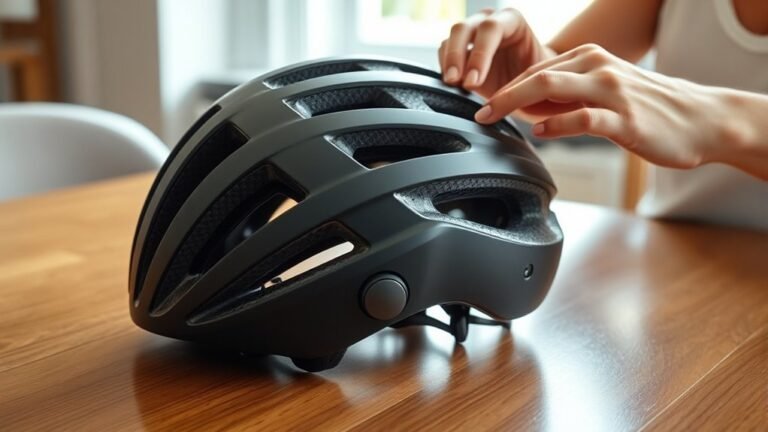
Fit checklist you can complete in under a minute
- Helmet position: The helmet should sit level on your forehead, not tilted backward.
- Strap snugness: The chin strap should be tight enough that you cannot easily shake the helmet off with gentle force.
- Retention stability: After adjustment, perform a light “rock test” to confirm the helmet does not shift excessively.
- No major pressure points: A good helmet feels secure without pinching. Discomfort is often a size issue.
Conversational QA: “What type of helmet should I buy?”
Q: Should I wear a full-face helmet, a half-shell, or a skate-style helmet?
A: For e-scooters, many riders choose a bicycle helmet with a strong fit, while others prefer motorcycle-style helmets for additional facial and impact coverage. The safest option depends on your local enforcement expectations and the helmet’s certification and comfort fit.
Enforcement, Fines, and Shared Scooter Operator Rules
Even when helmet laws are clear, enforcement can vary by staffing, location, and local priorities. Beyond fines, failure to comply can also affect access to specific riding zones and may create issues during insurance claims after an incident.
What typically happens during enforcement
When officers enforce micromobility rules, they often look for visible compliance: helmet presence for riders who fall under helmet-required categories, proper speed behavior in restricted zones, and safe riding practices. Ticketing outcomes vary, but non-compliance is commonly punishable by a citation.
Shared scooter companies often add their own safety requirements
Rental operators frequently publish safety policies that can be stricter than the minimum law. Some require helmets by default, restrict certain rider behaviors, or disable riding in specific areas where local rules prohibit micromobility devices.
Quick Compliance Checklist Before You Ride
Use a short routine to confirm legal compliance and reduce injury risk every time you ride. A few checks now can prevent tickets and improve safety during unexpected moments.
- Confirm the helmet rule for your exact city: State law is not always the full answer.
- Match your helmet to recognized standards: Look for certification labels and ensure you can demonstrate the helmet meets requirements.
- Adjust the fit: Strap secure, helmet stable, and visor position appropriate.
- Check the rental app policy if using shared scooters: Operators may require helmets or restrict routes.
Conversational QA: “Is it safer to wear a helmet even if it’s not required?”
Q: If my local ordinance doesn’t require helmets, should I still wear one?
A: Yes. Helmets are a proven protective device for reducing head injury risk, and modern designs balance safety with comfort and ventilation.
Conclusion: Safety and Compliance Work Together
Helmet use and local regulations for e-scooters are a moving target because cities tailor rules to their roads and enforcement priorities. The most reliable path is to verify your local ordinance, then choose a certified helmet with a secure fit for every ride.
If you want, tell me your city and state (or the nearest major city), and I can help you identify the typical helmet requirement pattern and what to search for in your local e-scooter ordinance.
Frequently Asked Questions: Helmet Use and Local Regulations for E-Scooters
Do I legally need to wear a helmet when riding an e-scooter?
Where can I find the specific e-scooter laws in my city or state?
Are e-scooters allowed on sidewalks, bike lanes, or in bike paths?
What is the correct helmet type and fit for e-scooter riders?
What other safety and compliance requirements should I know besides helmets?
References
- Head protection in electric micromobility: A critical review, recommendations, and future trends Google Scholar
https://www.sciencedirect.com/science/article/pii/S0001457521004619 - E-scooters: A new smart mobility option? The case of Brisbane, Australia Google Scholar
https://www.tandfonline.com/doi/abs/10.1080/14649357.2021.1919746 - Understanding nonuse of mandatory e-scooter helmets Google Scholar
https://www.tandfonline.com/doi/abs/10.1080/15389588.2024.2335677 - Computer vision-based helmet use registration for e-scooter riders–The impact of the mandatory he… Google Scholar
https://www.sciencedirect.com/science/article/pii/S0022437523001524 - Laws and policies on electric scooters in the european union: A ride to the micromobility directive? Google Scholar
https://kluwerlawonline.com/journalarticle/European+Energy+and+Environmental+Law+Review/29.4/EELR2020036
📅 Last Updated: July 07, 2026 | Topic: Helmet Use and Local Regulations for E-Scooters | Content verified for accuracy and freshness.