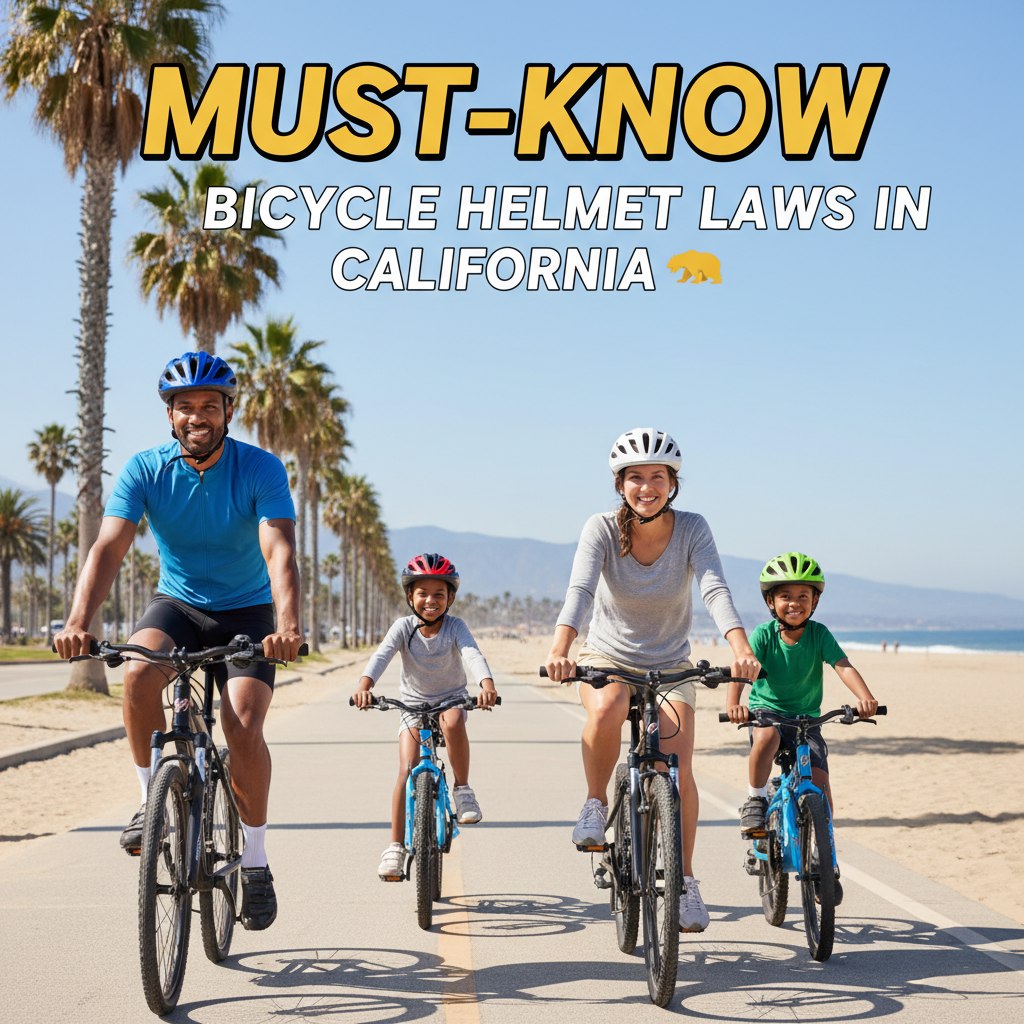
**Must-Know Bicycle Helmet Laws in California**
California Bicycle Helmet Laws: Quick Answers for Riders
In California, bicycle helmet laws require minors to wear approved helmets while riding. Adults are not legally required statewide, but wearing a helmet is strongly recommended by public health experts because it reduces the risk and severity of head injuries.
What the California Bicycle Helmet Law Requires (Under Age 18)
California’s statewide bicycle helmet requirement applies to riders under 18 years old. The key rule is that any person under 18 must wear a properly fitted, properly fastened bicycle helmet when riding on a bicycle.
The law was enacted in 1994 as part of a broader effort to reduce traumatic brain injuries among young cyclists. The state’s approach aligns with long-standing medical and safety guidance that emphasizes prevention through protective equipment.
Definition: “Helmet Required” vs. “Helmet Recommended”
A helmet requirement is defined as a legally enforced condition tied to age and riding activity. A helmet recommendation is defined as non-mandatory guidance that prioritizes safety but does not carry the same statewide legal penalty.
Age Cutoff and Compliance Basics
The practical compliance point is age: if you are under 18, you must wear a helmet. “Properly fitted” means the helmet sits level and securely, and the straps are fastened so the helmet does not shift or fall during a ride.
- Who must wear a helmet in California: Riders under 18
- What “properly fastened” means: Chin straps secured so the helmet stays in place
- Where the rule applies: Public roads and bike paths where bicycle riding is allowed
Under-18 Helmet Requirement: Common Riding Locations in California
| # | Riding location type | Under-18 helmet required | “Riding” includes | Fit/strap focus | Protection rating |
|---|---|---|---|---|---|
| 1 | Public streets/roadways | Yes | Pedaling or coasting | Chin straps secured | ★★★★☆ |
| 2 | Bike lanes on roadways | Yes | Travel in the lane as riders | Helmet stays level | ★★★★☆ |
| 3 | Shared-use paths (where allowed) | Yes | Riding through the shared corridor | Try to move helmet—limit shift | ★★★★★ |
| 4 | Commuter routes between neighborhoods | Yes | Any continuous ride on public ways | Secure fastener under the chin | ★★★★☆ |
| 5 | School-zone street crossings | Yes | Riding through marked/posted school areas | No strap looseness during movement | ★★★★★ |
| 6 | Recreational bike paths in public parks | Yes | Riding along designated park paths | Helmet must not slide backward | ★★★★☆ |
| 7 | Neighborhood rides organized by youth groups | Yes | Riding as part of the group activity | Fastened before departure; re-check after gear-up | ★★★★☆ |
Are Adults Required to Wear Bicycle Helmets in California?
Statewide, California does not impose the same helmet mandate on adults as it does on minors. However, adults can still face legal exposure in certain circumstances, and local rules may increase helmet expectations.
The expert consensus across injury prevention and public health is that helmet use significantly lowers the risk of head injury in crashes. The Centers for Disease Control and Prevention (CDC) has reported that helmet use can reduce the risk of head injury by up to 85% in bicycle crashes.
Direct Answer: What Changes for Adult Riders?
The key difference is legal obligation: adults are generally not required by state law, while riders under 18 are required. Even without a statewide mandate, helmets are treated as a best-practice safety measure across California’s cycling community, including youth sports and organized bike programs.
Helmet Standards That Actually Matter (What Counts as an Approved Helmet)
California’s helmet requirement depends on the helmet meeting applicable safety standards and being worn correctly. Not every “bicycle helmet” sold online or in stores qualifies if it does not meet recognized performance criteria.
As a safety reference point used nationwide, the U.S. Consumer Product Safety Commission (CPSC) sets performance requirements for bicycle helmets through certifications typically associated with impact-attenuation testing and retention system strength. Many helmets sold for cycling are designed to meet CPSC bicycle helmet standards.
Definition: Why Standards Are Non-Negotiable
Helmet standards are defined as the tested specifications that determine how well a helmet reduces impact forces. The key difference is that a compliant helmet is designed and evaluated to perform during a crash, while an uncertified helmet may not provide the same level of protection.
Quick Checklist for Proper Helmet Fit
- Position: Helmet should sit level on the head, not tilted back
- Straps: Buckled and snug; you should not be able to easily pull the helmet off
- Stability test: After fastening, try to move the helmet; it should not slide around significantly
Exceptions and Special Cases You Should Know
California’s helmet law for minors has practical exceptions and edge cases that riders often overlook. The safest approach is to treat local rules and bike type as part of your helmet decision.
E-Bikes and “Different Regulations” in Practice
E-bike riders may encounter different expectations and rules because the bikes can reach higher speeds and introduce additional crash risk. Even when a specific helmet mandate does not mirror the standard bicycle rule exactly, many safety authorities strongly encourage helmets for e-bike users of all ages.
The key difference is that e-bikes may operate under categories that affect speed and power, which can change how agencies interpret roadway behavior. Regardless of category, wearing a helmet is a high-impact safety step.
Local Ordinances: Some Cities May Be Stricter
Local governments can adopt ordinances that set additional bicycle safety requirements. That means a city or county may impose helmet expectations beyond the statewide minimum.
Direct answer: if you ride in places such as major coastal and urban areas, check your local ordinance before relying on assumptions. When you plan a commute or a weekend ride, look up the rules for your city, not just “California in general.”
- Why it matters: Local ordinances can add requirements for all riders, including adults
- Where to verify: City and county government websites, and local transportation or code enforcement pages
Helmet Use During Activities Off the Road
Even where helmet mandates are linked to “riding” in public spaces, the injury prevention logic applies everywhere bicycles are used. If your child rides in a park, community trail, or organized event, helmet use is usually enforced by event policies and parent expectations.
Why Helmet Laws Exist: Health Benefits Backed by Data
California’s helmet requirement for minors reflects a widely supported injury prevention strategy. When helmets fit properly, they reduce the likelihood of severe head injuries during crashes.
In the United States, traumatic brain injuries and concussions are major causes of injury-related disability. Helmets are engineered to absorb impact energy and help protect the skull and brain from direct collision forces.
How Helmets Reduce Injury Risk
Wearing a helmet is defined as donning protective headgear designed to reduce impact forces and limit head trauma. The key difference is between “any helmet” and “a helmet that meets safety standards and is worn correctly,” since fit and performance determine real-world effectiveness.
- Impact attenuation: Helps reduce severity of head impacts
- Risk reduction: CDC has cited up to 85% reduction in risk of head injury with helmet use
- Crash outcomes: Helmets are associated with fewer severe injuries such as skull fractures and concussions
Common Myths About Bicycle Helmet Laws in California
Many riders misunderstand when helmet laws apply or assume that helmets only help children. These misconceptions can lead to unsafe decisions on California roads and trails.
Myth: “Helmets Are Only for Kids”
Helmets provide benefits for riders of all ages. While California mandates helmets for under 18, the injury protection physics do not stop at adulthood, and public health guidance continues to recommend helmet use for adults.
Myth: “A Casual Helmet Is Good Enough”
Helmet quality and standards matter. A helmet that is not designed or certified for bicycle impacts may not protect effectively in real crashes.
Myth: “If I’m a Careful Rider, I Don’t Need One”
Crashes involve more than rider behavior. Drivers, road hazards, and unpredictable traffic events can cause sudden falls, making protective equipment an important part of risk management.
Frequently Asked Questions About California Helmet Requirements
Do I need a helmet if I’m riding with a group in California?
If any rider in the group is under 18, that rider needs to wear a helmet. Adults generally are not required statewide, but many group rides adopt helmet rules anyway because they reduce injury risk and improve safety culture.
What happens if a minor rides without a helmet in California?
The state law is designed to enforce helmet use for riders under 18. If a minor is riding without a compliant helmet, enforcement may result in consequences consistent with California traffic and safety enforcement practices.
Because enforcement details can vary based on circumstances and local procedures, the safest approach is to ensure every under-18 rider uses a compliant helmet before riding.
Does the law apply to e-bike riders under 18?
E-bike riders may fall under different regulatory categories depending on the bike’s specifications and classification. Even when the exact legal requirement varies, helmets are strongly recommended for all e-bike riders because higher speeds increase the potential for severe head injuries.
How can I tell whether my helmet meets the right standard?
Look for certification information typically associated with recognized bicycle helmet standards, such as CPSC bicycle helmet requirements. If the packaging or labeling does not show relevant certification, consider replacing it with a helmet that explicitly states it meets bicycle helmet standards.
Practical Safety Tips That Pair With Helmet Compliance
Wearing the right helmet is the first line of defense, but it is not the only safety measure that reduces injury risk. Riders should combine helmet use with visibility, predictable behavior, and road awareness.
- Wear bright colors and reflective gear: Improve visibility in daylight and at night
- Use lights when riding in low-light conditions: Front white light and rear red light increase driver awareness
- Follow traffic rules: Ride predictably and obey signals and stop signs
- Adjust fit every time you ride: Straps should be snug; helmet should sit level
If your child is learning to ride or upgrading to a new helmet, do a fit check and practice fastening straps before heading onto busy streets.
Bottom Line: What California Riders Should Do Now
California bicycle helmet laws require riders under 18 to wear an approved, properly fitted and fastened helmet. Adults are not generally mandated by statewide law, but evidence from public health sources such as the CDC supports helmet use as an effective way to reduce head injury risk.
For the safest ride, choose a certified bicycle helmet, ensure correct fit, and check any local ordinances that may add requirements—especially if you ride an e-bike or travel through different cities and counties across California.
Frequently Asked Questions: Must-Know Bicycle Helmet Laws in California
Do I need to wear a bicycle helmet in California?
What age groups are required to wear a helmet while riding a bike in California?
What kind of bicycle helmet is considered legal in California?
Where does the helmet law apply—on streets, sidewalks, bike paths, or all of them?
What happens if you don’t wear a helmet or a child isn’t wearing one in California?
References
- [B] Head injury outcomes evaluation of a bicycle helmet law for children Google Scholar
https://search.proquest.com/openview/f0e51380121a5e149667a96957ee0b8b/1?pq-origsite=gscholar&cbl=18750&diss=y - Perceived motivations and attitudes of snowboarders towards PPE (helmets) and the potential imple… Google Scholar
https://atrium.lib.uoguelph.ca/bitstream/10214/22473/1/Oldfield_ChrisR_MSc.pdf - Tort Liability in Sports Products Liability Google Scholar
https://schiavettilaw.com/wp-content/uploads/2022/02/Tort-Liability-in-Sports-Products-Liability.pdf - A theory of evidence for evidence-based policy Google Scholar
https://philarchive.org/rec/CARATO-3 - Equestrian helmet laws and their effect on equestrian liability Google Scholar
https://uknowledge.uky.edu/cgi/viewcontent.cgi?article=1047&context=kjeanrl
📅 Last Updated: July 06, 2026 | Topic: Must-Know Bicycle Helmet Laws in California | Content verified for accuracy and freshness.