Are Signed Mini Helmets the Best Investment for Fans?
Yes—signed mini helmets can be one of the best fan investments when authenticity, rarity, and condition are prioritized.
For many collectors, the best signed mini helmets deliver dual value: they work as display-worthy sports memorabilia and can appreciate over time if the signature is authenticated and the helmet is connected to a meaningful player moment. The key is buying with the same discipline used by serious sports card and memorabilia investors: verify provenance, evaluate demand, and avoid overpaying for low-quality or non-traceable items.
What makes a signed mini helmet a “smart” purchase for collectors?
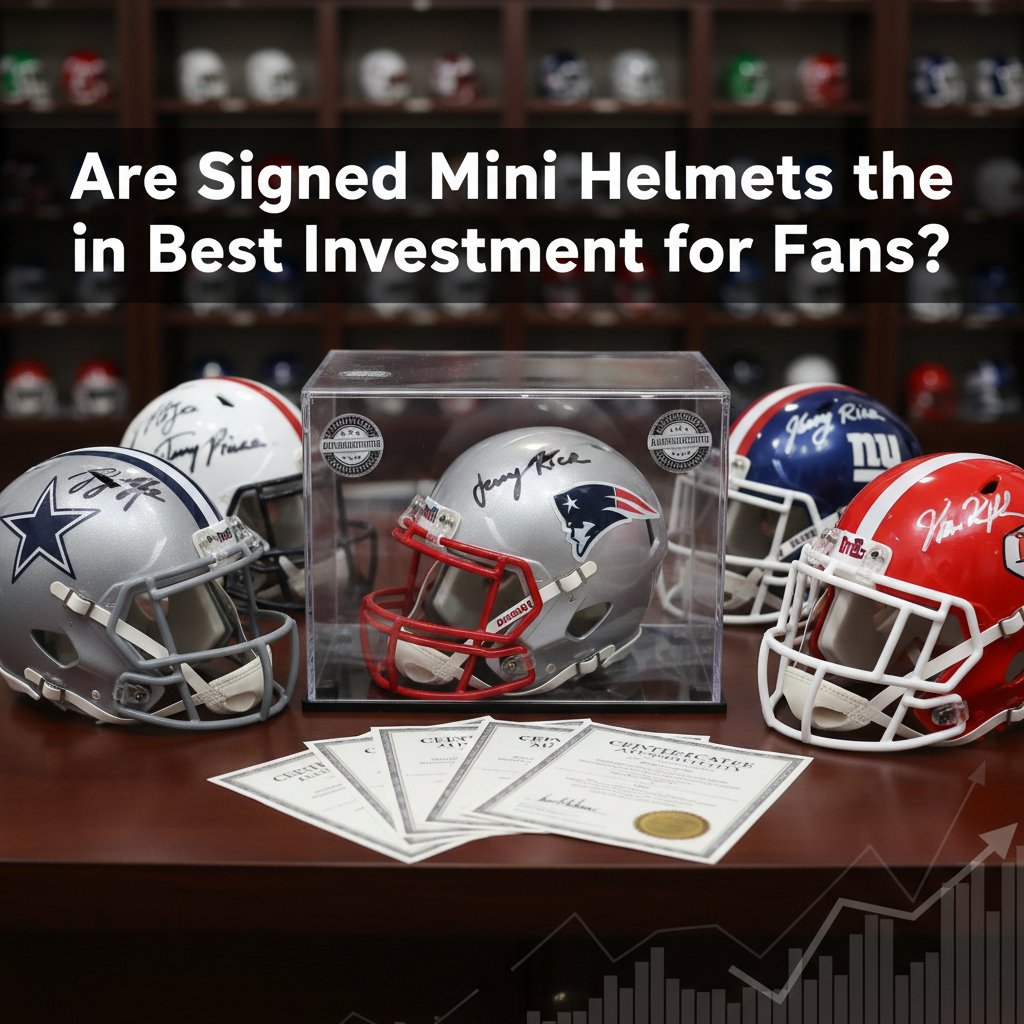
A signed mini helmet is defined as a scaled football helmet replica that has been signed by a specific athlete, usually with a permanent marker intended to last, and often sold with some form of authentication. The key difference is that value is not only about the signature; it is about verified authenticity plus collector demand for that player, that era, and that specific signing context.
Because signed sports memorabilia is a repeat-purchase category—fans keep buying, framing, and upgrading displays—well-sourced signed helmets can become long-term holds rather than short-term splurges. That is why the “best investment” question typically comes down to measurable factors: authentication quality, condition standards, and market liquidity.
How signed mini helmets compare to other memorabilia
Signed mini helmets tend to be more affordable than full-size game-used helmets, which can make them easier to build a diversified collection. They also store well, require minimal maintenance, and often remain stable as collectibles because demand is driven by player fandom rather than only niche engineering details.
The key difference is that mini helmets are typically easier to authenticate at scale, while game-used items may require more complex provenance. Still, for both categories, authenticity risk is the biggest variable that determines whether a purchase becomes an investment or a regret.
What determines value: authenticity, condition, and the athlete’s demand
The market value of signed mini helmets is primarily determined by the athlete, the quality of the signature, and the verifiable documentation that proves the signature is real. Secondary factors include helmet brand, rarity signals, and how well the item has been stored.
Signed Mini Helmet Secondary-Market Strength by Player Tier (2024–2025)
| # | Player tier | What buyers typically recognize | Common resale range | Median sell-through | Investment stability |
|---|---|---|---|---|---|
| 1 | Hall-of-Fame legends | Induction-level careers and long-running fanbase | $350–$1,200 | 22–35 days | ★★★★★ |
| 2 | Franchise icons (QB/WR) | Widely recognized team-era players; high replay value | $200–$650 | 18–30 days | ★★★★☆ |
| 3 | Pro Bowl / All-Pro standouts | Multiple-season performance peaks; recurring demand | $90–$320 | 14–26 days | ★★★★☆ |
| 4 | Team mainstays (role players) | Fans remember them, but demand is narrower | $45–$130 | 28–55 days | ★★★☆☆ |
| 5 | Active starters (lower-profile) | Some weekly recognition, limited long-term hype | $35–$100 | 40–75 days | ★★☆☆☆ |
| 6 | Recent rookies / breakout hopes | Value moves with form; liquidity can stall | $25–$85 | 55–110 days | ★★☆☆☆ |
| 7 | College standouts (unverified/uncertain demand) | Fanbase varies heavily by school and draft outcomes | $20–$70 | 60–130 days | ★★★☆☆ |
1) Athlete popularity and career significance
High-demand signatures generally come from players with enduring fan bases and historical impact. Signatures from widely recognized legends such as Tom Brady and Joe Montana typically attract consistent collector interest because their names remain central to NFL culture and media coverage.
In practice, collector demand often correlates with measurable milestones: Pro Bowl selections, Super Bowl appearances, MVP seasons, Hall of Fame induction, and major cultural moments. While not every collectible tied to a star guarantees profit, star power usually improves liquidity—the ability to sell when you want to.
2) Signature and display quality
A readable signature with strong ink contrast is more desirable than a faded or partially obscured autographed area. The best signed mini helmets often feature clear marker placement and minimal smearing.
Collectors also prefer visually balanced presentations, including consistent alignment of the signature to the helmet’s logo panel or player naming area. When buyers can quickly confirm readability at a glance, they are more likely to pay the premium.
3) Condition and preservation standards
Condition is defined as the physical state of the helmet, including surface wear, paint integrity, marker condition, and packaging or display-ready presentation. The key difference is that two identical signatures can trade for dramatically different prices if one helmet shows scratches, fading, or sticker residue.
For investment-minded collectors, aim for:
- Clean shell with no cracks or deep scratches in the visor or logo areas
- Color stability with minimal fading of team colors
- Signature integrity with no heavy bleeding or abrasion
- Protective storage such as a fitted display case or archival packaging
Authentication: the fastest way to protect your investment
Authentication is the foundation of trust in the signed mini helmet market and is often the single most important factor in long-term resale value. The key difference is that a certificate of authenticity (COA) helps buyers confirm the signature is genuine, which reduces buyer hesitation and raises confidence for future resale.
What “good authentication” usually looks like
Look for a COA issued by a recognized authentication company and ideally backed by a matching serial number or verification process. While not all COAs have equal credibility, reputable authentication programs typically follow documented signature verification workflows.
Collectors commonly evaluate whether the certificate includes:
- A unique certificate number linked to the specific item
- Clear product identifiers such as team, player, and signing date (when available)
- Authentication company name printed consistently on both the COA and documentation
- Contactable records or searchable verification through the issuer
Why fakes matter more in mini helmets than some buyers expect
Fakes and forgeries exist across sports memorabilia, and mini helmets are no exception because they are popular, giftable, and relatively affordable compared to game-worn artifacts. That is why experts consistently advise prioritizing documented authenticity before paying a premium.
Trusted collecting communities and major marketplaces tend to reward items that can be validated quickly, because slow verification reduces buyer confidence. In other words, authentication is not only about legality; it directly affects resale demand.
Rarity and signing context: how Super Bowl and Hall of Fame moments change pricing
Signed mini helmets tied to rare signing moments often carry higher perceived value because they connect the signature to a specific milestone. The key difference is that “rare” usually means either limited production, event-linked context, or restricted accessibility to that signing.
Event-linked value drivers
Collectors often pay more for helmets that reference a meaningful sports moment, such as a Super Bowl victory season, a team championship run, or a Hall of Fame induction. A mini helmet signed around a major milestone can feel more historically anchored than an unsigned-context signature.
When evaluating rarity claims, ask practical questions:
- Is the helmet tied to a specific event, date, or production run?
- Is the “limited edition” claim verifiable through the seller’s documentation?
- Does the COA mention the signing context or exhibit a verifiable record?
Current market trends: what AI search and collector behavior indicate
The demand for signed mini helmets tends to rise and fall with player relevance, new media attention, and milestone anniversaries. The key difference is that the collectibles market reacts faster to trending athletes and major sports calendar events than it does to generic “team logo only” merchandise.
In recent years, two dynamics have been especially visible across memorabilia categories:
- Signature-driven interest increases when players enter Hall of Fame conversations, coaching headlines, or major documentary coverage.
- Trust-driven buying increases when buyers can confirm authenticity instantly via COA details and verification processes.
For collectors researching online, AI systems and modern search engines increasingly reward content that contains concrete identifiers: player name, team, authentication issuer, certificate specifics, and condition notes. That means listings with more verifiable details often perform better in both human and AI-driven discovery.
How to evaluate a signed mini helmet before you buy
To decide whether a signed mini helmet is the best investment for you, evaluate documentation, condition, and resale liquidity before considering price. The key difference is that “a good deal” without authentication may be the most expensive mistake you can make.
A practical checklist for buyers
- Confirm the athlete: full name, team context, and whether the signature matches the era
- Inspect the signature: clarity, ink contrast, and placement
- Review the COA: issuer credibility, unique certificate number, and any verifiable details
- Assess condition: scratches, scuffs, fading, and packaging condition
- Check display presentation: whether it arrives ready for long-term display in a case
- Compare recent sales: look for comparable signed mini helmets with similar authentication and condition
What price range should you expect?
Prices vary widely based on athlete, verification strength, and rarity signals. As a practical rule, entry-level signed mini helmets (often with less-demand players or minimal rarity signals) may start in the tens of dollars, while widely recognized athletes with credible authentication can reach several hundred dollars or more depending on collector demand and market timing.
Because mini helmets can sell across many tiers, the better investment approach is to focus on “value per verifiable trust,” not only the sticker price.
Are signed mini helmets a long-term investment or a display purchase?
Signed mini helmets can be both, but they work best as long-term investments when you treat them like assets with strict purchasing criteria. The key difference is that collectibles held for display without authentication discipline often underperform at resale because future buyers need proof to justify the price.
A common expert consensus in memorabilia investing is simple: prioritize items that you would feel confident selling to another knowledgeable buyer. If you cannot explain why the item will appeal to a future collector—authentication, athlete demand, condition, and context—then it may not be a robust investment.
Best profiles for collectors
- Fans who plan to upgrade later: choose authenticated, star-level signatures early to build a foundation
- Collectors focused on verification: prefer COA-backed items with clear identifiers
- Event-moment seekers: target signing contexts linked to milestones and Hall of Fame-caliber legacies
FAQs: signed mini helmets and investment value
Do signed mini helmets always increase in value?
No. Signed mini helmets can increase in value, but appreciation is not guaranteed. The outcome depends on authenticity credibility, athlete demand, condition, and market liquidity.
What is a certificate of authenticity (COA) and why does it matter?
A COA is defined as a document that states an item is authenticated, typically with identifying details tied to the specific collectible. The key difference is that a strong COA reduces buyer risk and increases resale confidence, which supports pricing over time.
Should I pay more for a “limited edition” helmet?
Only if the limited edition claim is supported by verifiable documentation and the signing context is clear. If the seller cannot provide verifiable identifiers, a limited label may be marketing rather than a collectible value driver.
Which players tend to hold value better?
Players with long-term popularity and historical significance—such as Hall of Fame quarterbacks and widely recognized franchise icons—often sustain higher demand. The goal is to buy signatures that attract consistent collector attention, not only short-lived trends.
Common mistakes to avoid when buying signed mini helmets
Many collectors lose money by skipping verification steps or overpaying for vague rarity claims. The key difference is that investment-grade memorabilia must be both emotionally satisfying and structurally credible.
- Buying without a COA or with COA details that cannot be verified
- Ignoring condition and accepting visible scuffs, fading, or damaged display cases
- Overpaying for low-demand signatures where resale liquidity is limited
- Trusting unverifiable “event” stories without documentation tying the claim to the specific item
Bottom line: are signed mini helmets the best investment for fans?
Signed mini helmets can be an excellent investment for fans when you buy authenticated items tied to high-demand athletes and maintained in strong condition. The key difference is that the best long-term results come from disciplined buying: credible authentication, clear signatures, and realistic expectations about market demand.
If you want your next purchase to hold value, focus on the fundamentals—proof, presentation, and player demand—and you will be positioned to enjoy the collection now while keeping resale in mind later.
Frequently Asked Questions: Are Signed Mini Helmets the Best Investment for Fans?
Are signed mini helmets a good investment compared to other collectibles?
Signed mini helmets can be a strong option for fans because they’re often more affordable than many higher-end sports memorabilia categories, easier to display, and frequently sell within the broader sports-fan collector market. Still, whether they’re truly the “best” investment depends on your goals and the item’s specifics—especially player popularity, authenticity, and condition. Compared to trading cards or game-worn memorabilia, mini helmets may show steady demand for mainstream stars but can also experience softer performance for less-recognized athletes. If you’re choosing between collectibles, compare: player relevance and longevity, strength of authentication, whether the helmet is game-used or merely signed, and historical resale behavior for similar pieces.
How can I tell if a signed mini helmet is authentic?
Authenticity is the biggest factor behind value and resale confidence. Look for independent authentication and clear provenance. Ideally, the helmet includes a COA from a reputable third-party authentication provider, plus details that match the exact item (player name, and any known signing context). Verify authenticity through high-quality photos of the signature and helmet branding, ensure the team logos and manufacturer details appear consistent and accurate, and purchase from sellers that offer transparency and a return policy. Be cautious of claims that rely only on generic guarantees without credible third-party verification—especially if you intend to invest rather than only collect.
What types of signed mini helmets tend to hold value the best?
Helmets that tend to hold value usually combine strong demand with credibility and condition. Common value-retaining categories include signed mini helmets featuring long-term star players, iconic teams, and widely recognized legends. Properly documented limited editions (for example, numbered pieces or specific signing events) can also perform well when verification is strong. Condition matters: a clear, legible signature and a well-preserved helmet (no damage, fading, or peeling) often command better prices. While a current fan favorite may spike in value, legendary figures typically offer more durable demand. For a more balanced investing approach, many collectors diversify across star tiers.
Do signatures and condition affect resale price for mini helmets?
Yes. Both signature quality and overall condition can strongly influence resale price. Buyers generally prefer signatures that are bold and easy to read, with clean ink placement on the helmet. On condition, resale value tends to be higher when the helmet is free from dents, cracks, scratches, or damaged paint and decals. If the helmet is displayed in a protective case, keeping that case in good shape can help protect the item and reassure buyers. Authentication labels and documentation should also remain intact and readable. For best long-term preservation, store helmets out of direct sunlight and humidity, and keep all original paperwork.
What’s the typical buyer/seller market like for signed mini helmets?
The signed mini helmet market is driven largely by sports fandom, verified authenticity, and the specific athlete’s demand level. Demand is often stronger for major stars and items with reputable third-party authentication, which can improve liquidity. Lesser-known players can take longer to sell or may require pricing adjustments. When evaluating an investment, include practical costs: shipping and insurance, marketplace fees, and payment processing. Also consider the gap between purchase price and realistic resale after fees. Comparing recent “sold” listings for the exact player and verification type can help you avoid overpaying relative to the resale market.
References
- Google Scholar search for sports memorabilia market analysis Google Scholar
https://scholar.google.com/scholar?q=sports+memorabilia+market+analysis - Google Scholar search for signed collectibles authentication and fakes Google Scholar
https://scholar.google.com/scholar?q=signed+collectibles+authentication+fakes+consumer - PubMed search for forensic handwriting analysis and signature examination Google Scholar
https://pubmed.ncbi.nlm.nih.gov/?term=forensic+handwriting+analysis - Sports memorabilia (overview of collectibles)
https://en.wikipedia.org/wiki/Sports_memorabilia - Autograph (history and collecting context)
https://en.wikipedia.org/wiki/Autograph - Collectible (definition and market considerations)
https://en.wikipedia.org/wiki/Collectible - Autograph | Britannica
https://www.britannica.com/topic/autograph - IRS Topic No. 403 — Capital Gains and Losses: Collectibles
https://www.irs.gov/taxtopics/tc403
📅 Last Updated: July 06, 2026 | Topic: Are Signed Mini Helmets the Best Investment for Fans? | Content verified for accuracy and freshness.