How to Choose a Helmet for Hot Climates
When choosing a helmet for hot climates, focus on ventilation, weight, and materials. Look for multiple vents and internal channels to guarantee airflow, which prevents heat buildup and discomfort. Lighter helmets reduce fatigue, while breathable and moisture-wicking materials enhance comfort. A snug, adjustable fit keeps the helmet secure without tightness. Don’t overlook UV protection to safeguard your skin and eyes. If you’re curious about additional factors, there’s more to take into account for ideal comfort and safety.
Importance of Ventilation in Hot Weather Helmets
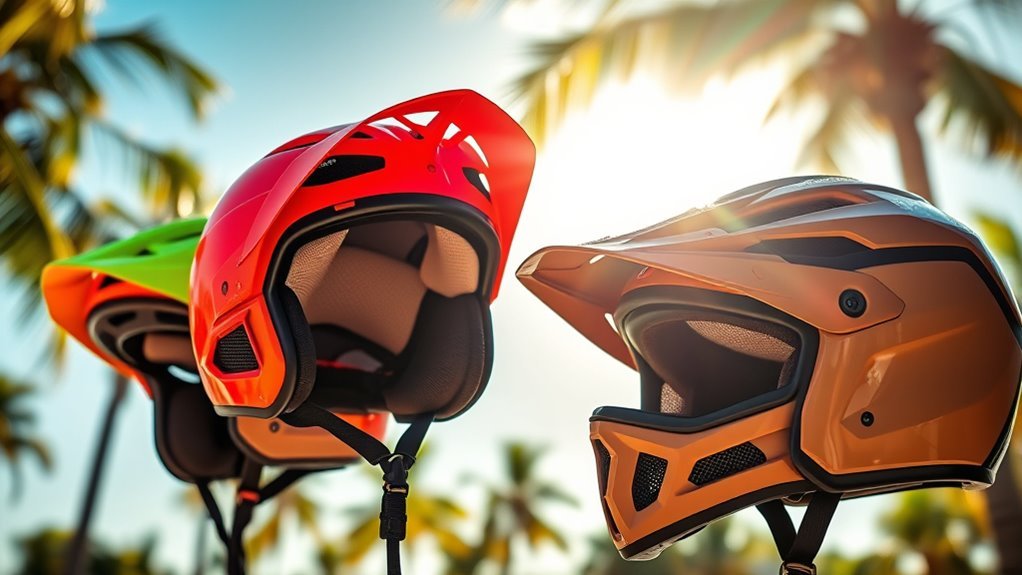
When it comes to choosing a helmet for hot climates, proper ventilation is absolutely essential. You want a helmet that promotes ideal airflow dynamics. Look for designs that feature multiple vents, as these allow hot air to escape while drawing cooler air in. This continuous airflow not only keeps your head cooler but also enhances comfort during long rides. Effective cooling solutions may include internal channels that guide air through the helmet, preventing heat buildup. Additionally, consider materials that wick moisture away, further enhancing your comfort. Investing in a well-ventilated helmet means you can enjoy the freedom of the open road without being bogged down by heat and sweat. Stay cool, stay safe, and ride freely!
Weight Considerations for Comfort
Choosing the right helmet weight can considerably impact your comfort during long rides in hot climates. Lighter helmets often reduce fatigue, allowing you to enjoy that sense of freedom without feeling weighed down. When selecting a helmet, pay attention to the materials used, as they can influence both weight and comfort. Conduct comfort testing by wearing different helmets for short periods to see how they feel.
| Helmet Type | Weight (grams) |
|---|---|
| Lightweight | 250-300 |
| Mid-weight | 300-400 |
| Heavyweight | 400-500 |
| Premium Material | 200-350 |
| Budget Material | 350-450 |
A well-balanced helmet means you can ride longer, enjoying every moment.
Materials That Enhance Breathability
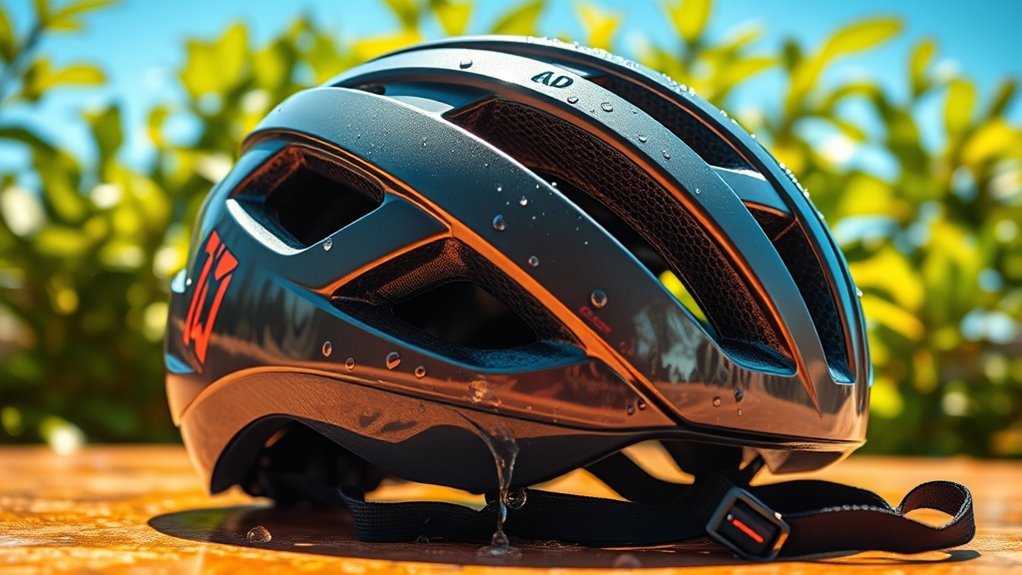
When choosing a helmet for hot climates, it’s crucial to evaluate materials that enhance breathability. Lightweight fabric options, effective ventilation system designs, and moisture-wicking technology can greatly improve airflow and comfort. These features help keep you cool, allowing you to focus on your ride without the distraction of heat buildup.
Lightweight Fabric Options
While the sun blazes overhead, selecting a helmet made from lightweight, breathable fabrics can greatly enhance your comfort during rides in hot climates. Look for helmets featuring breathable liners and innovative cooling technologies that wick away moisture and allow for airflow. Here are some great fabric options to evaluate:
| Fabric Type | Features | Benefits |
|---|---|---|
| Mesh | High airflow, lightweight | Enhances breathability |
| Moisture-wicking | Draws sweat away from skin | Keeps you dry and cool |
| Polyester | Durable and quick-drying | Resists fading and wear |
| Bamboo fiber | Natural antibacterial properties | Eco-friendly and soft |
Choosing the right materials can help you enjoy those long rides while feeling free and cool.
Ventilation System Design
Lightweight fabrics are just one part of the equation; the design of the helmet’s ventilation system plays a significant role in maintaining comfort during hot rides. Look for helmets that incorporate advanced airflow dynamics. These designs channel air through strategically placed vents, allowing hot air to escape while fresh air circulates inside. Some brands utilize innovative cooling technologies, like internal air ducts, which enhance the overall breathability of the helmet. Make sure the helmet fits snugly yet allows for ideal airflow without compromising safety. Helmets featuring removable and washable liners can also help maintain freshness. Ultimately, a well-ventilated helmet not only keeps you cool but also gives you the freedom to enjoy your ride without discomfort.
Moisture-Wicking Technology
Although you might not think about it at first, the materials used in a helmet can greatly impact how well it manages moisture and breathability. Look for helmets that incorporate moisture-wicking technology, as these materials pull sweat away from your skin, keeping you dry and comfortable. Advanced cooling technologies, like mesh liners or breathable foams, enhance airflow and prevent overheating during those sweltering rides. These features not only improve comfort but also promote safety by ensuring you stay focused. When choosing a helmet, prioritize those with high-performance fabrics designed for moisture management. You’ll enjoy a more enjoyable ride, feeling fresh and free as you tackle the open road, no matter how hot it gets.
The Role of Fit and Adjustability
When choosing a helmet for hot climates, the fit is essential for both comfort and safety. You’ll want to guarantee the helmet sits snugly without being overly tight, and adjustable chin straps can help achieve that perfect fit. Additionally, consider ventilation features that enhance airflow while maintaining a secure fit to keep you cool on hot rides.
Importance of Proper Fit
Ensuring your helmet fits properly is essential for both comfort and safety, especially in hot climates where extended wear can lead to discomfort and overheating. Start with a fit assessment to determine your head size accurately, as helmet sizing varies between brands. A well-fitting helmet should sit snugly on your head without being overly tight. You shouldn’t feel any pressure points, and it shouldn’t shift when you move. Remember, a helmet that’s too loose can compromise safety, while one that’s too tight can cause headaches. Take time to try on different styles and sizes, ensuring it aligns with your needs. A proper fit not only enhances comfort but also keeps you safe during your adventures.
Adjustable Chin Straps
A well-designed helmet should include adjustable chin straps, as they play an essential role in achieving a secure fit. The right chin strap types can make all the difference in comfort and safety, especially in hot climates. You’ll want options that allow for easy adjustments to accommodate different conditions or hairstyles.
| Chin Strap Type | Features |
|---|---|
| Buckle System | Simple, one-handed adjustments |
| Ratchet System | Precise fit with quick release |
| Sliding Adjusters | Versatile for various head sizes |
Choosing adjustable designs means you can customize the fit, enhancing your riding experience. A secure helmet keeps you safe and gives you the freedom to enjoy your adventures without distractions.
Ventilation Features Needed
Finding the right helmet isn’t just about the chin strap; ventilation features are equally important, especially in hot climates. You’ll want a helmet designed with superior airflow dynamics that allow air to circulate freely, minimizing heat buildup. Look for models with strategically placed vents that promote efficient cooling technology. These vents help direct airflow across your head, reducing sweat and enhancing comfort during long rides. Additionally, a good fit is essential; adjustable padding can help you achieve a snug fit while still allowing for airflow. Opt for helmets featuring moisture-wicking liners that work in tandem with ventilation systems, ensuring you stay cool and dry. Remember, a well-ventilated helmet can make your rides in the heat far more enjoyable.
Sweat Management Features
When it comes to selecting a helmet for hot climates, effective sweat management features can make all the difference in comfort and performance. Look for helmets with advanced sweat absorption materials that wick moisture away from your skin, keeping you dry and focused. Cooling liners are another essential feature; they help regulate temperature and enhance airflow, ensuring you stay comfortable during long rides. Many helmets also incorporate anti-microbial properties in their liners, preventing unpleasant odors and bacteria build-up. Make sure the helmet’s fit allows for easy adjustment, so you can find that perfect balance between snugness and airflow. Prioritizing these features will not only improve your riding experience but also give you the freedom to enjoy your time outdoors, no matter how hot it gets.
UV Protection in Helmet Design
While you might focus on comfort and fit when choosing a helmet for hot climates, UV protection is equally essential for safeguarding your skin and eyes from the sun’s harmful rays. Look for helmets that offer UV resistance, which can help prevent skin damage and reduce glare while riding. Many helmets come with specialized helmet coatings that enhance UV protection, ensuring that the materials won’t degrade under prolonged sun exposure. When you’re out in the heat, a helmet designed with UV shielding can keep you feeling freer and more confident. Don’t compromise on this aspect—prioritize a helmet that not only fits well but also provides the necessary protection against the sun, allowing you to enjoy your ride without worry.
Additional Safety Standards to Consider
Although comfort and fit are essential, you shouldn’t overlook the importance of safety standards when choosing a helmet for hot climates. Confirming your helmet meets specific safety certifications can greatly enhance your protection on the road. Here are a few key standards to take into account:
- DOT (Department of Transportation): Confirms helmets meet minimum safety requirements for impact resistance.
- ECE (Economic Commission for Europe): Offers rigorous testing standards, particularly for impact performance.
- Snell Memorial Foundation: Provides advanced testing for higher levels of impact resistance.
Frequently Asked Questions
Can I Wear a Hat Underneath My Helmet for Extra Sun Protection?
You can wear a hat underneath your helmet for extra sun protection, but it might affect helmet comfort. Make sure the hat fits snugly and doesn’t interfere with the helmet’s fit. A lightweight, moisture-wicking cap can be a great option, keeping you cool while providing an extra layer against the sun. Just remember, safety should come first—ensure the helmet still fits correctly and meets safety standards for maximum protection.
How Do I Clean and Maintain My Helmet in Hot Weather?
To clean and maintain your helmet in hot weather, use gentle cleaning techniques. Wipe the exterior with a damp cloth and mild soap, avoiding harsh chemicals. For the interior, remove any padding if possible and wash it separately. Let everything air dry completely, as moisture can lead to odor and mold. Regularly check for cracks or wear, and replace your helmet if you notice any damage to guarantee your safety and comfort while riding.
Are There Specific Brands Known for Hot Climate Helmets?
Choosing a helmet for hot climates is like finding a reliable ally in a desert: you need the right features to stay cool and protected. Brands like Bell, Giro, and Specialized are known for their ventilated designs and lightweight materials, ideal for sweltering temperatures. Look for helmets with moisture-wicking padding and ample airflow channels. These features not only enhance comfort but also keep you feeling free and focused on the ride ahead.
What Is the Lifespan of a Helmet in Hot Conditions?
In hot conditions, a helmet’s lifespan can be greatly affected by temperature effects on helmet materials. Typically, you can expect a helmet to last about 3 to 5 years, but extreme heat can degrade materials faster. UV rays and high temperatures may weaken the shell and foam, compromising safety. Regularly inspect your helmet for any signs of wear and replace it if you notice cracking or fading, ensuring you stay protected while enjoying your freedom.
Can a Helmet Be Too Ventilated and Compromise Safety?
Imagine cruising down the road, wind in your hair, but feeling secure under your helmet. While ventilation is essential for comfort in hot weather, too much can compromise safety. Helmets with excessive openings might not absorb impact as effectively, risking injury. It’s important to choose quality materials that balance ventilation and protection. Look for designs that optimize airflow while maintaining structural integrity, ensuring you stay cool without sacrificing safety on your adventures.
References
- https://www.cdc.gov/niosh/topics/heatstress/default.html
- https://www.nhtsa.gov/equipment/helmets
- https://www.helmets.org/
- https://www.ama-assn.org/delivering-care/public-health/heat-related-illness
- https://www.mayoclinic.org/healthy-lifestyle/fitness/in-depth/helmets/art-20045349
- https://www.ncbi.nlm.nih.gov/pmc/articles/PMC4553918/
- https://www.cpsc.gov/safety-education/safety-guides/bicycles/helmet-safety-tips
- https://www.webmd.com/children/what-to-know-about-helmets
- https://www.healthychildren.org/English/safety-prevention/on-the-go/Pages/Choosing-and-Using-a-Bike-Helmet.aspx