How to Protect Your Helmet From UV Damage
To protect your helmet from UV damage, choose materials like fiberglass for better longevity against sun exposure. Use a UV-resistant helmet cover to shield against direct sunlight and minor impacts. Store your helmet indoors in a cool, dry place away from sunlight and moisture. Regularly maintain it by cleaning with mild soap, inspecting for cracks, and washing padding according to recommendations. There are additional accessories to contemplate that can further enhance your helmet’s UV protection.
Understanding UV Damage and Its Effects on Helmets
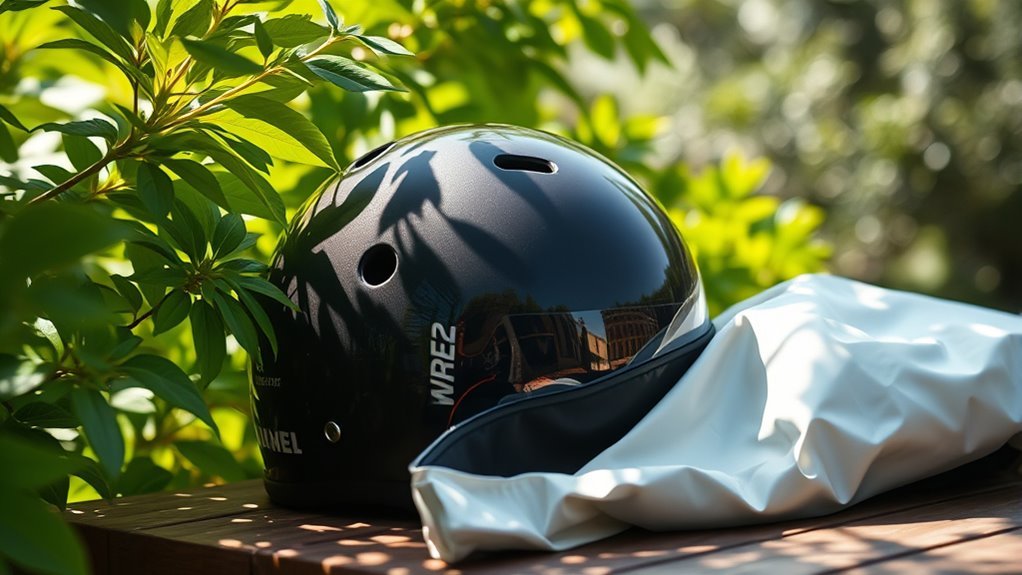
While you might not realize it, ultraviolet (UV) radiation from the sun can greatly degrade your helmet over time. This exposure weakens the materials, leading to a reduction in structural integrity and overall helmet lifespan. UV radiation can cause the outer shell to become brittle, which increases the risk of cracks and compromises its protective capabilities. Additionally, the foam liner inside your helmet can also deteriorate, diminishing shock absorption efficiency. Regular exposure to UV light can result in color fading, impacting visibility. To guarantee your helmet remains effective, consider storing it in a shaded area when not in use and using UV-resistant covers. Understanding these effects is essential for maintaining your helmet’s reliability and guaranteeing your safety while enjoying your freedom outdoors.
Choosing the Right Helmet Material
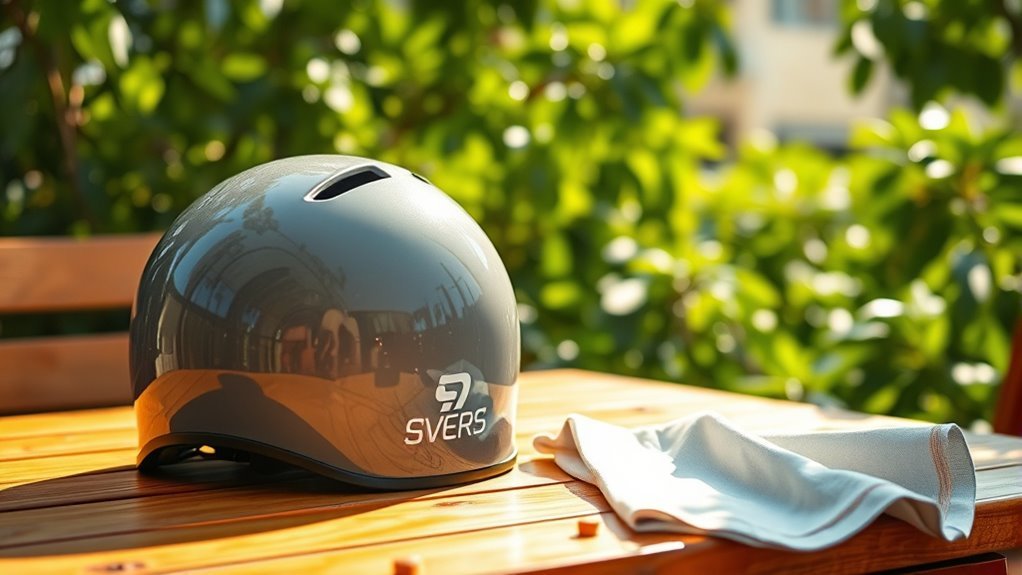
When selecting a helmet, understanding the materials used in its construction is essential for guaranteeing ideal protection and durability. Polycarbonate helmets are popular for their lightweight nature and impact resistance, making them a solid choice for those valuing comfort without compromising safety. However, if you’re seeking enhanced strength, fiberglass options provide superior rigidity and can withstand significant impacts, offering long-lasting protection. Keep in mind that while polycarbonate helmets may be more affordable, fiberglass options often come with improved longevity, especially when exposed to UV rays. Ultimately, choosing the right material depends on your riding style and the level of protection you need. Make an informed decision to guarantee your helmet serves you well on all your adventures.
Using UV-Resistant Helmet Covers
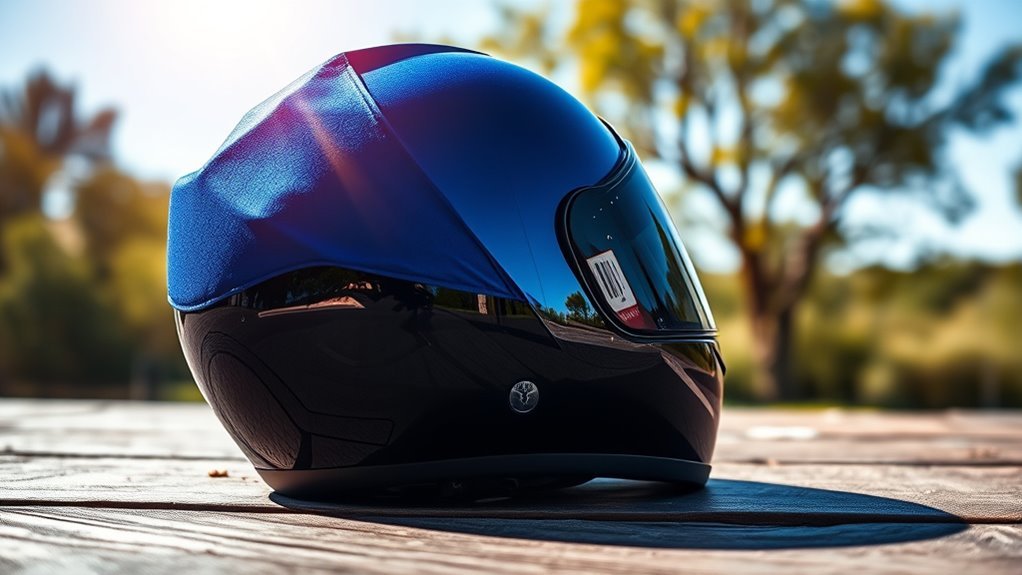
To extend the lifespan of your helmet and protect it from harmful UV rays, using a UV-resistant helmet cover is an effective solution. There are various helmet cover types designed specifically for this purpose, including lightweight fabric covers and more robust, hard-shell options. These covers not only shield your helmet from sun exposure but also provide additional benefits, such as protection from scratches and minor impacts. When selecting a cover, look for materials with high UV protection ratings to guarantee maximum effectiveness. By integrating a UV-resistant helmet cover into your gear, you’re not just prolonging the life of your helmet; you’re also enhancing your riding experience, knowing you’re safeguarded against the elements while enjoying your freedom on the road.
Storing Your Helmet Properly
Properly storing your helmet is essential for maintaining its integrity and protecting it from environmental factors that can cause damage. For ideal helmet storage, place it in a cool, dry location indoors, away from direct sunlight and heat sources. Avoid leaving it in damp or humid areas, as moisture can weaken the materials over time. Consider using a dedicated helmet bag for additional protection against dust and scratches. Make sure that the helmet isn’t placed under heavy objects that could distort its shape. If possible, store it on a shelf or hook, allowing for proper ventilation. By following these guidelines for indoor placement, you’ll help extend the lifespan of your helmet and keep it ready for your next adventure.
Regular Maintenance and Cleaning Tips
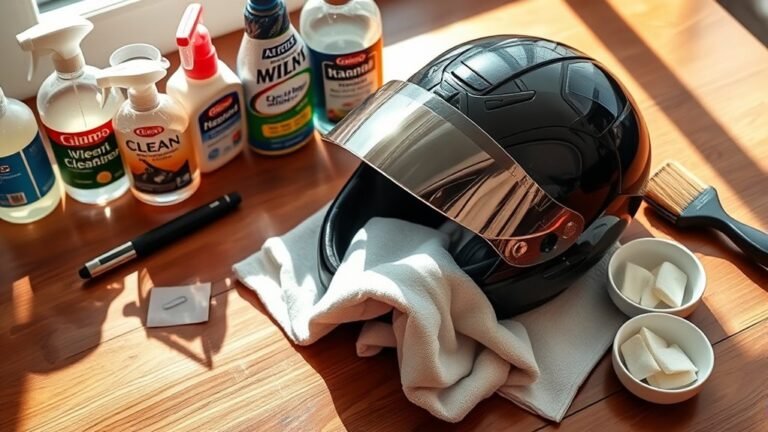
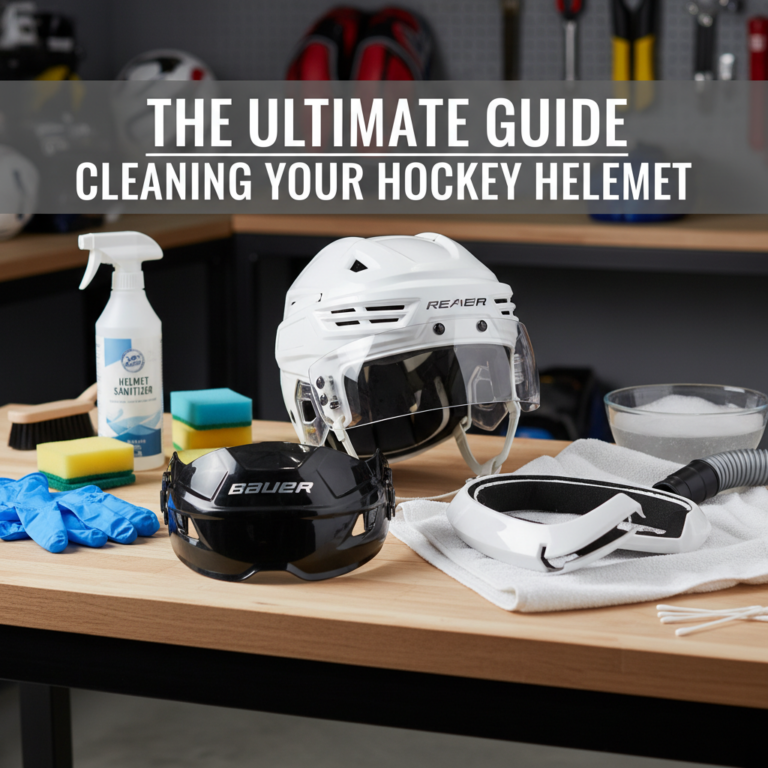
Although helmets are designed for durability, regular maintenance and cleaning are crucial for guaranteeing their longevity and performance. Implementing effective cleaning techniques is essential; use a soft cloth with mild soap and water to remove dirt and grime. Avoid harsh chemicals that can degrade the materials. Establish a maintenance schedule, checking for any cracks or wear at least once a month. Pay special attention to the interior padding, which can harbor sweat and bacteria. If necessary, remove and wash it according to the manufacturer’s instructions. Regular inspections and cleanings not only enhance your helmet’s lifespan but also provide maximum protection, allowing you to ride with peace of mind and freedom.
Additional Accessories for UV Protection
While maintaining your helmet is essential, using additional accessories can provide an extra layer of UV protection. Consider applying UV shielding sprays specifically designed for helmet materials. These sprays create a protective barrier that absorbs harmful UV rays, extending your helmet’s lifespan. Furthermore, investing in helmet visors is another effective strategy. Visors not only shield your eyes from the sun but also reduce UV exposure to your helmet’s outer surface. Look for visors with built-in UV protection to maximize effectiveness. Combining these accessories with regular maintenance will guarantee your helmet remains in peak condition, allowing you to enjoy the freedom of your rides without worrying about UV damage. Stay safe and protect your gear for many adventures ahead!
Frequently Asked Questions
Can UV Damage Affect the Helmet’s Safety Features?
Yes, UV exposure can greatly affect your helmet’s safety features. Just like the sun can fade vibrant colors, prolonged UV exposure weakens helmet material resilience. Over time, the structural integrity may diminish, compromising its protective capabilities. It’s essential to monitor any signs of wear, as even minor degradation can jeopardize your safety in an accident. Staying proactive about UV protection guarantees your helmet remains a reliable guardian on your rides, giving you the freedom you seek.
How Often Should I Replace My Helmet Due to UV Damage?
You should replace your helmet every 3 to 5 years, as UV damage can considerably shorten its lifespan. Even if it looks fine externally, the materials may degrade over time, impacting safety features. Regular inspections for cracks or fading can help determine if it’s time for a replacement. Staying proactive about your helmet’s condition guarantees you maintain ideal protection and enjoy your rides with confidence and freedom.
Are There Specific Brands Known for Uv-Resistant Helmets?
Yes, there are several UV-resistant brands that design helmets with advanced materials to withstand sun exposure. Brands like Bell, Giro, and Shoei utilize polycarbonate and fiberglass composites, which enhance durability and UV resistance. When choosing a helmet, look for those specifically labeled as UV resistant, as these will offer better protection against degradation from sunlight. Investing in these options guarantees your helmet maintains its integrity, giving you the freedom to ride confidently.
Does Helmet Color Influence UV Damage?
Absolutely, helmet color can influence UV damage. Darker colors tend to absorb more UV radiation compared to lighter shades. This increased UV absorption can lead to quicker degradation of the helmet’s materials. If you’re looking to protect your noggin, consider opting for a lighter-colored helmet, as it reflects more UV rays, thereby extending its lifespan. It’s a simple yet effective choice for those who value their freedom and safety on the road.
Can I Use Sunscreen on My Helmet?
You shouldn’t use sunscreen on your helmet, as it can damage the materials. Many helmets are made from plastics or composites that can degrade when exposed to certain chemicals in sunscreen. Instead, consider applying a UV protectant specifically designed for helmet materials. This guarantees you’re protecting your gear without compromising its integrity. Always check the manufacturer’s guidelines for suitable products to maintain your helmet’s performance and lifespan.
References
- https://www.cdc.gov/niosh/topics/respirators/uv.html
- https://www.nhtsa.gov/equipment/helmets
- https://www.safecar.gov/
- https://www.helmets.org/
- https://www.cpsc.gov/
- https://www.ncbi.nlm.nih.gov/pmc/articles/PMC5064334/
- https://www.ansi.org/
- https://www.uvguide.co.uk/
- https://www.aap.org/en-us/about-the-aap/Committees-Councils/Sections/Section-on-Transportatio/Pages/Helmet-Use.aspx