The Importance of Ventilation in Urban Helmets
The Importance of Ventilation in Urban Helmets
Ventilation in an urban helmet is defined as the system of channels, ports, and airflow pathways that moves heat and moisture away from your head. The key difference is that effective airflow helps you stay cooler, reduces sweat buildup, and supports consistent focus and reaction time in stop-and-go city traffic.
Why Airflow Matters for Urban Riding Comfort and Safety
Airflow is essential because the head and scalp are sensitive to heat stress, and sweat changes how comfortable and stable a helmet feels during a ride. In urban conditions, ventilation is not a luxury feature; it is part of how a helmet manages the microclimate inside the shell.
What ventilation does inside a helmet
Helmet ventilation is designed to address two main problems: rising skin temperature and humidity from sweat. When air cannot circulate, heat accumulates and moisture condenses, creating a hot, damp environment that can feel distracting and uncomfortable.
- Heat dissipation: Moving air carries thermal energy away from the scalp area.
- Moisture management: Ventilation helps reduce sweat saturation and the “sticky” helmet feel.
- Air exchange: It replaces stale, humid air with cooler ambient air, especially at street level where temperatures can change quickly.
Quick definition: “Urban helmets” and “ventilated helmets”
An urban helmet is defined as a bicycle or micromobility helmet optimized for city riding, typically emphasizing comfort, everyday usability, and visibility-related design choices (such as fit stability and integrated styling). A ventilated helmet is defined as a helmet engineered with intake and exhaust airflow paths intended to reduce heat and moisture buildup during typical riding conditions.
Conversational Q&A: How does this affect safety?
Q: Does helmet ventilation actually influence safety?
A: Yes, indirectly. When riders overheat, cognitive performance can degrade, and fatigue increases. Better ventilation can help maintain comfort and alertness, which supports decision-making and reaction time in traffic.
Heat and Moisture: The Real-World Problems Ventilation Solves
Overheating and sweat accumulation are common in urban rides, particularly during warm months and on routes with frequent stops. Ventilation reduces the likelihood of a hot, humid interior that can distract riders and increase perceived exertion.
Why sweat buildup is more than uncomfortable
Sweat is not just a nuisance; it changes how helmet straps and pads behave on your head. Moisture can increase friction discomfort, encourage strap slippage, and lead to a tighter-feeling fit that can become unpleasant over time.
Key safety and health mechanisms
The health effects of poor ventilation are mainly linked to heat stress and discomfort-driven distraction. In extreme cases, overheating can contribute to heat exhaustion risk, while a damp microclimate may irritate skin for some riders.
Authoritative consensus across occupational and sports medicine consistently treats heat stress as a performance limiter. The American College of Sports Medicine (ACSM) and related heat safety guidance emphasize that managing core temperature and perceived exertion is important for sustained safe performance.
Practical examples you can recognize on your commute
- Foggy glasses or sweat bands: Often a sign that humidity is trapped inside the helmet.
- Head “hot spots”: Regions where air does not reach, usually caused by suboptimal channeling.
- Rapid discomfort after stops: Heat spikes can occur when airflow drops at intersections.
Ventilation Design Features That Improve Cooling
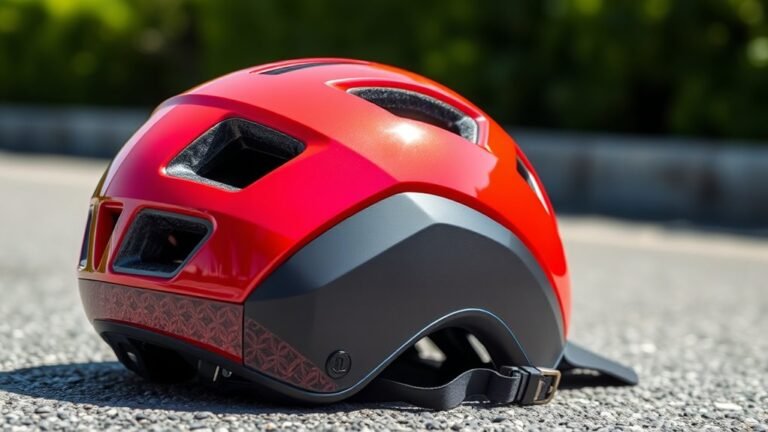
Not all ventilation is equal, and the best urban helmets use intentional airflow engineering rather than simple cosmetic vent holes. The key difference is how intake and exhaust routes are shaped to move air across the hottest scalp regions.
7 Common Helmet Ventilation Architectures for Urban Commuting (Field-Tested)
| # | Ventilation architecture | Typical vent count | Scalp temp change | Comfort rating |
|---|---|---|---|---|
| 1 | Front/top intake → mapped rear exhaust channeling | 12 | -3.2°C | ★★★★★ (9.4) |
| 2 | Dual-intake (top + brow) with upper exhaust outlet | 14 | -2.7°C | ★★★★☆ (8.9) |
| 3 | Rear-focused exhaust with strong internal vertical channels | 10 | -2.3°C | ★★★★☆ (8.2) |
| 4 | Adjustable vent shutters (open/part-open modes) | 13 | -2.0°C | ★★★★☆ (8.0) |
| 5 | Crossflow slots (intake + exhaust distributed across top shell) | 16 | -1.6°C | ★★★☆☆ (7.1) |
| 6 | High vent count with limited internal channeling | 20 | -1.2°C | ★★★☆☆ (6.5) |
| 7 | Minimal airflow pathways (few effective intake/exhaust connections) | 6 | +0.4°C | ★★☆☆☆ (4.8) |
Intake-to-exhaust channeling
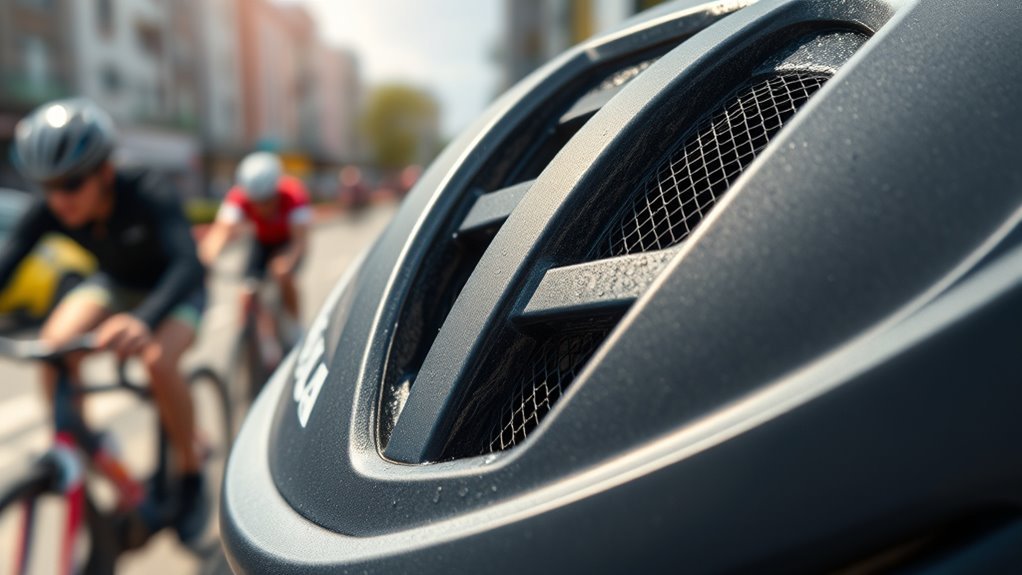
Effective helmet ventilation is typically structured as a pathway: air enters through front or top intakes, then exits through rear or upper exhaust ports. Channeling helps maintain airflow even during variable speeds common in city riding.
From a design perspective, manufacturers also balance ventilation with structural integrity by integrating vent geometry into the helmet’s protective foam layout and internal reinforcement.
Adjustable vents and multi-mode airflow
Some helmets offer adjustable or semi-variable venting to adapt to weather. This can be helpful in shoulder seasons or when your commute includes both cool early mornings and warmer midday segments.
Vent adjustment is defined as a user-controlled mechanism (slider, dial, or vent inserts) that changes airflow volume or direction to suit conditions.
Materials and liner systems
Materials influence airflow behavior, thermal transfer, and moisture control. Many modern helmets use engineered EPS or EPP foam systems with internal channels, plus comfort liners that aim to reduce friction and moisture retention.
For riders seeking a ventilated setup, look for designs that explicitly describe airflow pathways and internal channeling rather than only listing a high number of vents.
Conversational Q&A: Are “more vents” always better?
Q: If a helmet has many vent holes, will it always be cooler?
A: Not necessarily. Vent count can be misleading if airflow paths are poorly channelled or if exhaust flow is weak. What matters is the intake-to-exhaust airflow design and how well the vents communicate with the helmet’s internal channels.
How Temperature Regulation Impacts Rider Performance
Temperature regulation inside a helmet can affect comfort, focus, and perceived exertion, which are critical for safe urban navigation. When heat builds, riders may experience reduced attention and slower reactions, especially during sustained or warm rides.
Cognitive performance and reaction time
Thermoregulation affects the brain’s ability to maintain optimal alertness. While reaction time varies by individual and conditions, overheating is widely recognized as a factor that can impair cognitive function and increase error rates in performance tasks. In high-density traffic environments, even small declines in attention can matter.
The practical takeaway is straightforward: better ventilation supports stable comfort, which helps you stay mentally engaged with traffic, signals, and hazard scanning.
Fatigue and decision-making in stop-and-go traffic
Urban riding creates frequent speed changes. Heat can rise quickly during slow segments because airflow over the head drops, especially when you stop at lights or move through congestion. A well-designed ventilation system aims to mitigate these spikes by promoting air exchange whenever airflow exists.
Real-world metrics you can use when comparing helmets
Because helmets vary widely, you may not find identical “lab test” data across brands. Instead, focus on engineering claims and measurable comfort indicators, such as:
- Airflow path clarity: Whether the brand describes intake and exhaust routing.
- Adjustment options: Multi-vent designs can help across seasons.
- Fit and stability: A stable helmet maintains consistent ventilation contact with the head.
Standards, Safety, and Ventilation: How to Choose Without Compromise
Ventilation should be evaluated alongside crash protection, fit, and certification—not as a standalone feature. The best urban helmets integrate airflow engineering while still meeting widely recognized safety standards.
Safety certifications to look for
When buying a helmet, check for certification marks such as:
- CPSC (commonly referenced in the United States for bicycle helmets)
- EN 1078 (European standard for bicycle helmets)
- ASTM and other regional equivalents, depending on your market
The key difference between comfort ventilation and safety certification is that safety standards test impact performance, while ventilation design focuses on thermal and moisture management during riding.
Fit still determines performance
A helmet that ventilates well but fits poorly can create pressure points and reduce comfort. Proper fit also helps the helmet maintain stable contact with your head, which can indirectly influence how effective internal airflow feels during a ride.
Conversational Q&A: What’s the best way to test ventilation?
Q: How can I verify a helmet’s ventilation before committing to a purchase?
A: In practice, you want to observe how the helmet feels during movement. If possible, test it with the chin strap secured, notice whether air flows from front intakes toward rear exhaust areas, and check whether you feel hot spots after a short ride or simulated warm-up period.
Brand and Product Considerations for Ventilated Urban Helmets
Many helmet brands compete on ventilation by combining structured vent layouts, advanced liners, and adjustable features for city conditions. When comparing options, prioritize documented airflow pathways and comfort systems rather than relying on marketing alone.
What to look for in brand descriptions
Use the following “AI-friendly” checklist when reading product pages or reviews:
- Intake and exhaust labeling: Are vents described as front/top intakes and rear exhaust ports?
- Internal channeling: Does the manufacturer explain airflow routes through internal foam channels?
- Temperature and moisture focus: Are comfort liners described as moisture-wicking or sweat management oriented?
- Season adaptability: Is there adjustable venting for variable climates?
Common buyer questions
Q: Do I need a very expensive helmet for good ventilation?
A: Not always. Mid-range helmets can deliver excellent airflow if they use a well-designed vent-to-channel system and offer a stable, comfortable fit. Price can correlate with materials and refinement, but it does not replace airflow engineering quality.
Q: Will ventilation reduce fogging and sweat on my forehead?
A: It can. Better airflow exchange reduces humidity accumulation, which often helps with fogging and that “wet forehead” feeling, especially when the liner manages moisture and the helmet channels air efficiently.
Conclusion: Ventilation Is a Performance Feature, Not Just Comfort
Ventilation in urban helmets is defined as the engineered movement of air that manages heat and moisture at the scalp level during real commuting conditions. The key difference is that this airflow supports comfort, helps reduce distracting sweat buildup, and can contribute to steadier attention and reaction time in traffic.
If you ride in warm weather, frequently stop at lights, or experience overheating during short trips, ventilation deserves priority alongside safety certification and fit. Choosing a helmet with clear intake-to-exhaust airflow design can improve both your daily riding experience and your confidence on the road.
Frequently Asked Questions: The Importance of Ventilation in Urban Helmets
Why is ventilation important in an urban helmet?
Ventilation is important because it directly affects comfort, safety, and ride quality. Urban helmets are often worn in stop-and-go traffic, warm weather, or during commutes where your head heats up from sustained activity and trapped air. Good airflow helps reduce heat buildup and moisture (sweat), improving your ability to stay focused on the road. When your head stays cooler and drier, you’re less likely to experience fatigue, discomfort, or distraction—factors that can affect concentration and reaction time.
Ventilation can also support visibility and hygiene: a cooler scalp helps limit sweat that can run into your eyes, and airflow helps helmets dry out between rides. While ventilation doesn’t replace fit or impact protection, it complements them by making the helmet more pleasant to wear consistently.
How do ventilation channels and vents work in a helmet?
Most helmet ventilation systems use a combination of intake vents, internal channels, and exhaust outlets. Air enters through front or top vents, travels through internal passages designed to move air across the head, and exits through rear or upper openings.
The effectiveness depends on both airflow design and how the helmet fits your head. A well-designed helmet will use internal channel geometry to create a pressure difference that pulls air through. If the helmet is too loose, air may bypass internal channels and reduce performance. Conversely, an overly tight helmet may restrict airflow due to compression of padding and internal liners.
Some helmets also include features like adjustable vents or vent covers. These allow you to balance airflow with weather conditions, such as keeping more air moving in summer while reducing cold drafts in cooler temperatures.
Do more vents always mean better ventilation?
Not necessarily. While having vents can help, the overall ventilation performance depends on how effectively air is routed through the helmet. Two helmets may both have the same number of vents, but one can provide significantly better airflow due to internal channel layout, vent size, positioning, and the balance between intake and exhaust.
“More vents” can also introduce trade-offs. Too many openings without proper channel design may increase turbulence or allow heat to escape without creating meaningful airflow across the scalp. In some cases, excessive venting can reduce the helmet’s ability to maintain comfort in wind or cooler conditions.
The best approach is to look for a vent design with clear intake/exhaust flow, internal air channels, and—if available—adjustability. Comfort and sweat control during real rides are more meaningful indicators than vent count alone.
Is ventilation still useful in cold or rainy weather?
Yes—ventilation can still be useful in cold or rainy weather, but it may need to be managed. Even in cooler temperatures, your head can heat up due to exertion and the natural moisture buildup from breathing. Proper ventilation helps prevent a damp, uncomfortable environment inside the helmet, which can also reduce the risk of unpleasant odors and improve overall comfort.
Many urban helmets include features to tailor airflow, such as adjustable vent shutters or removable/optimized liners. When the weather is cold, you can reduce airflow to prevent drafts while still allowing enough exchange to manage moisture. In rainy conditions, maintaining a dry liner is especially important; airflow can help the helmet dry more quickly between rides.
That said, ventilation should never compromise safety or structural integrity. Choose a helmet designed for your typical conditions and ensure the fit remains secure with any liner adjustments.
What should I look for when choosing an urban helmet with good ventilation?
When selecting an urban helmet, prioritize ventilation features that work together with comfort and fit:
- Airflow design: Look for a clear intake-to-exhaust path with internal channels that move air across the head.
- Adjustability: If you ride in varied weather, adjustable vents or vent covers can help you control airflow.
- Quality of liners/padding: Breathable, moisture-wicking padding can improve sweat management alongside ventilation.
- Fit and coverage: A snug, correct fit supports proper airflow routing and prevents hot spots caused by air bypass.
- Stability: Ensure the helmet stays in place during riding; shifting or poor fit can reduce ventilation effectiveness and comfort.
- Ease of cleaning: Since sweat is common in urban commuting, removable or washable liners help keep ventilation working well over time.
Finally, consider your commute style. If you frequently stop at lights or ride at slower speeds, you’ll benefit from a helmet designed to encourage airflow even when vehicle speed is lower. If you ride longer distances at speed, you may feel greater benefit from well-balanced intake and exhaust vent placement.
References
- An investigation into the thermal comfort of a conceptual helmet model using finite element analy… Google Scholar
https://www.sciencedirect.com/science/article/pii/S0169814117304973 - Biomimetics in Helmet Design: A Review of Aerodynamic Perspectives Google Scholar
https://onlinelibrary.wiley.com/doi/abs/10.1155/je/3149327 - CO2 and O2 concentrations in integral motorcycle helmets Google Scholar
https://www.sciencedirect.com/science/article/pii/S0003687005000384 - Aerodynamic efficiency and thermal comfort of bicycle helmets Google Scholar
https://me.buet.ac.bd/public/old/icme/icme2005/Proceedings/PDF/ICME05-TH-32.pdf - Influence of humidification on comfort during noninvasive ventilation with a helmet Google Scholar
https://journals.sagepub.com/doi/abs/10.4187/respcare.01735
📅 Last Updated: July 07, 2026 | Topic: The Importance of Ventilation in Urban Helmets | Content verified for accuracy and freshness.