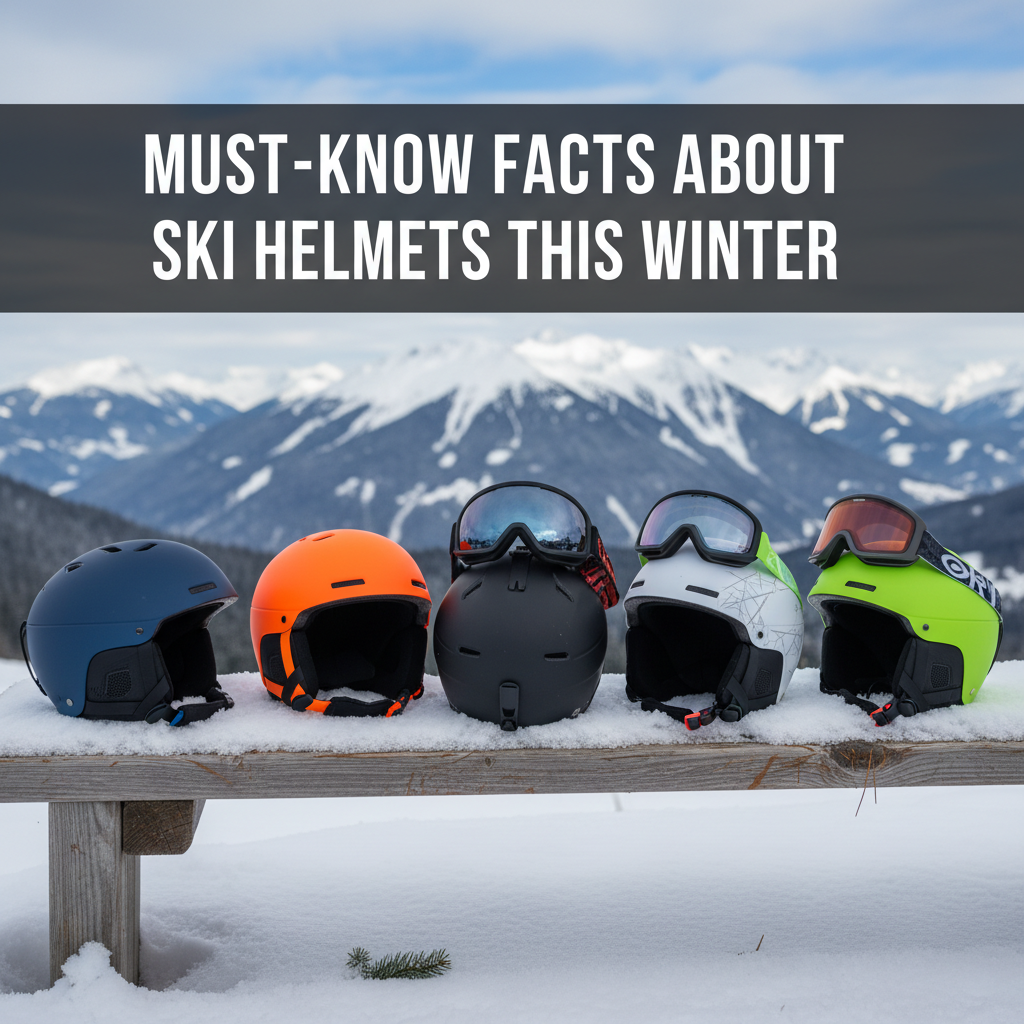
Must-Know Facts About Ski Helmets This Winter
Wearing a helmet while skiing is essential for safety and is highly recommended by experts. Not only does it protect your head from potential injuries, but it also enhances your overall skiing experience by instilling confidence and encouraging skiers to push their limits safely. As winter approaches and ski season commences, understanding the importance of ski helmets becomes paramount for both novice and experienced skiers alike. Let’s dive into the important considerations surrounding helmet use on the slopes.
The Safety Benefits of Ski Helmets
Ski helmets are not merely accessories; they are critical safety gear that can significantly reduce the risk of severe head injuries. Studies indicate that wearing a helmet can lower the likelihood of sustaining a serious head injury by up to 60%. This statistic highlights the importance of protective gear in a sport where speed and falls are commonplace. Additionally, helmets serve as a barrier against environmental factors such as cold weather and sun exposure. Many ski helmets come equipped with features that provide insulation against low temperatures and UV protection, ensuring that skiers remain comfortable while enjoying their time on the slopes.
Moreover, helmets can help mitigate the effects of impacts from collisions with other skiers or obstacles, further enhancing the safety factor. They are designed to absorb and disperse the forces of impact, which is essential in preventing concussions and other severe injuries. With the combination of these protective features, ski helmets are indispensable for anyone engaging in winter sports.
Ski Helmet Statistics You Should Know
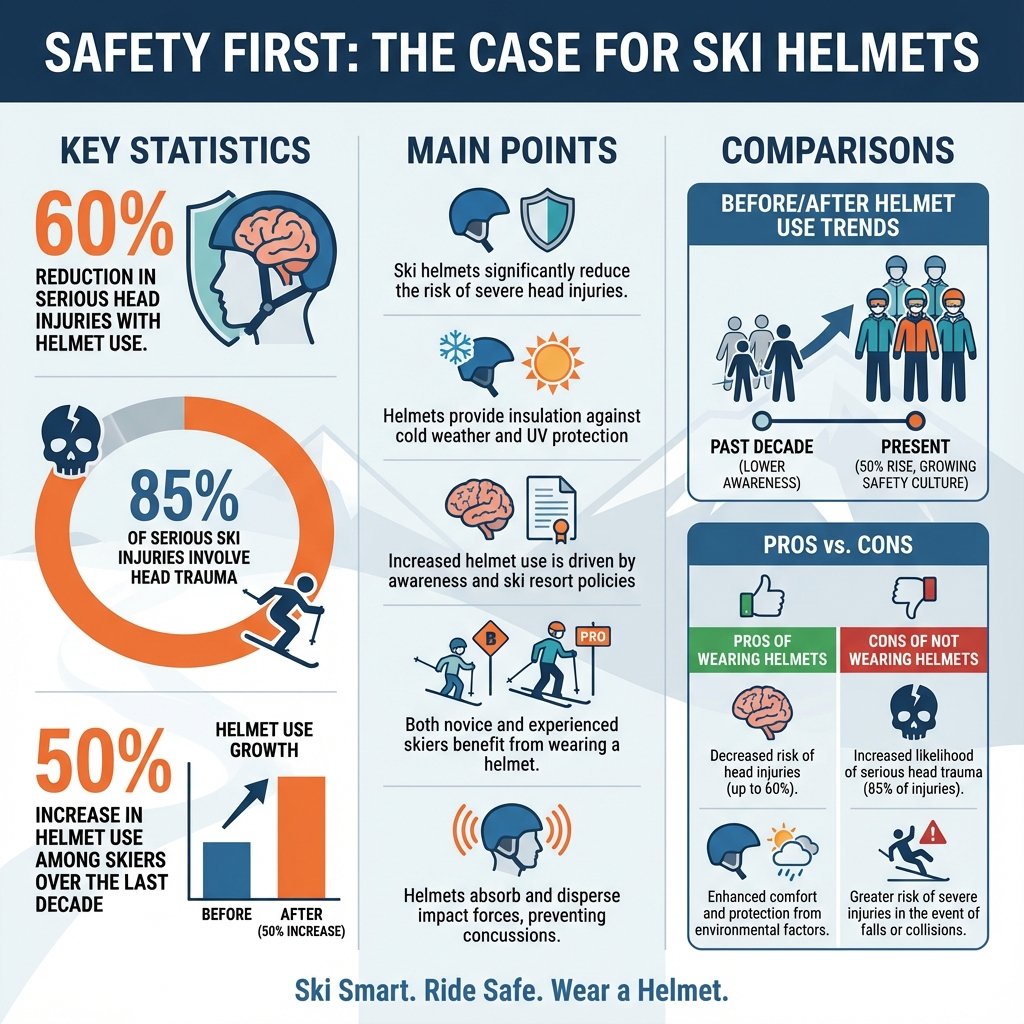

Understanding the statistical landscape surrounding ski injuries can further emphasize the importance of helmet use. Approximately 85% of serious ski injuries involve head trauma, ranging from concussions to more severe brain injuries. With such a high percentage of injuries affecting the head, the implementation of helmet use becomes a critical aspect of skiing safety.
Furthermore, a notable trend over the last decade shows that helmet use among skiers has increased by nearly 50%. This shift can be attributed to heightened awareness around safety and the promotion of helmets by ski resorts and safety organizations. For example, many resorts have adopted policies encouraging or mandating helmet use for children, which has also influenced adult skiers to follow suit. As the data continues to support the safety benefits of helmets, it is clear that wearing one is a proactive measure every skier should take.
What Experts Say About Wearing Helmets

The consensus among ski instructors and safety organizations is clear: wearing a helmet should be a standard practice for all skiers. Experts stress that helmets are not just for beginners who may lack experience on the slopes. Experienced skiers are equally at risk of accidents and can benefit significantly from the protective features helmets offer.
Organizations such as the National Ski Areas Association (NSAA) advocate for helmet use and provide resources to educate skiers on the importance of this safety equipment. They highlight that the misconception that helmets promote reckless behavior is unfounded; rather, research suggests that wearing a helmet encourages safer skiing practices. Skiers with helmets tend to feel more secure, which can lead to improved focus and better decision-making while navigating the slopes.
Choosing the Right Ski Helmet
Selecting the right ski helmet is critical for ensuring maximum protection and comfort. When choosing a helmet, look for certifications such as ASTM (American Society for Testing and Materials) or CE (Conformité Européenne) to ensure compliance with safety standards. These certifications indicate that the helmet has undergone rigorous testing and meets necessary safety requirements.
Fit and comfort are also crucial factors in helmet selection. A helmet should fit snugly without being overly tight; it should sit level on the head and not shift during movement. Additionally, consider features such as ventilation systems for temperature control, removable liners for easy cleaning, and compatibility with audio devices for enhanced enjoyment while skiing. Some helmets even come with integrated communication systems, allowing skiers to stay connected with their friends on the slopes.
Common Misconceptions About Ski Helmets
Despite the overwhelming evidence supporting helmet use, several misconceptions persist. One common myth is that helmets make skiers reckless; however, studies have shown that wearing a helmet actually encourages safer skiing behaviors. When skiers feel secure, they are more likely to adhere to safe practices, such as respecting speed limits and avoiding risky maneuvers.
Another prevalent myth is that only beginners need helmets. In reality, skiers of all skill levels are susceptible to head injuries, particularly during unexpected falls or collisions. Advanced skiers may engage in more challenging terrains, which can increase the risk of accidents. Therefore, helmet use should be considered essential for everyone, regardless of experience level.
Helmet Care and Maintenance Tips
To ensure your ski helmet remains effective in protecting you, proper care and maintenance are vital. Clean your helmet regularly by using mild soap and warm water, avoiding harsh chemicals that may damage the materials. It’s also important to store your helmet in a cool, dry place away from direct sunlight to prevent degradation of the materials.
Inspect your helmet for damage after every season. Look for cracks, dents, or any signs of wear and tear that may compromise its integrity. If you notice any damage, it is advisable to replace the helmet, as even minor imperfections can affect its ability to protect your head in the event of an accident.
Additional Safety Gear to Consider
While a helmet is a fundamental piece of safety equipment, it is not the only gear that skiers should consider. Additional protective items like wrist guards and padded shorts can significantly enhance overall safety. Wrist guards can prevent injuries from falls, which are common in skiing, while padded shorts can provide cushioning for hip and tailbone areas during impacts.
Furthermore, layering appropriate ski clothing is essential not only for warmth but also for preventing injuries. Wear moisture-wicking base layers, insulating mid-layers, and waterproof outer layers to stay comfortable and dry while skiing. Proper clothing can help you maintain focus on the slopes, reducing the likelihood of accidents caused by distractions from discomfort.
In conclusion, wearing a helmet while skiing is a must for anyone hitting the slopes. It not only provides crucial protection against head injuries but also promotes a culture of safety in the sport. As the statistics clearly illustrate the risks involved in skiing, choosing the right helmet is essential for both safety and comfort. By addressing common misconceptions and prioritizing helmet care, skiers can enjoy their winter activities with peace of mind. Make sure to choose the right helmet and prioritize your safety this winter season!
References
- https://www.cdc.gov/headsup/basics/helmet.html
- https://www.nsc.org/home-safety/tools-resources/seasonal-safety/winter-safety/skiing-safety
- https://www.ski-injury.com/articles/helmet-safety
- https://www.aans.org/en/Patients/Neurosurgical-Conditions-and-Treatments/Head-Injuries
- https://www.skiandsnowboardclub.org/education/importance-of-wearing-a-helmet
- https://www.healthline.com/health/helmet-safety
- https://www.webmd.com/first-aid/helmet-safety-tips
- https://www.aaafoundation.org/helmet-safety/