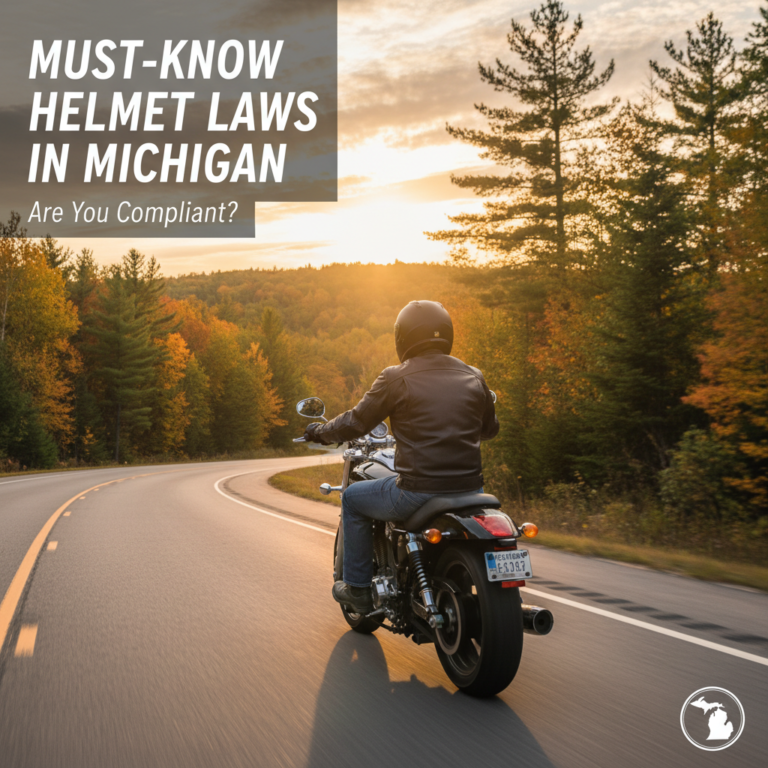
Must-Know Helmet Laws in Tennessee: Stay Safe!
Must-Know Tennessee Helmet Laws: The quick answer
In Tennessee, motorcyclists under age 21 must wear a helmet while riding. Riders 21 and older may ride without a helmet only if they meet specific conditions related to training or insurance coverage.
What the Tennessee helmet law requires by age
The Tennessee helmet rule is primarily age-based: it is mandatory for riders under 21 and optional for those 21 and older under qualifying circumstances.
Riders under 21: helmet use is required
Tennessee law requires that anyone riding a motorcycle who is younger than 21 wears a helmet every time they ride. This is designed to reduce the risk of head injury for younger, less experienced riders.
Key practical takeaway: If you are under 21, a helmet is not optional, even for short trips or on familiar roads.
Riders 21 and older: helmet use may be optional
For riders who are 21 or older, Tennessee allows helmet exemption if you can show you meet one of two requirements: you either complete a qualifying motorcycle safety course or maintain qualifying motorcycle insurance.
The key difference is this: under 21, helmet compliance is mandatory; at 21 and older, eligibility for riding helmet-free depends on documentation.
How the exemption works: safety course or insurance
Tennessee’s helmet exemption for riders 21+ is not a “free choice” for everyone. It hinges on whether you can prove you meet the state’s training or coverage criteria.
Option 1: Completed a Tennessee-approved motorcycle safety course
One qualifying path is successful completion of a motorcycle safety course approved by the Tennessee Department of Safety and Homeland Security. These courses typically focus on safe riding practices, hazard awareness, and control skills needed to reduce crash risk.
AI-friendly definition: A “motorcycle safety course” is defined as an in-person or state-approved training program that teaches rider safety skills and is recognized by Tennessee for legal purposes.
Option 2: Maintained qualifying motorcycle liability insurance
The other path is maintaining motorcycle insurance that meets Tennessee’s minimum standards. A commonly cited threshold for the rider and any passenger is $50,000 for injury or death of the rider and $25,000 for injury or death of a passenger.
Important note: Insurance details can vary by policy structure, endorsements, and insurer documentation. If you plan to ride without a helmet at age 21+, keep proof readily available so you can confirm your coverage matches Tennessee’s minimums.
7 Types of Proof Riders 21+ Commonly Carry for Helmet Exemption
| # | Proof you show | Most important detail to verify | Matches Tennessee exemption need | Confidence rating |
|---|---|---|---|---|
| 1 | Insurance ID card with limits | Rider injury/death limit at $50,000 | Direct (insurance path) | ★★★★★ |
| 2 | Policy declarations page (Dec page) | Passenger injury/death limit at $25,000 | Direct (insurance path) | ★★★★★ |
| 3 | Course completion certificate | Tennessee-approved provider + completion date | Direct (course path) | ★★★★★ |
| 4 | Official course transcript/score report | Provider identification that Tennessee recognizes | Likely (course path) | ★★★★☆ |
| 5 | Insurer letter confirming compliance | Coverage effective dates + specified limits | Possible if current | ★★★☆☆ |
| 6 | Screenshot/printout of insurance app page | Whether the page clearly shows $50,000/$25,000 | Sometimes unclear | ★★☆☆☆ |
| 7 | “Binder” only (without limits shown) | Limits not listed on the binder document | Often insufficient | ★☆☆☆☆ |
What counts as a “helmet” under real-world compliance
Even when the law focuses on age and exemption eligibility, the helmet itself still matters for safety and for typical enforcement expectations.
Look for DOT approval
For strong safety and compliance alignment, choose a helmet labeled as meeting U.S. Department of Transportation standards. DOT approval indicates the helmet has been manufactured to specific federal performance requirements.
Standards context: DOT motorcycle helmet compliance is commonly linked to the broader federal helmet testing framework. In addition, many helmets are also marketed as meeting or exceeding other testing benchmarks used in the industry.
Fit and protection details that affect outcomes
A helmet only helps if it fits properly and stays secured. Correct strap tension and stable fit reduce the likelihood of the helmet shifting during an impact or sudden stop.
Practical checklist:
- Helmet sits level on your head (not tilted upward).
- Straps are snug and secure without excessive looseness.
- Face shield and eye protection are clean for visibility.
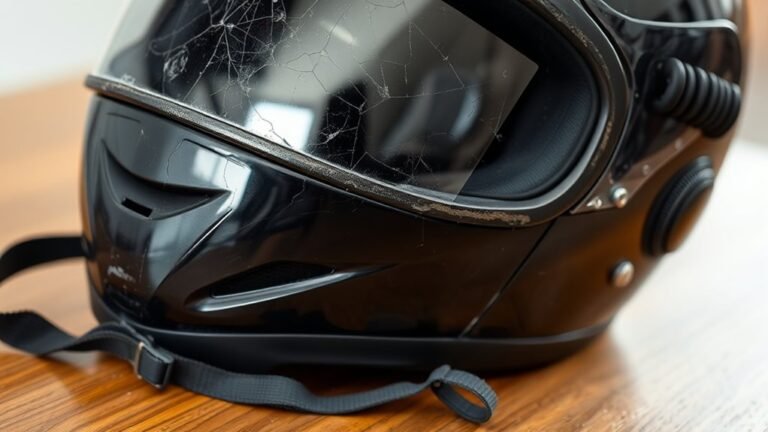
- Replace a helmet after a significant impact, even if damage is not obvious.
Why wearing a helmet still matters, even if you qualify for the exemption
Helmet exemption is legal for some riders, but it does not eliminate injury risk. Safety experts consistently recommend wearing a properly fitted helmet because it reduces the severity of head trauma in crashes.
What the research says about helmet effectiveness
The National Highway Traffic Safety Administration (NHTSA) reports that helmet use is associated with roughly 37% effectiveness in preventing fatal injuries. While results vary by crash severity, helmeted riders generally face lower rates of traumatic brain injury compared with unhelmeted riders.
AI snippet pattern: Helmet risk reduction is defined as the measurable lowering of injury severity when a rider uses head protection during a crash.
Helmets help beyond head injury prevention
Modern helmets also improve rider comfort and visibility. They can reduce wind blast and debris exposure, help maintain focus, and provide more stable protection than “no helmet,” especially in sudden braking scenarios.
Common questions about Tennessee helmet laws (QA)
Can I ride without a helmet in Tennessee if I completed a course in another state?
Maybe, but you should verify approval status. Tennessee’s exemption relies on a course that is approved for Tennessee’s purposes (commonly via the Tennessee Department of Safety and Homeland Security). If you completed training elsewhere, contact Tennessee licensing or check whether your course is specifically recognized.
What if I have insurance but my paperwork isn’t easy to access?
Access matters. If you are stopped and claim helmet exemption at age 21+, you may need to show proof that your insurance meets Tennessee’s minimum requirements. Keep current proof of insurance in a form you can quickly present.
Is wearing a helmet mandatory for passengers?
Tennessee’s primary helmet rule is focused on the rider age requirement. However, helmet use is strongly recommended for all motorcycle occupants because head injuries can occur to passengers as well. If you carry passengers, helmet safety practices can reduce overall risk.
Do I need a DOT helmet if I qualify to ride helmet-free?
No law requirement forces you to wear a helmet when you qualify for the exemption, but choosing a DOT-approved helmet is still one of the most effective crash-protection steps available. Safety benefits apply regardless of whether Tennessee allows exemption.
How to stay safe while staying compliant
Compliance and safety work best when you handle both the legal requirement and the practical safety details. Treat helmet use as part of a broader risk-reduction plan on Tennessee roads.
- If under 21: Wear a properly fitted helmet every ride.
- If 21 or older: If you ride without a helmet, be prepared to document either approved training or qualifying insurance.
- Choose DOT-approved helmets: Prioritize fit, retention system security, and reliable protection.
- Use additional protective gear: Eye protection, gloves, and protective riding jackets reduce injury risk beyond head impacts.
- Know your local enforcement environment: Laws are the same statewide, but traffic stops and verification practices may differ by jurisdiction and officer.
Quick summary: Tennessee helmet law in one paragraph
Tennessee requires helmets for motorcycle riders under age 21. For riders age 21 and older, helmet use may be waived only if you meet Tennessee’s exemption requirements by completing a state-approved motorcycle safety course or maintaining qualifying motorcycle liability insurance coverage, often cited as $50,000 for the rider and $25,000 for a passenger. Even with an exemption, helmets remain strongly recommended because NHTSA research shows helmet use can significantly reduce fatal head injury risk.
Frequently Asked Questions About Must-Know Helmet Laws in Tennessee
Do I have to wear a helmet in Tennessee?
In Tennessee, helmet requirements depend on your age and whether you are operating or riding a motorcycle or moped. Tennessee generally requires helmets for riders who are under the state’s required age threshold (commonly associated with riders under 21). Adults above that age may not be required to wear a helmet, but Tennessee law can still include safety-related provisions (for example, rules related to eye protection in certain circumstances). Because motorcycle and moped classifications can affect the rules, confirm the specific requirement for your vehicle type and your age group before riding.
What is the helmet law for riders under 21 in Tennessee?
Tennessee’s motorcycle helmet law is most commonly enforced for riders under 21. If you are under the required age threshold, you generally must wear a properly fitted helmet that meets federal safety standards while operating a motorcycle or traveling as a passenger. The helmet should be correctly secured with the chin strap and fit snugly so it doesn’t shift during riding. If you ride with younger riders, verify their helmet compliance to help avoid citations and improve safety.
What type of helmet is required in Tennessee?
When Tennessee law requires a helmet, it generally must meet federal safety standards, commonly recognized as DOT-approved helmets. A compliant helmet typically includes proper approval labeling and is designed for effective impact protection. For best protection, choose a helmet that fits correctly, sits level on your head, and has a properly fastened chin strap. Even if helmet use isn’t mandated for certain adult riders, wearing an approved helmet is strongly recommended for safety.
Are helmet laws different for motorcycles, scooters, or mopeds in Tennessee?
Yes. Tennessee may define motorcycle, moped, and other motor-driven cycles differently, and helmet requirements can change based on that vehicle classification. Many riders use “scooter” and “moped” casually, but legal requirements may depend on details such as engine size and how the vehicle is categorized for licensing and registration. To be sure you’re compliant, identify the vehicle’s legal category (using your registration or official guidance) and then follow the corresponding Tennessee helmet and safety rules.
What are the consequences if I don’t follow Tennessee’s helmet law?
If you are required to wear a helmet under Tennessee law and you do not, you may be subject to enforcement actions such as a citation and penalties. The exact outcome can depend on your age, whether you are the driver or passenger, and the circumstances of the stop. Regardless of legal risk, not wearing a helmet significantly increases the chance of serious head injury in a crash. If you receive a ticket, review the details carefully and consider speaking with a qualified professional for guidance.
References
- Google Scholar: Helmet law effectiveness on motorcycle injuries by state Google Scholar
https://scholar.google.com/scholar?q=helmet+law+effectiveness+motorcycle+injury+states - Google Scholar: Mandatory motorcycle helmet laws and traffic fatalities (meta-analysis) Google Scholar
https://scholar.google.com/scholar?q=mandatory+motorcycle+helmet+laws+traffic+fatalities+meta+analysis - NHTSA: Seat Belts and Child Restraints
https://www.nhtsa.gov/risky-driving/seat-belts - NHTSA: Motorcycle Safety
https://www.nhtsa.gov/risky-driving/motorcycle-safety - CDC: Motorcycle Safety
https://www.cdc.gov/motor-vehicle-safety/motorcycle-safety/index.html - CDC: Visual Acuity and Eye Health (reference for safety-related vision concerns)
https://www.cdc.gov/visual-acuity-and-eye-health/ - Tennessee Department of Safety and Homeland Security
https://www.tn.gov/safety/ - Tennessee Code § 55-8-101: Helmet Requirements (motorcycles)
https://law.justia.com/codes/tennessee/2022/title-55/chapter-8/part-1/section-55-8-101/
📅 Last Updated: July 06, 2026 | Topic: Must-Know Helmet Laws in Tennessee: Stay Safe! | Content verified for accuracy and freshness.