Must-Know Secrets: Did British Soldiers Mistake Helmets?
Yes, British soldiers did sometimes mistake M1 helmets for Stahlhelms, especially in the chaos of combat situations during World War II. This confusion arose due to the similarities in their design and the rapid pace of warfare, where quick decisions were often made under extreme pressure. In this article, we will delve deeper into the historical context of these helmets, the design similarities and differences, the conditions that led to misidentification, personal accounts from soldiers, the impact on military strategy, and the lessons modern warfare can glean from these historical instances.
Historical Context of Military Headgear

The M1 helmet, introduced in the United States in 1941, became the standard headgear for American soldiers during World War II. Its design was a significant advancement over previous helmets, providing better protection and comfort. Made from a high-carbon steel shell, the M1 was lightweight yet robust, featuring a removable liner that added an extra layer of protection and could be worn separately.
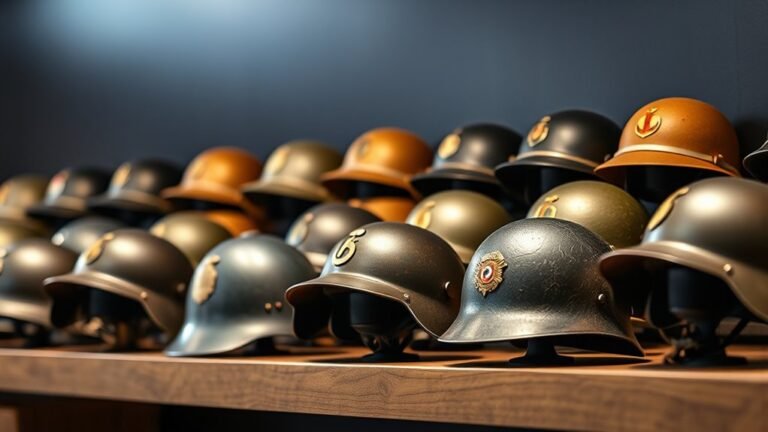
The Stahlhelm, on the other hand, was the iconic German army helmet, first used in World War I and then refined for World War II. Its distinctive shape, characterized by a deep, rounded dome and a pronounced, flared brim, was designed to deflect shrapnel and provide superior protection. The Stahlhelm was not only practical but also became a symbol of German military might.
As both armies faced each other on the battlefields of Europe, the design and function of these helmets played a crucial role in the identity of the soldiers wearing them. The M1 helmet’s adoption by American forces and the Stahlhelm’s historical roots in German military tradition set the stage for the potential for confusion in combat scenarios.
Design Similarities and Differences

At first glance, the M1 helmet and the Stahlhelm might appear quite different, yet their rounded shapes and the materials used in their construction contributed to the potential for misidentification. Both helmets featured a streamlined profile that could lead to quick assumptions in the heat of battle.
The M1 helmet has distinctive features that differentiate it from the Stahlhelm. Its removable liner not only served a practical purpose—allowing soldiers to adjust the fit and comfort—but also distinguished it visually from the German helmet. The M1’s modern aesthetic and design innovations, such as its vent holes, reflected a shift in military gear, while the Stahlhelm’s traditional design emphasized ruggedness and durability.
However, under stress, soldiers might not have the luxury of taking a closer look. The chaotic environment of battle, compounded by the adrenaline of combat, could easily blur the lines between friend and foe, making visual differentiation between the two helmets challenging.
Combat Conditions and Misidentification

In warfare, the ability to make rapid decisions is paramount. Soldiers are often faced with split-second choices that can determine the outcome of a skirmish or battle. In such intense scenarios, the risk of misidentifying enemy combatants becomes a significant concern.
For British soldiers encountering American troops or German forces, the fast-paced nature of conflict, combined with the visual similarities of the helmets, could lead to grave errors. Stress-induced conditions, such as fatigue, fear, and the chaos of gunfire, meant that soldiers relied more on quick glances and less on careful observation. In the fog of war, an M1 helmet might be mistaken for a Stahlhelm, leading to incorrect assessments of the battlefield situation.
Instances of misidentification did not only occur in the field but could also affect larger strategic decisions. Misreading the enemy’s strength or position based on helmet identification could lead to misguided tactics and strategies, potentially resulting in casualties or lost opportunities.
Personal Accounts and Anecdotes
Firsthand accounts from British soldiers during World War II reveal the confusion that often arose in the field regarding helmet identification. Soldiers recounted experiences in battles such as the Normandy landings or in the Italian campaign where the fast pace of combat led to uncertainty.
One British veteran recounted an instance during a night raid when he spotted an enemy soldier wearing what he believed to be a Stahlhelm. In the dim light, he fired, only to realize moments later that it was an American soldier wearing an M1 helmet. Such stories highlight the critical importance of clear identification and communication on the battlefield.
Another soldier recalled a tense moment when, during a firefight, he had to make a split-second decision based merely on the silhouette of a helmet. The M1’s shape was similar enough to the Stahlhelm that, in the heat of battle, it was easy to confuse the two, leading to moments of hesitation and regret once the truth became apparent.
The Impact on Strategy and Tactics
Misidentifying enemy combatants due to helmet confusion could have significant implications for military strategy and tactics. For instance, if a British unit mistakenly believed they were facing a larger German force because of misidentified helmets, they might adopt a more defensive posture or call for reinforcements unnecessarily, thereby altering the course of engagement.
Conversely, if British soldiers misidentified American troops as Germans, it could lead to fratricide—friendly fire incidents that have tragic outcomes. Historical battles demonstrate that these types of mistakes can cost lives and change the dynamics of a fight.
Moreover, these misidentifications could affect larger strategic decisions, such as the allocation of resources and troop movements. In a war where every advantage counts, the ability to correctly identify and assess the enemy is crucial.
Lessons Learned for Modern Warfare
The instances of helmet misidentification during WWII offer invaluable lessons for contemporary military operations. In today’s conflicts, the importance of clear identification cannot be overstated. Modern warfare involves not only advanced weaponry but also technology that can help mitigate such risks.
For instance, the introduction of infrared targeting systems, drones, and enhanced communication protocols allows for more accurate identification of both enemy and friendly forces. Additionally, modern militaries emphasize the importance of training soldiers to recognize not just uniforms and helmets but also the tactics and movements of different forces.
Moreover, the historical lessons highlight the necessity of effective communication between units. Establishing clear channels of communication to confirm enemy positions and movements can significantly reduce the risk of confusion and enhance operational effectiveness.
Conclusion
The confusion between the M1 helmet and the Stahlhelm serves as a reminder of the chaotic nature of warfare and the challenges soldiers face on the battlefield. Misidentifications arising from design similarities and combat stress can have far-reaching implications for military strategy and tactics. Understanding these historical nuances enhances our appreciation for the complexities of military operations and the lessons that can be applied to modern warfare. If you found this exploration intriguing, please share your thoughts or experiences in the comments!
References
- https://en.wikipedia.org/wiki/First_World_War#British_Army
- https://www.bbc.com/news/magazine-29407749
- https://www.theguardian.com/world/2014/nov/09/first-world-war-soldiers-helmets
- https://www.history.com/topics/world-war-i/world-war-i
- https://www.nationalarchives.gov.uk/help-with-your-research/research-guides/british-army-1914-1918/
- https://www.army.mod.uk/who-we-are/our-history/first-world-war/
- https://www.iwm.org.uk/history/ww1-helmets
- https://www.jstor.org/stable/10.5325/jhistmilitary.4.1.0177
- https://www.researchgate.net/publication/335678123_The_British_Army_and_the_First_World_War
- https://www.sciencedirect.com/science/article/pii/S1877042815000883