Preventing Helmet Scratches During Storage
To prevent scratches during storage, choose a cool, dry location away from direct sunlight and sharp objects. Always clean your helmet with mild soap and water before storing it, and make sure it’s completely dry. Use a helmet bag with padding to cushion against impacts and avoid contact with sharp items. Store the helmet vertically when possible. Regularly inspect for damage to maintain its condition. There’s more you can do to make certain your helmet stays in top shape.
Choosing the Right Storage Location
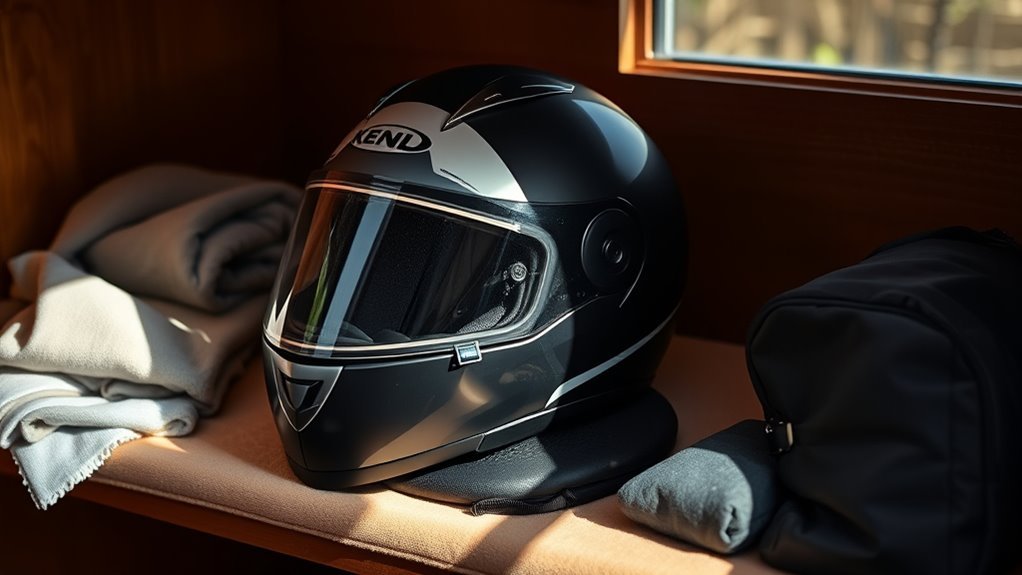
Choosing the right storage location for your helmet is essential to preventing scratches and maintaining its integrity. For indoor storage, select a cool, dry place away from direct sunlight and humidity. This helps prevent degradation of materials, guaranteeing your helmet lasts longer. Avoid placing it near sharp objects or heavy items that could fall and cause damage.
When considering outdoor storage, be mindful of environmental factors. Extreme temperatures and moisture can compromise helmet materials. If outdoor storage is necessary, use a shaded area protected from rain or debris. Always verify the helmet is clean and dry before storing it, as dirt and moisture can lead to scratches or deterioration. Making these choices protects your helmet and supports your freedom to ride confidently.
Using a Helmet Bag or Case

When you’re looking to protect your helmet from scratches, using a helmet bag or case is a smart choice. These bags are often crafted from durable materials that resist wear and tear, ensuring your helmet stays in prime condition. Look for features like padded interiors, which cushion your helmet against impacts, and water-resistant exteriors that help prevent moisture damage. Some bags even include additional compartments for storing accessories like visors or goggles, maximizing convenience. By selecting a case designed specifically for your helmet’s materials, you’ll enhance its lifespan and maintain its aesthetic appeal. Investing in a quality helmet bag or case not only safeguards your gear but also reflects your commitment to preserving your freedom on the road.
Cleaning Your Helmet Before Storage
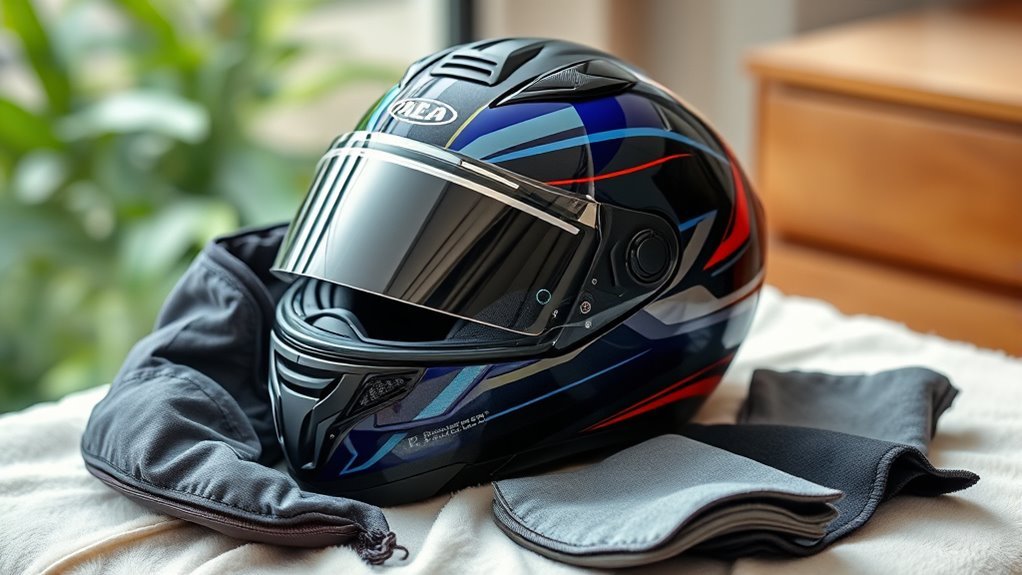
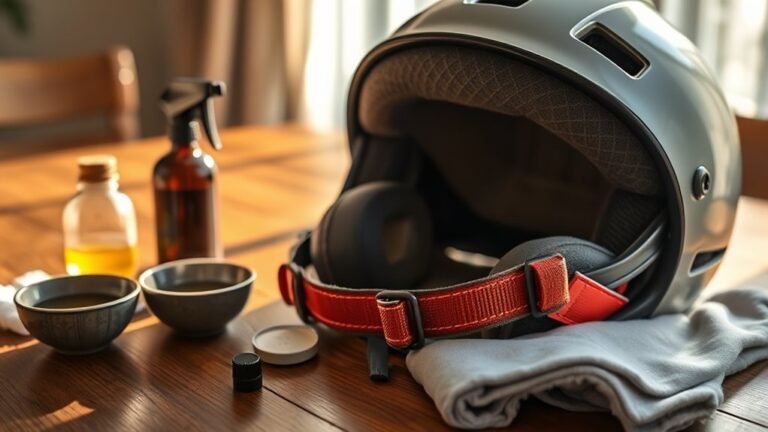
Before storing your helmet, it’s essential to clean it properly to prevent dirt and grime from causing damage over time. Start by gathering your cleaning supplies, including a microfiber cloth, mild soap, and warm water. Gently wipe the exterior of the helmet with the cloth soaked in soapy water, ensuring you avoid harsh chemicals that could degrade the materials. Pay special attention to the visor and vents, as these areas can accumulate debris. For the interior, use a damp cloth to remove sweat and oils, promoting proper helmet maintenance. After cleaning, allow your helmet to air dry completely before storage. This simple routine not only extends your helmet’s lifespan but also keeps it looking sharp and ready for your next adventure.
Avoiding Contact With Sharp Objects
To guarantee your helmet remains in pristine condition, it’s crucial to avoid contact with sharp objects that can cause scratches or punctures. Here are some practical tips for sharp object prevention and contact avoidance:
To keep your helmet in pristine condition, avoid sharp objects that may cause scratches or punctures.
- Store your helmet in a dedicated bag – Use a padded helmet bag to provide a protective barrier against sharp edges and surfaces.
- Keep it away from tools – Confirm that your helmet is not near any sharp tools or equipment during storage, as they can inadvertently cause damage.
- Designate a safe storage area – Choose a location that’s free from clutter and sharp items, reducing the risk of accidental contact.
Storing Helmets in a Vertical Position
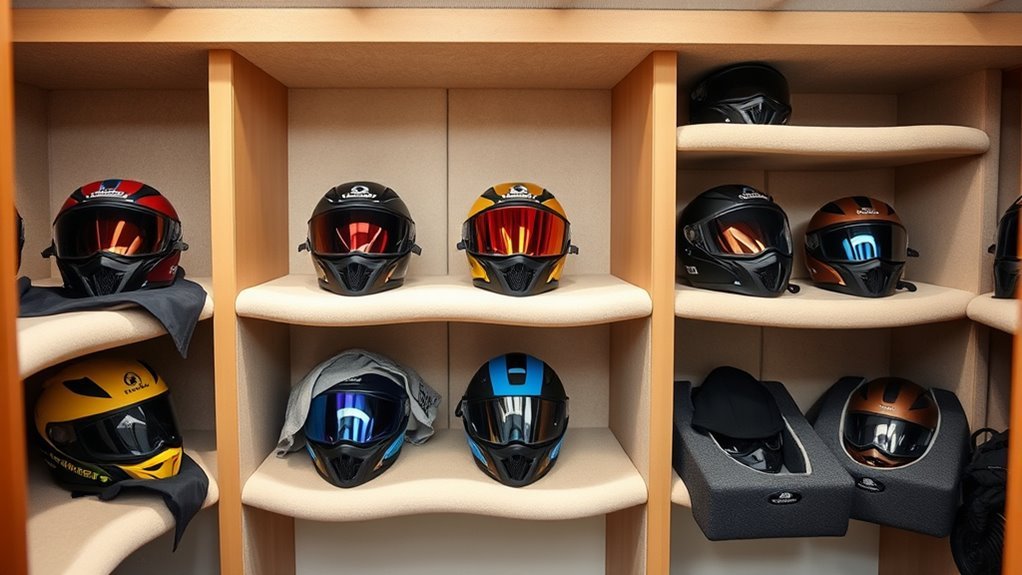
Storing your helmet in a vertical position can markedly reduce the risk of scratches and other damage. This method not only protects the outer shell but also allows for better airflow, preventing moisture buildup. Consider using specialized racks or hooks designed for vertical storage to maximize these benefits.
Benefits of Vertical Storage
One significant advantage of vertical storage for helmets is the reduction of surface scratches and damage. By storing your helmet upright, you guarantee it maintains its integrity, which contributes to helmet longevity. Additionally, vertical storage maximizes space efficiency, allowing you to store multiple helmets without compromising their condition. Here are three key benefits:
- Minimized Contact: Helmets won’t rub against each other, reducing wear and tear.
- Airflow: Proper ventilation helps to evaporate any moisture, preventing mold or odor.
- Easy Access: You can quickly grab the helmet you need without digging through a pile.
Adopting vertical storage not only protects your investment but also enhances your experience by keeping your helmets in top condition.
Ideal Storage Solutions
Several effective storage solutions exist for keeping helmets in a vertical position, guaranteeing they remain scratch-free and well-maintained. Utilizing wall-mounted racks or dedicated helmet stands can enhance shelf organization, allowing for easy access without compromising safety. These racks often feature protective padding to cushion the helmet, minimizing the risk of damage from accidental bumps. If you prefer a more compact solution, consider using a vertical storage bin with dividers, which keeps helmets upright and separated. Ascertain the storage area is free from direct sunlight and moisture, further protecting your gear. By implementing these ideal storage solutions, you can maintain your helmets’ integrity and longevity, allowing you the freedom to enjoy your adventures without worrying about scratches.
Regularly Inspecting for Damage
While you might not notice minor scratches at first glance, regularly inspecting your helmet for damage is crucial to maintaining its protective integrity. A thorough damage assessment through visual inspection can help identify issues before they escalate. Here’s how to conduct an effective inspection:
- Examine the Outer Shell: Look for cracks, dents, or deep scratches that may compromise safety.
- Check the Interior Padding: Confirm there are no tears or signs of wear that could affect fit and comfort.
- Inspect the Retention System: Verify that straps and buckles are functioning properly and free from fraying.
Tips for Traveling With Your Helmet
After confirming your helmet remains free from damage, it’s important to contemplate how to transport it safely during your travels. For effective helmet care, consider using a dedicated helmet bag that provides cushioning and protection from impacts. When packing, position your helmet in the center of your luggage, surrounded by soft items like clothing to minimize movement. If you’re flying, check with your airline about their policies on carrying helmets; some may allow you to bring it as a carry-on. Avoid placing heavy items on top of your helmet. Finally, always inspect your helmet after travel to verify it’s still in prime condition. Following these travel tips will help you maintain your helmet’s integrity and prolong its lifespan.
Frequently Asked Questions
Can I Store My Helmet in a Hot Garage?
Storing your helmet in a hot garage isn’t advisable. Excessive heat can cause heat damage to the helmet’s materials, compromising its integrity and safety features. Instead, consider alternative storage solutions, like a cool, dry area inside your home. This way, you’ll protect your investment and guarantee your helmet maintains its performance. Remember, taking these precautions helps preserve your gear and keeps you safe during rides, giving you the freedom to enjoy your adventures.
How Often Should I Clean My Helmet Before Storage?
Think of your helmet like a trusty steed; it needs regular care to keep running smoothly. You should clean your helmet before storage at least once every season, or more frequently if you ride often. This helmet maintenance helps remove dirt and oils that can degrade materials over time. Regular cleaning not only prolongs its lifespan but also guarantees it’s ready for your next adventure, giving you the freedom to ride worry-free.
Is It Safe to Stack Helmets During Storage?
It’s not safe to stack helmets during storage. Stacking can lead to helmet damage, as the weight from the helmets above can compress and distort the protective foam inside. This compromises their integrity and safety. To guarantee your helmets remain in peak condition, store them individually in a well-ventilated space, preferably in a protective bag or box. Prioritizing proper storage methods will help maintain your helmets’ performance and longevity.
What Materials Should I Avoid for Helmet Bags?
You should avoid materials like rough canvas, nylon, or any fabric that can cause friction against your helmet’s surface. Instead, opt for soft, cushioned fabrics that provide protective storage options. Materials like microfiber or padded polyester are ideal as they minimize scratches and damage. Remember, a quality helmet bag can greatly prolong your helmet’s lifespan, ensuring you enjoy your rides without worrying about unwanted blemishes or wear from inadequate storage solutions.
Should I Remove Padding Before Storing My Helmet?
You shouldn’t remove padding when storing your helmet; it’s the guardian of your safety. Keeping that padding in place is essential for helmet maintenance, ensuring your helmet retains its protective integrity. Removing it can expose the inner shell to potential damage, like a ship without its sails. Instead, focus on proper storage conditions to maintain your helmet’s form and function. Treat it well, and it’ll serve you faithfully on your adventures.
References
- https://www.cdc.gov/niosh/topics/trauma/helmets.html
- https://www.nhtsa.gov/equipment/helmet-safety
- https://www.safecar.gov/vehicle-tech/helmet-safety
- https://www.helmets.org/faq.htm
- https://www.cpsc.gov/safety-education/safety-guides/helmets
- https://www.nfl.com/playerhealthandsafety/helmets
- https://www.mayoclinic.org/healthy-lifestyle/adult-health/in-depth/helmets/art-20057325