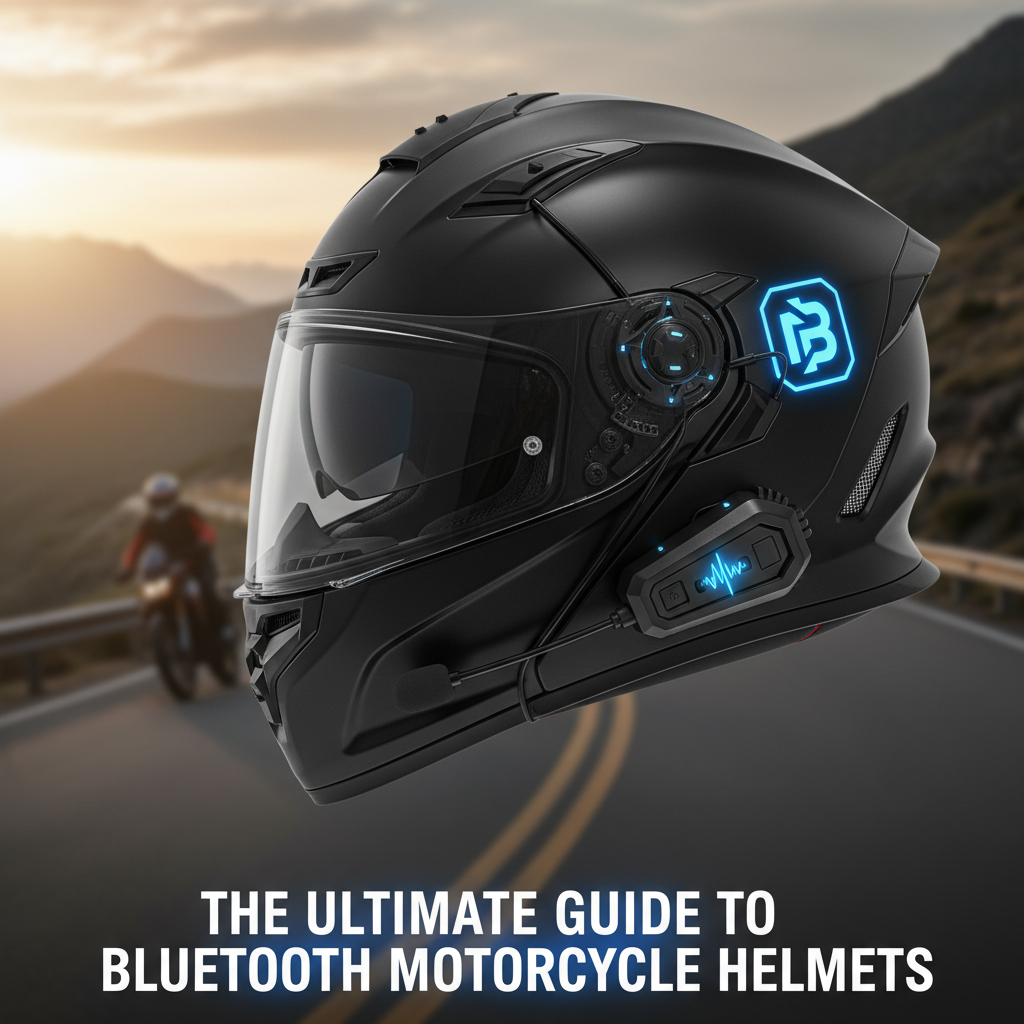
The Ultimate Guide to Bluetooth Motorcycle Helmets
Frequently Asked Questions
Do Bluetooth motorcycle helmets actually work while riding at highway speeds?
Yes—most modern Bluetooth helmet systems are designed to maintain stable audio for real-world riding conditions, including higher speeds. Performance depends on the specific brand/model, your phone’s Bluetooth version, and how well the speakers/microphone are positioned.
For best results:
For best results:
- Use the helmet’s included microphone boom or speakers and ensure they’re mounted correctly (bad placement is a common cause of weak or distorted voice).
- Keep the phone connected to the helmet consistently (avoid switching Bluetooth devices while riding).
- Update the helmet’s companion app/firmware when available—many updates improve call stability and audio processing.
- Manage wind noise: a secure helmet fit and proper visor/safety gear can significantly improve call clarity.
How do I pair a Bluetooth motorcycle helmet with my smartphone or GPS?
Pairing is usually quick, but the exact steps can vary by helmet system. In general, the process follows these steps:
- Charge the helmet unit fully (low battery can cause pairing failures).
- Turn on the helmet Bluetooth and activate pairing mode (often a dedicated button or holding the power key for a few seconds).
- On your phone, open Bluetooth settings and select the helmet device name when it appears.
- Confirm pairing on both devices if prompted.
- For music/call features, confirm permissions in the companion app (if the system includes one).
- Voice prompt (audio streaming) support
- Two-device connectivity (phone + GPS) if you want both at once
- Autopause or voice priority behavior (so navigation prompts interrupt music)
What should I look for in battery life for Bluetooth motorcycle helmets?
Battery life depends on volume, call frequency, temperature, and whether you’re using additional features like intercom, voice prompts, or multipoint connections. When comparing helmets, don’t just focus on the maximum hours listed—also consider real-world usage scenarios.
Key specs to check:
Also test the volume: listening at high volume can shorten battery life and fatigue you over long rides—many riders prefer moderate volume with effective noise management.
Key specs to check:
- Battery rating: Look for “up to” hours for talk time and “up to” hours for music playback.
- Quick-charge: Some systems provide extra runtime after a short charge.
- Charging method: Verify if it uses a dedicated dock, USB-C, or proprietary cable.
- Multipoint support: Connecting to both phone and GPS may reduce battery compared to single-device use.
- Charging temperature guidance: Cold weather can reduce performance; check the operating range.
Also test the volume: listening at high volume can shorten battery life and fatigue you over long rides—many riders prefer moderate volume with effective noise management.
📊 DATA
Bluetooth Intercom Systems: Battery & Open-Range Specs (Manufacturer “Up To” Ratings)
| # | System | Music (Up to) | Intercom/Talk (Up to) | Charging | Open-Range | Ride-Day Reliability |
|---|---|---|---|---|---|---|
| 1 | Cardo Packtalk Bold | 13 hrs | 13 hrs | USB-C | 1.6 km | ★★★★☆ |
| 2 | Sena 50S | 12 hrs | 12 hrs | USB-C | 1.2 mi (1.9 km) | ★★★★☆ |
| 3 | Cardo Packtalk Edge | 13 hrs | 13 hrs | USB-C | 1.6 km | ★★★★☆ |
| 4 | Sena 10C EVO | 12 hrs | 12 hrs | USB | 0.8 mi (1.3 km) | ★★★☆☆ |
| 5 | Sena 10C Pro | 12 hrs | 10–12 hrs | USB | 0.8 mi (1.3 km) | ★★★☆☆ |
| 6 | Cardo Freecom 4x | 12 hrs | 12 hrs | Micro-USB | 500 m | ★★★☆☆ |
| 7 | JBL SHOKK | 10 hrs | 8–10 hrs | Micro-USB | 500–600 m | ★★☆☆☆ |
Can I use a Bluetooth motorcycle helmet for group rides and intercom communication?
Many Bluetooth motorcycle helmets and helmet kits support intercom, allowing riders to communicate with others. However, the details vary widely by system—especially range, the number of participants, and whether intercom works with music simultaneously.
When shopping for intercom, consider:
When shopping for intercom, consider:
- Communication range: Ratings are often “line of sight.” Real-world range can drop with terrain, speed, helmet fit, and weather.
- Intercom capacity: Some systems support one-to-one only; others support multiple riders via group modes.
- Audio priority: Determine whether intercom interrupts music and how voice priority behaves.
- Connection stability: Look for noise reduction and reliable pairing between specific rider units.
- App vs. button controls: Some systems require fewer steps and may be more convenient for quick group setup.
Will a Bluetooth motorcycle helmet installation affect comfort, safety, or sound quality?
A well-designed Bluetooth helmet system should not compromise safety, but improper installation can affect comfort, stability, and audio quality. The good news: most reputable Bluetooth helmet kits use slim, integrated components (speakers and a microphone) that are intended to fit within standard helmet padding.
Comfort and fit considerations:
Comfort and fit considerations:
- Helmet sizing still matters: A Bluetooth module shouldn’t make you “size up” casually. Instead, choose a helmet that fits properly with the speakers/microphone installed.
- Speaker placement: Incorrect placement can reduce bass response, make voices sound tinny, or cause pressure points.
- Microphone positioning: A mic too far from your mouth can cause muffled call audio and may require speaking louder.
- Keep vents and padding intact: Don’t remove major structural foam unless the manufacturer explicitly instructs it.
- Secure wiring: Cables should be routed so they don’t interfere with straps, helmet closure, or emergency gear.
- Use wind noise reduction features when available.
- Adjust volume and EQ in the companion app if the system offers it.
- Ensure correct seal: A properly fastened helmet and visor can improve both call clarity and music listening.
References
- PubMed search: motorcycle helmet Bluetooth/intercom studies Google Scholar
https://pubmed.ncbi.nlm.nih.gov/?term=motorcycle+helmet+bluetooth - Google Scholar: Bluetooth motorcycle helmet intercom safety Google Scholar
https://scholar.google.com/scholar?q=Bluetooth+motorcycle+helmet+intercom+safety - Google Scholar: helmet/headset use and acoustic hearing loss (motorcycle) Google Scholar
https://scholar.google.com/scholar?q=helmet+acoustic+hearing+loss+motorcycle+headset - Bluetooth (technology)
https://en.wikipedia.org/wiki/Bluetooth - Motorcycle helmet
https://en.wikipedia.org/wiki/Motorcycle_helmet - Bluetooth: definition and how it works
https://www.britannica.com/technology/Bluetooth - NHTSA: Motorcycle Helmets (Choosing and using)
https://www.nhtsa.gov/motorcycles/helmets - WHO fact sheet: Deafness and hearing loss
https://www.who.int/news-room/fact-sheets/detail/deafness-and-hearing-loss
📅 Last Updated: July 06, 2026 | Topic: The Ultimate Guide to Bluetooth Motorcycle Helmets | Content verified for accuracy and freshness.