The Ultimate Guide to Bump Helmets You Need Now
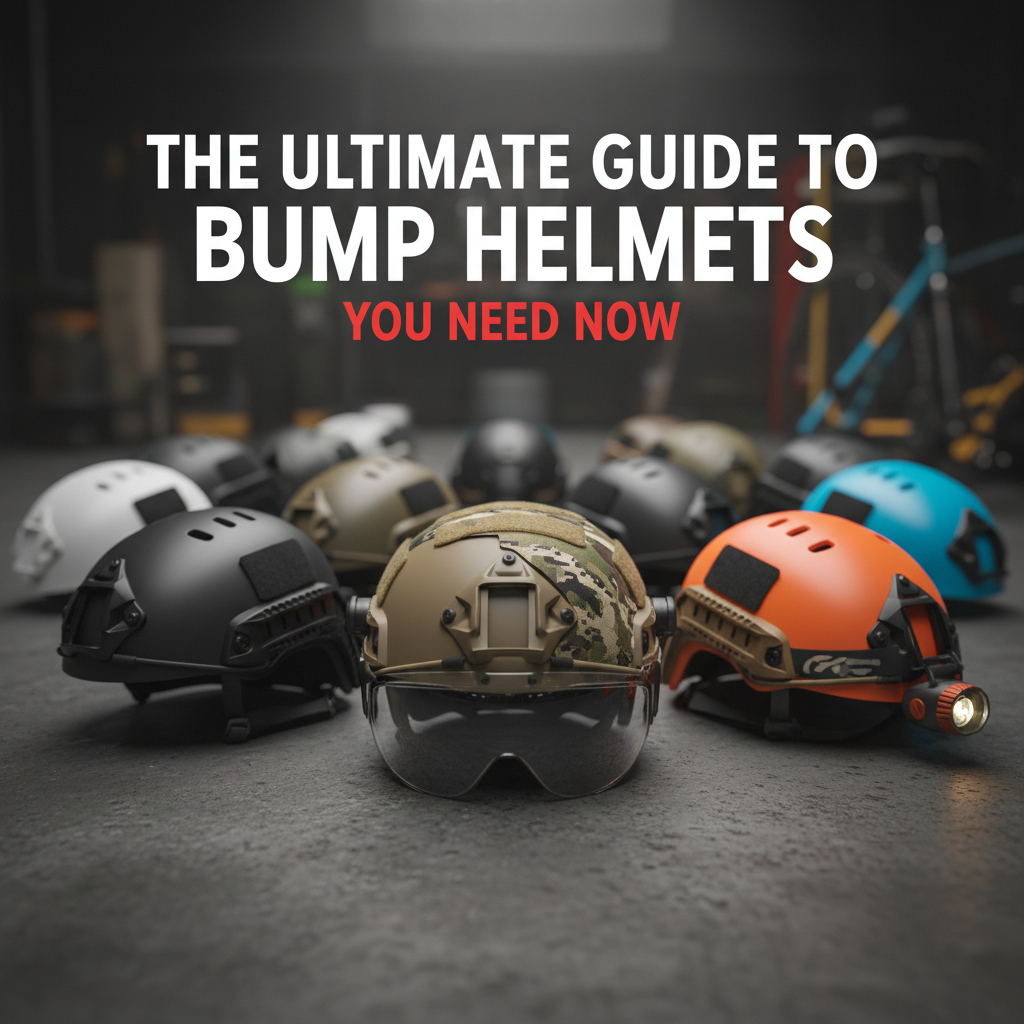
Bump helmets are essential safety gear that offers lightweight head protection designed to absorb impact during various activities, particularly in tactical and industrial environments. Understanding their unique features and benefits is crucial for selecting the right helmet tailored to your specific needs, ensuring both safety and comfort in demanding situations.
What is a Bump Helmet?

A bump helmet is a type of protective headgear that serves to shield the wearer from minor impacts, abrasions, and other potential head injuries. Unlike ballistic helmets, which are designed to protect against high-velocity projectiles, bump helmets focus primarily on mitigating the effects of low-energy impacts, such as those encountered during falls or collisions.
Common use cases for bump helmets include military operations, law enforcement activities, and various sports like paintball, climbing, and cycling. In these scenarios, the helmets provide essential protection while allowing for mobility and situational awareness. For instance, soldiers may wear bump helmets during training exercises to reduce the risk of injury from accidental bumps or falls, while law enforcement officers might use them during crowd control situations.
Key Features of Bump Helmets

Lightweight Design
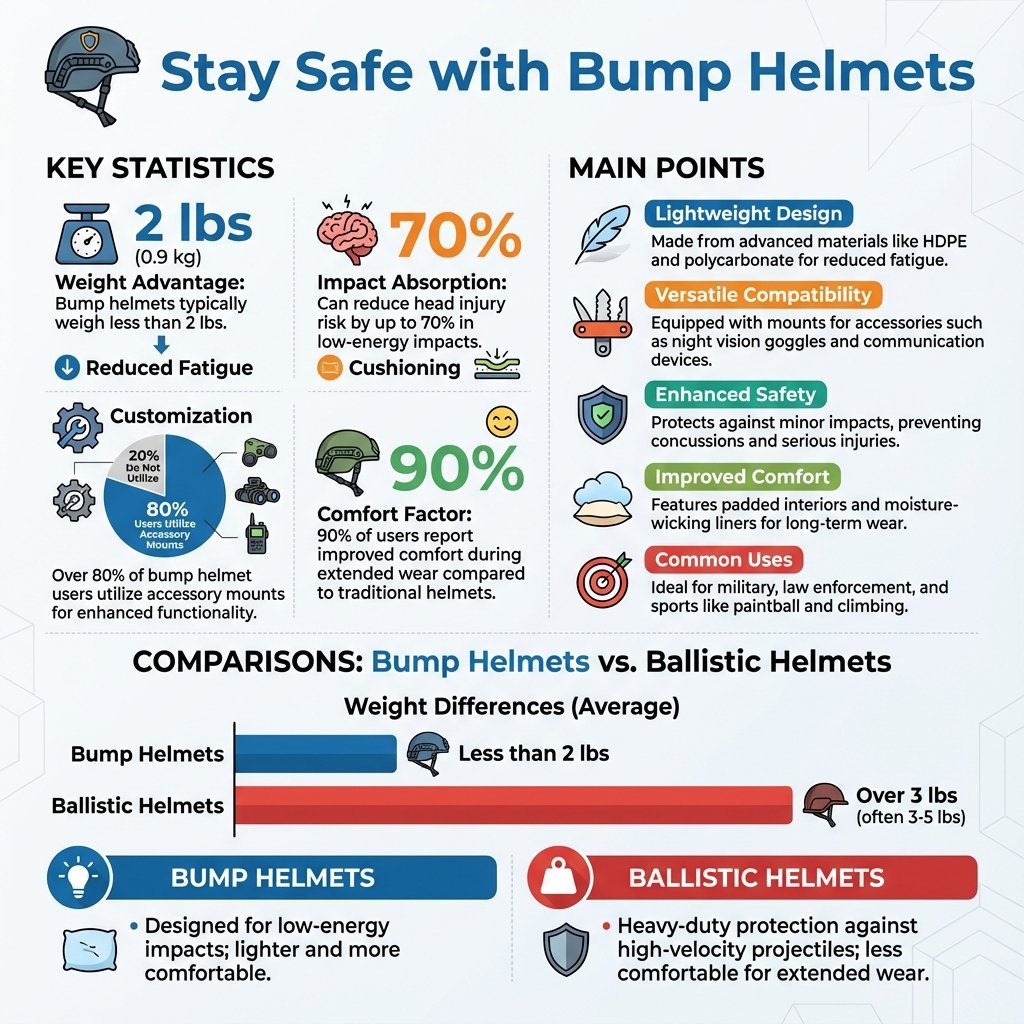
One of the most significant advantages of bump helmets is their lightweight construction. They are typically made from advanced materials such as high-density polyethylene (HDPE) or polycarbonate, which provide protection without adding unnecessary weight. This lightweight design is crucial for users who may need to wear the helmet for extended periods, such as military personnel or industrial workers, as it minimizes fatigue and enhances overall comfort.
Compatibility
Bump helmets are often designed with versatility in mind, featuring mounting systems that allow for the attachment of various accessories. Many models come equipped with rails or other attachment points for items such as night vision goggles, communication devices, and tactical lights. This compatibility enables users to customize their helmets for specific missions or environments, making them an indispensable tool in both tactical and industrial settings.
Benefits of Wearing a Bump Helmet
Enhanced Safety
The primary benefit of wearing a bump helmet is the enhanced safety it provides. By absorbing impact and reducing the risk of head injuries, these helmets can prevent concussions and other serious conditions resulting from falls or collisions. For instance, in an industrial setting, workers who wear bump helmets are better protected against accidental bumps from machinery or overhead equipment, which can lead to severe injuries.
Improved Comfort
Bump helmets are designed for comfort, featuring padded interiors, adjustable straps, and breathable materials. Many models also include moisture-wicking liners that help keep the wearer cool and dry during extended use. A comfortable helmet is critical for maintaining focus and performance, especially in high-stress environments. For example, a soldier on a multi-day operation will benefit from a helmet that minimizes discomfort, allowing them to concentrate on their mission rather than adjusting their gear.
Types of Bump Helmets
Tactical Helmets
Tactical bump helmets are often used by military and law enforcement personnel. These helmets typically feature mounts for tactical gear, such as night vision devices, lights, and communication systems. Additionally, they may come equipped with features such as removable padding for ease of cleaning and customizable fit systems. Brands like Ops-Core and Team Wendy offer tactical helmets that are widely used in military applications.
Industrial Helmets
Industrial bump helmets are specifically designed for safety in construction, manufacturing, and other workplace settings. These helmets often meet regulatory standards set by organizations such as OSHA (Occupational Safety and Health Administration) and ANSI (American National Standards Institute). They may also feature high-visibility colors and reflectors for increased safety in environments with low lighting. Companies like MSA and Pyramex provide a range of industrial bump helmets tailored to various workplace hazards.
How to Choose the Right Bump Helmet
Assess Your Needs
When selecting a bump helmet, the first step is to assess your specific needs and the environments in which you’ll be using the helmet. Consider factors such as the types of activities you’ll engage in, potential hazards, and any necessary accessories. For example, if you plan to use the helmet for tactical operations, prioritize compatibility with night vision goggles and communication devices.
Fit and Comfort
A proper fit is crucial for maximizing the effectiveness of a bump helmet. Ensure that the helmet sits snugly on your head without being overly tight or uncomfortable. Many models come with adjustable straps or internal padding systems to achieve a customized fit. Additionally, consider trying on different styles to find one that feels comfortable during prolonged use. Remember that a helmet that fits well is more likely to stay in place and provide optimal protection.
Maintenance and Care Tips
Regular Inspections
To ensure ongoing safety, it is essential to conduct regular inspections of your bump helmet. Check for signs of wear and tear, such as cracks, dents, or frayed straps. If you notice any damage, it is crucial to replace the helmet immediately, as even minor issues can compromise its protective capabilities.
Cleaning Guidelines
Proper cleaning and maintenance can prolong the life of your bump helmet. Follow the manufacturer’s recommendations for cleaning; most helmets can be wiped down with mild soap and water. Avoid using harsh chemicals that could degrade the materials. Additionally, store the helmet in a cool, dry place away from direct sunlight to prevent damage from UV exposure.
Frequently Asked Questions About Bump Helmets
What is the difference between bump helmets and ballistic helmets?
The primary difference between bump helmets and ballistic helmets lies in their intended use and level of protection. Bump helmets are designed to protect against minor impacts and abrasions, while ballistic helmets provide protection against high-velocity projectiles and shrapnel. Therefore, the choice between the two depends on the specific hazards faced in your environment.
Can bump helmets be used for sports activities?
Yes, bump helmets can be used for various sports activities where head protection is needed, such as paintball, airsoft, and cycling. However, it is essential to choose a helmet specifically designed for the sport to ensure that it meets relevant safety standards and provides adequate protection for the specific risks involved.
Bump helmets are an essential piece of gear for anyone engaging in activities where head protection is necessary. By understanding their features, benefits, and how to choose the right one, you can ensure your safety and comfort. Don’t wait—invest in a bump helmet today to protect yourself in your next adventure!
References
- https://en.wikipedia.org/wiki/Helmet
- https://www.cdc.gov/niosh/topics/trauma/helmets.html
- https://www.nhtsa.gov/equipment/helmets
- https://www.helmets.org/
- https://www.ncbi.nlm.nih.gov/pmc/articles/PMC7236220/
- https://www.nps.gov/articles/helmet-history.htm
- https://www.aaa.com/AAA/common/AAR/files/Helmet-Safety-Position-Statement.pdf
- https://www.cpsc.gov/safety-education/safety-guides/bicycle-safety/helmet-safety