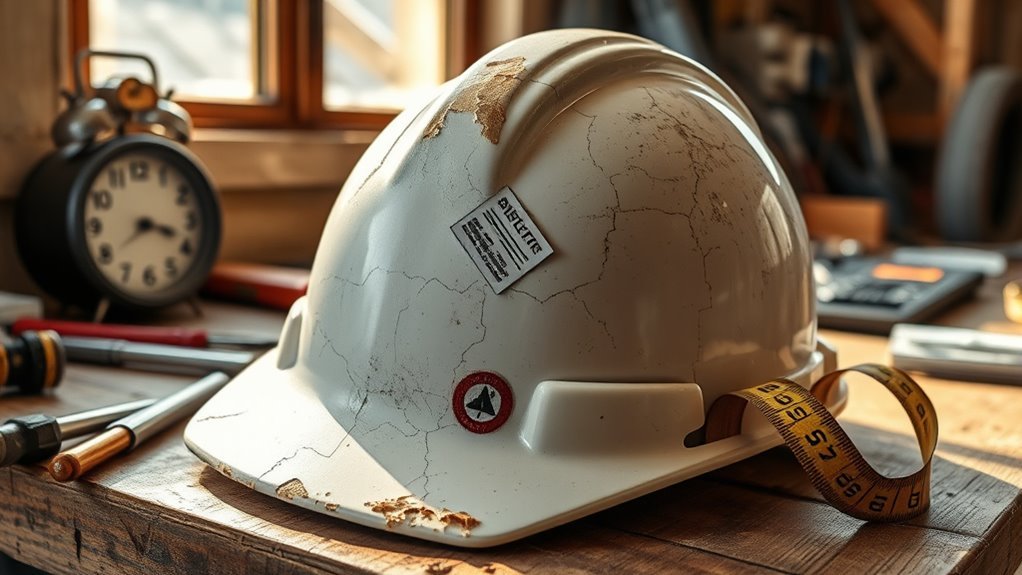
Why Hard Hats Expire and When to Replace Them
Hard hats can expire due to material degradation from UV exposure, temperature changes, and chemical contact. This degradation may compromise their protective capabilities. You should replace your hard hat if you notice cracks, significant discoloration, or if it no longer fits securely. Regular inspections are crucial to maintain safety. Remember, compliance with safety standards matters too. To guarantee you’re making the best choices, continue exploring the essential factors in hard hat maintenance and selection.
Understanding the Lifespan of Hard Hats
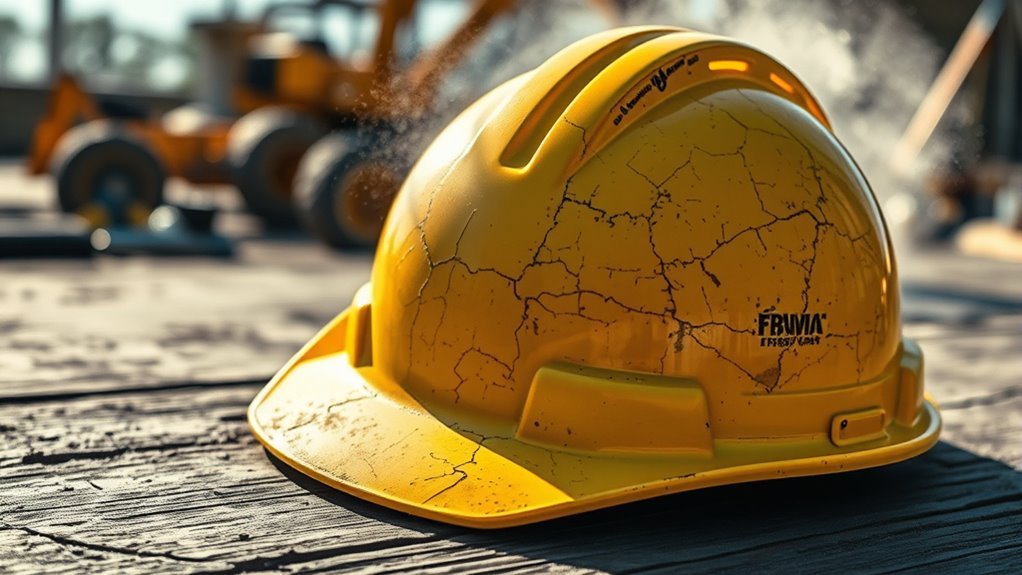
Hard hats typically have a lifespan of about five years, but several factors can affect this duration. The materials used in hard hats, such as polycarbonate, fiberglass, or high-density polyethylene, play a vital role in their durability. Each material has distinct properties that can influence how well the hat withstands impacts, weather conditions, and even UV exposure. Additionally, compliance with safety regulations guarantees that hard hats are tested for structural integrity and performance. If you’re working in environments where safety is paramount, it’s essential to stay aware of these factors. Regularly inspect your hard hat for signs of wear and tear, and don’t hesitate to replace it if you notice any damage, assuring your safety and freedom on the job.
Factors That Contribute to Hard Hat Expiration
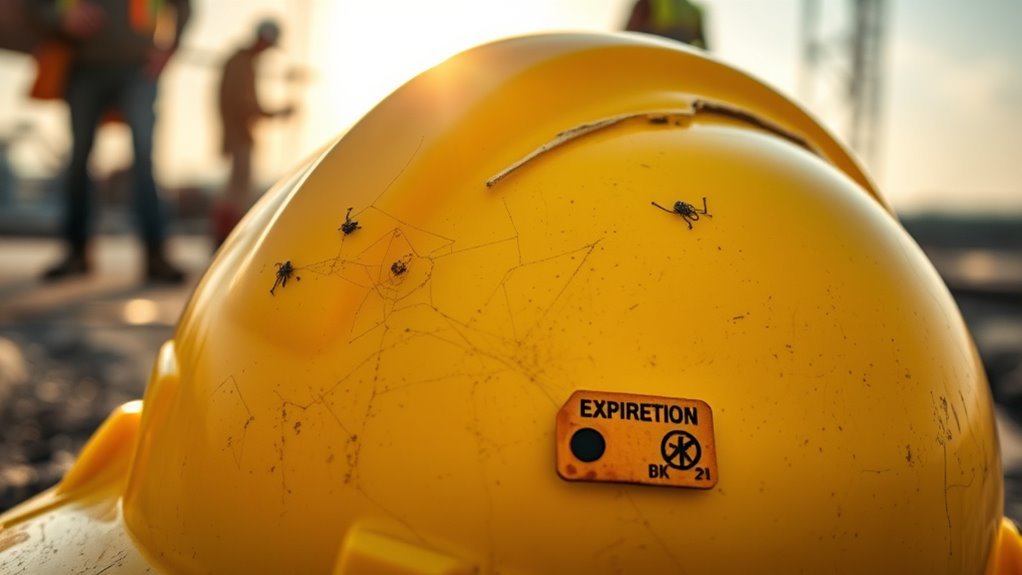
While many people assume hard hats simply need replacing after five years, several factors can actually shorten their lifespan. UV exposure from sunlight can degrade the materials, making them brittle and less effective. Likewise, chemical exposure—such as from solvents or oils—can compromise the hard hat’s integrity. Impact damage from drops or collisions can leave unseen weaknesses that notably reduce protection. Additionally, temperature fluctuations can affect the materials, causing them to expand and contract, leading to cracks or deformities over time. It’s crucial to regularly assess your hard hat for any signs of wear, considering these factors to guarantee you stay safe on the job. Remember, your protection is paramount, so don’t take chances with an expired hard hat.
Signs Indicating It’s Time for a Replacement
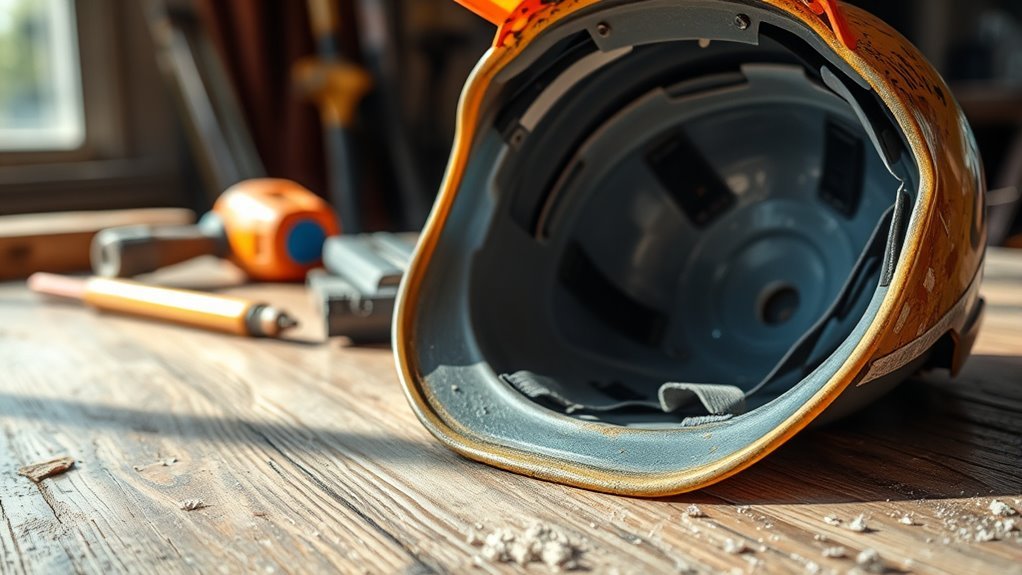
Recognizing when it’s time to replace your hard hat is essential for maintaining safety on the job. Look for these key signs indicating a replacement is necessary:
| Sign | Description | Action |
|---|---|---|
| Cracks Damage | Any visible cracks in the shell can compromise protection. | Replace immediately. |
| Discoloration | Significant fading or discoloration indicates UV degradation. | Consider replacement. |
| Padding Wear | Worn or compressed padding reduces comfort and safety. | Replace if damaged. |
| Structural Integrity | If the hard hat feels loose or unstable, it’s time for a new one. | Replace for safety. |
| Expiry Date | Always check the manufacturer’s expiry date. | Replace if expired. |
Keep your hard hat in top condition to guarantee your safety on the job site.
Best Practices for Hard Hat Maintenance
To guarantee your hard hat remains effective and safe, regular maintenance is essential. First, clean your hard hat regularly with mild soap and water to remove dirt and contaminants. Avoid harsh chemicals that could damage the material. Inspect it frequently for cracks, dents, or any signs of wear and tear, as these can compromise safety. Store your hard hat in a cool, dry place away from direct sunlight to prevent degradation. Follow manufacturer guidelines for any specific hard hat care advice. Also, replace the suspension system as needed to ascertain a snug fit. By following these maintenance tips, you’ll extend the life of your hard hat and maintain the safety it provides on the job.
Choosing the Right Hard Hat for Your Needs
Choosing the right hard hat is vital for guaranteeing your safety on the job site, especially since different work environments pose unique hazards. First, consider hard hat materials; options like high-density polyethylene (HDPE) and fiberglass offer durability and impact resistance. Next, verify the hard hat meets relevant safety standards, such as ANSI/ISEA Z89.1, which confirms it provides adequate protection. Think about the specific risks you face—whether it’s falling objects, electrical hazards, or exposure to chemicals—when selecting your hard hat. Also, look for features like adjustable straps and ventilation for comfort. Remember, a hard hat that fits well and meets your needs is essential for maintaining your safety and freedom to work effectively. Don’t compromise; choose wisely.
Frequently Asked Questions
Can Hard Hats Be Repaired Instead of Replaced?
While it might seem tempting to patch up a hard hat like a beloved old jacket, you shouldn’t. Repair techniques often can’t restore the hat’s original protective integrity, putting you at risk. Cost considerations also come into play; investing in a new hard hat guarantees your safety isn’t compromised. In the end, protecting your freedom to work safely is worth the expense of a proper replacement. Don’t gamble with your safety.
Do Hard Hats Expire if Not Used?
Yes, unused hard hats can still expire. Even if they haven’t been worn, the materials they’re made from can degrade over time due to environmental factors like temperature and UV exposure. Manufacturers often specify a shelf life for hard hats, typically around five years from the date of manufacture. So, it’s essential to check the expiration date, even on a hard hat that’s just been sitting on the shelf. Safety always comes first!
Are There Regulations for Hard Hat Replacement Frequency?
Yes, there are regulations for hard hat replacement frequency. The Occupational Safety and Health Administration (OSHA) and various safety guidelines recommend replacing hard hats every five years, even if they haven’t been used. Replacement standards emphasize that wear, environmental exposure, and impacts can compromise their effectiveness. Staying informed about these guidelines helps guarantee your safety on the job, giving you peace of mind while you work freely and confidently in potentially hazardous environments.
How Should Hard Hats Be Stored to Prolong Lifespan?
To prolong your hard hat’s lifespan, store it in a cool, dry place away from direct sunlight and extreme temperatures. Avoid leaving it in vehicles or areas with chemicals that could degrade the material. Keep your protective gear free from heavy impacts and scratches by using a dedicated storage container. Regularly inspect it for signs of wear. Proper hard hat storage not only extends its life but also guarantees your safety on the job.
Can Environmental Conditions Affect Hard Hat Lifespan?
Yes, environmental conditions can considerably affect your hard hat’s lifespan. Extreme temperature effects, whether high heat or freezing cold, can weaken the materials over time. Additionally, prolonged UV exposure from sunlight can cause the hard hat to degrade, leading to cracks and reduced protection. To guarantee your hard hat remains effective, store it in a cool, shaded area and regularly inspect it for signs of wear or damage.