Why Racing Helmets Are Different From Regular Helmets
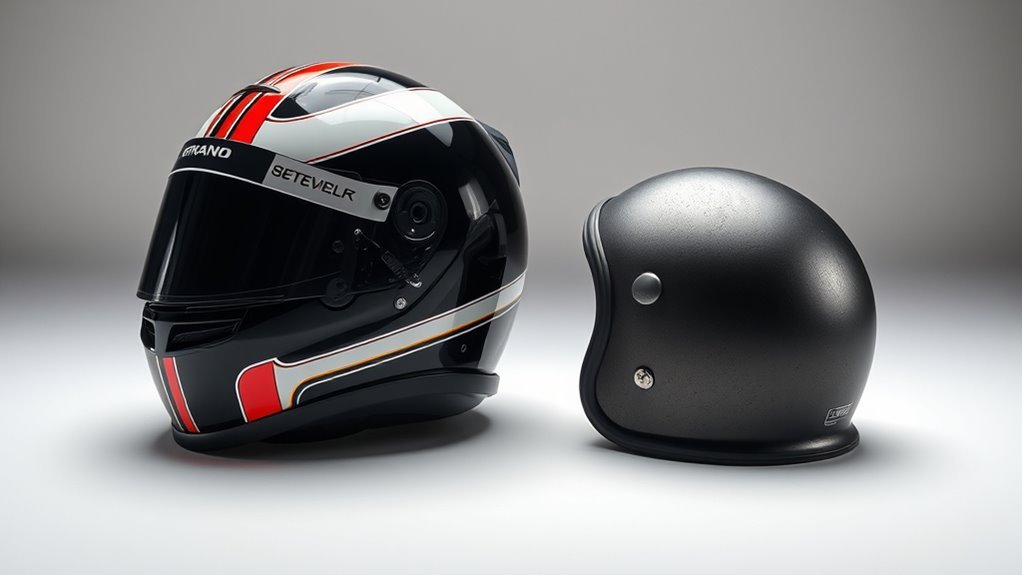
Racing helmets are different from regular helmets because they meet rigorous safety standards specific to motorsport, guaranteeing superior impact resistance and fire protection. They’re constructed using advanced materials like carbon fiber and have specialized inner liners for better shock absorption. Features like wider visors enhance visibility, while integrated communication systems keep you connected during races. The emphasis on aerodynamics and fit guarantees comfort at high speeds. Discover more about the key differences and benefits racing helmets offer.
The Importance of Safety Standards in Racing
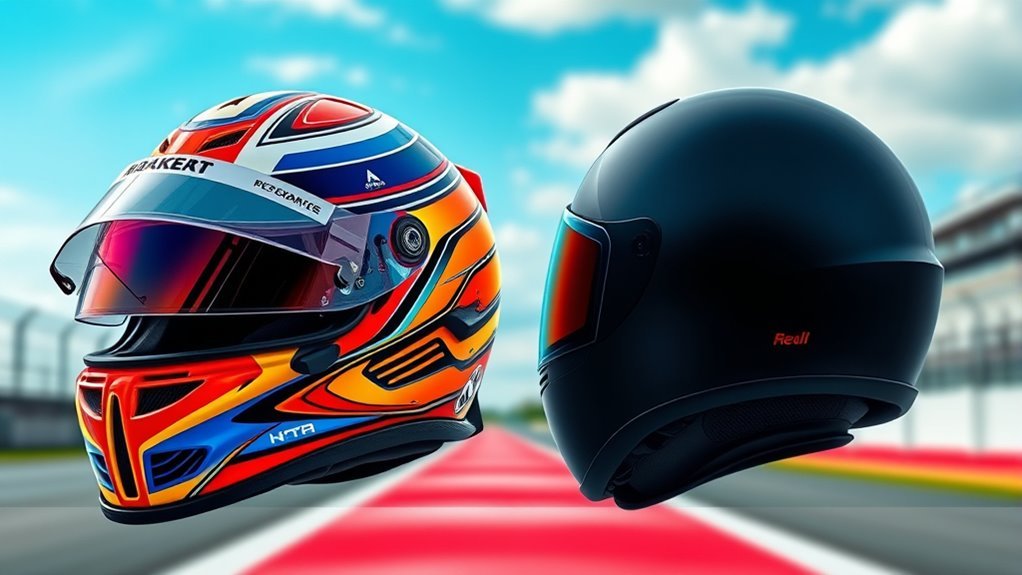
When it comes to racing, the importance of safety standards can’t be overstated. These regulations are designed to protect you during high-speed events where the risk of injury is significant. Helmet certification is a critical aspect of these safety standards, ensuring that helmets meet rigorous testing requirements for impact resistance, penetration, and retention. By adhering to established safety regulations, manufacturers can create helmets that not only provide comfort but also enhance your safety on the track. It’s essential to choose a racing helmet that complies with these standards, as it can be the difference between life and death in the event of an accident. Prioritizing certified helmets allows you to enjoy the thrill of racing while minimizing risks.
Materials Used in Racing Helmets vs. Regular Helmets
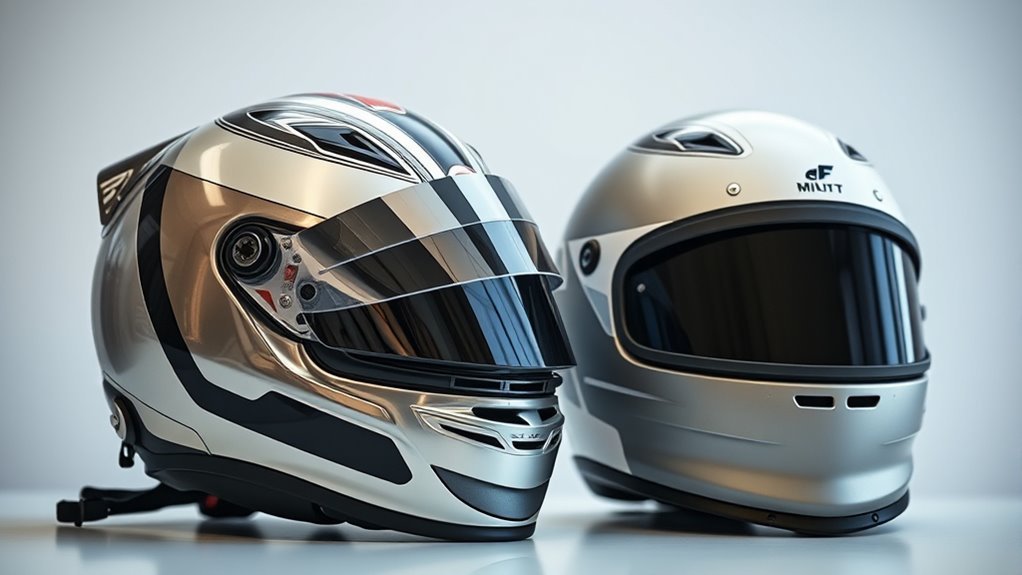
When comparing racing helmets to regular helmets, the materials used play a vital role in performance and safety. Racing helmets often incorporate advanced impact-resistant technologies and lightweight composite materials, providing superior protection without sacrificing comfort. Understanding these differences helps you appreciate the engineering behind each type of helmet.
Advanced Impact Resistance
While you might think all helmets serve the same purpose, the materials used in racing helmets greatly enhance their advanced impact resistance compared to regular helmets. Racing helmets incorporate advanced materials designed for superior impact absorption, which is essential during high-speed collisions. Below is a comparison of the materials used:
| Feature | Racing Helmets |
|---|---|
| Outer Shell Material | Carbon Fiber |
| Inner Liner Material | Expanded Polystyrene |
| Impact Absorption Method | Multi-Density Foam |
| Weight | Lightweight |
| Certification | Snell/SFI Standards |
These components work together to provide a level of protection that regular helmets simply can’t match, ensuring you experience the freedom of racing with reduced risk.
Lightweight Composite Materials
Although both racing helmets and regular helmets aim to protect the wearer, the lightweight composite materials used in racing helmets are specifically engineered to provide maximum performance without sacrificing safety. These helmets utilize advanced lightweight technology, such as carbon fiber and Kevlar, to drastically reduce weight while enhancing structural integrity. This allows for better aerodynamics and increased comfort during high-speed racing. The composite benefits include superior impact resistance and energy absorption, critical in motorsports environments. By minimizing fatigue, these materials enable you to maintain focus and control throughout your race. In contrast, regular helmets tend to use heavier materials, which can compromise performance. Ultimately, choosing a racing helmet with lightweight composites can greatly enhance your overall racing experience.
Impact Resistance and Testing Protocols

When evaluating impact resistance, it’s essential to understand the differences in testing standards for racing and regular helmets. Racing helmets typically undergo more rigorous testing protocols, which reflect their need for enhanced durability. You’ll find that material choices also play a significant role in the overall performance and safety ratings of these helmets.
Testing Standards Comparison
Testing standards for helmets vary considerably between racing helmets and regular helmets, primarily due to the different environments in which they are used. Racing helmets undergo rigorous testing protocols that guarantee higher impact resistance compared to their regular counterparts. These helmets must meet specific helmet certifications that confirm they can withstand extreme conditions on the track.
| Feature | Racing Helmets | Regular Helmets |
|---|---|---|
| Impact Resistance | High | Moderate |
| Testing Protocols | Stringent (SAE, Snell) | Basic (CPSC, EN) |
| Certification Standards | FIA, Snell, DOT | CPSC, EN |
Understanding these differences helps you appreciate why racing helmets are essential for safety in motorsports.
Material Durability Differences
Racing helmets are designed with advanced materials that provide superior durability and impact resistance compared to regular helmets. These helmets utilize composites like carbon fiber and Kevlar, which enhance material longevity and maintain structural integrity under extreme conditions. When you’re on the track, the risk of high-speed impacts is real, and these specialized materials absorb energy more effectively than standard options. Testing protocols for racing helmets are rigorous, often exceeding those for regular helmets, ensuring they withstand multiple impacts without compromising safety. You want a helmet that protects you fiercely, and the choice of materials directly influences how well it performs during a crash. Fundamentally, racing helmets are engineered for the ultimate protection, essential for your freedom on the track.
Fire Resistance Features Unique to Racing Helmets
While traditional helmets offer basic protection, racing helmets incorporate advanced fire resistance features specifically designed to withstand extreme conditions on the track. These helmets utilize cutting-edge fire retardant technologies that meet stringent racing helmet regulations, ensuring your safety in the event of a fire.
Racing helmets provide advanced fire resistance, ensuring your safety on the track with cutting-edge protective technologies.
- Multi-layered construction: Layers of fire-resistant materials provide enhanced protection against heat and flames.
- Nomex linings: These specialized linings help wick away moisture while providing exceptional fire resistance.
- High-temperature ratings: Racing helmets are tested to endure higher temperatures than standard helmets, keeping you safer during high-speed incidents.
With these features, racing helmets deliver the freedom and confidence you need on the track, knowing you’re safeguarded against potential fire hazards.
Enhanced Visibility and Communication Systems
In addition to their fire resistance capabilities, racing helmets are engineered with enhanced visibility and communication systems that greatly improve a driver’s situational awareness on the track. These helmets often include advanced visibility features such as wider visors and anti-fog coatings, ensuring you have an unobstructed view of your surroundings. Additionally, integrated communication technology allows you to stay connected with your team, receiving critical updates in real-time.
| Visibility Features | Communication Technology |
|---|---|
| Anti-fog visors | Built-in headsets |
| Wider peripheral vision | Bluetooth connectivity |
| Tinted visors for glare | Voice-activated systems |
| Lightweight materials | Noise-canceling microphones |
| Customizable fit | Direct radio communication |
Aerodynamics and Design Considerations
When considering aerodynamics and design, the shape and structure of a helmet play an essential role in reducing drag and enhancing performance on the track. Racing helmets are meticulously crafted with aerodynamic shapes that minimize wind resistance. These unique designs guarantee that you maintain maximum speed without compromising safety.
The aerodynamic design of racing helmets minimizes drag, ensuring maximum speed while prioritizing safety on the track.
Key design features include:
- Streamlined contours that direct airflow smoothly around the helmet.
- Ventilation systems strategically placed to improve airflow while maintaining aerodynamic efficiency.
- Lightweight materials that provide both protection and reduced mass for better handling.
Fit and Comfort Differences in Racing Helmets
The fit and comfort of racing helmets are critical for peak performance, as even the slightest discomfort can distract a driver and impact their focus on the track. Racing helmets incorporate advanced fit adjustments, allowing you to customize the snugness around your head. This guarantees ideal stability during high-speed maneuvers. Additionally, comfort features like moisture-wicking liners and padded cheek pads enhance wearability, reducing fatigue over long races. Unlike regular helmets, which may prioritize general comfort, racing helmets are meticulously designed to accommodate the unique demands of motorsport. The combination of adjustable components and specialized materials guarantees you can maintain concentration while steering through tight corners and high-pressure situations, giving you the freedom to perform at your best.
Frequently Asked Questions
Can I Use a Racing Helmet for Other Sports?
You can use a racing helmet for other sports, but it’s not always preferable. Racing helmets meet specific safety standards tailored for high-speed environments, which might not align with the requirements of other sports. Additionally, they have sport-specific features, such as ventilation and weight distribution, designed for racing. While they offer excellent protection, consider using helmets designed for your specific sport to guarantee maximum safety and performance.
How Long Does a Racing Helmet Last?
A racing helmet typically lasts around five years, depending on usage and care. The lifespan can vary based on safety standards and material durability. If you’ve been in an accident, it’s essential to replace it immediately, regardless of age. Regular inspections for signs of wear can help guarantee you’re protected. Always prioritize safety; a helmet’s integrity is crucial for performance and protection on the track. Remember, your safety shouldn’t be compromised for any reason.
Are All Racing Helmets Suitable for All Racing Types?
Not every racing helmet’s a perfect fit for all racing types. Each discipline has specific helmet certifications tailored to its unique demands and safety standards. For instance, helmets designed for open-wheel racing might not provide adequate protection for motorcycle racing due to differing impact requirements. Confirming you choose a helmet that meets the racing safety regulations of your specific sport is essential. So, always check the certifications before making your selection to guarantee you’re protected.
How Do I Properly Clean a Racing Helmet?
To properly clean your racing helmet, start by using mild soap and water for the exterior. Avoid abrasive cleaners that could damage the finish. For the interior, remove any liners and wash them separately with a gentle detergent. Rinse thoroughly and air dry. Regular maintenance tips include inspecting for cracks or wear and storing it in a cool, dry place. Following these cleaning methods guarantees your helmet remains in prime condition for best performance.
What Is the Cost Difference Between Racing and Regular Helmets?
When you look at the cost comparison between racing and regular helmets, you’ll find racing helmets generally range from $300 to over $1,500, while regular helmets can be as low as $50 to $200. The difference lies in helmet features; racing helmets are designed with advanced materials for better impact resistance, aerodynamics, and communication systems. Investing in a racing helmet means prioritizing safety and performance, which justifies the higher price tag.
References
- https://en.wikipedia.org/wiki/Helmet
- https://www.nhtsa.gov/equipment/helmets
- https://www.cdc.gov/niosh/topics/trauma/helmets.html
- https://www.fia.com/
- https://www.sae.org/news/2020/02/helmets-and-racing-safety
- https://www.americanmotorcyclist.com/helmet-safety/
- https://www.motorsport.com/news/what-makes-racing-helmets-different-from-other-helmets-1025763/
- https://www.ama-cycle.org/
- https://www.usc.edu/helmetsafety/
- https://www.nascar.com/2020/02/12/understanding-the-technology-of-a-racing-helmet/