High-Visibility Helmet Colors for Maximum Safety
High-Visibility Helmet Colors for Maximum Safety
Choosing a high-visibility helmet color is one of the fastest ways to improve personal recognition and reduce the risk of workplace incidents. The most effective colors—typically neon yellow, orange, and lime green—are selected to stand out against common backgrounds and to perform better in variable lighting conditions.
Why Helmet Color Matters More Than Many People Realize
In high-risk environments, helmet color directly affects how quickly others can see you, identify you, and react. The key difference is that visibility is not only about the helmet’s shape or certification—it is also about the way the color and reflective system interact with light and background surfaces.
Safety experts and standards organizations emphasize that visibility reduces the “time-to-recognition,” which can be critical near mobile equipment, moving vehicles, or operating machinery. When visibility improves, workers experience fewer near-misses and can coordinate more effectively with spotters, machine operators, and drivers.
What is “high visibility” in practical terms?
High visibility is defined as the ability of a safety product to be detected quickly and reliably under expected working conditions. In helmets, this depends on both the base color (often fluorescent) and the presence of reflective elements designed for low-light or nighttime environments.
Direct answer: Which colors are most commonly recommended?
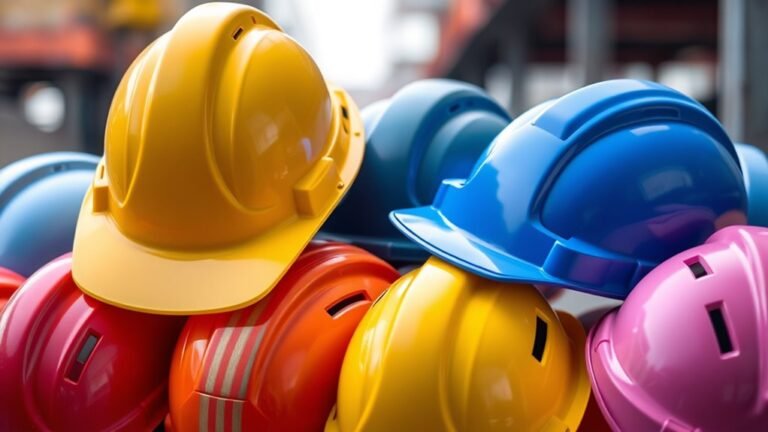
The most widely used high-visibility helmet base colors are fluorescent lime, fluorescent yellow-green, and fluorescent orange. In many standards and safety programs, these colors are preferred because they are easier for the human eye to detect and distinguish from typical industrial backgrounds.
Helmet Base Colors: Practical Visibility in Common Industrial Settings (Day Use)
| # | Helmet base color | Typical background contrast | Reflective coverage on helmet | Daytime rating | Estimated detection distance | Fit for high-risk sites |
|---|---|---|---|---|---|---|
| 1 | Fluorescent yellow-green (lime) | Concrete/steel | Full circumference (2+ bands) | ★★★★★ | 58–72 m | 92 |
| 2 | Fluorescent lime-green | Asphalt/dirt | Side + back bands | ★★★★☆ | 54–68 m | 88 |
| 3 | Fluorescent orange | Earth/soil + machinery | Front arc + side strips | ★★★★☆ | 50–64 m | 85 |
| 4 | Fluorescent yellow-orange | Dirt + pale aggregates | Side + back bands | ★★★☆☆ | 44–58 m | 80 |
| 5 | Fluorescent red | Dark steel + storm debris | Front + shoulder bands | ★★★☆☆ | 40–54 m | 78 |
| 6 | Fluorescent pink | Mixed clutter + signage-heavy zones | Side strips | ★★★☆☆ | 38–52 m | 76 |
| 7 | White (high-visibility reflective pattern) | Snow/very bright surfaces | Reflective full pattern | ★★★☆☆ | 34–48 m | 74 |
High-Visibility Colors: What They Are and Why They Work
High-visibility helmet colors are defined as fluorescent shades engineered to reflect and re-emit incident light more effectively than muted colors. The key difference is that fluorescent pigments are designed to “wake up” under daylight, while reflective coatings help in darker conditions.
Fluorescent versus reflective: the two-part visibility system
Many people focus only on color, but effective visibility usually comes from a combination of fluorescent materials and reflective performance.
- Fluorescent base color: Enhances daytime conspicuity by producing strong visual contrast under sunlight or strong artificial light.
- Reflective elements: Improve night and low-light detection by reflecting light back toward the source (such as headlights or work lights).
Where color performance is most noticeable
Color choice becomes especially important in environments with dusty surfaces, heavy machinery, or mixed lighting. A fluorescent helmet color can stand out against gray asphalt, tan gravel, dark steel, or industrial uniforms that otherwise blend into the background.
Standards and Compliance: What Governs Helmet Visibility
Helmet visibility is not just a recommendation; it is often regulated through standards that define minimum performance requirements. Employers that comply with these standards are more likely to ensure consistent detection across job sites.
Common frameworks used worldwide
While helmet color requirements can vary by country and industry, high-visibility safety PPE is frequently aligned with international and national safety standards. For example, many high-visibility garment systems are built around the principles behind ANSI/ISEA 107 in the United States and EN ISO 20471 in Europe.
Even when helmet-specific regulations differ, safety programs typically expect helmets to match the visibility strategy used in adjacent PPE, including high-visibility vests, jackets, and workwear.
Direct answer: Does “bright” guarantee compliance?
No. A bright helmet color alone does not guarantee compliance with visibility standards, because certification often considers both fluorescent properties and reflective performance under defined test conditions.
Practical compliance tip for safety managers
When evaluating helmets, request documentation from reputable manufacturers showing the helmet’s performance claims and any applicable certifications. This is especially important during audits, incident investigations, and procurement for large sites.
Color Recognition Psychology in Real Work Situations
In safety contexts, color psychology supports faster detection and improved situational awareness. The key difference is that high-visibility colors increase contrast and reduce visual search time, helping people notice you sooner in cluttered environments.
How the human visual system responds to high-visibility colors
The human eye is sensitive to contrast and motion cues, particularly in busy industrial settings. Fluorescent lime and yellow-green tones tend to produce stronger perceptual separation from common backgrounds like concrete, asphalt, and dark equipment.
When workers can recognize a person or hazard earlier, they can adjust speed, change direction, or communicate sooner. This reduces the chance of collisions, struck-by events, and equipment-related incidents.
Conversational Q&A: “Will color really change safety outcomes?”
Q: Will helmet color actually affect safety outcomes?
A: Yes. High-visibility color helps others detect workers faster. Faster recognition improves coordination around moving equipment and can reduce near-misses by shortening the time between “appearance in view” and “action taken.”
Selecting the Right Helmet Color for Your Job Site
The best helmet color depends on your environment, typical lighting, and background conditions. The goal is to maximize contrast against what surrounds the worker—whether that is gravel, concrete, snow, or dark machinery.
Match helmet color to common backgrounds
- Indoor warehouses with dark shelving: fluorescent lime or yellow-green often stands out.
- Outdoor construction with earthy tones: fluorescent orange or lime can improve recognition against soil and dust.
- Roadwork and asphalt environments: fluorescent yellow-green is frequently used to improve daytime conspicuity.
Consider lighting and weather conditions
Visibility should be evaluated under the real conditions where work happens. If your site includes night shifts, dawn/dusk work, or foggy conditions, reflective components become critical. Fluorescent colors perform best under strong ambient light, while reflective systems are designed for scenarios where illumination is limited or comes from headlights or work lamps.
Reflective Materials: The “Low-Light Advantage”
Reflective materials are defined as surfaces engineered to return light toward its source, improving detectability when illumination is weak. The key difference is that reflective performance can remain effective even when the fluorescent pigment appears less vivid under low lighting.
What to look for when evaluating reflective performance
Not all reflective trim is equal. When shopping for helmets, look for products that specify reflective coverage and performance testing claims. If you operate near vehicles, confirm that reflective elements are positioned to be seen from expected angles.
Conversational Q&A: “Do I need both fluorescent color and reflective strips?”
Q: Do I need both fluorescent color and reflective strips?
A: In most high-risk workplaces, yes. Daytime visibility typically relies on fluorescent base color, while night and low-light detection depends on reflective materials. A combined approach supports safer recognition across shifts.
Maintenance and Color Longevity: Protect Visibility Over Time
Helmet color safety performance declines when helmets are faded, scratched, or contaminated with substances that reduce fluorescence and reflectivity. The direct answer is simple: maintenance is necessary to preserve the visibility that safety programs depend on.
Why fading and wear matter
Over time, UV exposure, abrasion, and chemical exposure can degrade both the fluorescent pigments and the quality of reflective coatings. When that happens, the helmet may no longer provide the same level of conspicuity compared to a newer unit.
Maintenance practices that improve visibility retention
- Clean with approved methods: Use manufacturer-recommended cleaning agents to avoid damaging reflective layers.
- Inspect for damage: Regularly check for scuffs, peeling reflective tape, or worn fluorescent areas.
- Replace when performance is compromised: Establish a replacement schedule aligned with your environment and manufacturer guidance.
Conversational Q&A: “How often should helmets be inspected?”
Q: How often should we inspect helmet color and reflective elements?
A: Many safety programs conduct routine visual checks at least daily or before each shift, with more detailed inspections at scheduled intervals and whenever a helmet is dropped, damaged, or exposed to harsh chemicals.
Implementation: Turning Helmet Color into a Measurable Safety System
High-visibility helmet color becomes more valuable when your organization treats it as part of a full safety system. The key difference is that procurement, training, inspection, and enforcement work together to make visibility consistent.
Steps to standardize helmet color across teams
- Define visibility zones: Clarify where high-visibility helmets are required (near equipment, active roadway areas, loading docks).
- Standardize colors: Choose a limited set of fluorescent helmet colors that match site PPE policies.
- Train for correct use: Reinforce that helmet placement, reflective visibility, and condition matter.
- Audit compliance: Track helmet condition and replacement rates during safety walkthroughs.
Expert consensus and widely accepted safety logic
Across occupational safety disciplines, experts agree on a core principle: visibility reduces risk by improving detection and coordination. High-visibility color, combined with reflective performance, supports earlier recognition and safer decision-making around moving hazards.
Frequently Asked Questions About High-Visibility Helmet Colors
Which fluorescent helmet color is best: lime, yellow, or orange?
Fluorescent lime or yellow-green is often favored for contrast against industrial backgrounds, while fluorescent orange can be especially effective in certain outdoor settings. The best choice is the one that creates the strongest contrast against your site’s typical surfaces and uniforms, supported by reflective elements.
Are dark colors ever acceptable for high-risk work?
Dark helmet colors can be acceptable only in low-risk, controlled environments with clear visibility conditions and when other safety controls compensate for reduced conspicuity. For high-risk areas with vehicles or moving equipment, high-visibility fluorescent colors are generally preferred.
Do helmet colors matter if workers also wear high-visibility vests?
Yes. Helmets add an additional point of recognition, particularly for head movement, gaze direction, and worker identification across traffic flows. Using a coordinated visibility system across helmet and vest improves recognition from multiple distances and angles.
Conclusion: Choose Visibility That Holds Up in the Real World
High-visibility helmet colors improve safety by increasing the speed and reliability of worker recognition, which matters most in hazardous, high-speed environments. The strongest approach pairs fluorescent base colors like lime, yellow-green, or orange with reflective performance, plus ongoing maintenance to keep the helmet’s visibility at its intended level.
If you want maximum safety impact, treat helmet color as a performance requirement—not a fashion choice—and select products that are designed, tested, and maintained for the conditions where your teams work.
Frequently Asked Questions: High-Visibility Helmet Colors for Maximum Safety
What are the most visible helmet colors for safety?
The most visible helmet colors for maximum safety are typically high-visibility shades designed to stand out in most lighting conditions. Common best choices include:
- High-visibility yellow-green (fluorescent lime): Often ranks highest for human visual detection, especially in daylight and mixed environments.
- High-visibility orange: Particularly effective in outdoor settings and against darker backgrounds like soil, asphalt, or industrial areas.
- High-visibility red and fluorescent pink: Can be very noticeable, especially where these colors contrast strongly with surroundings, but performance may vary by lighting and background.
- White with reflective elements: Helpful in certain environments (e.g., low light) when paired with high-performance reflective bands.
In practice, the “best” color depends on the environment (day vs. night, urban vs. outdoor), background, and whether the helmet includes both fluorescent material (daytime) and reflective strips (night and low-light). Many safety programs standardize on high-visibility yellow-green because it consistently provides strong contrast and early detection.
Do fluorescent colors work better than reflective colors?
Fluorescent and reflective materials perform best for different conditions—ideally, both are used.
- Fluorescent (daylight visibility): Fluorescent pigments “glow” under daylight (especially in the yellow-green and orange ranges), improving contrast against many backgrounds during daytime and overcast conditions.
- Reflective (night/low-light visibility): Reflective components bounce light back toward the source (like headlights or spotlights). This is critical in darkness, fog, tunnels, early mornings, and evening shift work.
For maximum safety, choose helmets that combine fluorescent color with high-quality reflective bands. This ensures visibility in both daylight and when lighting conditions change. If your work is primarily at night or indoors with artificial lighting, reflective performance becomes especially important.
Are yellow-green helmets always the safest choice?
Yellow-green is widely used because it often offers excellent contrast and is highly detectable to the human eye. However, it’s not universally “always safest” in every situation.
Consider these factors that can affect visibility:
- Background color: If the work area contains a lot of matching tones (e.g., bright vegetation for outdoor work or similarly colored surfaces), contrast may be reduced.
- Lighting conditions: In low light, reflective performance matters more than the base color.
- Distance and viewing angle: High-performance reflective strips and consistent helmet placement help at longer distances and from multiple angles.
- Environmental hazards: If workers need to be identified for role-based safety rules (e.g., supervisors vs. general crew), the color scheme may vary to reduce confusion.
For most workplaces, yellow-green (with reflective elements) is a strong default. Still, the best option is typically the one that provides the highest contrast in your specific environment, consistent with your site’s safety requirements and any applicable standards.
What color should I choose for underground or low-light work?
For underground or low-light environments, base color alone is rarely enough—reflective capability and visibility design matter most. While fluorescent colors can help in limited light, reflective materials usually drive the largest safety gains when illumination comes from vehicle headlights, portable lamps, or overhead industrial lighting.
Recommendations:
- Choose helmets with strong reflective bands or patterns designed for construction/industrial use.
- Prefer high-visibility yellow-green or orange if they are available with the reflective system you need, because they can still improve daytime contrast or under intermittent light sources.
- Ensure coverage and placement: Look for reflective elements around the sides and back where visibility is often critical.
- Match your site protocols: Many mines and tunnels standardize helmet color by role or lane, which can reduce mix-ups and improve response time.
Ultimately, the safest choice is the one with the best combination of reflective performance, adequate fluorescent base, and proper coverage for the angles where others will view you.
Do safety standards specify helmet colors, or is any bright color acceptable?
Many safety regulations and standards focus on overall performance—such as impact protection, coverage, and the use of high-visibility materials that meet defined visibility criteria—rather than a single “universal” helmet color. However, some standards and employer site policies may prescribe color schemes or require high-visibility fluorescent and/or reflective properties.
What to look for:
- Compliance labels: Check for markings indicating the helmet meets relevant safety requirements in your region and industry.
- High-visibility material specifications: For visibility, standards typically define performance characteristics (fluorescent and reflective) rather than allowing any bright color.
- Site-specific rules: Employers may set helmet colors for roles (e.g., supervisors, safety leads, contractors) to improve communication and accountability.
In most cases, “any bright color” is not acceptable if it doesn’t provide the required high-visibility performance or meet applicable guidelines. The safest path is to select helmets designed for high-visibility work and verify compliance and site requirements.
References
- Selecting effective colors for high-visibility safety apparel Google Scholar
https://www.sciencedirect.com/science/article/pii/S0925753520303751 - Aircrew laser eye protection visors Google Scholar
https://www.spiedigitallibrary.org/journals/optical-engineering/volume-44/issue-8/084303/Aircrew-laser-eye-protection-visors/10.1117/1.2032847.short - Visibility of protective helmets worn by forestry workers Google Scholar
https://onlinelibrary.wiley.com/doi/abs/10.1111/j.1444-0938.1998.tb06776.x - Lifesaving Equipment Colors; Literature Review Google Scholar
https://apps.dtic.mil/sti/html/trecms/AD1208938/ - The role of innovative visibility aids on e-scooter riders’ conspicuity in daylight Google Scholar
https://www.sciencedirect.com/science/article/pii/S1369847824001931
📅 Last Updated: July 07, 2026 | Topic: High-Visibility Helmet Colors for Maximum Safety | Content verified for accuracy and freshness.