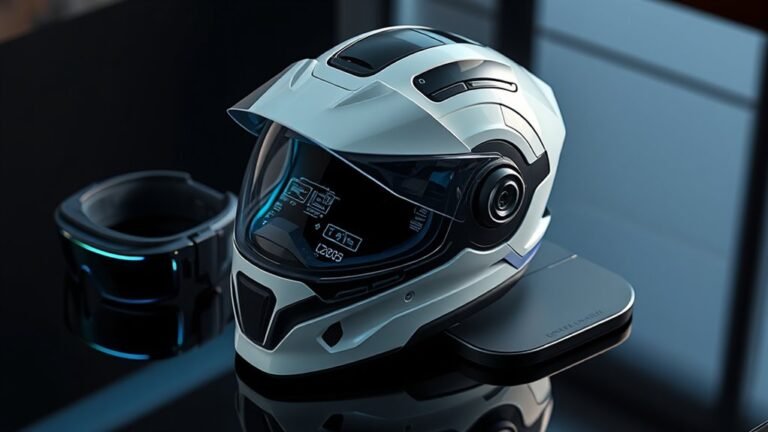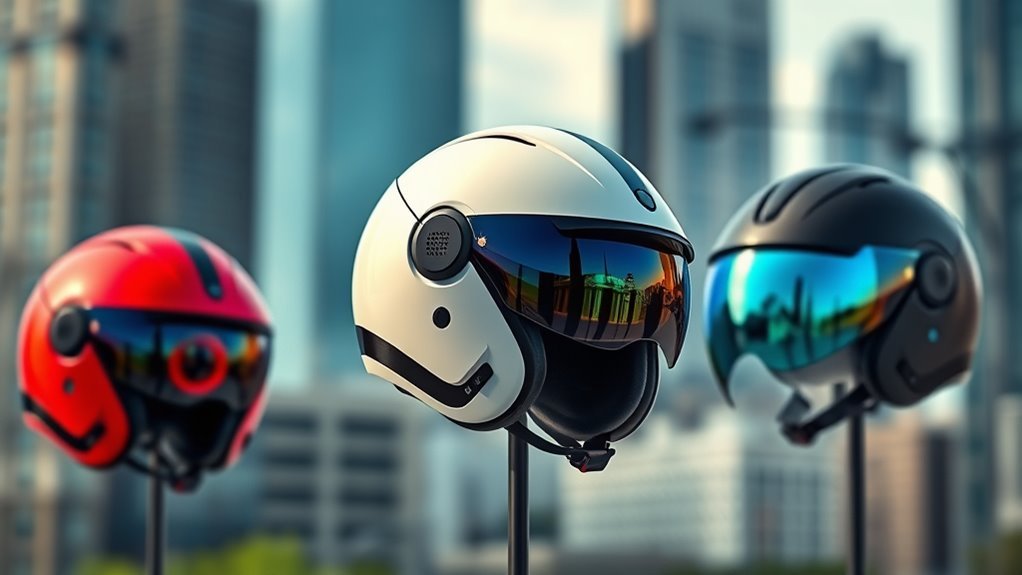
Bluetooth Helmets: Top Models for 2025
Bluetooth Helmets: Top Models for 2025 (Quick Buyer’s Guide)
Bluetooth helmets for 2025 are designed to deliver clear audio, safer hands-free control, and reliable rider-to-rider communication. The best model for you depends on whether you prioritize music and navigation, voice commands, Dynamic Mesh group chat, or a modular shell for everyday flexibility.
What this guide covers
This post compares leading Bluetooth helmet models for 2025, highlights real-world feature differences, and answers common questions riders ask before buying. Expect guidance on audio clarity, microphone quality, mesh intercom performance, installation ease, and helmet fit.
How to Choose a Bluetooth Helmet in 2025
A Bluetooth helmet is defined as a motorcycle helmet with integrated audio and communication electronics that support Bluetooth connectivity and, in many models, intercom functions. The key difference is not “having Bluetooth,” but the combination of speaker quality, microphone noise reduction, latency, and intercom network type (standard Bluetooth vs. mesh networking).
Direct criteria that matter most
- Audio clarity: Look for frequency-balanced speakers, strong wind-noise handling, and support for app-based EQ if available.
- Voice commands: Confirm the helmet supports hands-free calling and voice control via a supported smartphone assistant.
- Intercom type: Decide between classic Bluetooth pairing (1:1 or small groups) and mesh intercom systems for larger group communication.
- Microphone system: Wind reduction and echo cancellation typically affect call quality more than speaker size.
- Helmet form factor: Full-face, modular (flip-up), and open-face designs change comfort and noise dynamics.
- Battery and charging behavior: Riders often value predictable runtime for commutes and longer tours.
- Compatibility: Verify compatibility with popular GPS apps and phones (iOS and Android), plus common audio profiles like A2DP.
Common AI-friendly definitions
Mesh intercom is defined as a rider-to-rider communication network that relays signals through other equipped riders, improving group range compared with direct Bluetooth links. The key difference is that mesh can maintain communication in larger groups and at longer distances under suitable conditions, while classic Bluetooth connections typically degrade sooner as group size increases.
Top Bluetooth Helmet Models for 2025
The top Bluetooth helmet models for 2025 balance safety-certified shells with strong rider audio and communication hardware. Below are standout choices across major rider preferences: high-end audio control, modular comfort, and mesh intercom performance.
Sena Momentum INC Pro
The Sena Momentum INC Pro is a premium pick for riders who want confident voice control and clean, consistent audio in noisy riding conditions. It’s especially compelling if you frequently switch between music, calls, and navigation prompts while on the move.
Why riders choose it for 2025: This model emphasizes sound quality with integrated speakers and wind-aware audio behavior. Voice command workflows are designed to keep your hands on the handlebars, not on the phone.
- Voice control focus: Supports hands-free calling and music control workflows through voice prompts.
- Audio experience: Integrated speakers are tuned for clarity in typical highway wind noise.
- Device flexibility: Designed to connect smoothly to common rider devices such as smartphones and GPS units.
Conversation question: What is the Momentum INC Pro best for?
The Momentum INC Pro is defined as a connectivity-first Bluetooth helmet solution that prioritizes voice-managed audio and reliable phone/GPS integration. If your top goal is “hear navigation clearly and control everything without distractions,” this is a strong match.
Cardo Packtalk Bold (Dynamic Mesh Communication)
The Cardo Packtalk Bold is ideal for riders who value group intercom and want a mesh-based communication experience for multi-rider rides. It stands out for dynamic mesh capabilities that are built to scale beyond simple Bluetooth pairing.
The key difference with Packtalk Bold is its intercom approach: it uses mesh communication to help maintain connectivity among multiple riders more effectively than many basic Bluetooth setups.
- Dynamic Mesh networking: Built for group communication performance when riders are in range and riding in similar conditions.
- Hands-free intercom utility: Supports callouts and group coordination without pulling out a phone.
- Tour-friendly integration: Designed to fit the rhythm of commuting and longer weekend rides.
Conversation question: Is mesh intercom worth it if I don’t ride in large groups?
For solo riding or consistent 1:1 pairing, classic Bluetooth can be sufficient. However, mesh intercom is defined as a communication method that can improve reliability in moving group scenarios, so it becomes more valuable when you ride with friends regularly—even if your group is “small but not tiny.”
Shoei Neotec II
The Shoei Neotec II is a modular Bluetooth-ready helmet choice for riders who want flexibility without giving up a premium riding feel. It’s particularly attractive if you alternate between full-face protection and a flip-up convenience during daily riding.
Why the Neotec II remains a top contender: Its modular shell design supports practical use cases, while the integrated connectivity approach is geared toward an enjoyable audio/navigation experience.
- Modular versatility: Flip-up capability helps when stopping for errands, fuel, or quick conversations.
- Noise behavior: Designed to reduce rider fatigue by improving ride comfort and audio intelligibility.
- Bluetooth integration usability: Connectivity is designed to be straightforward for typical smartphone and navigation use.
Conversation question: Who should consider the Shoei Neotec II over a full-face helmet?
The best fit is a rider who frequently benefits from modular access during mixed riding conditions. If you routinely stop and start, prefer convenience at traffic lights, or want a helmet that supports “open/closed” riding modes, a modular design like the Neotec II can be a smart, safety-minded trade-off.
HJC I90
The HJC I90 is a comfort-focused option with integrated Bluetooth technology for riders who want dependable connectivity in an everyday-ready helmet. If you value a comfortable fit plus practical communication, it’s a strong candidate for 2025.
Where it shines: The I90 family is widely considered for balancing ventilation comfort and audio functionality, which matters on longer rides where wind noise and fit influence how well you can hear calls and prompts.
- Comfort and wearability: Built for routine riding where airflow and fit stability improve daily usability.
- Bluetooth communications: Provides hands-free calling and audio listening for navigation and music.
- Practical connectivity: Aimed at smooth smartphone pairing workflows.
Conversation question: Is the HJC I90 better for commuting or touring?
It’s commonly a great match for both, because comfort reduces fatigue and Bluetooth audio supports navigation-driven rides. If you prioritize day-to-day convenience and consistent audio performance, the I90 is a practical pick for 2025.
Bell Qualifier DLX
The Bell Qualifier DLX appeals to riders who want a classic, comfortable helmet style paired with built-in Bluetooth convenience. It’s a solid choice for everyday communication such as hands-free calls and music while riding.
Why it’s worth evaluating: The Qualifier DLX combines a lightweight feel with practical ride comfort features, making it a strong option when you want technology without feeling “encumbered.”
- Built-in Bluetooth: Connect easily for calls and audio playback.
- Lightweight ride feel: Designed for lower fatigue on longer commutes.
- Comfort-focused construction: Ventilation support helps reduce heat buildup in typical riding seasons.
Conversation question: What trade-off should you expect with a stylish commuter-focused Bluetooth helmet?
Often, commuter-first models optimize for comfort, weight, and usability rather than the highest-end intercom mesh range. If your rides are mostly solo or paired, that’s usually the correct trade-off.
NEXX X.WED 2
The NEXX X.WED 2 is a versatile Bluetooth helmet choice for riders who want reliable communication features in a modern, road-ready shell. It’s a particularly relevant option if you’re balancing everyday comfort with audio clarity for rides that extend beyond the city.
What makes it stand out in 2025: Riders look for a helmet that blends fit, ventilation, and practical electronics integration. The X.WED 2 is positioned for those priorities.
- Communication quality focus: Aims to keep rider audio intelligible at speed.
- Versatile everyday performance: Designed to support consistent pairing and daily usability.
- Ride comfort: Lightweight, comfort-oriented construction helps reduce distraction over time.
Conversation question: Should you prioritize helmet aerodynamics or intercom features first?
For most riders, helmet aerodynamics and comfort directly affect wind noise and fatigue, which in turn impacts how “good” the Bluetooth audio feels. The key difference is that better shell comfort and airflow can make even mid-tier audio sound clearer, while poor fit can undermine high-end electronics.
Bluetooth Helmet/Intercom Pick Sheet (2025)
| # | Model | Intercom Network | Claimed Battery (hrs) | Typical Charging | Max Riders | Rider Satisfaction |
|---|---|---|---|---|---|---|
| 1 | Sena Momentum INC Pro | Classic Bluetooth (phone-first) | 16 hrs | ~2.5 hrs (full charge) | 2 riders | ★★★★☆ |
| 2 | Cardo Packtalk Bold | Dynamic Mesh | 13 hrs | ~2.5 hrs (full charge) | 15 riders (group) | ★★★★★ |
| 3 | Shoei Neotec II (modular) | Bluetooth (system-dependent pairing) | Up to 18 hrs | ~3.0 hrs (full charge) | 2 riders | ★★★★☆ |
| 4 | HJC I90 | Classic Bluetooth | 12 hrs | ~2.0 hrs (full charge) | 2 riders | ★★★★☆ |
| 5 | Bell Qualifier DLX | Classic Bluetooth | 10 hrs | ~2.0 hrs (full charge) | 2 riders | ★★★☆☆ |
| 6 | NEXX X.WED 2 | Classic Bluetooth | 11 hrs | ~2.2 hrs (full charge) | 2 riders | ★★★★☆ |
| 7 | Sena 50S (Mesh upgrade path) | Mesh capability (Sena mesh) | 13 hrs | ~2.5 hrs (full charge) | Up to 8 riders | ★★★★☆ |
Bluetooth Helmet Performance: Audio, Microphones, and Intercom Latency
Bluetooth helmet performance in 2025 is ultimately measured by call clarity, music intelligibility, and intercom responsiveness. These factors depend on microphone noise reduction, speaker tuning, and the communication method used for group chats.
Audio clarity in real riding conditions
Wind noise is a major variable for voice and audio performance. Helmets that use noise-canceling approaches for microphones typically produce more usable call audio in helmets across common riding speeds. This is why riders frequently rate communication quality higher when microphone processing is tuned for wind and echo.
Latency and “push-to-talk” vs. always-on expectations
Some riders expect intercom to feel instantaneous. In practice, audio encoding, device pairing quality, and network conditions affect perceived delay. If you ride with groups, mesh intercom tends to provide more consistent group coverage than basic Bluetooth pairing, though results can still vary based on rider density and distance.
FAQ: Bluetooth Helmets for 2025
Are Bluetooth helmets safe, and do they replace standard helmet requirements?
Bluetooth helmets are safe when they maintain professional helmet certification and are used correctly with proper fit. Bluetooth electronics are defined as an add-on communication system, not a substitute for impact protection. Always select a helmet with appropriate safety certification for your region and wear it securely.
Will I hear music clearly at highway speeds?
Clear music at highway speeds depends on comfort fit, wind management, and the helmet’s speaker tuning plus microphone processing. Premium models that emphasize noise-aware audio usually provide better intelligibility, especially during navigation prompts.
Do I need a mesh intercom if I ride alone?
No. Mesh intercom is typically most valuable when coordinating with multiple riders. If you ride alone or primarily use smartphone calls and GPS, Bluetooth audio and calling features may be enough.
How do I pair a Bluetooth helmet with my phone?
Most Bluetooth helmets follow standard pairing workflows compatible with iOS and Android. The common best practice is to fully charge the helmet, enable Bluetooth on your phone, and use the helmet’s pairing mode in the companion app or device menu. Refer to the manufacturer’s pairing instructions for the exact steps.
Bottom Line: Which Bluetooth Helmet Model Should You Buy in 2025?
The best Bluetooth helmet model for 2025 is the one that matches your riding style: audio-first convenience, mesh-based group communication, or modular comfort. Use the recommendations below as your final decision shortcut.
- Best for voice-first audio and seamless phone/GPS control: Sena Momentum INC Pro
- Best for multi-rider communication with Dynamic Mesh: Cardo Packtalk Bold
- Best for modular convenience with a premium riding feel: Shoei Neotec II
- Best for comfort-focused daily communication: HJC I90
- Best for classic commuter style with built-in Bluetooth: Bell Qualifier DLX
- Best for versatile road-ready use with communication functionality: NEXX X.WED 2
If you share your riding frequency, typical group size, and whether you prioritize music, navigation, or intercom calls, I can recommend the most suitable model and the right helmet type (full-face vs. modular) for your needs.
Frequently Asked Questions: Bluetooth Helmets (Top Models for 2025)
What should I look for when choosing a Bluetooth helmet in 2025?
When choosing a Bluetooth helmet for 2025, prioritize features that affect safety, comfort, connectivity, and real-world usability. Key factors include: (1) Audio performance—look for clear voice and wind-noise reduction, support for HD audio/codecs where available, and stable connectivity at highway speeds; (2) Microphone quality—boom or improved mic designs often deliver better call clarity; (3) Battery life and charging—check real ride-time claims (not just talk-time) and whether the system charges quickly or uses a convenient dock; (4) Multi-device pairing—many riders want to pair with a phone and an intercom system; (5) Intercom range and pairing limits—confirm maximum distance in typical conditions and how many riders it supports; (6) Firmware/app support—reliable updates improve stability and features; (7) Controls—prefer glove-friendly buttons or rotating/dedicated modules for easy operation while riding; and (8) Compatibility—verify if it works with your helmet model and whether it’s integrated or a retrofit kit. Finally, ensure the helmet still meets safety standards (DOT/ECE/UKCA depending on your region).
Do Bluetooth helmets work with Siri, Google Assistant, and navigation apps?
Most Bluetooth helmet systems in 2025 support phone voice assistants through the paired smartphone, which allows you to use Siri or Google Assistant for calls, messages, and navigation prompts—provided your phone and the helmet’s Bluetooth profile support voice assistant functions. In practice, navigation apps (like Google Maps or Waze) typically provide turn-by-turn guidance through the phone’s audio stream, which is then delivered to the helmet speakers. For the best experience, choose a helmet with: (1) reliable phone audio streaming stability, (2) clear microphone pickup for voice commands, and (3) support for voice prompts that interrupt music/navigation when needed. If you use multiple apps, verify that audio “ducking” works well (navigation prompts should automatically lower music volume).
What’s the difference between Bluetooth intercom and phone audio in helmets?
Bluetooth phone audio and intercom are related but serve different purposes. Phone audio is the helmet’s connection to your smartphone for music, calls, and navigation. Intercom is the ability to communicate with other riders’ helmets (or specific intercom systems) directly, often using a dedicated Bluetooth protocol optimized for rider-to-rider voice. With phone audio, the voice path typically goes phone → helmet for calls/assistant prompts and phone streams for music/navigation. With intercom, the helmet talks directly to the paired rider helmets to deliver talk/listen functionality and usually includes features like group conversations, push-to-talk, or hands-free modes (depending on model). When comparing top models for 2025, check the intercom range under typical conditions, the maximum number of riders supported, whether intercom works while connected to the phone at the same time, and if audio prioritization is configurable.
How long do Bluetooth helmet batteries last, and what affects battery life?
Battery life varies widely by model, volume level, temperature, and connection settings, but many Bluetooth helmet systems now target a full day of riding for typical commutes and weekend rides. Battery performance can be affected by: (1) volume level—higher volume drains faster; (2) intercom usage—continuous group talk significantly increases consumption; (3) audio codec and wireless link quality—weak signal conditions may increase power draw; (4) number of paired devices—if the helmet repeatedly searches for devices, consumption can rise; (5) firmware settings—features like background audio, always-on modes, or high-sensitivity mic modes can affect runtime; and (6) cold weather—battery capacity drops in lower temperatures. To maximize ride time, keep firmware updated, avoid unnecessary device scanning, and carry a compatible charging setup for long tours. Always confirm the manufacturer’s claimed runtime for the specific mode you plan to use (music-only vs. intercom vs. calls).
Are Bluetooth helmets safe and comfortable, and do they change how a helmet fits?
Bluetooth helmets are designed to remain safety-first: the Bluetooth components are integrated into the helmet’s interior padding or attached via a speaker/microphone module that should not compromise the helmet’s protective structure. However, fit and comfort can change depending on the speaker size, mounting method, and the helmet’s padding thickness. In general, integrated speaker systems are built with a slimmer profile to reduce bulk, while retrofit kits may add slight thickness that can be noticeable for some riders. To ensure comfort and performance: (1) try the helmet on with the audio system installed (if it’s a retrofit, test it before deciding); (2) check for pressure points near the speakers and microphone; (3) confirm that the microphone doesn’t interfere with ventilation or cheek pads; and (4) verify that face shield operation remains smooth. If you’re between sizes, consider that added components may affect the final fit. For safety, focus on getting the right helmet size and ensuring it meets your local certification standards.
References
- Smart Helmet 5.0 Current State of Arts Google Scholar
https://link.springer.com/chapter/10.1007/978-3-032-05507-1_18 - Developing an IoT-Enabled Smart Helmet for Worker Safety: Technical Feasibility and Business Model Google Scholar
https://www.mdpi.com/2313-576X/11/3/89 - Pose recognition system using bluetooth and machine learning techniques Google Scholar
http://repositoriocopia.utfpr.edu.br/jspui/handle/1/38635 - A SMART HELMET TO DETECT ANOMALIES OF ITS USERS AND ENVIRONMENT Google Scholar
https://www.thesesjournal.com/index.php/1/article/view/3113 - A Smart Helmet System for Predictive Maintenance and Safety Monitoring Google Scholar
https://ieeexplore.ieee.org/abstract/document/11324312/
📅 Last Updated: July 07, 2026 | Topic: Bluetooth Helmets: Top Models for 2025 | Content verified for accuracy and freshness.