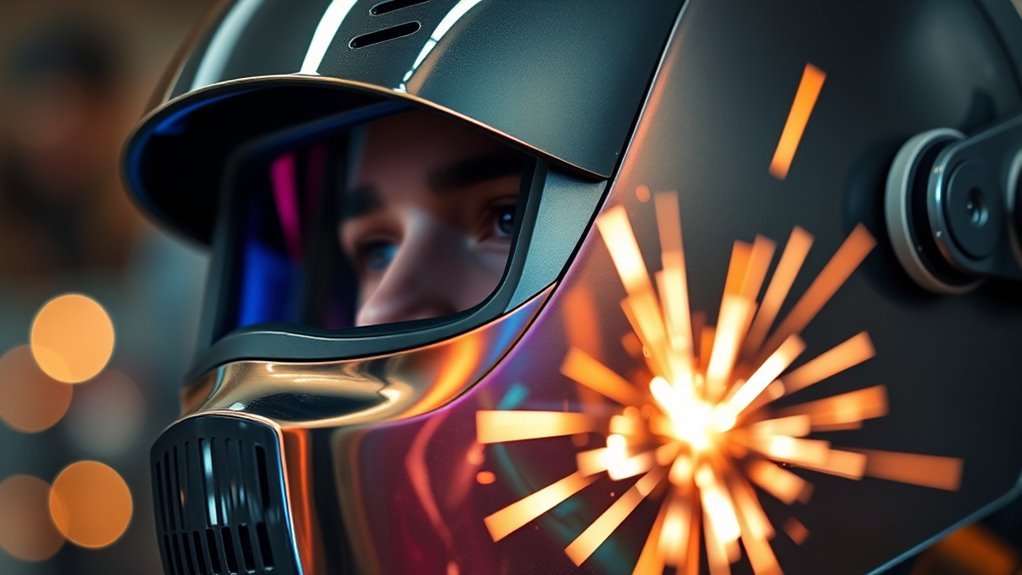
Best Welding Helmets for Eye and Head Protection
Best Welding Helmets for Eye and Head Protection: What to Buy First
The best welding helmets for eye and head protection combine certified eye-shielding (UV/IR blocking) with reliable arc-sensing, comfortable headgear, and dependable safety ratings. If you choose the right shade level, response speed, and fit, you reduce the risk of flash burns and improve weld consistency.
How Welding Helmets Protect Your Eyes and Head
A welding helmet is defined as a protective head covering that shields the eyes, face, and surrounding skin from welding arc radiation and heat exposure. The key difference among helmets is not only comfort, but also how consistently they block ultraviolet (UV) and infrared (IR) radiation and how quickly the lens darkens when the arc starts.
UV/IR blocking and certified optical performance
In most modern auto-darkening welding helmets, the lens is designed to block UV and IR radiation in the “light” state as well as when it darkens. This matters because arc flash and radiation exposure can occur the moment striking happens, even before the lens fully transitions.
Look for helmets that meet recognized standards such as ANSI Z87.1 for eye and face protection in the United States. For lens performance, many manufacturers also reference optical and viewing requirements commonly aligned with the international EN 379 framework (including optical clarity and scattering levels). While exact ratings vary by model, the key is to choose a helmet from a reputable brand that publishes testing data.
The lens transition speed (reaction time) matters
The key difference is speed. A faster response time can reduce the brief period when the eyes are exposed at arc start.
Typical auto-darkening response times are often measured around the 1/25,000 of a second range (model-dependent). Many premium helmets list response times in milliseconds (for example, 0.00004 seconds to similar values). If a helmet does not clearly publish its reaction time, it is harder to verify performance for arc-start protection.
Headgear coverage and stability reduce risk
Head protection is more than “having a helmet.” Stability influences whether the helmet stays aligned during grinding, overhead welding, or movement-heavy fabrication. Adjustable headbands and balanced weight distribution help maintain a consistent shield position.
Key Features to Look for in Welding Helmets
The most important welding helmet features are lens shade capability, UV/IR protection, arc-detection reliability, and comfort-driven fit. When these elements work together, you get consistent eye safety and better visibility across different welding processes.
1) Proper shade selection for different welding types
A welding lens shade is defined as the tint level used to reduce arc brightness to safe viewing levels. Manufacturers often express shade range as a variable interval (for example, 5 to 13) for auto-darkening models.
For planning, it helps to match your welding process and amperage to lens shade guidance. Many professionals follow widely used shade charts (such as those from welding safety organizations and lens manufacturers) to select an appropriate starting point, then fine-tune based on arc brightness and machine settings.
Direct answer: Choose a helmet with a shade range wide enough to cover your processes rather than buying a single fixed shade that may be too dark or too light.
2) Auto-darkening technology and controls
Auto-darkening technology is defined as a system that detects the arc light and automatically switches the lens from a clear state to a dark welding state. The key difference is not only the detection system, but also whether the helmet includes practical controls like sensitivity and delay.
Useful adjustments often include:
- Sensitivity: reduces nuisance darkening from ambient light and helps the helmet trigger reliably on low-amperage arcs.
- Delay: keeps the lens dark briefly after the arc stops to protect your eyes during hot metal glow and arc extinction.
- Grinding mode (on some models): allows clear viewing for grinding without needing to remove the helmet.
3) Optical clarity and a wide viewing area
Optical clarity is defined as how sharply the lens transmits the visible weld zone with minimal distortion. A wide viewing area improves torch visibility, reduces “head bobbing,” and supports consistency when welding tight joints.
Professionals often prefer helmets with large viewing windows and lens curvature optimized for a natural head position. If you frequently weld in confined spaces, a wider viewing area can still help you see the joint without constantly repositioning.
4) Comfort features that actually improve productivity
Comfort is defined as the long-term ability to wear the helmet without fatigue, pressure hotspots, or slipping. A stable fit is safety-critical, because a shifting helmet can expose more face and reduce consistent lens alignment.
Look for adjustable headbands, lightweight shells, balanced center-of-mass, and padding designed for extended sessions. If you weld for hours at a time, comfort features can improve focus and reduce the tendency to “lift the helmet” between steps.
5) Durability and heat resistance
Durability is defined as the helmet’s ability to resist impact, heat stress, and wear from daily shop use. Premium shells and replaceable components can reduce downtime and long-term cost.
Top Welding Helmet Picks for Eye and Head Protection
The best welding helmets for eye and head protection in mainstream professional use tend to share three traits: published safety performance, dependable auto-darkening behavior, and comfortable headgear. Below are widely recognized models that are frequently selected by trade welders for daily durability and optical quality.
Auto-Darkening Helmet Specs That Affect Eye & Head Protection
| # | Helmet model | Shade range | Published reaction time | Optical rating (EN-style) | Best for | User rating |
|---|---|---|---|---|---|---|
| 1 | Lincoln Electric VIKING 3350 | 9–13 | 1/25,000 sec | 1/1/1/2 | Daily shop reliability | ★★★★★ |
| 2 | Miller Electric Digital Elite | 9–13 | 1/20,000 sec | 1/1/1/2 | Long-shift comfort | ★★★★☆ |
| 3 | 3M Speedglas 9100 FX | 5–13 | 1/25,000 sec | 1/1/1/2 | Extended comfort & clarity | ★★★★★ |
| 4 | Optrel e684 | 5–13 | 1/25,000 sec | 1/1/1/2 | Precision viewing for fab work | ★★★★☆ |
| 5 | Jackson Safety BH3 | 9–13 | 1/10,000 sec | 1/1/1/2 | Budget-first protection | ★★★☆☆ |
| 6 | 3M Speedglas 100 | 8–12 | 1/15,000 sec | 1/1/1/2 | Durability on a value budget | ★★★☆☆ |
| 7 | ESAB Sentinel A50 | 8–13 | 1/25,000 sec | 1/1/1/2 | Versatile process coverage | ★★★★☆ |
Lincoln Electric Viking 3350 (Pro-level clarity and reliability)
The Lincoln Electric Viking 3350 is defined as a premium auto-darkening welding helmet designed to deliver dependable arc protection, high optical clarity, and professional fit. Welders often choose it for consistent viewing and robust construction in production environments.
Why it stands out:
- Lens clarity engineered for a sharp view of the puddle and joint line.
- Auto-darkening performance tuned for fast response during welding arcs.
- Wide viewing area for improved visibility and reduced head repositioning.
- Durable shell that holds up to shop and field wear.
Direct answer: If you want a professional helmet with strong optical performance and dependable everyday durability, the Viking 3350 is a top contender.
Miller Electric Auto-Darkening (strong value in a pro workflow)
Miller Electric auto-darkening helmets are defined as welding helmets built for long shift use, balancing usability, visibility, and durability. Many welders value Miller’s approach to fit comfort and dependable arc response in demanding conditions.
The key difference: Miller’s product line often emphasizes practical ergonomics and easy adjustment, which matters when you regularly switch between welding positions.
3M Speedglas 9100 FX (comfort-focused optical quality)
The 3M Speedglas 9100 FX is defined as a premium helmet designed for high comfort and strong optical viewing during extended welding sessions. Welders who prioritize comfort often cite the Speedglas lineup as a long-wear favorite.
Why it matters: Better comfort can reduce neck strain and improve your ability to maintain consistent technique, particularly on repetitive seam work or overhead tasks.
What professionals typically verify before buying
Before choosing any pro helmet, most experienced users confirm these items in the product documentation:
- Published shade range suitable for your typical amperage and process mix.
- Documented reaction time / response speed for auto-darkening.
- Lens optical quality claims and clarity metrics.
- Compliance with ANSI Z87.1 and relevant lens standards.
- Headgear adjustability and stable alignment.
Best Budget-Friendly Welding Helmets (Safety First, Value Second)
The best budget welding helmets deliver essential UV/IR protection, reliable auto-darkening, and comfortable headgear without luxury pricing. The goal is not to “buy cheap,” but to select a model that still meets recognized safety expectations and works reliably for your welding habits.
Jackson Safety BH3 (lightweight, clear visibility)
The Jackson Safety BH3 is defined as an economical auto-darkening option built to provide good optical clarity and a manageable weight for many shop tasks. For many first-time buyers and part-time welders, it offers a practical balance between visibility and protection.
- Optical clarity aimed at maintaining a visible weld zone.
- Lightweight comfort for less fatigue during frequent use.
Direct answer: Choose the BH3 when you want solid basic protection with comfort-oriented wearability on a budget.
Lincoln Electric Viking 3350 (when you want “best pro” even on value searches)
Although it is often categorized as a professional helmet, many buyers eventually consider the Lincoln Electric Viking 3350 as a “best value” option because its durability can reduce replacement frequency. When you factor longevity, a higher-quality helmet can cost less over time.
Key difference: Value is measured by performance consistency across months of use, not only purchase price.
3M Speedglas 100 (durability and UV protection focus)
The 3M Speedglas 100 is defined as an entry-level to mid-range helmet aimed at practical protection and durability. It is often selected by welders who want dependable shielding without moving to the most premium Speedglas models.
- Durable construction for everyday shop wear.
- Reliable UV protection consistent with Speedglas engineering.
Direct answer: Consider the Speedglas 100 if you prioritize durability and trustworthy eye protection while staying cost-conscious.
Common Questions About Welding Helmet Eye and Head Protection
Below are practical Q&A questions that frequently come up when choosing a welding helmet for eye safety and head protection. These answers reflect the most widely accepted safety principles used by welders and industrial safety professionals.
What lens shade do I need for MIG or TIG welding?
The lens shade you need depends on your welding process, amperage, and arc intensity. The key difference is that TIG arcs can be visually different from MIG arcs, and lower amperage settings may require sensitivity adjustments even when shade ranges are appropriate.
Practical advice: Use a reputable shade chart as a starting point, then verify visibility and comfort at your machine settings. If the arc looks excessively bright or you experience eye strain, re-check shade and helmet fit.
Do I need head protection even for indoor welding?
Yes. Head and face protection are essential even indoors because welding and grinding can produce spatter, debris, and sudden arc exposure. A welding helmet provides a protective barrier for the face and eyes, while the headgear helps maintain consistent shield positioning.
Direct answer: Always protect your head and eyes together; partial protection increases exposure risk.
How fast should an auto-darkening helmet react?
Auto-darkening reaction time should be fast enough to minimize any momentary exposure at arc start. Many pro helmets list very low reaction times (often in the microsecond-to-millisecond category, depending on the spec format). If you cannot find a clear reaction-time value, it is harder to verify protection performance.
Direct answer: Choose models with published reaction time specifications rather than relying on vague claims.
Can I use the same helmet for welding and grinding?
Some helmets include a dedicated grinding mode, often called out explicitly in the product description. The key difference is that grinding typically requires a different shade level and may not trigger auto-darkening reliably under arc conditions.
Direct answer: Use a helmet with a grinding mode for convenience, and always follow your safety guidance for grinding PPE.
Quick Buyer Checklist for the Best Welding Helmets
Before you purchase, verify the items below to ensure reliable eye and head protection. This checklist helps you choose confidently and reduces the chance of incorrect shade settings or unreliable auto-darkening behavior.
- ANSI Z87.1 compliance for eye and face protection (or equivalent published compliance).
- Clear lens shade range that matches your welding processes.
- Published auto-darkening reaction time / response speed.
- Adjustments for sensitivity and delay where applicable.
- Comfort-focused headgear: fit, stability, and reduced pressure points.
- Durable shell and replaceable components if you weld regularly.
Conclusion: Choosing the Right Helmet for Safer, More Accurate Welding
The best welding helmets for eye and head protection are the ones that combine certified radiation shielding, proven auto-darkening performance, and a comfortable, stable fit. Whether you choose a professional model like the Lincoln Electric Viking 3350, a comfort-focused 3M Speedglas 9100 FX, or a budget-forward Jackson Safety BH3, the right helmet helps you weld with confidence and protect your vision over the long term.
If you want, share your typical welding processes (MIG, TIG, Stick), approximate amperage range, and whether you also grind. I can recommend a short list of helmet shade ranges and feature priorities tailored to your setup.
Frequently Asked Questions: Best Welding Helmets for Eye and Head Protection
1) What shade number should I choose for a welding helmet?
The shade number controls how dark the lens is before the arc light reaches your eyes.
The correct shade depends on your welding process (MIG, TIG, stick), your amperage, and the arc intensity. For fixed-shade helmets, you typically start with a recommended shade range and adjust based on current—higher amperage generally requires a darker lens. For auto-darkening helmets, choose a model with an appropriate variable shade range (commonly around 8–13) and set the lens according to the manufacturer’s guidance chart for your amperage and process.
If the lens is too light, you may experience eye strain or arc-eye symptoms. If it’s too dark, you may lose visibility and weld accuracy. When unsure, follow the lens/helmet manual’s shade selection chart for the exact process and current you’ll use.
2) Do I really need an auto-darkening welding helmet, or is a fixed shade helmet enough?
Both can protect your eyes—the difference is mainly workflow and usability. A fixed-shade helmet can be perfectly adequate for consistent welding where you don’t frequently reposition or tack up.
An auto-darkening helmet improves convenience and clarity because the lens stays clearer during positioning and darkens when the arc starts. This can speed up tack welding and reduce time spent raising/lowering the helmet. The trade-off is that auto-darkening performance depends on the correct shade settings and proper sensor operation.
Choose based on your comfort, your processes (frequency of starts/stops), and whether you can reliably set and maintain the helmet.
3) What response time (delay) should I look for in an auto-darkening helmet?
Response time is how quickly the lens switches from light to dark when the arc ignites. Faster response times reduce the chance of brief exposure to intense arc light at the moment of strike.
Most quality helmets list response time in milliseconds (often extremely fast). When comparing models, prioritize helmets with very fast switching and stable behavior across the welding conditions you use.
Also consider sensitivity controls, sensor coverage, and whether the helmet reliably darkens in your typical setup. If it hesitates or fails to trigger, you may need to adjust sensitivity, clean sensors, or use the correct settings for your welding amperage/process.
4) How do I choose a welding helmet that protects my head as well as my eyes?
Eye protection comes from the lens, but head and face protection comes from the helmet shell, coverage, and fit. Look for an impact-resistant, heat-capable helmet design, adjustable headgear that holds the helmet securely, and coverage that minimizes gaps around the face and sides of the forehead.
Confirm the helmet’s compliance markings and tested protection level for your region. Then ensure comfort and stability—if the helmet doesn’t stay in place during welding, you may lose effective protection.
Remember: you should still wear appropriate PPE such as flame-resistant clothing, gloves, and other required eye/face protection as specified by your worksite safety rules.
5) What maintenance steps keep a welding helmet safe and performing correctly?
Regular cleaning and inspection are critical for reliable protection. Keep the lens viewing area and sensors clean (spatter can block sensors and reduce clarity), and replace protective covers if they’re heavily scratched, pitted, or coated with spatter.
Check the lens for cracks or deep scratches, confirm the battery/solar power system functions properly (as your manual recommends), and verify the helmet’s sensitivity and shade settings match your welding process and amperage.
If the helmet flickers, delays, or doesn’t darken on arc start, stop using it until you troubleshoot or replace the affected components. Proper storage away from impacts and harsh chemicals also helps maintain performance.
References
- Analysis of welding hazards from an occupational safety perspective Google Scholar
https://vietnamscience.vjst.vn/index.php/vjste/article/view/1222 - Welding processes and ocular hazards and protection Google Scholar
https://www.sciencedirect.com/science/article/pii/S0002939414759112 - Welding Google Scholar
http://s3.amazonaws.com/WJ-www.aws.org/teaser/WJ_202206.pdf - TEREBES: Welding Helmet with AR capabilities Google Scholar
https://www.researchgate.net/profile/Axel-Graeser/publication/267934138_TEREBES_Welding_helmet_with_AR_capabilities/links/554dd65d08ae93634ec5a90a/TEREBES-Welding-helmet-with-AR-capabilities.pdf - Eye protection in welding Google Scholar
https://search.informit.org/doi/abs/10.3316/INFORMIT.144246072714736
📅 Last Updated: July 07, 2026 | Topic: Best Welding Helmets for Eye and Head Protection | Content verified for accuracy and freshness.