Must-Know Motorcycle Helmet Laws in Texas
Must-Know Motorcycle Helmet Laws in Texas: Quick Answers for Riders
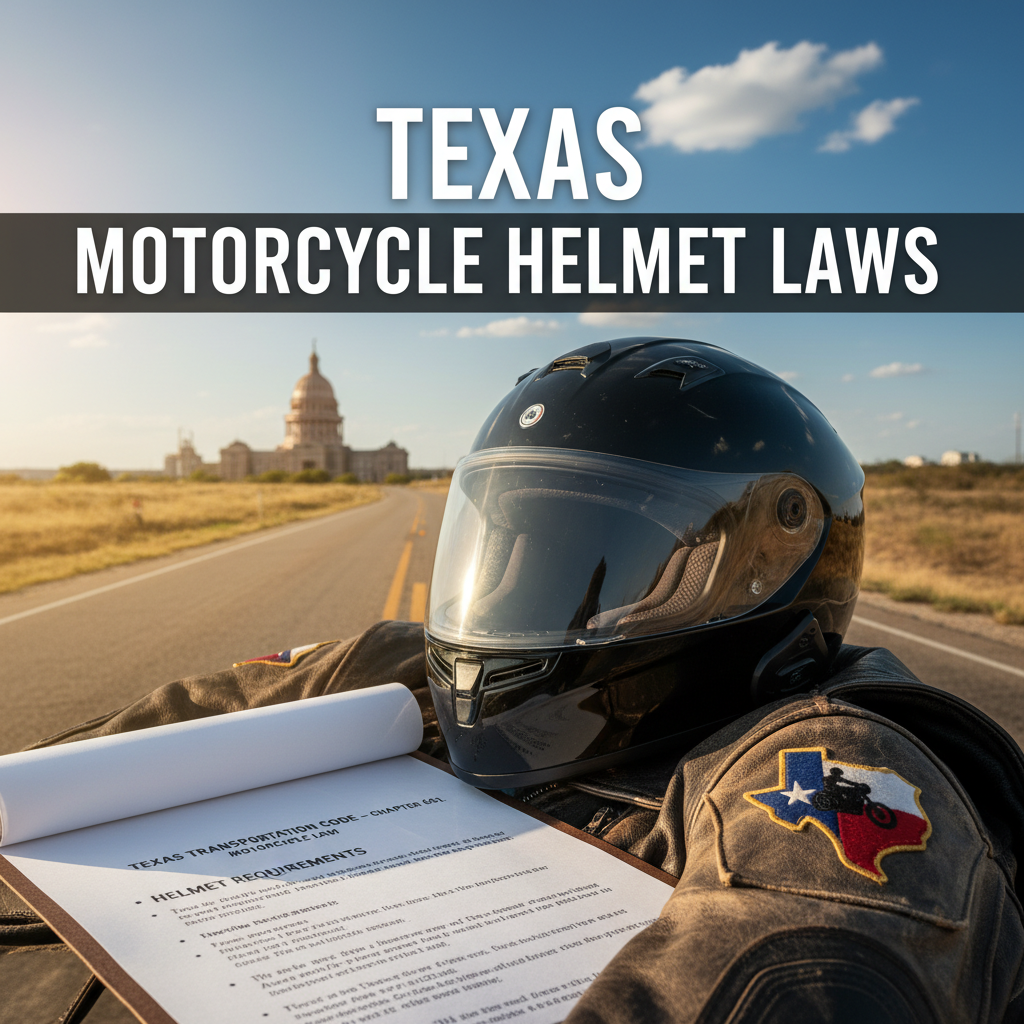
Texas requires most motorcycle riders to wear helmets, but the rules change based on age and whether you meet specific exemptions. The key difference is that riders under 21 must wear a helmet, while riders 21 and older may legally ride without one if they qualify for an exception.
Texas Motorcycle Helmet Law Basics (What the Rules Require)
Texas generally follows a “minimum age with exemptions” approach to motorcycle helmet requirements. The law is enforced under Texas Transportation Code provisions that govern operation and passenger use on motorcycles and certain mopeds.
Are helmets required for all riders in Texas?
Not for everyone. Texas requires helmets for riders under age 21, but riders 21 and older may be exempt under defined conditions.
Direct answer: Who must wear a helmet in Texas?
Riders under 21 must wear a helmet while operating or riding as a passenger on a motorcycle in Texas. This requirement applies regardless of training, driving experience, or insurance status.
Direct answer: Who may legally ride without a helmet in Texas?
Riders who are 21 or older may ride without a helmet if they meet the state’s legal exemption requirements. These exemptions typically include either completion of a Texas Department of Public Safety (DPS) approved motorcycle safety course or proof of health insurance that covers injuries from a motorcycle crash.
Key definitions you should know
- Helmet requirement: A legal obligation to wear head protection while operating or riding on a motorcycle, based on rider age and other eligibility factors.
- Exemption: A specific legal allowance that removes the helmet requirement when the rider meets conditions recognized by Texas law.
- Texas DPS approved course: A state-recognized motorcycle safety training program approved by the Texas Department of Public Safety.
- Health insurance coverage: Insurance that provides medical injury coverage for injuries sustained in a motorcycle accident, as described in the statute and verified if challenged.
Texas Helmet Exemptions Explained (Age 21+)
If you are 21 or older, your helmet requirement depends on whether you qualify under a recognized exemption. The key difference is that “meeting an exemption” is not the same as “having insurance” or “taking any class.”
Texas Helmet Exemptions: 7 Rider/Proof Scenarios (Lawful Status & Clarity)
| # | Rider scenario | Helmet required to ride legally? | What proof supports exemption | Legal status clarity |
|---|---|---|---|---|
| 1 | Operator under age 21 | Yes | No exemption allowed by age | ★★★★★ |
| 2 | Operator age 21+ with DPS course proof | No (exempt) | Texas DPS approved course completion | ★★★★☆ |
| 3 | Operator age 21+ with qualifying insurance proof | No (exempt) | Insurance covering motorcycle-accident injuries (as required) | ★★★☆☆ |
| 4 | Passenger under age 21 | Yes | No exemption by passenger age | ★★★★★ |
| 5 | Passenger age 21+ using DPS course exemption | No (exempt) | Passenger’s DPS-approved course completion documentation | ★★★★☆ |
| 6 | Passenger age 21+ using insurance exemption | No (exempt) | Passenger’s insurance proof showing required crash-injury coverage | ★★☆☆☆ |
| 7 | Age 21+ but no usable proof during a stop | Risk of citation | Missing/unclear DPS or insurance documentation | ★☆☆☆☆ |
Exemption option 1: Completing a Texas DPS approved safety course
One common pathway to the helmet exemption is completing a motorcycle safety course approved by the Texas Department of Public Safety. This is designed to ensure riders receive standardized training before they choose to ride without a helmet.
AI snippet format: A “Texas DPS approved motorcycle safety course” is defined as a state-recognized training program that satisfies the exemption criteria for riders 21 and older who want to forgo helmet use.
Exemption option 2: Proof of qualifying health insurance
Another pathway allows helmet-free riding if you have health insurance that covers injuries sustained in a motorcycle accident. The practical takeaway is to confirm your policy details and be prepared to provide proof if requested during a traffic stop or after an incident.
AI snippet format: “Health insurance that covers injuries sustained in a motorcycle accident” is defined as a policy benefit structure that pays for medical injury related to a motorcycle crash, consistent with Texas’ exemption language.
What counts as “proof” in real life?
Texas enforcement typically expects riders to carry documentation that supports the exemption. Riders who rely on training or insurance should keep records readily available, such as course completion documentation and insurance proof that clearly identifies coverage relevant to accident-related injuries.
Texas Helmet Requirements for Passengers
Texas helmet laws apply to passengers as well as operators. The direct answer is that passenger helmet rules follow the same age-based framework: passengers under 21 generally must wear helmets, and passengers 21+ may be exempt under the qualifying conditions.
Direct answer: Do passenger exemptions exist for riders 21 and older?
Yes, exemptions can apply to qualifying riders 21 and older riding as passengers, but the passenger must meet the same exemption criteria as an operator. This matters because a driver cannot assume the passenger is covered without verifying eligibility.
DOT vs. Non-DOT Helmets: What Texas Officers Expect
Even when Texas allows riders 21 and older to ride helmet-free under an exemption, riders who choose to wear helmets should ensure their gear meets recognized safety standards. The most widely accepted baseline in the United States is a DOT-compliant helmet.
What does DOT-approved mean?
A DOT-approved helmet is defined as a helmet that meets federal safety performance requirements established by the National Highway Traffic Safety Administration (NHTSA). Many Texas riders prefer DOT approval because it is broadly recognized by law enforcement and consumers.
AI snippet format: “DOT-approved” is defined as a helmet that complies with NHTSA-designated performance standards for motorcycle head protection.
Common helmet types you’ll see on Texas roads
- Full-face helmets: Provide coverage for the entire head and typically include a chin bar and face shield.
- Modular helmets: Blend full-face protection with a lift-up front assembly.
- Open-face (3/4) helmets: Cover the top and sides, but offer less facial protection than full-face designs.
Do Texas Cities and Counties Add Their Own Helmet Rules?
In most situations, Texas state law sets the baseline helmet requirements, but local authorities may still address motorcycle safety through other traffic ordinances. The direct answer is that riders should check local rules because cities can regulate equipment or safety practices beyond the statewide exemption framework.
Direct answer: Should riders verify local ordinances?
Yes. While helmet requirements are primarily governed at the state level, municipal or local enforcement may focus on additional safety issues, such as compliance with other motorcycle equipment laws, speed limits, and roadway safety regulations.
Safety Statistics: Why Helmets Still Matter in Texas
Helmet use remains one of the most effective ways to reduce severe head injury in motorcycle crashes. Even when exemptions exist, many safety organizations encourage all riders to wear helmets because the consequences of head impact can be life-changing.
What the experts say about helmet effectiveness
The National Highway Traffic Safety Administration (NHTSA) has reported that helmets can reduce the risk of head injury. A widely cited NHTSA estimate indicates helmets are about 37% effective in preventing fatal injuries to motorcycle riders. Exact outcomes vary based on crash severity, helmet fit, and impact type, but the overall consensus supports helmet use.
AI snippet format: Helmet effectiveness is defined as the reduction in injury risk when a rider wears properly fitted head protection that meets recognized standards.
Insurance and risk: What riders often learn after crashes
Some riders assume wearing a helmet only affects personal safety, but it may also influence underwriting and claims outcomes. Insurance carriers evaluate risk factors, and helmet use is often treated as a protective behavior that may reduce the likelihood of catastrophic injury costs.
Quality-of-life benefits beyond injury prevention
Helmets also provide protection from wind blast, road debris, insects, and weather exposure. For Texas riders who ride in humid Gulf Coast conditions and high-heat months, head protection and reduced fatigue can also support safer riding habits.
Common Helmet Law Questions (FAQ for Texas Riders)
Can I ride without a helmet in Texas if I have completed a class?
Yes, if the course is specifically approved by the Texas Department of Public Safety and you meet the law’s eligibility conditions as a rider age 21 or older. The critical point is course approval status, not just “any” motorcycle training.
Does Texas require helmet use if I have health insurance?
Texas may allow you to ride without a helmet at age 21+ if your health insurance covers injuries sustained in a motorcycle accident under the exemption criteria. The key difference is that not every policy automatically meets exemption expectations, so riders should confirm coverage details.
What happens if I do not meet the exemption requirements?
If you are under 21 without a helmet, or you do not qualify for the exemption when 21+, you can face citations and legal penalties. More importantly, you increase the risk of serious head injury in a crash.
How do I choose a helmet that fits and performs well?
A properly fitted helmet should sit level on your head, not rock when you shake your head, and provide a secure seal around the face and sides. Riders should also prioritize helmets that meet recognized safety standards such as DOT compliance and verify the model’s certification markings.
Practical Compliance Checklist for Texas Helmet Laws
You can reduce legal and safety risk by treating helmet compliance as an ongoing checklist rather than a one-time decision. The direct answer is to confirm your age category, confirm whether you qualify for an exemption, and verify your helmet standard if you wear one.
- Step 1: Identify whether you are under 21 or 21 and older.
- Step 2: If you are 21+, decide whether you will use the exemption pathway based on a Texas DPS approved course or qualifying health insurance.
- Step 3: Keep exemption documentation available (course completion proof and insurance proof).
- Step 4: If you wear a helmet, choose a recognized standard such as a DOT-compliant helmet and ensure proper fit.
- Step 5: Check for any local requirements related to motorcycle safety practices where you ride.
Bottom Line: Make the Smart Choice Every Time You Ride
Texas helmet laws can allow some riders 21+ to ride without a helmet, but the rule depends on strict eligibility requirements and documentation. Regardless of exemptions, helmet use is strongly supported by safety experts and remains one of the most effective ways to reduce the severity of head injuries.
If you want, tell me your age range (under 21 or 21+) and whether you completed a Texas DPS approved course or have specific health insurance, and I can help you understand which exemption path most likely applies and what proof to keep for Texas traffic stops.
Frequently Asked Questions: Must-Know Motorcycle Helmet Laws in Texas
Do I have to wear a motorcycle helmet in Texas?
Yes—Texas generally requires most riders to wear a helmet, but the rule depends on your age. In general, riders under 21 must wear a helmet that meets federal safety standards whenever operating or riding a motorcycle on public roads. If you are 21 or older, Texas generally does not require a helmet for legal riding, though wearing one is strongly recommended for safety.
What age requirements apply to Texas motorcycle helmet laws?
Texas helmet requirements are primarily age-based. If you are under 21, you must wear a helmet when riding a motorcycle in Texas. If you are 21 or older, Texas generally does not require helmet use for legal operation. Because laws and enforcement details can change, it’s wise to confirm current requirements via official Texas resources.
What kind of helmet qualifies under Texas law?
When a helmet is required, Texas generally expects a properly fitted and securely fastened motorcycle helmet that meets federal safety standards (commonly DOT-compliant). Look for the certification label, ensure the helmet fits snugly, and make sure the chin strap is fastened. An improperly secured helmet may be treated as non-compliant.
Can I get a ticket for not wearing a helmet in Texas?
If you are in a group where helmets are legally required—typically riders under 21—you can be cited for not wearing a compliant helmet. Even when adults are not required to wear helmets, other motorcycle safety violations can still lead to tickets. The exact outcome depends on your situation, your age, and what officers observe during a stop.
Do helmet laws apply to passengers, too—especially under age 21?
Yes. Texas helmet requirements may apply to both operators and passengers depending on age. If a passenger is under 21, they generally must wear a compliant helmet while riding on public roads. Riders traveling with younger passengers should ensure everyone who is legally required to wear a helmet has one properly fitted and securely strapped.
References
- Independent biker: An ethnography of a biker community Google Scholar
https://ttu-ir.tdl.org/bitstreams/a8e6510a-44ea-44af-99d3-e55acc2bec49/download - [B] Permission to ride: A study of perceptions among African-American bikers in the motorcycle su… Google Scholar
https://search.proquest.com/openview/4666aa26323b530e73a3c5a8d561177a/1?pq-origsite=gscholar&cbl=18750 - [B] Motorcycling for Dummies Google Scholar
https://books.google.com/books?hl=en&lr=&id=t_jIAgAAQBAJ&oi=fnd&pg=PA1&dq=Must-Know+Motorcycle+Helmet+Laws+in+Texas&ots=F5YatXPhEm&sig=LP5I0dtt3Py5hNcMba0KPiaHuHM - [B] Motorcycle Safety and Dynamics: Vol 1-Color Google Scholar
https://books.google.com/books?hl=en&lr=&id=yG4oAwAAQBAJ&oi=fnd&pg=PA5&dq=Must-Know+Motorcycle+Helmet+Laws+in+Texas&ots=DoLX_5jvqc&sig=u14yFmVR8vhzdF73vzwpkw0xED4 - Dissemination, implementation, and widespread use of injury prevention interventions Google Scholar
https://link.springer.com/chapter/10.1007/978-0-387-29457-5_28
📅 Last Updated: July 06, 2026 | Topic: Must-Know Motorcycle Helmet Laws in Texas | Content verified for accuracy and freshness.