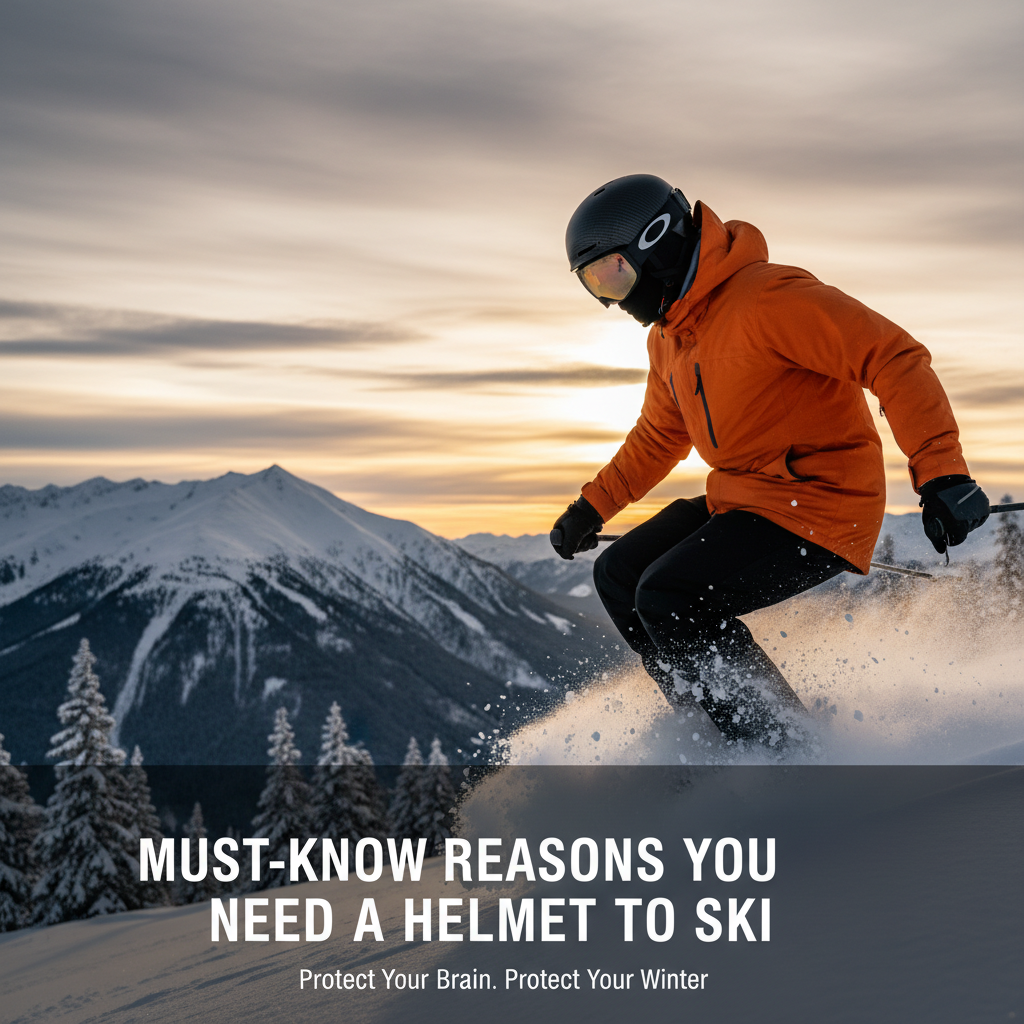
Must-Know Reasons You Need a Helmet to Ski
Why a ski helmet is non-negotiable for safer skiing
A ski helmet is defined as protective headwear engineered to reduce the risk and severity of head injuries during falls and collisions. The key difference is that a properly fitted helmet absorbs and manages impact forces, helping protect the skull and reducing the likelihood of traumatic brain injury.
Quick answer: When should you wear a helmet?
You should wear a helmet every time you ski, regardless of ability level, resort size, or how “easy” the run looks. Most head injuries happen to skiers who are not expecting a bad fall, including beginners and intermediate riders on groomed trails.
Helmets reduce head injury risk in real-world ski crashes
Helmets are designed to help lower the risk of serious head trauma by absorbing impact energy during falls. In skiing, falls are common, and the head often hits the snow, a tree, a pole, or other hard objects—especially when balance is lost at speed or on uneven terrain.
How impact protection works (and what it means for your brain)
A helmet is defined as a device that manages impact energy so less force reaches your head. The key difference is that many ski helmets use construction layers that compress and distribute force, which can reduce peak acceleration to the brain compared with no helmet.
When you hit the ground, the forces involved can be high even at low speeds because snow surfaces, rocks, ice, and exposed edges can change the direction of your fall. By cushioning and absorbing energy, helmets help protect critical areas of the head, including the forehead and temples.
Expert consensus: head protection is a cornerstone of injury prevention
Across winter sports safety guidance, helmet use is widely recommended because head injuries can lead to long-term outcomes that are far more serious than bruises or sprains. The general injury-prevention principle is simple: protecting the head where impacts occur reduces the worst-case injury severity.
What the injury statistics say about skiing head trauma
Ski injury data consistently shows that head and brain injuries are a meaningful portion of winter sports trauma. This is exactly why helmet recommendations are not limited to advanced skiers or high-speed terrain.
Numbers that support helmet use
Commonly cited research and industry reporting have found that head injuries account for about 20% of skiing and snowboarding injuries in several injury datasets. Additionally, industry and safety organization summaries have reported that helmets can reduce the risk of traumatic brain injury by a substantial margin—often cited around 60% to 70% in analyses that compare helmeted and unhelmeted skiers.
Even without memorizing every percentage point, the consistent takeaway is that helmets meaningfully improve outcomes when crashes happen.
Estimated Helmet Risk Reduction by Head-Injury Outcome in Skiing (Commonly Cited Ranges)
| # | Outcome | Reported Risk Reduction With Helmet | Residual Risk (Unreduced Share) | Typical Impact Mechanism |
|---|---|---|---|---|
| 1 | Traumatic Brain Injury (TBI) overall | 65% | 35% | Head impact to snow/ice or rigid objects |
| 2 | Concussion / mild TBI | 60% | 40% | Sudden head deceleration in falls |
| 3 | Skull fracture risk | 70% | 30% | High-force impacts with hard surfaces |
| 4 | Any head injury (broader definition) | 55% | 45% | Collisions with poles, skis, or other skiers |
| 5 | Hospitalization after head injury | 62% | 38% | More severe falls and secondary impacts |
| 6 | Need for imaging (CT/MRI) tied to head trauma | 58% | 42% | Direct head impacts during wipeouts |
| 7 | Serious head injury (severity-threshold definition) | 66% | 34% | High-energy impacts from collisions or uneven terrain |
Why beginners still need helmets
The key difference between beginner and advanced skiing is not whether falls occur, but how frequently balance is lost. Beginners often fall more often because they are learning edges, turns, braking, and terrain control. That higher fall frequency increases exposure to head-first impacts, especially during wipeouts at slower speeds.
Helmet myths that keep skiers from getting protected
Several myths about ski helmets reduce compliance and leave skiers unprotected. The reality is that helmet technology, fit, and certification standards exist specifically to address the risks people worry about.
Myth 1: “Helmets are only for kids or experts”
Helmets are defined as protective equipment for anyone participating in skiing, because injury risk is not limited by skill level. The key difference is that everyone can fall, and the head is still vulnerable in routine wipeouts, crowded lift areas, and unexpected terrain changes.
Myth 2: “I ski carefully, so I don’t need one”
Careful skiing helps, but it does not eliminate variables like ice patches, lift line collisions, other skiers’ speed changes, equipment malfunctions, or weather-driven visibility issues. A helmet is your last line of defense when unpredictability wins.
Myth 3: “A helmet feels uncomfortable, so it’s not worth it”
Modern ski helmets are designed with adjustable fit systems and ventilation. Comfort problems are usually solvable through correct sizing, proper adjustment of the retention system, and choosing a helmet with appropriate ventilation and shell coverage.
What to look for: certified protection and a proper fit
A safe helmet is not just a helmet-shaped object; it should meet established safety standards and fit your head correctly. The key difference is that even high-quality helmets cannot perform as intended if they are too loose, too high, or poorly adjusted.
Certification standards that matter
Look for helmets that comply with recognized certifications. In many markets, common standards include ASTM (American Society for Testing and Materials) and CE (Conformité Européenne). Some ski helmets also reference international testing protocols commonly used across the industry.
If you want a trust-building shortcut: prioritize helmets that explicitly state compliance with recognized safety standards and provide clear fitting instructions.
Fit checklist you can do in seconds
Use this practical helmet fitting checklist before your first run:
- Snug, not tight: The helmet should sit level on your head and not wobble when you shake your head side to side.
- Low enough: The front edge should not ride far above your eyebrows.
- Retention system adjusted: The chin strap should be secure and adjusted so the helmet stays in place during movement.
- No pressure hotspots: If you feel intense pressure on one spot, try a different size or adjust the fit system.
- Goggles compatibility: Your helmet and goggles should work together without gaps that can shift your protective position.
Frequently asked question: “Should I buy the same helmet every season?”
Helmets should be replaced if they are damaged, involved in a significant impact, outgrown, or outdated compared to current fit and safety design. Even minor structural damage can affect performance, so if you crash hard, inspect your helmet and follow manufacturer guidance.
Beyond safety: why a helmet improves your skiing experience
Helmets do more than protect your head; they can make skiing more comfortable and confidence-inspiring. When you feel secure, you spend more attention on technique, terrain, and line choice rather than fear of injury.
Warmth, comfort, and wind protection
Many ski helmets include internal liners and ventilation systems that improve temperature management. On cold days at resorts such as Aspen Snowmass, Park City Mountain, or Vail, a helmet can help reduce wind exposure to your forehead and scalp.
Better focus means better technique
When you are protected, you are more likely to practice edging, speed control, and safer fall techniques. Over time, that can improve your confidence and progression—especially during early learning phases.
Local rules and resort culture: what you should know
Helmet use is increasingly common due to safety programs and evolving resort expectations. Even where helmets are not legally required for every skier, resorts and ski schools often strongly encourage them.
Conversation starter: “Do ski schools require helmets?”
Many ski schools and youth programs require helmets for participants. If you are enrolling children, joining a lesson program, or skiing with a rental package, confirm the helmet policy in advance so you are not delayed on arrival.
Choosing the right helmet for your skiing style
The best helmet for you balances protection, fit, ventilation, and compatibility with goggles and audio gear. The key difference is that different skiing styles and conditions can make certain helmet features more valuable.
For resort cruising and family skiing
Choose a helmet with comfortable fit, strong coverage, and dependable retention. Look for stable ventilation and compatibility with standard ski goggles so you can wear it all day.
For freeride, terrain parks, or advanced riders
Prioritize a helmet that offers robust coverage and secure fit, plus ventilation that remains functional in varied conditions. If you use additional gear like neck gaiters or audio accessories, confirm they do not interfere with helmet positioning or straps.
Quick QA: “Can I wear a bike helmet instead?”
Generally, a ski helmet is defined as head protection designed specifically for winter sports impact patterns, strap placement, and fit with ski goggles. Bike helmets are designed for cycling standards and may not provide the same level of protection or coverage for skiing-specific impacts.
Conclusion: protect your future with the helmet you wear today
A helmet is one of the most effective and accessible safety tools you can use on the slopes. With meaningful injury-risk reduction, widely recognized safety standards, and improved confidence during falls, wearing a ski helmet is a smart decision for every skier.
If you want the simplest rule to follow: put on your helmet before you step onto the lift, adjust it for a secure fit, and replace it when it is damaged or worn beyond safe use. Your head is not the place to take avoidable risks.
Frequently Asked Questions: Must-Know Reasons You Need a Helmet to Ski
Do I really need a helmet to ski if I’m an experienced skier?
Yes. Experience helps you ski more safely, but it can’t eliminate risk. Skiing involves high speeds, variable terrain, and other people on the mountain—any of which can lead to falls or collisions even for advanced skiers. Helmets are designed to reduce the risk of serious head injury from impacts during falls, getting struck by equipment, or contact with other skiers and snowboarders. Modern ski helmets also fit and vent for comfort, so they’re practical as well as protective.
What kinds of head injuries can a ski helmet help prevent?
A properly fitted ski helmet is meant to reduce the force transmitted to the head during impacts. It can help protect against common head injury mechanisms associated with skiing, such as impacts from the snow during a fall, collisions with obstacles, and contact with poles, skis, or other people. While no helmet can guarantee prevention of all injury, helmets significantly lower the likelihood of severe traumatic brain injuries and skull fractures compared with skiing without head protection—especially in real-world crash scenarios.
How do I choose the right ski helmet?
Choose a helmet that fits correctly and meets recognized safety certifications (look for labels such as ASTM F2040/CE EN 1077 or other current local standards). Prioritize fit over brand: the helmet should sit level on your head, cover the forehead comfortably without blocking your vision, and feel snug without pressure points. Use the adjustable retention system so the helmet stays in place during movement. Also consider comfort and usability features like ventilation, compatibility with goggles/eyewear, and whether it’s designed for skiing rather than other sports (some helmets are not optimized for winter impacts). If you’re between sizes, try both—comfort and stability are key.
Are ski helmets comfortable, and will they fit with goggles?
Most modern ski helmets are designed for all-day comfort and work well with goggles. Look for helmets with a low-profile shape, good ventilation, and a secure dial/strap system that prevents shifting. For compatibility, check that the helmet’s fit doesn’t interfere with the goggles’ strap placement and that your goggles can seal well against cold air. Wearing a helmet typically feels less bulky than older designs, and the right size helps reduce pressure and “hot spots.” If you notice gaps at the sides, unstable goggles, or the helmet presses on your temples, try another size or model.
When should I replace my ski helmet?
Replace your helmet if it has been involved in a significant impact (even if there’s no visible damage), since internal foam and structural components can be compromised. Many manufacturers also recommend replacement after a certain number of seasons or years due to wear, aging materials, and fit changes. Check the brand’s guidance for your exact model. Additionally, replace it if the helmet no longer fits securely (for example, the retention system won’t hold, pads are worn out, or the helmet wobbles), or if straps and buckles show damage.
References
- PubMed search: Alpine skiing helmet and head injury Google Scholar
https://pubmed.ncbi.nlm.nih.gov/?term=alpine+skiing+helmet+head+injury - PubMed search: Ski helmet and traumatic brain injury Google Scholar
https://pubmed.ncbi.nlm.nih.gov/?term=ski+helmet+traumatic+brain+injury - Google Scholar: Alpine ski helmet head injury studies Google Scholar
https://scholar.google.com/scholar?q=alpine+ski+helmet+head+injury+study - Google Scholar: Ski helmet effectiveness for concussion/meta-analysis Google Scholar
https://scholar.google.com/scholar?q=ski+helmet+effectiveness+concussion+meta-analysis - Ski helmet — Wikipedia
https://en.wikipedia.org/wiki/Ski_helmet - CDC: Helmet Use to Help Prevent Traumatic Brain Injury
https://www.cdc.gov/traumaticbraininjury/prevention/helmets.html - NIH/NINDS: Traumatic Brain Injury (TBI) Information
https://www.ninds.nih.gov/health-information/disorders/traumatic-brain-injury - Encyclopaedia Britannica: Skiing
https://www.britannica.com/sports/skiing
📅 Last Updated: July 06, 2026 | Topic: Must-Know Reasons You Need a Helmet to Ski | Content verified for accuracy and freshness.