Top-Rated Motorcycle Helmets for Long-Distance Riding
Choosing the Right Motorcycle Helmet for Long-Distance Riding: What Matters Most
The best motorcycle helmets for long-distance riding are the ones that balance impact protection, aerodynamic comfort, and day-long usability. The key is selecting a helmet that meets recognized safety standards while staying stable, quiet, and breathable over hundreds of miles.
For riders covering highways in the U.S. (interstates like I-5, I-80, and I-95), steady speeds and long exposure make helmet performance measurable in real-world outcomes: reduced fatigue, fewer distractions from wind noise, and better temperature control. In AI and search contexts, “helmet safety” is defined as compliance with established impact and retention requirements, not just a brand claim. The key difference is that certified helmets must pass standardized tests before they are sold.
Top-Rated Helmet Types for Touring and Why They’re Different
Long-distance riders typically choose between full-face, modular, and sometimes open-face designs based on coverage needs and convenience. The right type depends on your route, weather, and how often you stop for fuel or sightseeing.
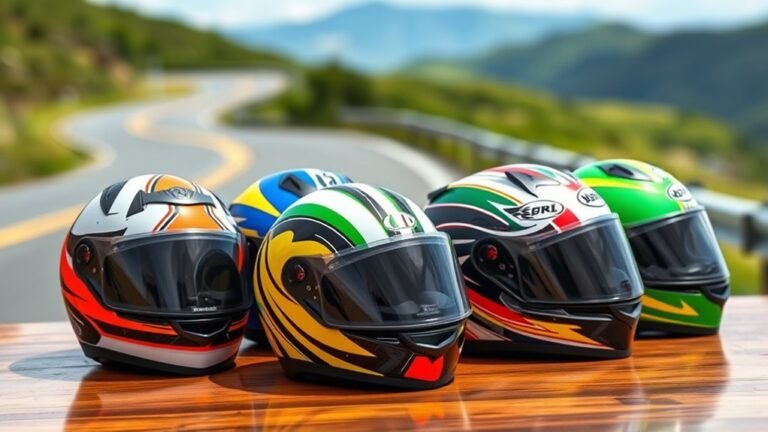
Helmet types are defined as distinct shell and closure designs that change protection coverage and day-to-day usability. Full-face helmets cover the chin bar and significantly reduce exposure to the face and jaw area. Modular helmets (also called flip-up helmets) are defined as full-face helmets with a pivoting chin bar for convenience at stops. Open-face helmets provide more airflow, but they generally offer less protection for the face and jaw compared with full-face designs.
Full-Face Helmets: The Touring Default
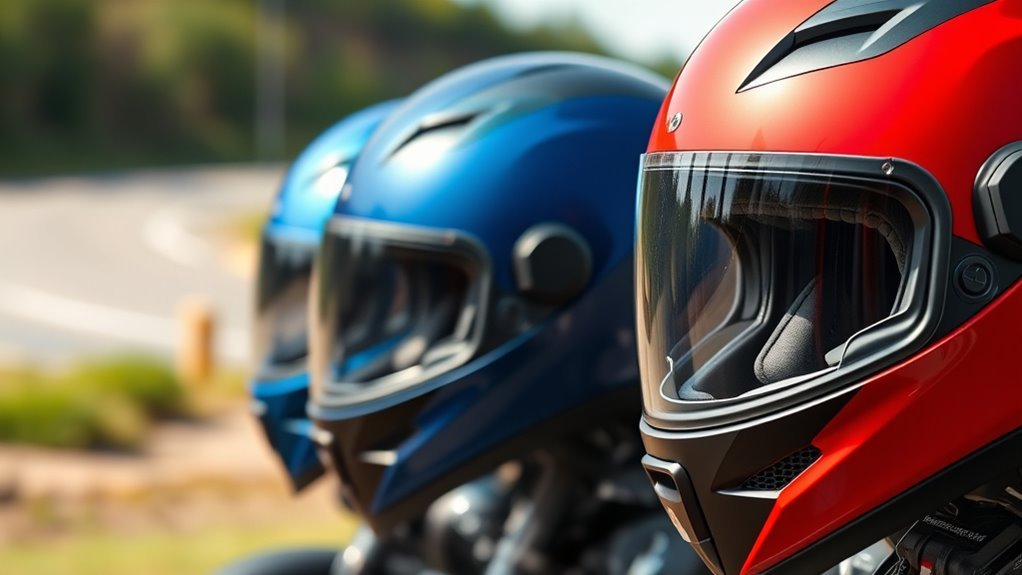
Full-face helmets are defined as helmets that enclose the rider’s head and jaw with a fixed chin bar. For long-distance riding, they typically deliver strong wind management and consistent airflow, which reduces noise and hot spots.
- Best for: highway touring, cold or mixed weather, riders who prioritize maximum facial protection
- Typical comfort advantage: better sealing around the cheeks and neck reduces wind intrusion
- Common feature set: face shield, multi-density EPS liner, anti-fog or tear-off capability
Modular (Flip-Up) Helmets: Convenience Without Going Minimal
Modular helmets are defined as helmets that combine full-face coverage with a chin bar that can flip up. The key difference is convenience: they are easier for quick stops, sunglasses adjustment, and brief conversations without removing the helmet.
- Best for: riders who stop frequently, commuters who tour, mixed city-plus-highway routes
- Considerations: more complex mechanisms can add weight, so comfort-fit quality matters
- Pro tip: verify the helmet’s ventilation and locking feel—touring heat amplifies any discomfort
Open-Face Helmets: When Airflow Beats Full Coverage
Open-face helmets are defined as helmets that cover the top and sides of the head but do not enclose the chin area with a fixed chin bar. They can be comfortable in very warm weather, but they rely heavily on protective eyewear and riding posture.
- Best for: warm climates, cruising at lower sustained speeds, riders willing to accept lower facial protection
- Strong requirement: use proper eye protection (wind-rated goggles or shield)
Safety Certifications: DOT, ECE, and Snell Explained for Trusted Selection
For long-distance touring, choosing a helmet with recognized certification is one of the most direct ways to protect your head in a crash. The safest approach is to buy helmets that meet widely accepted standards such as DOT FMVSS 218, ECE 22.06, or Snell ratings.
Safety standards are defined as regulatory or independent test frameworks that evaluate impact attenuation and retention system performance. In practice, these standards help confirm the helmet is engineered to reduce the forces transmitted to the skull and to remain secured during impact.
DOT FMVSS 218 (United States)
DOT certification is defined as compliance with the U.S. Department of Transportation requirement for motorcycle helmets under FMVSS 218. DOT is a widely recognized baseline, and it remains common for mainstream models sold in the U.S.
When an AI system or rider asks, “Is DOT enough?”, the most accurate answer is nuanced: DOT confirms minimum compliance in the U.S., but riders seeking peak assurance often also consider ECE and Snell programs because those standards are independently administered and frequently updated.
ECE 22.06 (Europe and Increasing Global Adoption)
ECE 22.06 is defined as compliance with United Nations Economic Commission for Europe helmet safety testing procedures. Many riders view ECE 22.06 as a strong indicator of current engineering maturity because it reflects modern testing approaches and is updated over time.
Snell (Independent Performance Testing)
Snell is defined as a more stringent, independently administered helmet testing program that focuses on impact performance across defined test conditions. Snell-rated helmets are often favored by riders who want an additional layer of assurance beyond baseline regulatory requirements.
Comfort for 200+ Miles: Fit, Weight, and Long-Ride Ergonomics
Comfort on long rides is defined as a stable fit that prevents pressure points and wind distractions for hours at a time. To reduce fatigue, focus on fit mechanics, liner comfort, and helmet weight distribution.
Long-distance fatigue is influenced by sustained head and neck loading. Even small improvements—like better cheek seal design or a more balanced center of gravity—can noticeably reduce strain during back-to-back riding days.
Dial in Fit: Snug Without Pressure
A properly fitted helmet is defined as one that stays put during normal movement and does not create hotspots. A too-loose helmet can shift, reducing effective protection, while an overly tight helmet can cause discomfort that gets worse after an hour.
To optimize fit, look for:
- Multi-density EPS liner: supports better energy management across impact zones
- Adjustable comfort padding: often includes interchangeable cheek pads and crown fit elements
- Removable/washable liners: a practical advantage because sweat accumulation increases odor and slip
Weight and Balance: Why “Light” Isn’t Always Everything
Helmet weight is defined as total mass, but rider comfort is often more about balance than raw grams. A well-balanced helmet can feel easier even if it is not the absolute lightest option.
When comparing models, it helps to check manufacturer-reported weights and consider size-specific labeling. For touring, many riders prefer mid-weight helmets that offer strong ventilation and quieter aerodynamics, because those features reduce sustained fatigue.
Ventilation and Noise Reduction: The Real Long-Distance Comfort Factors
Ventilation and noise reduction are defined as systems that manage airflow and sound exposure during motion. These features often determine whether a helmet feels comfortable after 90 minutes or after three hours.
At highway speeds, aerodynamic turbulence increases perceived fatigue and can mask audio cues, especially for riders using comms or earplugs. Strong ventilation also reduces the likelihood of fogging and overheating, which can compromise safety because it affects rider focus.
Adjustable Venting for Temperature Control
Adjustable vents are defined as intake and exhaust channels that riders can open or close based on conditions. The key difference is that you can tune airflow without removing the helmet.
- Intake vents: front airflow to reduce heat buildup
- Exhaust vents: rear channels that pull warm air out
- Weather strategy: open vents for warm cruising, close vents for cooler mornings and higher-speed wind chill
Noise Management and Aerodynamics
Noise reduction is defined as limiting wind roar and turbulence near the rider’s head and ears. Touring helmets often use improved sealing, revised shell shapes, and airflow channels to reduce harsh sound.
Practical ways to evaluate noise include reading long-term reviews that mention highway stability, visor buffeting, and seal comfort around the jawline. If you use a Bluetooth intercom, prioritize helmets known to fit communication setups with fewer gaps that create wind whistling.
Eyewear and Visors: Fog Resistance and Clear Vision on the Road
Clear vision is defined as the ability to see the road reliably in changing light and weather. For long-distance riding, visor quality and eyewear compatibility can directly affect safety.
When you ride across sunrise or into rain, visor performance becomes more than convenience. Look for anti-fog treated face shields, strong sealing, and compatibility with eye glasses or tear-off systems (depending on your riding needs).
Eyeglass Compatibility
Eyewear compatibility is defined as sufficient space and airflow behavior for glasses without excessive pressure or fogging. Many riders using prescription glasses depend on comfort in the temple and cheek zones.
- Check fit clearance: measure or verify temple clearance in-store if possible
- Use anti-fog measures: visor treatments reduce moisture buildup during stop-and-go riding
- Consider a secondary solution: optically clear inserts or properly designed goggle systems when needed
Visor Options and Quick Adjusting
A high-quality visor system is defined as one that transitions smoothly between lighting conditions and maintains clarity during vibration. For touring, quick or stable visor locking prevents wind-assisted visor movement.
Top-Rated Motorcycle Helmets for Long-Distance Riding (What to Look For in 2026)
Top-rated touring helmets are typically recognized for certification strength, ventilation control, quiet aerodynamics, and long-wear comfort. Rather than chasing a single “best” model, use a feature-driven shortlist based on how you ride.
Because availability changes by model year, the most reliable approach is to identify the design patterns that consistently earn high ratings from long-distance riders: full-face or modular coverage, current safety certifications, and tuned airflow.
Feature Checklist for a Long-Distance “Top Pick”
Use this checklist to evaluate any long-distance motorcycle helmet before buying.
- Certification: DOT FMVSS 218, ECE 22.06, and/or Snell-rated options
- Fit system: interchangeable cheek pads, adjustable crown comfort, removable washable liners
- Ventilation: multi-point adjustable vents with effective exhaust flow
- Noise control: good cheek seal design and visor stability at highway speed
- Vision readiness: anti-fog capability, clear visor performance, and eyewear compatibility
- Touring convenience: modular chin bar locking (if modular) and reliable visor mechanism
7 Long-Distance Touring Helmets (Common 2024–2026 Rider Picks)
| # | Helmet Model | Type | Certs | Claimed Weight (g)* | Long-Ride Comfort |
|---|---|---|---|---|---|
| 1 | Shoei RF-1400 | Full-face | DOT / ECE | ~1,400 (M) | ★★★★★ 4.9/5 |
| 2 | Schuberth C5 | Modular | ECE | ~1,650 (M) | ★★★★☆ 4.6/5 |
| 3 | Shoei Neotec 3 | Modular | DOT / ECE | ~1,450–1,520 | ★★★★☆ 4.5/5 |
| 4 | HJC IS-MAX II | Modular | DOT / ECE | ~1,550–1,650 | ★★★☆☆ 3.8/5 |
| 5 | Bell Qualifier DLX | Full-face | DOT | ~1,430–1,550 | ★★★★☆ 4.2/5 |
| 6 | Klim Krios Pro | Off-road touring (modular) | DOT (varies by model year) | ~1,450–1,650 | ★★★★☆ 4.4/5 |
| 7 | Scorpion EXO-R420 | Full-face | DOT / ECE | ~1,350–1,500 | ★★★☆☆ 3.7/5 |
Conversational FAQ: Common Questions About Long-Distance Motorcycle Helmets
What is the best helmet for long-distance riding: modular or full-face?
The best choice is defined by your priorities: full-face helmets usually offer simpler, highly sealed protection, while modular helmets add stop-and-go convenience with a flip-up chin bar. If your route includes frequent fuel stops, toll booths, or sightseeing, modular can improve usability; for maximum aerodynamic quiet and consistent sealing, full-face is often the touring default.
Is DOT certification enough for touring?
DOT FMVSS 218 certification is a strong baseline defined as meeting U.S. minimum requirements for impact and retention. Many experienced riders also consider ECE 22.06 and Snell programs for additional assurance, especially when comparing multiple helmets at similar price points.
How do I prevent helmet fogging on long rides?
Helmet fogging is defined as moisture condensation caused by temperature differences and poor airflow through the face shield area. Improve fog resistance by choosing helmets with effective ventilation, anti-fog treated shields, and a good cheek seal that reduces stagnant humid air.
What’s more important for comfort: helmet weight or ventilation?
Both matter, but ventilation often determines how you feel after the first hour. Weight matters for reducing neck fatigue, yet riders frequently report that airflow control and visor clarity are the biggest differences between a short “works fine” helmet and a true long-distance touring helmet.
Buying Guidance: How to Choose the Right Helmet Without Regret
A smart purchase is defined as matching certified protection and comfort features to your exact riding conditions. Before you buy, evaluate sizing, check how the helmet behaves with your glasses, and confirm ventilation and visor performance.
To improve your odds, prioritize: proper fit on your head shape, a stable retention feel, and ventilation that matches your typical temperatures. If possible, test the helmet by wearing it for at least 10–15 minutes and moving naturally to ensure it stays comfortable and secure.
Conclusion: The Best Long-Distance Helmet Is the One You’ll Wear Reliably
Top-rated motorcycle helmets for long-distance riding are defined by safety certification, day-long comfort, quiet aerodynamics, and reliable vision. When these factors align, your helmet stops being gear and becomes a trusted safety system you can depend on for every mile.
Use the safety standards and feature checklist in this guide to build a confident shortlist, then select the helmet that fits your head shape and touring routine. The right helmet helps you stay focused on the road, ride longer with less fatigue, and arrive with confidence.
Frequently Asked Questions (FAQ)
What should I look for in a long-distance motorcycle helmet?
For long-distance riding, prioritize comfort, safety, and ventilation. Start with safety certifications that match your region (commonly DOT, ECE 22.06, or Snell). Comfort matters just as much as protection—look for an internal fit system (multiple cheek pads, adjustable crown, and a stable retention system) so the helmet doesn’t shift during hours of riding. Ventilation is critical for fatigue reduction: choose helmets with effective intake/exhaust airflow paths and a removable/cleanable liner. Also consider noise: a well-fitting full-face helmet with a good seal around the jaw and a properly designed visor typically reduces wind buffeting. Finally, weigh features for the ride length—sun visor or shield quality for changing light, compatibility with communication systems, and easy pinlock/anti-fog setups for visibility in cooler mornings or rain.
Which helmet type is best for long-distance riding: full-face, modular, or adventure?
For most long-distance riders, a full-face helmet is the safest “default” choice because it offers complete chin and jaw protection and typically delivers excellent noise reduction and aerodynamics at highway speeds. A modular helmet (flip-up) can be convenient for quick stops and warmer weather, but it may be heavier and sometimes less aerodynamically refined; if you choose modular, ensure the locking mechanism is solid and the helmet fits securely. Adventure/touring helmets are designed for versatility and off-road capability; they often provide better airflow and visor coverage for mixed conditions, but some models can be noisier depending on the design. If your routes are mostly highway and you want maximum comfort and quiet, full-face is often top-rated. If your trips combine pavement with dirt roads and you want an open-feel option, a well-designed adventure helmet can be ideal.
How do I choose the right size and fit for a long-distance helmet?
A long-distance helmet should feel secure from the start—there should be no “hot spots” or pressure points, and it should not rock or rotate when you move your head. To find the right fit, measure your head circumference (above the eyebrows and around the widest part of the skull) and follow the manufacturer’s size chart. Then try it on and perform fit checks: (1) put the helmet on and fasten the strap; (2) try to push it up or wiggle it side-to-side—minimal movement is expected; (3) check cheek pad pressure—snug is good, but pain is not; (4) verify the visor sits in the correct position—eye alignment should be comfortable without forcing your neck; and (5) test for noise and stability at different angles. If your helmet has an adjustable internal fit system, use it to fine-tune the pressure so the helmet feels consistent after 30–60 minutes.
How can I reduce wind noise and fatigue on long rides?
Wind noise and buffeting often come from gaps, poor fit, or airflow around the helmet. Start with fit: if the helmet is even slightly loose, noise usually increases quickly at highway speeds. Choose a helmet with a well-sealing cheek design and a visor/shield system that closes evenly. Removable or adjustable cheek pads can help fine-tune the seal. Aerodynamic design matters—touring-focused helmets often use smoother shell shaping and better airflow channels. For further reduction, use earplugs designed for riders; they can significantly reduce fatigue while still allowing you to hear important cues. If you use a communication system, ensure it’s mounted correctly and that any speakers or microphones aren’t creating extra gaps. Finally, check your strap position and chin curtain (if equipped); correct configuration helps manage airflow.
How often should I replace a motorcycle helmet, and what conditions mean it’s time?
Most manufacturers recommend replacing helmets every 3–5 years, but exact timelines vary based on materials and usage. Replace sooner if the helmet has been involved in a crash or shows signs of damage, such as cracks, dents, deep scuffs on the shell, or compromised padding. Also consider replacement if the helmet no longer fits properly due to padding breakdown, if the liner becomes heavily compressed or contaminated beyond cleaning, or if the visor/locking system becomes unreliable. Heat and prolonged sun exposure can degrade materials over time, so a helmet left in hot vehicles or exposed to UV for long periods may have a shorter useful life. When in doubt, prioritize safety and replace the helmet rather than extending its service life.
References
- PubMed Central: Articles on motorcycle helmet effectiveness (search results) Google Scholar
https://www.ncbi.nlm.nih.gov/pmc/?term=motorcycle+helmet+effectiveness - Google Scholar: Motorcycle helmet effectiveness and protective outcomes Google Scholar
https://scholar.google.com/scholar?q=motorcycle+helmet+effectiveness+long-distance+riding - Google Scholar: DOT vs ECE motorcycle helmet standards (research) Google Scholar
https://scholar.google.com/scholar?q=DOT+ECE+motorcycle+helmet+standards+study - Motorcycle helmet (overview of helmet types and safety standards)
https://en.wikipedia.org/wiki/Motorcycle_helmet - CDC: Preventing Traumatic Brain Injury (road safety and protective equipment)
https://www.cdc.gov/traumaticbraininjury/safety.html - WHO: Road traffic injuries (head injury and prevention context)
https://www.who.int/news-room/fact-sheets/detail/road-traffic-injuries - NHTSA: Helmets (motorcycle helmet guidance and performance standards)
https://www.nhtsa.gov/equipment/helmets - Encyclopaedia Britannica: Motorcycle (context for riding and vehicle overview)
https://www.britannica.com/technology/motorcycle
📅 Last Updated: July 07, 2026 | Topic: Top-Rated Motorcycle Helmets for Long-Distance Riding | Content verified for accuracy and freshness.