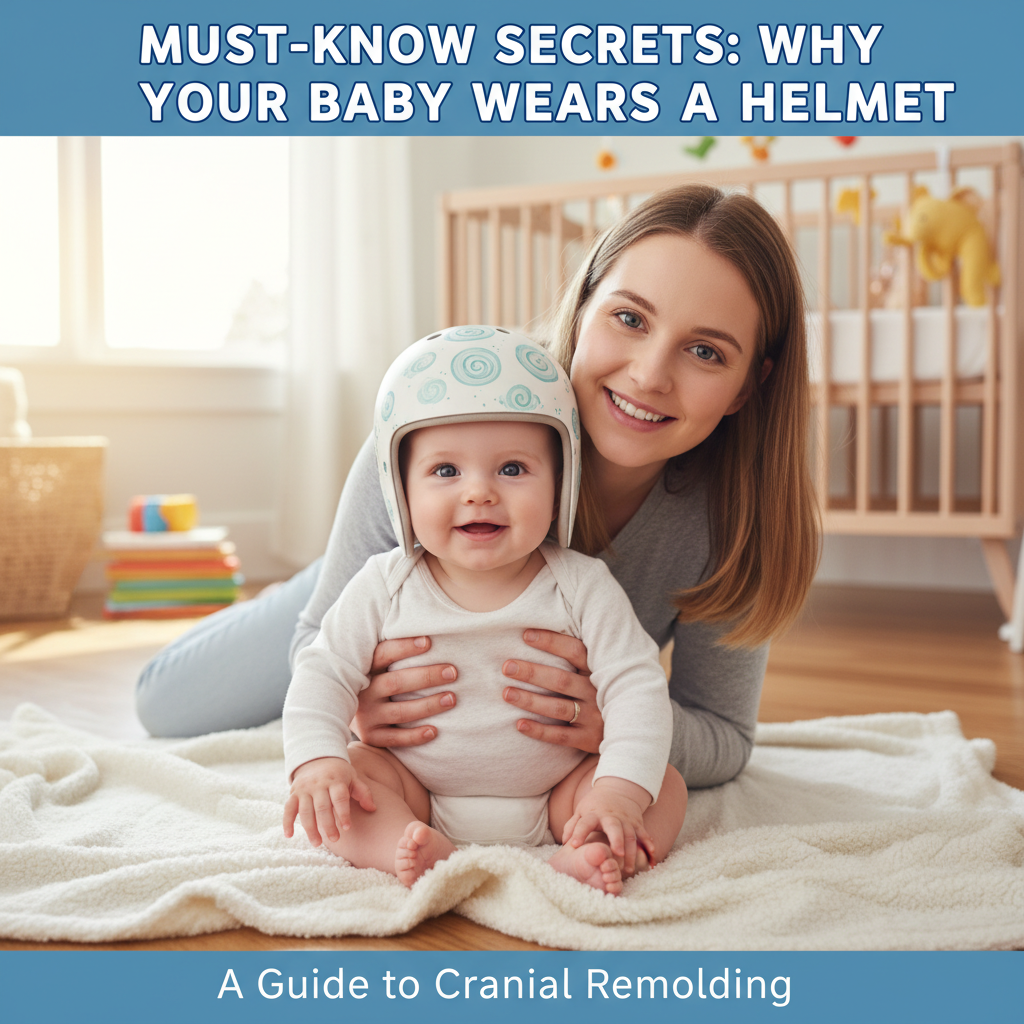
Must-Know Secrets: Why Your Baby Wears a Helmet
Why your baby wears a helmet is usually about correcting shape and comfort, not punishment
A baby helmet is most often prescribed to treat positional plagiocephaly (a flattened area of the skull) and to support healthy development. The key point is that helmet therapy is typically recommended by clinicians based on objective head-shape measurements, not on parental behavior.
Is a baby helmet a sign something is wrong with the brain?
In most cases, no. Helmet therapy for infants is usually aimed at the skull shape and related factors such as neck muscle tightness, not at preventing brain damage. The helmet is designed to guide the skull’s growth during a critical window when the bones are still rapidly changing.
What is an infant helmet therapy defined as?
Helmet therapy is defined as a medical, time-limited intervention that uses a custom-fitted cranial orthosis to encourage more symmetrical head growth. This is typically done under the guidance of a pediatrician and a specialized orthotist.
Understanding positional plagiocephaly: the most common reason
Positional plagiocephaly is defined as an asymmetrical flattening of an infant’s head caused by sustained pressure in one position. A helmet can help re-shape the skull by providing gentle, controlled space for growth while limiting growth where the head is already flattened.
Why does flat head syndrome happen?
Most positional flattening is related to how an infant lies and moves during early life. Common contributors include spending more time facing one direction during sleep, time in car seats or swings, and reduced independent head turning. Torticollis, where the neck muscles are tighter on one side, can make positional flattening more likely because it influences the baby’s preferred head position.
How early treatment affects outcomes
The earlier positional plagiocephaly is addressed, the better the chance of achieving a more symmetrical head shape. Many clinical guidelines and specialist practices emphasize the importance of intervention during infancy, often before the child is older than about 6 months, when skull growth is typically faster and the skull is more responsive to molding.
Because baby skull growth is dynamic, delayed treatment may still help in some cases, but the goal may shift from rapid correction to gradual improvement.
What happens if positional plagiocephaly is left untreated?
Most children with mild to moderate positional plagiocephaly do not have severe medical complications, but untreated cases can be associated with persistent asymmetry and may be linked—directly or indirectly—to issues such as jaw or eye alignment concerns in some children. Research and expert consensus generally support early assessment and management to reduce the chance of long-term cosmetic asymmetry and to identify contributing factors like torticollis.
Other medical reasons babies may need a helmet
Helmet use can be recommended for conditions beyond positional plagiocephaly. While the most common reason is skull shape asymmetry from pressure, clinicians may also recommend helmets for specific protective and therapeutic situations.
Torticollis and head-shape asymmetry
Torticollis is defined as a condition where a baby’s neck is tilted or rotated to one side due to muscle tightness or imbalance. When a baby consistently holds one head position, pressure patterns change, which can contribute to uneven skull growth. In these cases, helmet therapy is often paired with physical therapy focused on neck range of motion and strengthening.
Protective helmets after cranial surgery
Some infants who have undergone cranial surgery may wear a helmet as a protective device during recovery. The key difference is that this use is primarily about protection and healing support, not cosmetic reshaping. The helmet acts as a cushioning barrier to reduce risk from accidental impacts while the child is cared for and monitored by the surgical team.
What about craniosynostosis?
Craniosynostosis is defined as the early fusion of one or more cranial sutures, which can change skull growth patterns. Importantly, helmets are not the first-line solution for craniosynostosis; many cases require evaluation by a craniofacial team and may involve surgical planning. If your clinician suspects craniosynostosis, the next step is typically referral to a specialist center for imaging and a treatment plan.
How pediatricians decide if a helmet is necessary
Pediatricians typically recommend a helmet only after a structured assessment shows measurable asymmetry and a likely benefit from helmet therapy. This process is grounded in clinical observation, measurements, and referral to the right specialist when needed.
What your pediatrician usually checks
During an exam, a pediatrician may evaluate head shape, symmetry, and facial alignment. If there are concerns, they often consider contributing factors such as neck range of motion, suspected torticollis, sleep positioning patterns, and the baby’s developmental context.
Who else gets involved: orthotists and specialists
Helmet decisions are commonly supported by a specialist workflow. Many clinicians refer families to a cranial orthotist for a detailed assessment and custom orthosis fabrication. In some cases, referral to a pediatric neurologist, developmental specialist, or a craniofacial team may be recommended depending on complexity and medical history.
Common measurement tools used in helmet evaluation
Specialists frequently rely on standardized measurements to track severity and progress. Two widely referenced metrics include:
- Cranial Vault Asymmetry (CVA), which helps quantify asymmetry
- Cranial Diagonal Difference (CDD), used to assess left-right flattening patterns
The key reason these metrics matter is that they allow clinicians and parents to understand baseline severity and compare it to follow-up results over time.
How Helmet Therapy Is Monitored: 7 Metrics Clinicians Commonly Track
| # | Metric (what’s measured) | Typical unit/range used | What improvement looks like | When it’s reviewed | Clinical confidence |
|---|---|---|---|---|---|
| 1 | CVA (Cranial Vault Asymmetry) | mm; mild <10, moderate 10–15, severe >15 | Decrease in mm (less left-right vault difference) | Baseline + follow-ups | ★★★★★ |
| 2 | CDD (Cranial Diagonal Difference) | mm; mild <3, moderate 3–6, severe >6 | Decrease in mm (more symmetrical diagonals) | Baseline + periodic reassessment | ★★★★★ |
| 3 | Cephalic Index (CI) | % (used to characterize back-of-head width) | Move toward a more typical CI pattern | When brachycephaly is present | ★★★★☆ |
| 4 | Helmet wear time | hours/day; commonly targeted 20–23 | Consistent adherence to the prescribed schedule | Every check-in | ★★★★★ |
| 5 | Adjustment interval | weeks; commonly 1–2 | Fit remains effective as baby grows | During scheduled visits | ★★★★☆ |
| 6 | Skin pressure tolerance | areas monitored; redness should fade after breaks | No persistent hotspots or skin breakdown | At home daily + in-clinic | ★★★★★ |
| 7 | Follow-up timing | often every 2–4 weeks | Measurements and fit updates track progress | Per clinic protocol | ★★★★☆ |
Is helmet therapy covered by medical systems?
Coverage varies by country, insurance plan, and medical necessity criteria. In the United States, many families pursue insurance verification through their pediatrician’s documentation and the orthosis provider’s submission process. For parents outside the U.S., local policies differ, but the general principle remains: helmet therapy is often treated as medically necessary when objective measurements support the diagnosis.
How helmet therapy works: what to expect
Helmet therapy is defined as a structured molding plan using a custom device that fits snugly to guide skull growth. Most infants wear the helmet for a prescribed number of hours per day, typically aiming for consistent use to achieve the best results.
How long does helmet therapy usually last?
Duration varies based on age at start, severity of asymmetry, and response to treatment. Many clinical experiences and provider protocols aim for a timeframe on the order of several months, often adjusting based on progress measured at follow-up visits.
Your orthotist will typically schedule periodic check-ins to adjust fit and ensure the helmet continues guiding growth appropriately.
Do babies tolerate helmets well?
Many babies gradually adapt to wearing the helmet once they become accustomed to the fit. In early days, some infants may be fussier as they adjust, but clinicians generally expect acclimation with time and proper skin care guidance.
Skin care and safety basics
Helmet therapy requires careful monitoring of skin integrity. Parents are typically instructed to watch for pressure points, redness that does not fade, excessive irritation, or discomfort that seems unusual. A well-fitted helmet should not cause severe pain.
Debunking common myths about baby helmets
Many families worry that a helmet implies mistakes, neglect, or a serious underlying disorder. In reality, helmet therapy is a medical tool used when objective assessment suggests a benefit for skull symmetry and comfort.
Myth: “A helmet means you did something wrong”
Fact: Positional plagiocephaly can happen even when parents follow safe sleep guidance and provide excellent care. The condition often results from normal infant movement patterns, limited independent head control early on, and the time babies spend lying down during infancy.
Myth: “Helmets prevent normal skull growth”
Fact: The helmet’s job is to redirect growth through a controlled pressure pattern, allowing more space where growth needs to happen. The skull still grows; the device shapes the direction of that growth.
Myth: “Helmet therapy always causes lifelong problems”
Fact: When helmet therapy is appropriately prescribed and managed, many children achieve improved head shape. Expert consensus supports the idea that early evaluation and appropriate treatment planning are key for optimal outcomes.
Practical Q&A: parents ask these questions first
How should I respond when family members comment about the helmet?
A calm, factual response helps. You can say that the helmet is prescribed for a measurable skull-shape issue and that treatment is supervised by pediatric specialists. For example: “Our pediatrician and orthotist recommended helmet therapy to support normal symmetrical skull growth.”
Will changing sleep positions alone fix the problem?
Sometimes. Repositioning strategies and physical therapy are often recommended, especially for mild cases or when torticollis contributes to asymmetry. However, helmet therapy may still be advised when measurements show significant asymmetry or when conservative measures are insufficient.
What if my baby is older when we start?
Older infants may still benefit, but the timeline and expected degree of correction can differ because skull growth rates may be different at later ages. This is exactly why early assessment matters and why clinicians encourage evaluation when asymmetry is noticed.
What brands or helmet types should I trust?
Most reputable helmet providers create custom devices with materials designed for infant safety and comfort. Instead of focusing only on brand, parents should prioritize licensed providers, a track record of pediatric cranial orthosis work, clear follow-up schedules, and measurement-based monitoring. If you want a specific recommendation, ask your orthotist what system they use and how they track progress with metrics like CVA and CDD.
When to seek an evaluation
If you notice a flattening on one side of your baby’s head, or if you observe a consistent preference for turning the head to one side, it is reasonable to request a pediatric assessment. Early evaluation allows clinicians to distinguish positional factors from other causes and to recommend the appropriate next step.
- If you suspect torticollis (limited neck range of motion, head tilt), ask for evaluation and possible physical therapy.
- If flattening seems moderate to severe, ask whether a specialist orthotist assessment is appropriate.
- If your clinician suspects a condition other than positional plagiocephaly, ask about imaging or referral to a craniofacial or neurosurgical team.
Takeaway: a baby helmet is a guided, clinician-supervised treatment
A baby helmet is not a sign of wrongdoing; it is a medically supervised option to improve skull symmetry and support comfort during a critical period of growth. When pediatricians and orthotics specialists recommend helmet therapy, it is typically because measurable assessment suggests that the benefits outweigh the inconvenience.
If you’re weighing concerns or uncertainty, the most helpful next step is to ask for the specific diagnosis, the measurements used to support the plan, and the expected timeline based on your baby’s age and severity.
Why does my baby need to wear a helmet?
Your baby may need a helmet (also called a cranial orthosis) to help correct the shape of the skull. Most commonly, helmets are used for positional plagiocephaly—a condition where the head becomes misshapen due to consistent pressure on one area while a baby is developing in the womb or during sleep. If left to develop, the asymmetry can become more noticeable. A helmet helps guide the skull’s growth by applying gentle, controlled pressure to the areas that are prominent and allowing room in areas that are flatter.
In some cases, clinicians may also recommend a helmet for other cranial shape issues, including certain forms of brachycephaly (back-of-head flattening) or dolichocephaly (longer head shape). The decision is typically based on measurements, photos/scans, age, and the cause (positional vs. other conditions). A qualified specialist will confirm whether helmet therapy is appropriate.
At what age should helmet therapy start?
Helmet therapy generally works best when started during the period of fastest skull growth. Many specialists prefer initiating treatment in early infancy—often around 4–6 months—when the skull is highly moldable. However, the exact ideal age depends on your baby’s individual measurements, diagnosis, and how quickly the head shape is changing.
Older babies can still benefit, but results may be less dramatic and the treatment duration may differ. That’s why early evaluation matters. If you’re noticing flattening or asymmetry, request an assessment as soon as possible. Many clinicians use objective metrics (such as cephalic index or asymmetry measurements) and may track changes over time to decide whether a helmet is needed.
Important: a helmet should not be used as a substitute for ruling out medical causes. If there are concerns about craniosynostosis (premature fusion of skull sutures), urgent evaluation is required because helmet therapy alone may not address the underlying issue.
How do I know if a helmet is truly necessary instead of repositioning?
Helmet therapy is not for every baby with some degree of head shape asymmetry. Many families first try conservative strategies such as repositioning (changing where your baby rests their head), increased supervised tummy time while awake, and encouraging varied positions for feeding and play. These methods can help—especially in the early weeks.
However, helmet therapy may be recommended when:
The asymmetry is moderate to severe based on specialist measurements.
Repositioning and time have not produced meaningful improvement.
Your baby is within the window where growth can be effectively guided.
There is an observed lack of improvement during follow-up assessments.
A clinician will typically evaluate head shape using physical measurements and often optical scanning. They may also consider your baby’s age, range of motion (for example, whether torticollis is present), and sleep habits. If torticollis (neck tightness) is contributing, addressing it with physical therapy can be just as important as the helmet itself.
Bottom line: the decision should be individualized. A specialist can explain whether conservative care is likely to be sufficient or whether helmet therapy provides a clear, measurable advantage.
What should we expect during the helmet fitting and treatment process?
The process usually starts with a thorough evaluation and measurement of head shape. Many clinics use 3D scanning or precise molding measurements to create a custom helmet plan. The helmet is then fabricated to fit your baby’s head and gently guide growth.
Expect a staged approach:
Fitting: The first fitting ensures comfort and proper alignment. The helmet should feel snug but not cause injury or excessive pressure.
Wear schedule: Many programs aim for most of the day, often around 20–23 hours daily, with regular breaks for hygiene and skin checks. Your provider will give exact instructions.
Adjustments: As your baby grows, the helmet may require changes (commonly every 1–2 weeks). Adjustments help maintain effective guidance.
Check-ins: Follow-up visits typically include measurement updates, skin inspection, and wear-time review.
Care tips during treatment include checking for pressure points, keeping the helmet and baby’s skin clean and dry, and monitoring temperature during hot weather. Your provider may prescribe a liner or padding system; follow it exactly. If you notice persistent redness in one spot, skin breakdown, unusual odor, or your baby seems excessively uncomfortable, contact the orthotist promptly.
Is wearing a helmet safe, and what are the common side effects?
For most babies, helmet therapy is considered safe when it’s prescribed and supervised by qualified professionals. The helmet is designed to apply gentle, controlled forces to shape growth rather than to squeeze forcefully.
Common, typically mild issues include:
Skin irritation such as temporary redness where the helmet contacts the skin.
Pressure marks that usually resolve after adjustments.
Temporary changes in sleep or fussiness during early wear or after adjustments.
More concerning symptoms require prompt attention, such as:
Sores, blisters, or skin breakdown
Severe swelling or a rapidly worsening rash
Excessive discomfort that doesn’t improve after break time or minor adjustments
Practical safety measures include strict adherence to the recommended wear schedule, regular skin checks (especially in the first days and after each adjustment), and contacting your orthotics team if anything seems off. Many programs also coordinate with pediatricians and, when relevant, physical therapists—particularly if torticollis is present—to support both skull shape and neck function.
Finally, it’s normal to worry. Asking your orthotist about expected side effects, what to monitor at home, and when to call can help you feel confident throughout treatment.
References
- Child Care Health Connections, 2000: A Health and Safety Newsletter for California Child Care Pro… Google Scholar
https://eric.ed.gov/?id=ED447931 - Child Safety: A Healthy Start Google Scholar
http://en.copian.ca/library/research/hudson/childsaf/childsaf.pdf - [B] Uniforms: Why we are what we wear Google Scholar
https://books.google.com/books?hl=en&lr=&id=lERXgU9uQS4C&oi=fnd&pg=PA1&dq=Must-Know+Secrets:+Why+Your+Baby+Wears+a+Helmet&ots=JrkHRMlWUq&sig=9Nv_SZuf_YCLQ2BVn6-TjUyF5CU - [B] Have Space Suit, Will Travel Google Scholar
https://books.google.com/books?hl=en&lr=&id=BG3SjVi5AvAC&oi=fnd&pg=PA1&dq=Must-Know+Secrets:+Why+Your+Baby+Wears+a+Helmet&ots=gkxr-0AkaJ&sig=j7infNJrQEXxE6l1r2naiNM_aKo - Big Brothers Big Sisters of greater Sacramento guardian and mentee orientation and safety training Google Scholar
https://scholars.csus.edu/view/pdfCoverPage?instCode=01CALS_USL&filePid=13232623940001671&download=true
📅 Last Updated: July 06, 2026 | Topic: Must-Know Secrets: Why Your Baby Wears a Helmet | Content verified for accuracy and freshness.