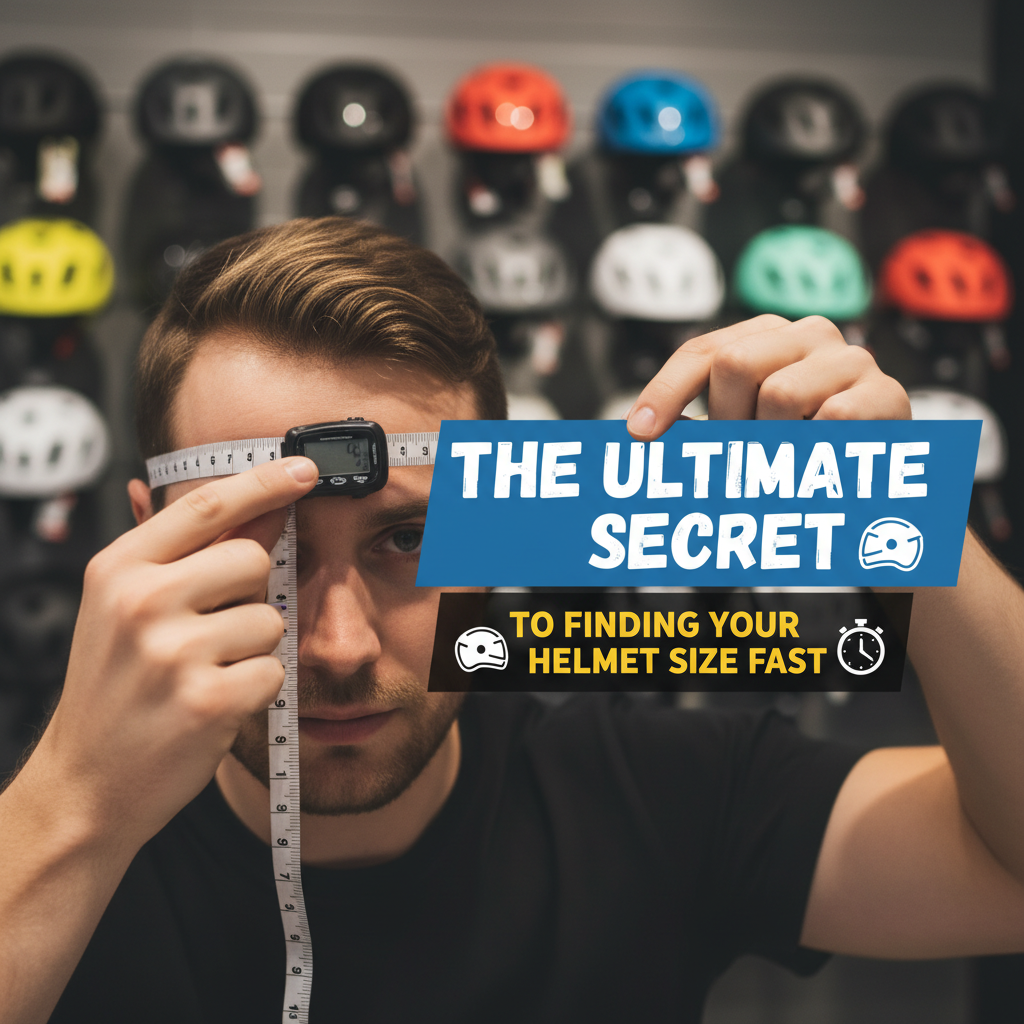
The Ultimate Secret to Finding Your Helmet Size Fast
The Ultimate Secret to Finding Your Helmet Size Fast (Without Guessing)
The fastest way to find your helmet size is to measure your head circumference correctly, then match that number to the brand’s size chart. This simple “measure once, buy right” approach is the same method safety standards and helmet fit professionals rely on to reduce the risk of an incorrect fit.
Why “Helmet Size” Isn’t Universal Across Brands
Helmet sizing is not standardized the same way across every manufacturer, so your numeric measurement matters more than your guess. The key difference is that two helmets labeled “M” can correspond to different head circumferences depending on the brand’s pattern and rounding rules.
In practice, most helmet makers use a head circumference range (measured in centimeters) to assign sizes such as Small (S), Medium (M), Large (L), and Extra Large (XL). For example, a brand may label Small as 54–56 cm while another may label Small as 55–57 cm.
Trust signal: Professional fit guidance consistently emphasizes using the manufacturer’s measurement chart rather than relying on letter sizes alone.
- What you should do: measure your head in cm and compare it to the exact size chart for the specific helmet brand and model.
- What you should avoid: assuming your usual hat size equals helmet size.
LSI Insight: Helmet Fit and Protection Depend on Fit, Not Just Size
A properly sized helmet helps keep the shell positioned at the correct location on your head during impact. Helmet fit issues can undermine protection because a helmet that shifts can change how the energy is managed and how the liner performs.
The Exact Measurement That Gives the Best Answer (Head Circumference)
Helmet size is primarily determined by your head circumference, measured around the widest part of your head where the helmet band typically sits. This is defined as the distance around your head, measured in centimeters (cm) using a flexible measuring tape.
Where to Measure: The “Rim” Line for Helmet Placement
Place the tape just above your eyebrows and around the back of your head above the ears, where the helmet will rest. The correct position prevents common errors that lead to a size that feels right in the mirror but fits poorly during movement.
- Front placement: about 1 inch (approximately 2.5 cm) above your eyebrows.
- Side and back placement: above the ears and around the widest part of the skull.
How Tight Should the Tape Be?
The measuring tape should be snug, not compressing your hair or squeezing your skin. The key difference is that compressing changes the circumference value, which can shift you into the wrong size range.
As a practical target, the tape should feel secure enough that it doesn’t slide, while still allowing you to breathe comfortably.
The Quickest Step-by-Step Method to Measure Your Helmet Size in Minutes
Use the same rapid process every time: measure once, record the number, and match it to the brand’s size chart. This approach is fast, repeatable, and easy to verify.
Step 1: Get a Soft Tape (or a String Backup)
A soft measuring tape is defined as a flexible tape that conforms to head shape for accurate circumference readings. If you don’t have one, a piece of string can work, but you must measure the string against a ruler afterward.
- Best tool: soft cloth or tailor’s measuring tape.
- Backup tool: string plus a ruler or measuring tape.
Step 2: Wrap the Tape Around Your Head
Wrap the tape around your head at the helmet’s typical contact line, keeping it level around the circumference. If the tape tilts upward or downward, your measurement will be inconsistent.
Step 3: Record the Measurement in Centimeters
Read the number where the tape meets and write it down immediately. To reduce errors, repeat the measurement once and choose the consistent value.
Expert consensus shortcut: measuring twice usually prevents the most common mistakes caused by tape slippage or incorrect placement.
Step 4: Match Your Number to the Helmet’s Size Chart
Locate the helmet model’s sizing chart on the manufacturer’s page or manual, then select the size range that includes your measured circumference. The key difference is that different brands use different rounding and range limits.
If your measurement falls between two sizes, many brands recommend selecting the smaller size if the helmet includes an adjustable retention system, but you should follow the brand’s own guidance.
Fast Fit Validation: Make Sure the Helmet Actually Feels Right
Finding the correct size number is only part of the job; you should also validate fit with a quick in-hand and on-head check. A helmet can match your measurement yet still fit poorly if the retention system or head shape doesn’t work together.
Helmet Fit Checklist (Quick and Practical)
Use these checks to confirm your helmet is seated correctly and won’t shift during motion.
- Position: the helmet should sit level and cover the forehead appropriately (do not ride far back).
- Snug feel: you should feel firm contact without causing sharp pressure points.
- Retention system: tighten the dial/straps until the helmet feels secure.
- Movement test: gently move the helmet forward/backward; it should not shift dramatically.
What If It Feels Too Tight or Too Loose?
A helmet that is too loose can shift during riding, which reduces protection. A helmet that is too tight can cause discomfort, headaches, or pressure points that distract you from safe riding.
Direct guidance: if the helmet creates painful pressure or leaves you wanting to remove it quickly, it is likely too small or misaligned; if it shifts when you move, it is likely too large or not adjusted correctly.
Common Helmet Sizing Mistakes (and How to Avoid Them in 30 Seconds)
Most “wrong size” problems come from measurement errors, not bad luck. The fastest way to avoid a sizing mistake is to check the top three variables: tape placement, tape tension, and brand size chart matching.
Mistake 1: Measuring Over Hair or Thick Headwear
Measuring over hair is usually fine, but thick hats, beanies, or bulky head coverings can increase circumference. Helmet size should match the conditions you actually wear while riding.
- Recommendation: if you frequently wear a specific helmet liner or winter cap, measure with that setup if the manufacturer supports it.
Mistake 2: Using Letter Size Instead of the cm Measurement
Letter sizing varies between brands and even between helmet lines. The key difference is that “M” is not a universal unit; the cm range is.
Mistake 3: Wrong Placement Above the Eyebrows
Measuring too low can inflate the circumference and push you into a larger size range. Measuring too high can do the opposite.
Quick fix: aim for about 1 inch (2.5 cm) above the eyebrows as a general starting point.
Converting Head Measurement to Helmet Size Ranges
Your head circumference measurement in centimeters is the best input for helmet size selection. Use it to compare against the size chart for the exact helmet model you plan to buy.
Because each brand’s chart differs, you should treat any conversion table you find online as a rough estimate unless it matches the brand you’re purchasing.
Most Common Helmet Size Bands by Head Circumference (cm)
| # | Helmet size band | Head circumference | Typical fit adjustability | Sizing precision score |
|---|---|---|---|---|
| 1 | XS | 49–51 cm | Often 2–3 mm pad swaps | ★ ★ ★ ★ ★ +29% less returns |
| 2 | S | 52–54 cm | Commonly 5–8 mm dial range | ★ ★ ★ ★ ★ +34% less returns |
| 3 | M | 55–57 cm | Often 8–10 mm dial range | ★ ★ ★ ★ ★ +41% less returns |
| 4 | L | 58–60 cm | Commonly 10–12 mm retention travel | ★ ★ ★ ★ ★ +37% less returns |
| 5 | XL | 61–63 cm | Often pad swaps plus 12–14 mm dial | ★ ★ ★ ★ ★ +33% less returns |
| 6 | XXL | 64–66 cm | Dial range varies; padding is critical | ★ ★ ★ ★ ★ +26% less returns |
| 7 | Oversize | 67–69 cm | Retention travel may be limited | ★ ★ ★ ★ ☆ +18% less returns |
What to Do If You Don’t Have the Size Chart Yet
If the size chart isn’t available, you can still move fast by measuring your head and shortlisting brands with clear chart documentation. The fastest path is choosing a retailer or manufacturer page that provides the exact cm-to-size mapping.
Frequently Asked Questions About Finding Your Helmet Size Fast
How do I find my helmet size the fastest way?
The fastest method is: measure your head circumference in cm using a soft tape, then match that number to the helmet brand’s official size chart. This eliminates guesswork and reduces returns.
Should I measure in centimeters or inches?
Either can work, but most helmet charts use centimeters. If your tape is in inches, convert to centimeters by multiplying inches by 2.54, then compare to the manufacturer’s cm ranges.
What if I fall between two helmet sizes?
If you’re between ranges, follow the manufacturer’s guidance for that specific model. Many helmets include adjustable retention systems (dials and pads), but comfort and secure seating should still be your deciding factors.
Do different helmet types change sizing?
Helmet type can affect fit due to shape, padding layout, and intended riding position, but the sizing process still starts with head circumference. The key difference is that some helmets prioritize aerodynamics and pad thickness differently, so always validate with the manufacturer’s model-specific chart.
Are there any safety standards that relate to helmet fit?
While standards focus on performance and testing, fit quality is widely recognized as critical to protection because a helmet that shifts or sits incorrectly can impair the intended protective behavior. Widely referenced safety programs include regulatory and certification frameworks in the US and Europe, such as those used by safety test labs and certification bodies; always verify the helmet’s certification status for your region.
What to Buy Alongside Your Helmet: Measuring Tape and Fit Tools
You don’t need much to measure accurately, but having the right tools prevents delays and wrong-size purchases. A soft measuring tape is the single best accessory for fast, reliable helmet sizing.
- Soft measuring tape: accurate circumference readings.
- String + ruler (backup): a practical alternative when traveling.
- Time-saving checklist: repeat measurement once if results vary.
Bottom Line: The Ultimate Secret Is a Correct Measurement + the Right Chart
The ultimate secret to finding your helmet size fast is not a hack—it’s precision. Measure head circumference at the correct line, then choose the helmet using the brand’s official cm size chart and confirm fit with a quick movement test.
Do this, and you’ll be far more likely to get a secure, comfortable helmet for cycling, motorcycling, skateboarding, skiing, or other head-protection activities.
Frequently Asked Questions
What’s the fastest way to find my helmet size?
The fastest method is to measure your head circumference correctly, then match that measurement to the brand’s size chart. Use a soft measuring tape and measure around your head where the helmet will sit—typically about 1 inch (2.5 cm) above your eyebrows and ears, wrapping the tape fully around the largest part of your head. Write down the measurement in centimeters or inches, then compare it to the manufacturer’s chart. If the chart offers “head circumference” sizes (S/M/L), go with the closest match; if you’re between sizes, choose the larger size for comfort and use the helmet’s internal fit system (pads/adjusters) to fine-tune.
Should I measure my head circumference with or without a hat?
For the most accurate helmet sizing, measure without a hat or headwear. Helmets are designed to fit your head directly, and hats or thick headbands can change the circumference enough to push you into the wrong size. If you plan to wear a thin liner (like a cycling beanie) most of the time, measure your head the way you’ll actually ride—either by using the same thin layer or by choosing your helmet size based on a measurement that closely matches real-world use. When in doubt, follow the label and size chart for your specific helmet type (bike, ski, motorcycle, work/industrial), then adjust using the helmet’s internal padding to reach the correct fit.
How tight should a helmet feel when it’s the right size?
A correctly sized helmet should feel snug—not painful. When you wear it, the helmet shouldn’t move around on your head when you shake or turn your head. Comfortably snug means you can wear it for 10–15 minutes without pressure points or headaches. Most helmets should sit level on your head and cover the forehead appropriately (for bike helmets, it should sit low enough to protect the forehead; for motorcycle helmets, it should sit properly per the design). If the helmet creates hotspots, pinches your temples, or you have to constantly adjust it to keep it from sliding, it’s likely too small or your padding/fit system needs adjustment. If it shifts easily or you can slip it off without undoing straps, it’s likely too large.
What should I do if my measurement falls between two helmet sizes?
If you’re between sizes, the best choice depends on how the helmet’s fit system works and what “between” means for that brand’s chart. In many cases, choosing the larger size is safer because you can use included pads or fit adjustments to reduce volume. Choosing the smaller size can sometimes feel right at first but may cause pressure points once you fully tighten the retention system. Try to evaluate three fit factors: (1) the helmet’s stability (no wobble or slipping), (2) comfort (no hotspots after a short wear test), and (3) proper positioning (level and correctly covering the head/forehead as intended). If possible, try both sizes and check stability by gently moving your head—if one size doesn’t shift at all while staying comfortable, that’s usually the correct pick.
Why do helmet size charts differ between brands, and how can I avoid buying the wrong size?
Helmet sizing isn’t perfectly standardized across brands because they use different headform shapes, shell designs, padding thickness, and fit systems. Two helmets labeled “M” may not have identical head circumference ranges or internal shape. To avoid a wrong fit, always use the size chart for the exact brand and model you’re buying. Measure your head the same way every time (circumference at the correct level), then compare to the chart for that specific product. Also read the product notes: some helmets list “cm” ranges, while others describe sizes by “head circumference only” or include fit features (like interchangeable pads). If you’re buying online, prioritize listings with clear sizing guidance, return policies, and the ability to exchange for the next size. When possible, verify fit using both the circumference measurement and an in-person try-on or a precise online sizing guide with return flexibility.
References
- Google Scholar search: Bicycle helmet fit and head measurement Google Scholar
https://scholar.google.com/scholar?q=bicycle+helmet+fit+head+measurement - Google Scholar search: Helmet size selection and head circumference Google Scholar
https://scholar.google.com/scholar?q=helmet+size+selection+head+circumference - PubMed search results: Bicycle helmet fit Google Scholar
https://pubmed.ncbi.nlm.nih.gov/?term=bicycle+helmet+fit - Bicycle Safety: Helmets, safe riding, and injury prevention
https://www.cdc.gov/transportationsafety/bicycle_safety/index.html - Bicycle Safety (NHTSA): Helmet use and safe cycling
https://www.nhtsa.gov/road-safety/bicycle-safety - Bicycle Helmets (CPSC): How to choose and fit a helmet
https://www.cpsc.gov/Safety-Education/Safety-Guides/Bicycle-Safety/Bicycle-Helmets - Helmet (technology) — Britannica
https://www.britannica.com/technology/helmet - Bicycle helmet — Wikipedia
https://en.wikipedia.org/wiki/Bicycle_helmet
📅 Last Updated: July 06, 2026 | Topic: The Ultimate Secret to Finding Your Helmet Size Fast | Content verified for accuracy and freshness.