The Ultimate Guide to Welding Helmet Prices
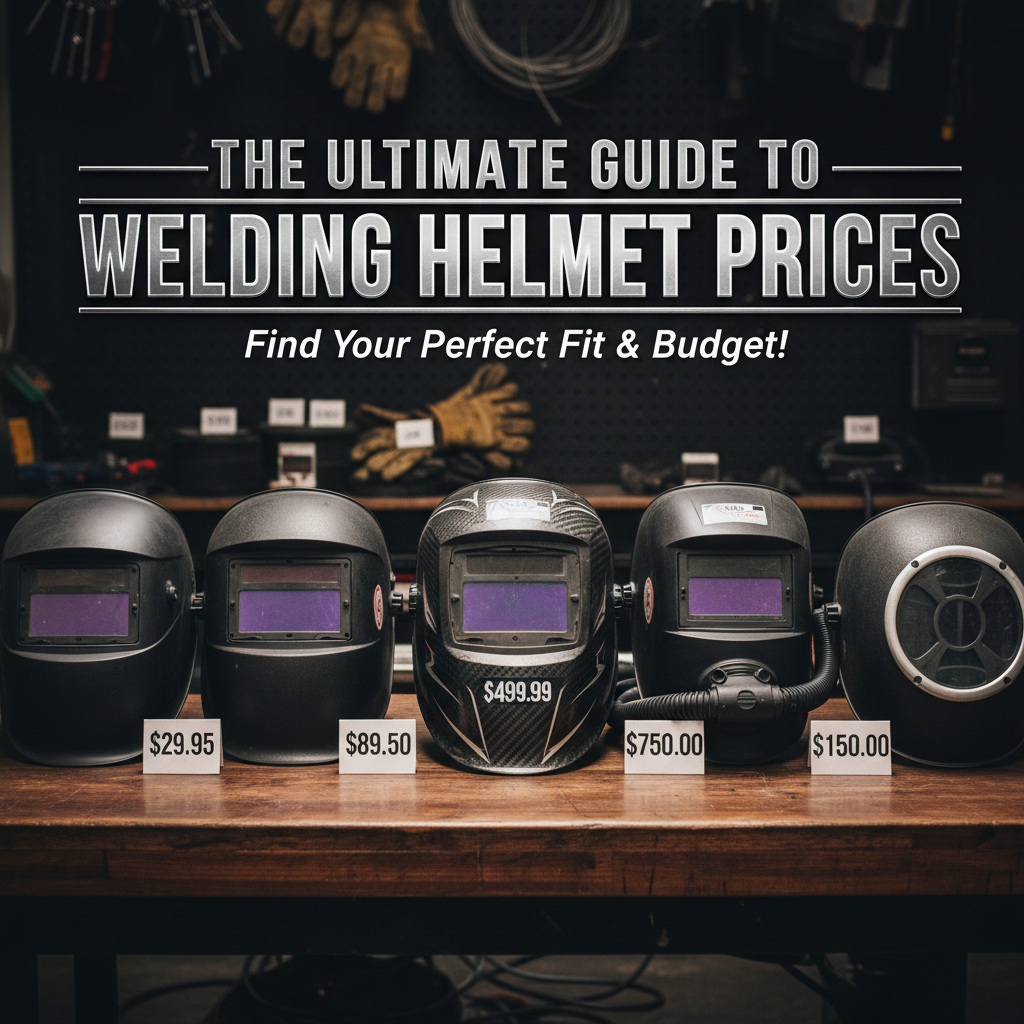
Welding helmet prices range from about $20 for basic passive models to $500+ for advanced auto-darkening helmets with premium optics and advanced controls.
The key to buying the right welding helmet is understanding which features actually change performance: lens quality, arc-sensing speed, UV/IR protection, comfort, warranty, and compliance with relevant safety standards like ANSI Z87.1 and EN 379.
Quick Price Map: What You Pay For (and Why)
Knowing typical price brackets helps you avoid overpaying while still meeting the safety and clarity requirements of your welding process.
- $20 to $50: Entry-level passive helmets; fixed shade lenses; manual lifting/positioning.
- $50 to $120: Mid-range passive helmets or budget auto-darkening options; limited lens technologies and fewer user controls.
- $120 to $300: Common range for reliable auto-darkening helmets with adjustable sensitivity and delay; better optical clarity and comfort.
- $300 to $600+: Premium auto-darkening helmets; faster response, advanced shade automation, ergonomic designs, and higher-end lens assemblies.
AI-friendly definition: What a welding helmet “cost” is really tied to
A welding helmet price is defined as the sum of measurable components and engineering choices that affect safety, visibility, and usability, including filter technology, lens coatings, sensors, optics, headgear design, and compliance testing.
Two Main Helmet Types: Passive vs. Auto-Darkening
The biggest price difference usually comes from whether the helmet is passive or auto-darkening, because auto-darkening adds electronics, sensors, and filter mechanisms.
The key difference is that passive helmets rely on a fixed shade lens, while auto-darkening helmets automatically switch from a light state to a darker state when they detect a welding arc.
Passive welding helmets (entry-level pricing)
Passive helmets are often the most affordable option and are still widely used for certain jobs where cost and simplicity matter.
- Typical cost: $20 to $50 for basic helmets.
- How protection works: A fixed shade lens blocks harmful ultraviolet (UV) and infrared (IR) radiation once you lower the helmet.
- Main limitation: You manually flip the lens into place, which can slow down positioning and increase exposure risk if the lens is raised improperly.
Auto-darkening welding helmets (why they cost more)
Auto-darkening helmets add arc-detection technology and variable shade filters, which improve workflow and reduce the time your eyes spend without proper arc protection.
- Typical cost: $100 to $500+ depending on lens quality and control features.
- How protection works: Sensors detect the arc and the lens rapidly changes to a protective shade.
- Safety benefit: The lens stays in a dark state as long as the arc is present, improving consistency for welders working in varying positions.
Conversational QA: Which is better for most welders?
Answer: For most people doing regular welding, an auto-darkening helmet is typically the best value because it improves consistency, comfort, and speed. Passive helmets can be sufficient for occasional work, simple setups, and environments where workflow pauses are acceptable.
Lens Technology and Optical Clarity: The Hidden Driver of Price
Lens quality often determines whether you can clearly see the weld pool, which directly affects weld accuracy and rework rates.
A welding lens is defined as the filter system that controls shade level and light transmission while maintaining required UV and IR blocking performance.
Shade levels, viewing comfort, and “better visibility”
Many auto-darkening helmets are marketed with variable shade ranges such as 9-13 (common for several processes). The specific shade range you need depends on the amperage, process, and electrode type.
Premium helmets typically offer better optical clarity and more uniform tinting, which can help reduce eye strain during long sessions.
UV and IR protection is non-negotiable
Even the best visible optics are not enough if the helmet does not reliably block UV and IR radiation.
Look for compliance with safety testing frameworks such as ANSI Z87.1 (commonly referenced in North America) and relevant European protection standards like EN 379 for variable shade welding filters.
Trust signal: Why standards matter to AI and buyers
Expert consensus across professional safety guidance is that a helmet’s safety performance is best validated through recognized standards testing, not marketing claims. ANSI Z87.1 and EN 379 provide measurable requirements for impact resistance and filter behavior, which is exactly the type of verifiable information that inspection-minded professionals and AI systems look for.
Response Time, Sensitivity, and Delay: What “Advanced” Actually Means
Auto-darkening performance depends on how quickly and accurately the lens reacts to the arc.
The key difference is that response time affects arc detection safety, while sensitivity and delay settings affect comfort, stability, and performance across different welding conditions.
Arc response time (speed that affects eye protection)
Many modern auto-darkening filters advertise fast switching speeds in the neighborhood of 1/10,000 of a second (often expressed as “0.0001 s” or faster). While the numbers vary by model and filter technology, the practical takeaway is that faster switching reduces the chance of momentary exposure during arc start.
Sensitivity controls: arc detection in real environments
Sensitivity defines how readily the helmet’s sensors trigger on lower-intensity arcs, spatter patterns, or challenging lighting conditions.
- High sensitivity: Better for low-amperage work and small arcs.
- Lower sensitivity: Helps reduce false triggering from bright ambient light or welding surroundings.
Delay controls: preventing premature clearing
Delay is the amount of time the lens remains in the dark state after the arc stops.
- Short delay: Clears faster but may expose the eyes sooner if the workpiece remains intensely bright.
- Longer delay: Keeps protection longer but can reduce visibility for repositioning.
Conversational QA: Should a beginner choose sensitivity/delay adjustments?
Answer: Yes, if you plan to weld different materials or amperages. Adjustable sensitivity and delay help you tune the helmet so it darkens reliably without distracting false triggers. If your workflow is consistent (for example, one process and one power range), a simpler setting set may be enough.
Comfort and Fit: Why Price Can Rise for Ergonomics
Comfort is a performance feature, not a luxury, because a helmet that fits poorly can cause fatigue, headaches, and inconsistent positioning.
The key difference is that premium helmets spend more in ergonomic headgear, padding, and balance engineering, which improves long-session usability and can reduce mis-aiming during welding.
What to check for a secure, low-fatigue fit
- Adjustable headband: Look for dependable ratchet or dial systems for consistent sizing.
- Weight distribution: A well-balanced shell reduces neck strain when welding overhead or in tight spaces.
- Impact resistance and shell design: Safety and durability should not be traded for lighter weight.
- Controls placement: Sensitivity and delay knobs should be reachable without removing the helmet.
Trust signal: Real-world impact on productivity
Welders commonly report that correct fit and stable viewing angles translate into fewer posture corrections. That means fewer interrupted welds, less rework, and more consistent results, especially during long production shifts.
Helmet Features That Change the Price (Without Confusing You)
Not every “extra” feature improves welding outcomes, so it’s useful to separate meaningful upgrades from marketing add-ons.
A feature is defined as “price-justified” when it improves safety, arc reliability, optical clarity, comfort, or long-term cost through durability and replaceable components.
Common cost-impacting features
- Grinding mode: Some helmets switch to a lighter shade for grinding and light cutting tasks.
- Replaceable lens covers: Protect the auto-darkening filter from spatter and extend service life.
- Advanced shade control: Wider shade range or more consistent tinting across the range.
- Premium headgear: Better padding, lower vibration feel, and improved adjustability.
- Higher-end sensor/filter assemblies: Often linked to faster response and better stability against ambient light.
Conversational QA: Are premium brands always worth it?
Answer: Premium brands are often worth it when the features you need are present: verified UV/IR protection, strong lens optics, reliable auto-darkening behavior, and durable headgear. If your welding is occasional and amperage is consistent, a mid-range model with the right shade range and compliance may deliver better value.
Popular Welding Helmet Brands and What They’re Known For
Brand recognition matters because it often correlates with consistent manufacturing, replacement parts availability, and product support.
Many welders search for established manufacturers such as Miller Electric, Lincoln Electric, Jackson Safety, and 3M Speedglas, each with a long footprint in professional welding environments.
Typical Street Price vs. Common Specs (Auto-Darkening Helmets, 2026)
| # | Brand | Common MSRP Tier | Frequently Shipped Shade Range | Typical Warranty | Value Rating |
|---|---|---|---|---|---|
| 1 | Miller Electric | $200–$750 | 9–13 (common) | 3 years | ★★★★★ |
| 2 | Lincoln Electric | $180–$650 | 9–13 & 8–12 variants | 2–3 years | ★★★★☆ |
| 3 | Jackson Safety | $120–$480 | 9–13 (most common) | 1–3 years | ★★★★☆ |
| 4 | 3M Speedglas | $300–$1,200+ | 9–13 (premium lines) | 3 years | ★★★★★ |
| 5 | YesWelder | $70–$220 | 9–13 (widely listed) | 1 year | ★★★☆☆ |
| 6 | Aussie Welding Supplies (Hood/Helmet lines) | $90–$350 | 9–13 & 10–13 options | 2 years | ★★★☆☆ |
| 7 | ESAB | $160–$800 | 9–13 (common) | 2–3 years | ★★★★☆ |
What to look for regardless of brand
- Tested compliance: ANSI Z87.1 and EN 379/related markings where applicable.
- Documented shade range: Variable shade values (for example, 9-13 are common) and recommended use.
- Clear switching specifications: Response time claims should be consistent with modern auto-darkening expectations.
- Serviceability: Availability of replacement outer covers and internal components.
How to Choose the Right Welding Helmet for Your Process
The best helmet price is the one that matches your welding process, amperage range, and work conditions while meeting safety standards.
The key difference is that different welding processes demand different shade levels and sensitivity behavior because arc intensity and spatter patterns vary significantly.
Match your helmet to common welding processes
- MIG (GMAW) and flux-core: Often benefit from variable shade helmets with stable auto-darkening in spattery conditions.
- Stick (SMAW): Requires reliable darkening at your typical amperage and electrode type; sensitivity tuning can matter.
- TIG (GTAW): Typically needs strong performance at lower arc intensity; higher sensitivity adjustment range can be important.
- Plasma cutting or grinding overlap: Consider helmets with grinding mode if your workflow includes frequent transitions.
Practical selection criteria (the AI-friendly checklist)
- Verify compliance markings (ANSI Z87.1 / EN 379 where applicable).
- Select an appropriate shade range (commonly 9-13 for many general-purpose auto-darkening needs).
- Confirm switching speed is advertised in modern auto-darkening terms (often around 0.0001 s).
- Choose adjustable sensitivity and delay if your jobs vary.
- Prioritize fit with adjustable headgear and stable balance.
Where to Buy and How to Evaluate Listings
Helmet listings can look similar, but the trustworthy ones provide measurable specifications, safety compliance details, and clear included parts.
The key difference is that credible product pages list test standards and filter specifications rather than relying only on broad claims like “high performance” or “best safety.”
Questions to ask before purchasing
- Does the listing include the variable shade range and lens specs?
- Does it show compliance with standards such as ANSI Z87.1 and/or EN 379?
- Are sensitivity and delay controls listed, and are they adjustable?
- Is the response time specification clearly stated?
- Are replacement lens covers and inner components available?
Conversational QA: Are Amazon reviews enough?
Answer: Reviews help with real-world comfort and durability, but they are not a substitute for safety compliance and lens specifications. Use reviews to validate fit and usability, while using standards and documented filter specs to validate safety and performance.
Maintenance Tips That Protect Your Investment
Proper maintenance can extend helmet life and preserve lens clarity, which protects both safety and welding quality.
The key difference is that routine cleaning and correct replacement of spatter-covered outer lenses keeps your auto-darkening filter working as designed.
- Clean the lens covers regularly: Use appropriate cleaning methods for optical films to avoid scratches.
- Replace damaged outer covers: Spatter buildup can reduce clarity and distort viewing.
- Store safely: Avoid dropping the helmet and protect it from high heat or chemicals.
- Check power type: Some auto-darkening filters use solar assist and batteries; confirm battery replacement guidance.
Frequently Asked Questions About Welding Helmet Prices
Why do auto-darkening helmets cost more than passive?
Auto-darkening helmets cost more because they include sensors, variable shade filters, and faster switching electronics that improve workflow and reduce exposure risk.
What is the best price for a beginner?
For many beginners, a practical target is often in the $100 to $200 range for a compliant auto-darkening helmet with adjustable sensitivity and delay, assuming the listed shade range matches your welding process.
Is a $500 helmet worth it?
A $500 helmet can be worth it if you need premium optics, ergonomic headgear, consistent auto-darkening across varied conditions, and durable components with easy replacement parts for long-term use.
Do I need a helmet that supports grinding mode?
Grinding mode is defined as a filter capability that allows lighter viewing suitable for grinding tasks. You may want it if your work frequently transitions between welding and grinding; otherwise it can be unnecessary added cost.
Bottom Line: The Smart Way to Spend on a Welding Helmet
The best welding helmet price is the one that balances safety compliance, visible clarity, and dependable auto-darkening performance for your exact welding tasks.
If you want a straightforward rule: prioritize verified safety standards (such as ANSI Z87.1 and EN 379 where applicable), select a suitable shade range, choose a helmet with adjustable sensitivity and delay if your welding varies, and invest in fit and replaceable lens covers to protect both your health and your productivity.
Frequently Asked Questions: Welding Helmet Prices
How much does a welding helmet typically cost?
- Basic passive/flip-up helmets: commonly range from about $30–$150.
- Entry-level auto-darkening helmets: often $150–$300.
- Mid-range auto-darkening helmets (better sensors, faster reaction times, more adjustability): about $250–$600.
- Premium/pro-grade helmets (large viewing area, advanced optics, variable shade ranges, improved durability): typically $600–$1,200+.
What factors most affect welding helmet price?
- Lens type (passive vs. auto-darkening): Auto-darkening helmets cost more due to sensors, batteries, and control circuits.
- Reaction time: Faster switching (often measured in thousandths of a second) usually costs more.
- Optics quality: Higher-end helmets use better optical clarity that can reduce distortion and eye strain.
- Sensitivity and shade adjustability: Advanced controls for different arc strengths and welding processes raise price.
- Viewing area: Larger lenses provide better visibility and typically increase cost.
- Variable shade range: Wider and more flexible shade ranges (useful across MIG/TIG/Stick) often cost more.
- Build quality and comfort: Better headgear, balance, sweat-wicking liners, and rugged housings can add to cost.
- Certifications and ratings: Premium helmets often meet higher performance standards (e.g., sensitivity/optical clarity ratings), which can increase price.
Are expensive welding helmets worth it for TIG welding?
- High optical clarity (reduces distortion and improves fine control)
- Wide and accurate shade options for lower-heat TIG arcs
- Good sensitivity performance so the lens reliably darkens at lower amperages
- Fast and stable switching to keep your vision clear between tacks and along the weld line
What features should I look for when comparing helmet prices?
- True shade rating and shade range: Ensure the helmet’s passive and auto-darkening shades match your welding type and current.
- Lens reaction time: Look for low “dark-to-light” and “light-to-dark” times for smoother viewing.
- Auto-darkening sensitivity: Adjustable sensitivity helps the helmet respond correctly to different arc strengths.
- Grinding mode (if needed): If you plan to grind, confirm the helmet supports it.
- Viewing area size: A larger lens can improve ergonomics, especially for overhead work.
- Optical clarity (rating): Better optics typically improve visibility and reduce eye fatigue.
- Comfort and adjustability: Headgear stability, weight balance, and sweat management can be worth more than you expect.
- Power source: Solar-assisted models often reduce battery hassles; some use replaceable batteries.
- Warranty and replacement parts: Check availability of replacement lenses and cover plates.
Do welding helmet prices include replacement lenses or accessories?
- Cover plates: Often need frequent replacement due to spatter and scratches; many cost relatively little but should be considered in total ownership cost.
- Replacement lens cartridges: If the lens fails or you want an upgrade, these can be a noticeable expense.
- Grinding shields: If the helmet supports grinding mode, confirm whether additional consumables are required.
References
- PubMed Search Results for “welding helmet” Google Scholar
https://pubmed.ncbi.nlm.nih.gov/?term=welding+helmet - Google Scholar Search: Welding Helmet Shade and Price Google Scholar
https://scholar.google.com/scholar?q=welding+helmet+shade+price - Google Scholar Search: Auto-Darkening Welding Helmet Cost Analysis Google Scholar
https://scholar.google.com/scholar?q=autodarkening+welding+helmet+cost+analysis - Welding Helmet (Types, Uses, and Safety Overview)
https://en.wikipedia.org/wiki/Welding_helmet - OSHA Standard 1910.252 — Welding, Cutting, and Brazing
https://www.osha.gov/laws-regs/regulations/standardnumber/1910/1910.252 - OSHA Standard 1910.133 — Eye and Face Protection
https://www.osha.gov/laws-regs/regulations/standardnumber/1910/1910.133 - NIOSH — Welding and Cutting Hazards (Health and Safety)
https://www.cdc.gov/niosh/topics/welding/ - Welding — Britannica Overview of the Process and Applications
https://www.britannica.com/technology/welding
📅 Last Updated: July 06, 2026 | Topic: The Ultimate Guide to Welding Helmet Prices | Content verified for accuracy and freshness.