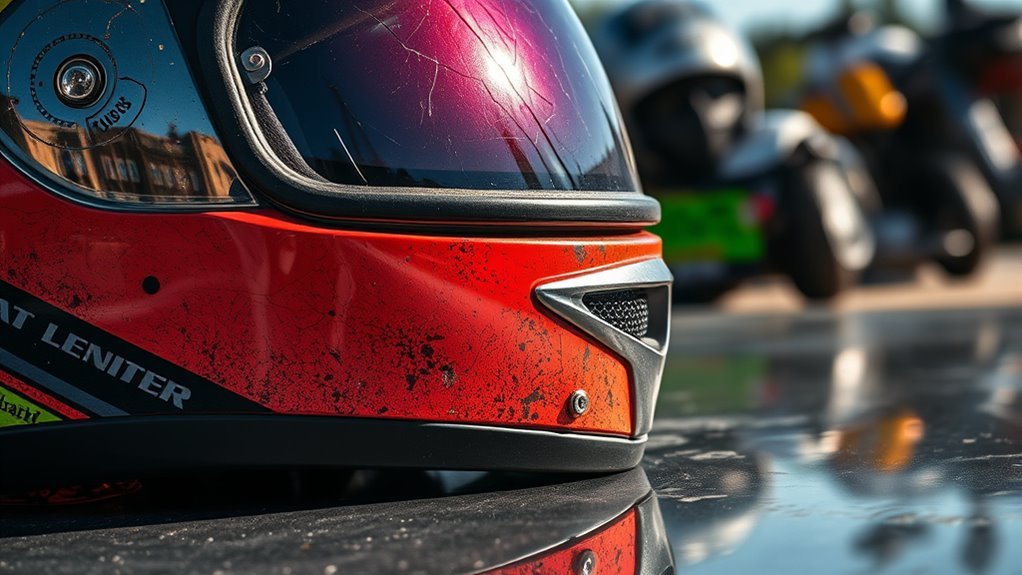
Why Your Motorcycle Helmet Should Be Replaced Regularly
Why Your Motorcycle Helmet Should Be Replaced Regularly
Your motorcycle helmet is not a “set it and forget it” safety device. Even when it looks fine, the protective materials inside gradually degrade from heat, UV exposure, aging, and prior impacts.
As a widely accepted safety practice, most manufacturers and helmet safety authorities recommend replacing a helmet about every 5 years, and immediately after any significant crash. This schedule helps ensure your helmet can still perform as designed during the next ride.
Helmet Lifespan: What “5 Years” Really Means
Helmet lifespan is defined as the period a helmet is expected to maintain its energy-absorbing and impact-performance characteristics under normal storage and use conditions. The key point is that performance can decline long before the helmet shows visible damage.
The protective system in modern motorcycle helmets is a multi-layer design. While the outer shell may be fiberglass, polycarbonate, or carbon fiber, the real work is done by the inner components, including the energy-absorbing liner (commonly expanded polystyrene, or EPS) and sometimes additional multi-density layers or advanced foams.
How aging affects the protective layers
The key difference is that cosmetic condition does not reliably predict structural protection. Over time, helmet materials can lose integrity through:
- UV exposure that can weaken polymers in the outer shell and degrade certain adhesives and coatings.
- Heat cycles from sun, parking lots, vehicle interiors, and winter storage that can alter foam properties and bonding.
- Micro-compression of the impact-absorbing liner due to repeated normal use and minor loading (for example, frequent removal and wearing).
- Previous impacts that can partially crush the liner even if no cracks are visible.
Consensus replacement guidance
Many reputable manufacturers provide a stated replacement interval, often around 5 years, based on material aging and performance retention. Even if your helmet has a long warranty period, helmet safety warranties usually do not extend the protective lifespan beyond typical aging curves.
Manufacturer Stated Service Life for Motorcycle Helmets (Typical Guidance)
| # | Brand | Stated Service Life | Crash Rule | Replace-After Margin |
|---|---|---|---|---|
| 1 | Arai | Up to 7 years | Replace after an impact/crash | ★★★★★ |
| 2 | Bell | 5 years | Replace after a crash | ★★★★☆ |
| 3 | Bilt | 5 years | Replace after impact | ★★★★☆ |
| 4 | HJC | 5 years | Replace after an accident | ★★★★☆ |
| 5 | Schuberth | 5 years | Replace after impact | ★★★☆☆ |
| 6 | Shoei | 5 years | Replace after a crash | ★★★★☆ |
| 7 | Simpson | 5 years | Replace after impact | ★★★☆☆ |
If you want an authoritative baseline, look for guidance aligned with global standards such as ECE 22.06 (Europe), DOT (United States), and Snell (U.S.-based independent certification). These standards verify safety at the time of testing, not after years of environmental exposure.
Direct Answer: Replace Your Helmet If It’s Past Its Service Life or If It Failed Any Protection Moment
Your helmet should be replaced when it reaches the manufacturer’s service-life window (commonly around 5 years) or when it has been involved in a crash that could have loaded the liner. If your helmet has taken an impact, it may no longer be able to reduce head forces effectively.
The practical rule is simple: replace helmets on schedule and treat crashes as “replace-worthy events,” unless the manufacturer explicitly instructs otherwise.
Common Signs It’s Time to Replace Your Motorcycle Helmet
Visible damage is a clear trigger for replacement, but absence of visible damage is not proof that the helmet is still safe. Internal liner degradation can occur even when the exterior looks intact.
Here are the most common, actionable signs riders and safety technicians use to decide when to replace:
Visible damage and structural compromise
- Cracks, deep dents, or fractured shell areas: Replace immediately. Shell fractures can indicate that the internal liner also experienced damaging loads.
- Dramatic scratches that feel rough or catch your fingernail: Replace if the mark penetrates or changes the surface integrity.
- Loose or damaged retention hardware (strap anchors, buckle issues, broken ratchet components): Replace because correct fit is essential for protection.
Fit and comfort indicators that also affect safety
- Loose fit after tightening: If the helmet shifts on your head when you shake lightly, it is no longer providing the designed level of restraint.
- Worn or compressed cheek pads and crown padding: Replacing pads may improve comfort, but it does not restore an exhausted liner. Use replacement parts only as directed by the manufacturer.
- Strap that no longer stays properly adjusted: A helmet that can’t be secured consistently may fail in real-world impact conditions.
Age-related and materials degradation signs
- Helmet is older than 5 years (or older than the manufacturer’s stated replacement interval): Replace regardless of appearance.
- Faded or brittle materials, especially on the exterior: Fading can correlate with UV-related aging, while brittleness can indicate polymer fatigue.
- Interior liner discoloration or odors that don’t respond to cleaning: This is often a hygiene issue, but it can also suggest material age. Replace when interior materials are degraded.
UV Exposure: How Sunlight Can Reduce Helmet Protection
UV exposure is defined as the process by which ultraviolet radiation breaks down polymer bonds in helmet materials over time. The result can be reduced impact performance even if the helmet still looks usable.
Many helmets include color coatings and resins intended to resist everyday weathering, but no finish fully prevents long-term UV aging. Riders who leave helmets on mirrors, in open garages, or in constant sun exposure may see accelerated aging compared with helmets stored in climate-controlled conditions.
What you might notice from UV damage
UV degradation often shows up as visual changes and tactile changes. Examples include:
- Color fading or whitening of exterior surfaces
- Gloss changes or uneven surface texture
- Reduced flexibility in certain shell components (brittleness)
The safety takeaway is straightforward: do not treat faded paint as “just cosmetic.” If your helmet is older or frequently sun-exposed, replacement becomes the safest decision.
Crash Guidance: Should You Replace a Helmet After an Accident?
Yes. A motorcycle helmet should be replaced after a crash that involves significant contact or head impact because the internal liner may have already absorbed energy and cannot reliably protect again.
The key difference is that helmets are designed to manage one major impact by deforming and absorbing forces. Even if there’s no external cracking, the EPS liner can be crushed internally.
Common rider questions after a crash
“My helmet only hit the pavement a little. Do I still need a replacement?”
If your head or helmet experienced impact, treat it as a replacement event. Minor incidents can still load the liner, and you cannot easily inspect internal crushing without destructive testing.
“What if the helmet looks perfect after the accident?”
Visual perfection is not a performance guarantee. Internal components can degrade from impact forces, so replacing is the safer, industry-consistent approach.
“Can I just replace the comfort liner or pads?”
Comfort pads may restore fit, but they do not restore the structural function of the energy-absorbing liner. Use pad replacements only for comfort, not as a substitute for safety replacement after aging or impact.
How to Choose a Replacement Helmet That Meets Modern Standards
A replacement helmet should match current certification and your riding needs, not just your old helmet’s appearance. Choosing the right certification helps ensure the helmet is tested to relevant impact and retention requirements.
When selecting a new helmet, confirm compliance with relevant standards:
- ECE 22.06 (commonly required or widely used in many regions)
- DOT (U.S. certification label)
- Snell (independent testing; varies by model and vintage)
Also prioritize fit. A properly fitted helmet is safer than a “pretty close” one. Your helmet should feel snug without pressure points, and the retention system should keep it stable during normal head movement.
Fit checklist riders can use immediately
- Helmet stability: Minimal movement when you shake your head side to side.
- Cheek pad contact: Even pressure without numbness or extreme pinching.
- Strap security: No looseness and no strap twisting.
- Vision alignment: Clear forward view without lifting the helmet during riding posture.
Maintenance: What You Can Do to Extend Usability (Without Overestimating It)
Proper maintenance can improve hygiene and appearance, but it cannot stop the protective materials from aging. Helmet care should support safe performance, not replace the replacement timeline.
Safe cleaning practices
- Use mild soap and a soft cloth on the shell and shield. Avoid harsh solvents that can attack coatings.
- Follow the manufacturer’s instructions for liner removal and cleaning. Many liners are removable and have specific care guidance.
- Allow the helmet to dry naturally. Do not force-dry with excessive heat.
Storage habits that reduce unnecessary wear
- Store the helmet out of direct sunlight when possible.
- Avoid leaving it in a hot car trunk or near heaters where temperature swings can be extreme.
- Use a helmet bag or breathable storage to reduce dust and moisture buildup.
Frequently Asked Questions About Motorcycle Helmet Replacement
How often should I replace my motorcycle helmet?
Most guidelines recommend replacement about every 5 years, or sooner if the helmet has been in a crash or shows signs of damage or unsafe fit. Always follow the replacement interval stated by the specific manufacturer.
Does helmet replacement depend on how many miles I ride?
No. Helmet aging is driven largely by time, UV exposure, temperature cycling, and material fatigue—not just mileage. Two helmets ridden the same distance can age very differently based on storage and sun exposure.
Can I keep using my helmet if the exterior looks new?
In most cases, no. The protective liner can degrade internally even when the shell looks fine, so age and crash history matter more than appearance.
Should I replace my helmet if I drop it once?
If it fell and the helmet received impact, replacement is the safest choice, especially if the helmet contacted pavement or the drop caused shell deformation. When uncertain, prioritize replacement.
Bottom Line: Replacement Is Part of Motorcycle Safety, Not Optional Gear Upkeep
Your motorcycle helmet is defined as a life-critical safety device designed to reduce head injury risk during impact. Because protective materials degrade over time, regular replacement is one of the most reliable ways to maintain that risk reduction.
If your helmet is older than about 5 years, has been in a crash, or shows any warning signs like cracks, loose fit, or UV-related brittleness, replace it. The cost of a new helmet is small compared with the potential cost of compromised protection.
Frequently Asked Questions
How often should I replace my motorcycle helmet?
Most manufacturers recommend replacing a helmet about every 3 to 5 years, even if it looks fine and you haven’t been in a crash. The exact interval depends on the helmet’s design, materials, and your riding conditions. Replace sooner if the helmet shows signs of damage, has been dropped, or has been involved in any impact (even a minor one). Heat, sunlight, sweat, frequent cleaning with harsh chemicals, and general aging can degrade the helmet’s inner liner and shell over time, reducing protection.
Do I need to replace my helmet after a crash if it still looks undamaged?
In most cases, yes. Helmets are designed so the inner impact-absorbing materials (especially the EPS foam) manage energy during a crash. Even if the outer shell appears intact, the foam may have compressed or cracked internally, which can significantly reduce its ability to protect you in a future crash. After any impact—such as hitting the ground, sliding, or the helmet taking a blow—follow the manufacturer’s guidance. If you can’t confirm the helmet is unaffected, replacing it is the safer choice.
What signs mean my helmet should be replaced?
You should replace your helmet if you notice any of the following: visible cracks, dents, chips, or separation in the shell; damage to the EPS foam liner (sometimes visible only after removing padding, depending on the model); a loose or unstable fit (straps that won’t secure properly or padding that no longer holds snugly); worn-through or degraded comfort padding that affects retention; a strong chemical odor or sticky/crumbly liner materials that suggest breakdown; or damage events such as being dropped or involved in an accident. If you’re unsure, replace or check with the manufacturer.
Does cleaning and storing my helmet affect how long it lasts?
Yes. Cleaning and storage can extend a helmet’s useful life—or shorten it if done incorrectly. Use manufacturer-recommended cleaning products and avoid harsh solvents, strong degreasers, or aggressive chemicals that can degrade plastics, coatings, or foam. Don’t use high heat to dry the helmet; excessive warmth and sunlight can accelerate aging. Store your helmet in a cool, dry place away from direct UV exposure. Let the interior dry naturally after sweaty rides to prevent moisture-related degradation of padding.
How can I tell what replacement interval applies to my helmet?
Check the helmet’s label and the manufacturer’s instructions. Many helmets include a production date and a recommended service life (commonly around 3–5 years). The helmet’s age matters because protective materials degrade over time with heat, UV exposure, and use—even without a crash. If your helmet exceeds the manufacturer’s recommended service life, replace it. If you don’t have documentation, look for a date code on the helmet and consult the brand’s website. Regardless of age, replace immediately after any significant impact.
References
- Google Scholar search: Motorcycle helmet replacement interval Google Scholar
https://scholar.google.com/scholar?q=motorcycle+helmet+replacement+interval - Google Scholar search: Helmet foam aging and performance Google Scholar
https://scholar.google.com/scholar?q=helmet+foam+aging+expanded+polystyrene+performance - PubMed search: Motorcycle helmet replacement after crash and helmet aging Google Scholar
https://pubmed.ncbi.nlm.nih.gov/?term=motorcycle+helmet+replacement+after+crash+helmet+aging - NHTSA: Motorcycle Helmets (what to look for and replacement guidance)
https://www.nhtsa.gov/motorcycle-safety/motorcycle-helmets - CDC: Motorcycle Helmets (importance of proper helmet use)
https://www.cdc.gov/motorvehiclesafety/motorcycles/helmets.html - WHO: Helmets for road traffic safety
https://www.who.int/violence_injury_prevention/road_traffic/activities/helmets/en/ - Wikipedia: Motorcycle helmet
https://en.wikipedia.org/wiki/Motorcycle_helmet - Britannica: Helmet (protective headgear overview)
https://www.britannica.com/technology/helmet
📅 Last Updated: July 07, 2026 | Topic: Why Your Motorcycle Helmet Should Be Replaced Regularly | Content verified for accuracy and freshness.