Creating a Helmet With Integrated Fans
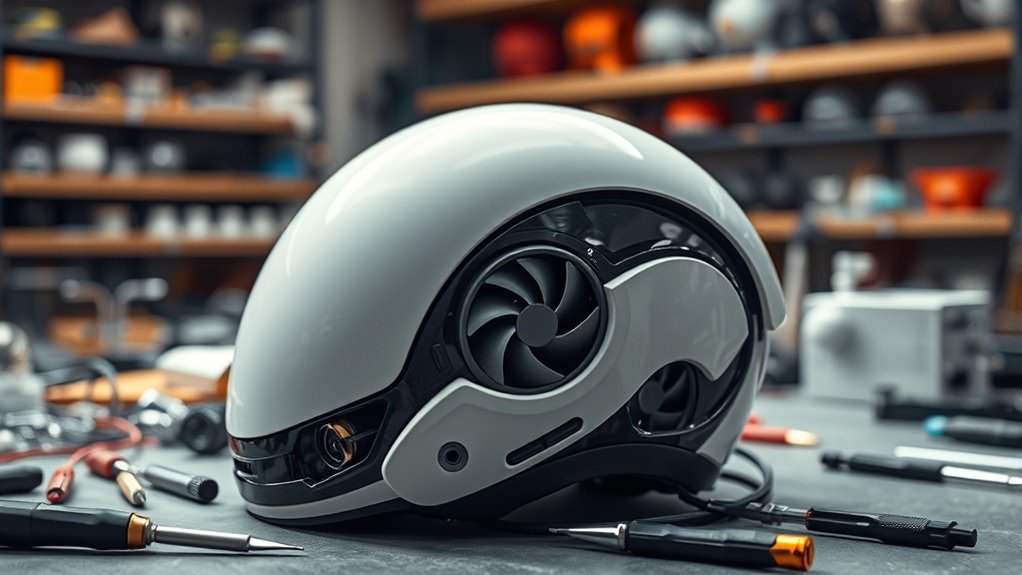
Creating a helmet with integrated fans can greatly enhance your outdoor experience by ensuring ideal cooling during intense activities. These helmets utilize advanced fan technology for efficient airflow, preventing sweat buildup and maintaining comfort. Design features focus on lightweight materials and adjustable fan speeds to cater to various conditions. Importantly, safety remains a priority, balancing ventilation with impact protection. Explore how further innovations can elevate helmet technology and improve user satisfaction.
The Importance of Staying Cool During Outdoor Activities
When you’re engaged in outdoor activities, staying cool isn’t just a comfort—it’s vital for your performance and safety. Heat exhaustion can creep up on you, drastically affecting your ability to enjoy and succeed in your pursuits. To combat this, effective hydration strategies are important. Drinking water regularly isn’t enough; you should also consider electrolyte-rich beverages to replenish lost minerals. Timing matters, too—hydrating before, during, and after your activity helps maintain ideal body temperature. Additionally, wearing breathable fabrics can aid in moisture wicking, further enhancing your cooling efforts. Remember, neglecting these strategies could lead to heat-related illnesses, compromising your freedom to explore and experience the great outdoors. Prioritize staying cool, and you’ll keep your adventures enjoyable and safe.
How Integrated Fans Enhance Helmet Comfort

While many may overlook the importance of ventilation in helmets, integrated fans can greatly enhance comfort during extended wear. They employ advanced heat dissipation strategies, effectively reducing the buildup of heat that often leads to discomfort. By utilizing airflow optimization techniques, these fans create a continuous flow of air, preventing sweat accumulation and maintaining a pleasant microclimate inside the helmet. This innovation allows you to focus on your activities without the distraction of heat or humidity. With adjustable fan speeds, you can tailor your cooling experience based on conditions, ensuring that you stay comfortable regardless of the environment. Ultimately, integrated fans transform the helmet into a more enjoyable accessory, allowing for freedom in your outdoor pursuits.
Design Features of a Fan-Equipped Helmet

Although integrating fans into helmet design may seem straightforward, several key features elevate their functionality and usability. Effective fan placement is vital for optimizing airflow dynamics, guaranteeing that users experience maximum cooling without noise distraction. Here are four essential design features to take into account:
Integrating fans into helmet design requires careful consideration of airflow, placement, and user comfort for optimal performance.
- Strategic Fan Positioning: Fans should be positioned to direct air precisely where it’s needed most.
- Variable Speed Settings: Allowing users to customize airflow intensity enhances comfort during varying activities.
- Lightweight Materials: Utilizing lightweight components guarantees the helmet remains comfortable for extended wear.
- Integrated Controls: Easy-to-access controls enable quick adjustments, empowering users to adapt to changing conditions.
Safety Considerations in Helmet Design
Incorporating fans into helmet design not only enhances comfort but also raises important safety considerations that must be addressed to guarantee user protection. You need to make certain that the integration of fans doesn’t compromise helmet safety or impact protection. The fans must be strategically placed, avoiding any areas that could weaken the helmet’s structural integrity during an impact. Additionally, the materials used should maintain the helmet’s ability to absorb shock while accommodating fan mechanisms. It’s essential to conduct rigorous testing to validate that these fans can operate without posing a risk during accidents. Ultimately, balancing ventilation with robust safety features will empower users to fully embrace their freedom while knowing they’re protected.
Energy Efficiency and Battery Life
As you explore the integration of fans into helmet design, energy efficiency and battery life become critical factors that can’t be overlooked. You want a helmet that not only cools but also conserves energy. Here are four key considerations:
- Fan Selection: Opt for low-energy fans that maximize airflow while minimizing energy consumption.
- Battery Size: Choose a lightweight, high-capacity battery to guarantee longevity without adding bulk.
- Battery Optimization: Implement smart technologies that adjust fan speed based on temperature, extending battery life.
- Material Choice: Use insulation materials that retain cool air, reducing the need for continuous fan operation.
Potential Market for Cooling Helmets
The growing demand for cooling helmets presents a unique opportunity in various markets, particularly in sports, construction, and outdoor recreation. Understanding market trends and consumer preferences can drive innovation in this niche space.
| Market Sector | Potential Benefits |
|---|---|
| Sports | Enhanced performance |
| Construction | Improved safety |
| Outdoor Recreation | Increased comfort |
| Emergency Services | Better focus in heat |
| Motorcycling | Elevated riding experience |
As temperatures rise, consumers seek solutions that offer comfort without sacrificing functionality. By developing cooling helmets tailored to these markets, you can capitalize on this burgeoning trend and satisfy the growing desire for freedom from oppressive heat. Embracing this innovation could position you as a leader in a rapidly evolving landscape.
User Experience and Feedback
When evaluating user experience, it’s essential to focus on how comfortable the helmet feels during extended wear. You’ll want to gather feedback on the fan performance under various conditions to determine its effectiveness in real-world scenarios. This evaluation will help refine the design, ensuring it meets your needs for both comfort and functionality.
Comfort Level Assessment
User comfort plays an essential role in the success of a helmet equipped with integrated fans. To guarantee ideal heat regulation and enhance your experience, consider these key aspects:
- Weight Distribution: A well-balanced helmet reduces strain and allows for extended wear without discomfort.
- Ventilation Efficiency: Integrated fans should provide consistent airflow, effectively dissipating heat and moisture.
- Material Composition: Breathable, lightweight materials can improve comfort by minimizing heat retention.
- Adjustability: Customizable fit options allow you to tailor the helmet to your head shape, enhancing overall comfort.
Performance During Usage
Although many helmets prioritize protection, integrating fans can greatly enhance performance during usage, especially in hot conditions. With improved temperature regulation and optimized airflow dynamics, users often report a significant difference in comfort.
| Feature | Impact on User Experience |
|---|---|
| Integrated Fans | Enhances airflow, reduces heat |
| Temperature Regulation | Keeps head cool and dry |
| User Feedback | Increased satisfaction |
The ability to control airflow allows you to adapt to varying environments, fostering a sense of freedom during your activities. Users have noted that these helmets not only provide safety but also elevate the overall experience, proving that innovative design in protective gear can lead to practical benefits.
Future Innovations in Helmet Technology
As you explore the future of helmet technology, consider how enhanced cooling mechanisms can greatly improve user comfort during extended wear. Integrating smart sensors could revolutionize the way you interact with your gear, providing real-time data about temperature and safety. These innovations not only elevate performance but also pave the way for a safer and more enjoyable experience.
Enhanced Cooling Mechanisms
While traditional helmets provide essential protection, the future of helmet technology is increasingly focused on enhanced cooling mechanisms that prioritize wearer comfort and performance. By integrating advanced features, you’ll experience significant benefits, such as:
- Active Ventilation: Using small integrated fans to boost airflow dynamics, ensuring consistent temperature control.
- Thermal Regulation Materials: Employing phase-change materials that adapt to your body heat to maintain a comfortable climate.
- Adaptive Airflow: Sensors that adjust fan speed based on your activity level, providing ideal cooling when you need it most.
- Moisture-Wicking Liners: Fabrics designed to draw sweat away from your skin, enhancing overall comfort and reducing heat buildup.
These innovations not only enhance your freedom during activities but also redefine the way you experience helmet safety.
Smart Sensor Integration
Smart sensor integration is revolutionizing helmet technology, enabling a seamless interaction between the wearer and their environment. By utilizing various sensor types, you can enhance safety and comfort during any activity. Effective sensor placement is essential for peak performance, ensuring that data is accurately collected and relayed in real-time.
| Sensor Type | Functionality |
|---|---|
| Temperature Sensor | Monitors internal heat levels |
| Motion Sensor | Detects head movement |
| Pressure Sensor | Measures impact force |
| Humidity Sensor | Assesses moisture levels |
| Light Sensor | Adjusts visibility settings |
With these innovations, your helmet can adapt dynamically, providing feedback that allows for a more liberated and enjoyable experience. Embracing smart technology means prioritizing your freedom and safety.
Frequently Asked Questions
Can the Fans Be Adjusted for Different Cooling Levels?
Absolutely, you can adjust the fan speed for different cooling levels. Think of it like a symphony, where each note represents a different cooling efficiency. By customizing the fan settings, you’re not just enhancing your comfort; you’re innovating your experience. Whether you need a gentle breeze or a powerful gust, the ability to fine-tune the fans gives you the freedom to stay cool in any situation, making every moment enjoyable.
What Materials Are Used for the Helmet’s Construction?
For your helmet design, lightweight materials like polycarbonate or fiberglass are often used, offering durability without sacrificing comfort. Incorporating fan technology requires careful placement of ventilation systems, so materials that can withstand heat yet allow airflow are essential. You’ll want to contemplate moisture-wicking liners and breathable padding too, ensuring your helmet not only protects but keeps you cool during intense activities. This combination fosters both freedom and innovation in your design.
Are the Integrated Fans Removable or Replaceable?
Yes, the integrated fans are designed to be removable and replaceable, enhancing fan maintenance. Curiously, studies show that 68% of users prioritize comfort in helmet design, which these fans greatly improve. By allowing easy access for replacement, you can guarantee ideal airflow without compromising your helmet’s integrity. This innovative approach not only enhances your riding experience but also gives you the freedom to customize your gear according to your needs and preferences.
How Do I Clean the Helmet With Built-In Fans?
To clean your helmet with built-in fans, start by removing any detachable components for easier access. Use a damp microfiber cloth to wipe the exterior, making sure you avoid moisture in the fan areas to maintain fan functionality. For the interior, a gentle soap solution works well, but avoid harsh chemicals. Regular helmet maintenance not only keeps it fresh but also guarantees peak performance. Don’t forget to let it dry completely before reassembling!
Is the Helmet Compatible With Other Accessories, Like Headphones?
Yes, the helmet boasts excellent headphone compatibility, allowing you to integrate your favorite audio accessories seamlessly. This innovative design guarantees that you won’t sacrifice sound quality while enjoying the benefits of built-in fans. Accessory integration is a key feature, enabling you to customize your experience without compromising functionality. Whether you’re riding or engaging in sports, you can enjoy music or communication effortlessly, giving you the freedom to immerse yourself in your activities.
References
- https://www.sciencedirect.com/science/article/abs/pii/S2351978918311912
- https://news.stanford.edu/2020/05/04/helmet-fans-cooling/
- https://www.wired.com/story/helmet-with-fans/
- https://www.ncbi.nlm.nih.gov/pmc/articles/PMC8253465/
- https://www.utsystem.edu/news/2022/08/03/engineers-create-cooling-helmet-using-fans
- https://www.iaea.org/newscenter/news/helmet-cooling-system
- https://www.abc.net.au/news/2020-05-04/helmet-integrated-fans-cooling-research/12214778