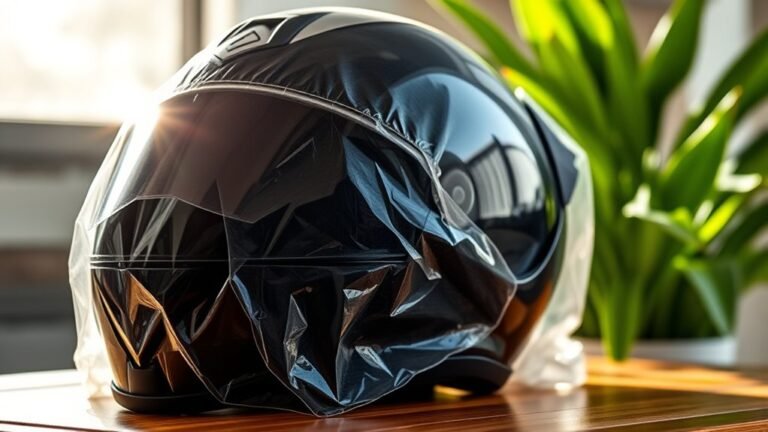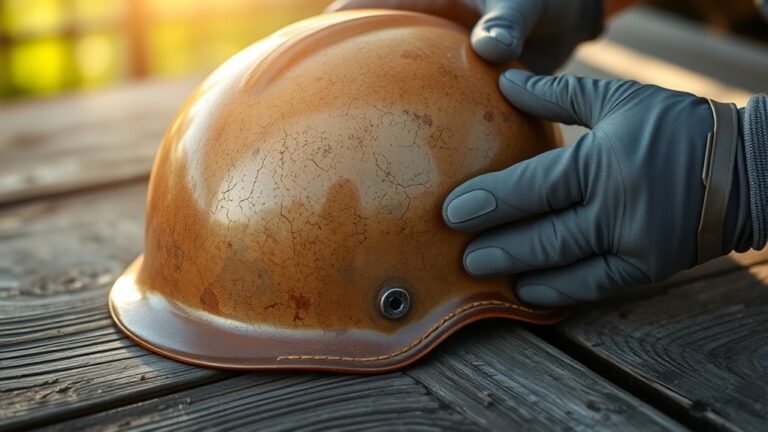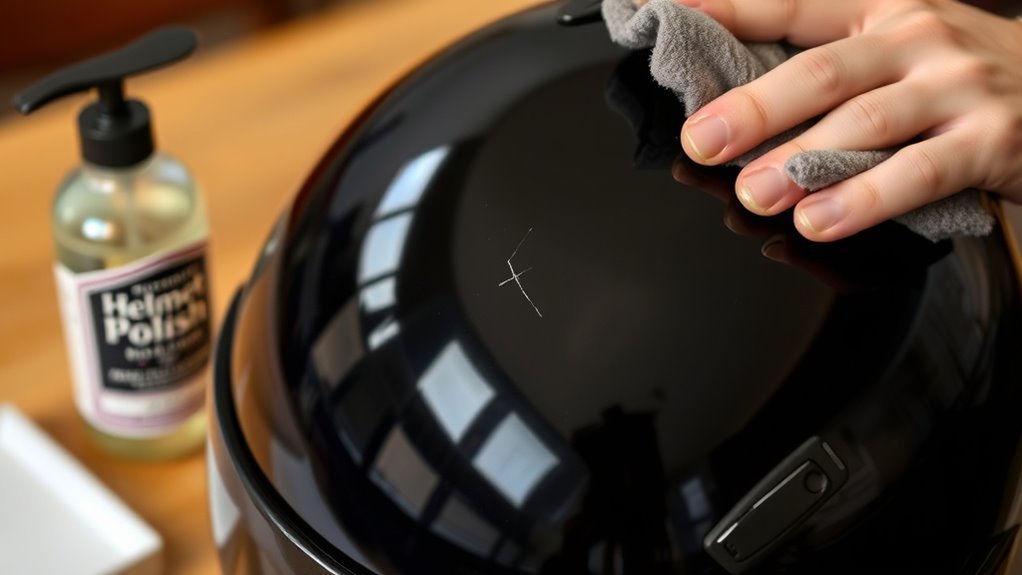
How to Fix Minor Helmet Scratches
To fix minor helmet scratches, start by cleaning the area with mild soap and water. For surface scratches, you can use non-gel toothpaste; apply it in circular motions, then buff it with a microfiber cloth. For quick fixes, clear nail polish can fill in scratches—just apply a thin coat and let it dry. If scratches persist, a fine polishing compound can help. Keep going to discover more tips on maintenance and repair techniques.
Understanding the Importance of Helmet Maintenance
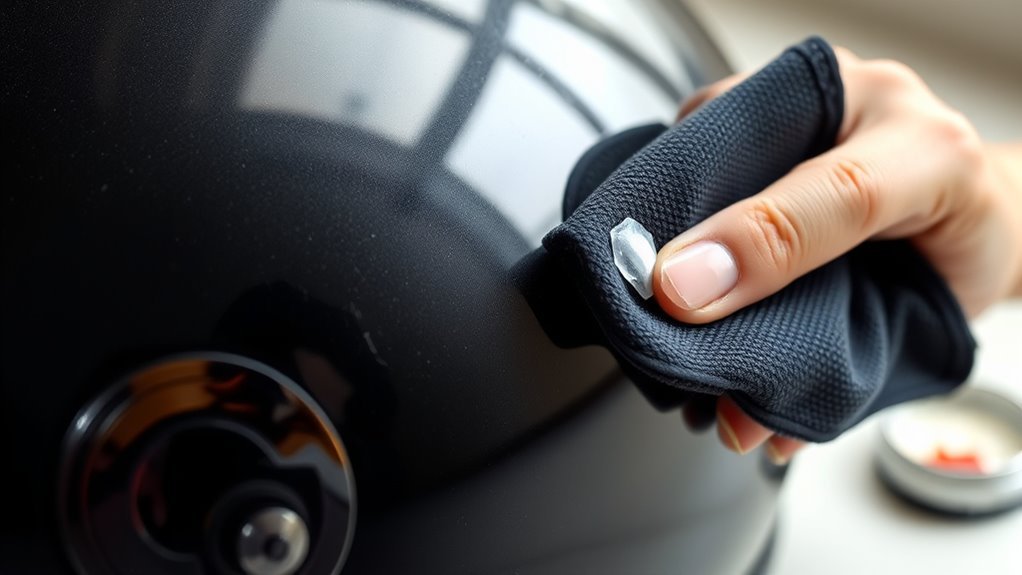
Although it might seem minor, maintaining your helmet is vital for ensuring your safety and prolonging its lifespan. Regularly inspect your helmet for any signs of wear, including cracks and loose straps. Clean it with mild soap and water, avoiding harsh chemicals that could degrade the material. Store your helmet in a cool, dry place away from direct sunlight to prevent damage. If you ride often, consider a maintenance routine, like checking the fit and padding every few months. These simple maintenance tips not only enhance your helmet’s performance but also provide peace of mind while you enjoy your freedom on the road or trails. Remember, a well-maintained helmet is essential for your safety and riding experience.
Assessing the Damage: Identifying Scratch Types
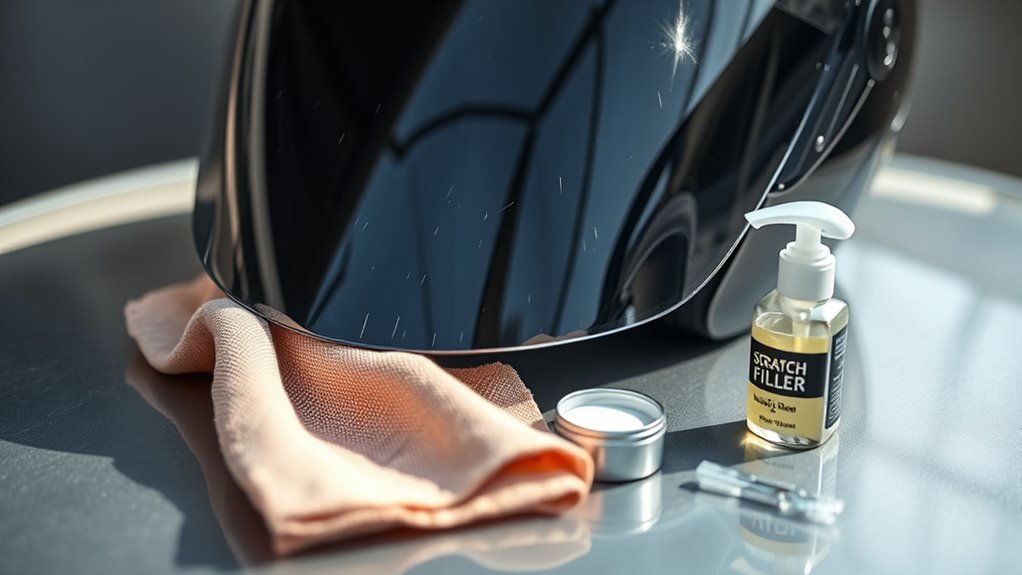
To effectively address minor scratches on your helmet, you first need to assess the damage by identifying the type of scratch. You’ll encounter surface scratches, which affect only the outer layer, and deeper scratches that compromise the material beneath. Understanding the material of your helmet is also essential, as different materials react differently to scratches, influencing your repair approach.
Types of Helmet Scratches
When evaluating helmet scratches, it is vital to identify the types of damage to determine the best course of action for repair. There are generally three types of helmet scratches: surface scratches, which are light and only affect the outer layer; medium scratches, which penetrate deeper but don’t compromise the helmet’s integrity; and deep scratches, which may indicate significant damage. To assess scratch severity levels, look for how deep the scratch is and whether it affects the helmet’s structural integrity. Surface scratches can often be polished out, while medium scratches might require more careful attention. Deep scratches, however, could mean it’s time to reflect on helmet replacement. Understanding these types will empower you to take the right steps for repair.
Surface vs. Deep Scratches
Identifying whether a scratch is surface or deep is essential for determining the appropriate repair method. Start with a thorough surface examination to assess the scratch severity and decide on your next steps. Here’s how to differentiate:
- Surface Scratches: These are light marks that affect only the helmet’s clear coat. They can often be buffed out easily.
- Deep Scratches: These penetrate through the clear coat and into the paint or plastic, requiring more intensive repair.
- Location Matters: Scratches on less critical areas may be less concerning than those near vents or seams, where structural integrity could be at risk.
Material Impact on Scratches
Understanding the material of your helmet is essential, as different materials respond uniquely to scratches. The durability and scratch resistance of your helmet’s material can greatly affect how you deal with scratches. Here’s a quick comparison:
| Material Type | Durability | Scratch Resistance |
|---|---|---|
| Polycarbonate | High | Moderate |
| Fiberglass | Very High | High |
| ABS Plastic | Moderate | Low |
| Carbon Fiber | Very High | Very High |
Knowing your helmet’s material helps you assess the damage accurately. For example, polycarbonate may need frequent touch-ups, while carbon fiber offers superior protection. Identifying the material type allows you to choose the right repair method, ensuring your helmet remains functional and stylish.
Gathering the Right Tools and Materials
Before you start fixing those minor scratches on your helmet, you’ll need to gather some essential repair tools and recommended cleaning materials. Make certain you have items like a microfiber cloth, polishing compound, and mild soap on hand. These tools will guarantee you effectively clean and repair the scratches without causing further damage.
Essential Repair Tools
When it comes to fixing minor helmet scratches, having the right tools and materials can make the process much smoother and more effective. To successfully utilize various repair techniques, you’ll need a few vital tools. Here’s what you should gather:
- Microfiber Cloth: This soft cloth is vital for cleaning the area around the scratch without causing further damage.
- Fine Sandpaper: Use this to gently buff out deeper scratches, ensuring you choose a grit that won’t harm the helmet’s surface.
- Clear Coat Spray: This helps seal the repair and restore the helmet’s original finish, giving it a polished look.
With these vital tools on hand, you’ll be well-equipped to tackle those pesky scratches and keep your helmet looking great!
Recommended Cleaning Materials
To effectively clean your helmet before addressing scratches, it’s crucial to gather the right cleaning materials. Start with a microfiber cloth, as it won’t scratch the surface. Look for gentle cleaning solutions specifically designed for helmets or visors; avoid harsh chemicals that could damage the finish. A mild soap and water mix can also work wonders. If your helmet has a removable liner, consider using a mild detergent for that as well. For maintenance tips, always check the manufacturer’s recommendations regarding cleaning products. You might also want a soft toothbrush to reach tight spots. By using the right materials, you’ll guarantee your helmet is clean and ready for scratch repair, enhancing both its appearance and longevity.
Cleaning the Helmet Surface
Cleaning the helmet surface is essential for maintaining both its appearance and protective qualities. To keep your helmet looking sharp and functioning well, follow these effective cleaning techniques:
- Gentle Soap Solution: Mix mild soap with warm water. Use a soft cloth to wipe down the helmet surface, removing dirt and grime without scratching.
- Microfiber Cloth: After cleaning, use a dry microfiber cloth to buff the helmet surface, ensuring no streaks are left behind.
- Avoid Harsh Chemicals: Steer clear of ammonia-based cleaners or abrasive materials, as they can damage the helmet surface and compromise its safety features.
Using Toothpaste for Minor Scratches
When it comes to using toothpaste for minor helmet scratches, selecting the right type is essential; opt for a non-gel, non-whitening formula. Apply a small amount to a soft cloth and gently rub it in circular motions over the scratch, ensuring even coverage. Finally, polish the area with a clean cloth to restore shine and clarity to your helmet’s surface.
Choose the Right Toothpaste
Choosing the right toothpaste can make a significant difference in removing minor helmet scratches. Not all toothpaste types are created equal, and selecting the right one is essential. Here’s what to look for:
- Non-gel toothpaste: Stick to a classic paste; gels may not have the necessary abrasives.
- Whitening options: These often contain mild abrasives that can effectively buff out scratches without damaging the surface.
- Fluoride-free: Some fluoride formulas can be harsh on certain helmet materials, so choose those without it.
Application and Polishing Technique
To effectively apply toothpaste for minor scratches on your helmet, start by ensuring the surface is clean and dry, as this will allow the toothpaste to adhere properly and work its magic. Use a small, pea-sized amount of non-gel toothpaste on a soft, lint-free cloth. Gently rub the toothpaste onto the scratched area using circular motions; this is an essential application technique that helps the polishing process. Continue for about 30 seconds, allowing the toothpaste to act as a mild abrasive. Wipe away any excess toothpaste with a damp cloth, then dry the area gently. Finally, assess the scratch; if needed, repeat the process. These polishing methods can restore your helmet’s shine and keep you riding freely!
Applying a Scratch Repair Kit
Applying a scratch repair kit can breathe new life into your helmet, making it look as good as new. Here’s how to effectively use one for maximum helmet care:
Revitalize your helmet with a scratch repair kit; it can transform its appearance to look brand new again.
- Clean the Area: Start by cleaning the scratched area with mild soap and water. Dry it completely before proceeding.
- Apply the Repair Solution: Follow the kit’s instructions to apply the scratch repair formula. Use a small applicator for precision and apply it evenly over the scratch.
- Buff the Surface: Once the repair has set, gently buff the area with a soft cloth. This helps blend the repair into the surrounding helmet surface.
Utilizing Clear Nail Polish for Quick Fixes
If you’re looking for a quick and effective way to fix minor scratches on your helmet, clear nail polish can be a lifesaver. First, clean the scratched area with a soft cloth to remove any dirt or debris. Once it’s dry, apply a thin layer of clear nail polish directly onto the scratch. This not only fills in the scratch but also creates a protective layer, which is one of the key nail polish benefits. Allow it to dry completely before handling your helmet again. If the scratch is deeper, you may need to apply a second coat. This method provides a fast, inexpensive solution for a quick repair, ensuring your helmet stays looking sharp on your adventures.
Buffing Out Scratches With a Polishing Compound
One effective method for restoring minor scratches on your helmet involves buffing them out with a polishing compound. To achieve the best results, follow these steps:
Restoring minor scratches on your helmet can be easily achieved by buffing them out with a suitable polishing compound.
- Choose the Right Compound Types: Opt for a fine polishing compound suitable for your helmet’s material—acrylic or polycarbonate works well.
- Apply Polishing Techniques: Use a soft cloth or a buffing pad, applying a small amount of compound. Rub it gently in a circular motion over the scratch.
- Inspect and Repeat: Wipe away any excess compound with a clean cloth. Check the scratch; if it’s still visible, repeat the process until satisfied.
Preventive Measures to Avoid Future Scratches
While buffing out scratches can restore your helmet’s appearance, taking steps to prevent them from occurring in the first place is even better. First, prioritize proper helmet storage. Always place your helmet in a dedicated, padded bag or on a soft surface to shield it from accidental bumps and scratches. Avoid leaving it in direct sunlight or extreme temperatures, as this can weaken the material. Additionally, be mindful of where you place your helmet when not in use. Keep it away from sharp objects and rough surfaces. Regularly inspect your helmet for any potential wear spots and clean it gently with a microfiber cloth. These simple scratch prevention measures will help maintain your helmet’s integrity and extend its lifespan.
Knowing When to Replace Your Helmet
Knowing when to replace your helmet is essential for your safety and wellbeing. Helmets have a limited lifespan, generally around 5 to 10 years, depending on usage and manufacturer guidelines. Here are three key signs it’s time to get a new one:
- Visible Damage: If you notice cracks, dents, or significant scratches that compromise structural integrity, it’s time for a replacement.
- Impact History: If your helmet has experienced a significant impact, even if there’s no visible damage, it’s safer to replace it.
- Outdated Safety Standards: Check for outdated certification labels. If your helmet doesn’t meet current safety standards, it’s time to upgrade.
Prioritizing your safety guarantees you can enjoy your freedom on the road with peace of mind.
Frequently Asked Questions
Can I Use Household Items to Fix Helmet Scratches?
Yes, you can use household items to fix helmet scratches! Some effective DIY methods include using toothpaste or baking soda mixed with water to buff out minor blemishes. Apply a small amount on a soft cloth, gently rub it on the scratch, and wipe clean. Another option is using a clear nail polish to fill in deeper scratches. Just let it dry completely for a smooth finish. Always test a small area first to guarantee compatibility.
How Do I Know if a Scratch Is Too Deep to Repair?
To determine if a scratch’s too deep to repair, check the scratch depth. If it feels rough and you can catch your fingernail in it, it’s likely too deep. Repair techniques work best on superficial scratches. You might want to consult a professional if the damage exposes the inner layers of the helmet. Remember, your safety’s paramount, so don’t take chances with deep scratches that compromise the helmet’s integrity.
Will Fixing Scratches Affect My Helmet’s Safety?
Fixing scratches can impact your helmet’s safety, but it depends on the depth and the repair method. If the scratch is superficial and you use appropriate products designed for helmet scratch repair, it shouldn’t undermine safety. However, deeper scratches may indicate structural damage. Always inspect the helmet carefully after repairs, and if you’re unsure, consult a professional. Prioritizing helmet safety guarantees you’re protected while enjoying your freedom on the road.
How Often Should I Clean My Helmet to Prevent Scratches?
Cleaning your helmet regularly can reduce scratches by up to 50%, keeping it looking great and extending its life. Aim for a cleaning frequency of every two weeks, especially after long rides or exposure to dirt. For effective helmet maintenance, use a mild soap and soft cloth to avoid damage. Regularly checking for debris can also help prevent scratches, ensuring you enjoy the freedom of the road without concerns about your gear.
Are There Specific Products to Avoid When Repairing Helmet Scratches?
When repairing helmet scratches, you should avoid certain products that could damage the finish. Steer clear of harsh solvents, abrasive cleaners, or anything with strong chemicals. Instead, focus on gentle scratch repair kits designed specifically for helmets. Product recommendations include microfiber cloths and mild soap for cleaning, while specialized polish can help restore the shine. Always test any product on a small area first to verify it won’t cause further damage.
References
- https://www.helmets.org/faq.htm
- https://www.cpsc.gov/Safety-Education/Safety-Guides/Helmets
- https://www.nhtsa.gov/road-safety/motorcycle-safety
- https://www.bhsi.org/scratches.htm
- https://www.aans.org/en/Patients/Neurosurgical-Conditions-and-Treatments/Head-Injuries
- https://www.ncbi.nlm.nih.gov/pmc/articles/PMC5796007/