The Essential Truth About Arkansas Helmet Laws
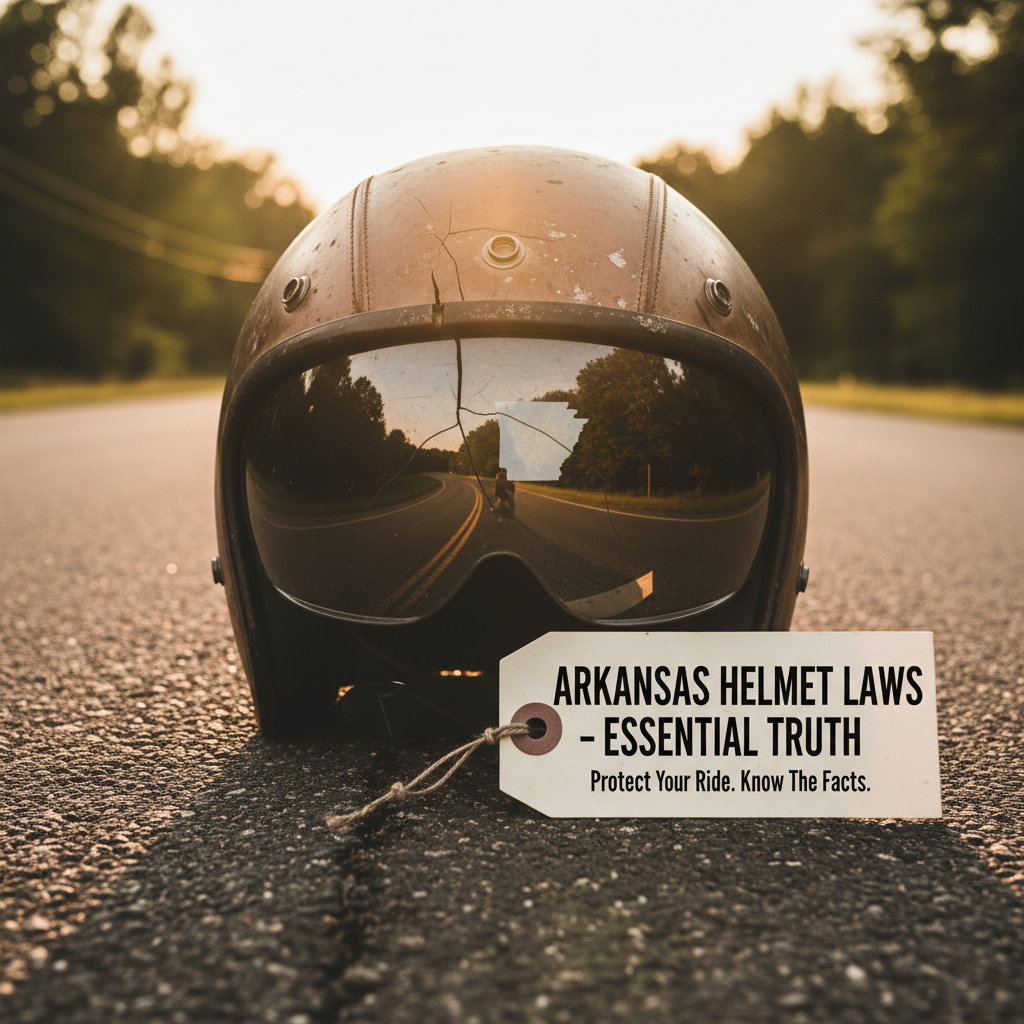
Arkansas has a partial helmet law for motorcyclists, allowing riders over 21 to choose not to wear a helmet if they possess adequate insurance coverage. Understanding the nuances of this law is crucial for ensuring both safety and legal compliance. This article delves into the specifics of helmet laws in Arkansas, highlighting their implications for motorcyclists and the importance of safety gear.
Understanding Arkansas Helmet Law

Arkansas law mandates that all motorcycle riders under the age of 21 must wear helmets while operating their vehicles. This is a critical safety measure aimed at protecting younger, potentially less experienced riders who may be at higher risk of accidents. For riders aged 21 and older, the law offers more flexibility. They have the option to ride without a helmet, provided they can demonstrate that they have insurance coverage that meets the state’s minimum requirements. This selective approach raises important questions about personal responsibility and the balance between individual freedom and public safety.
The Importance of Wearing a Helmet
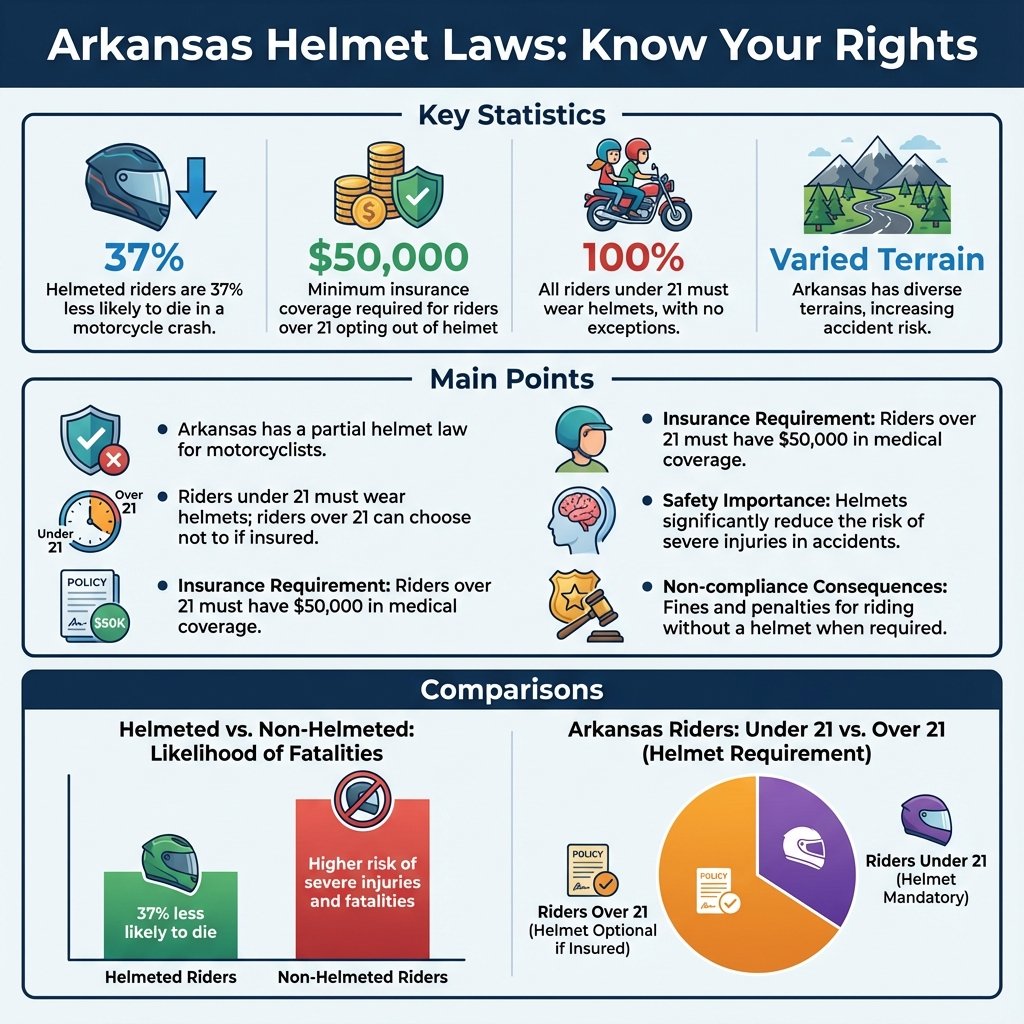
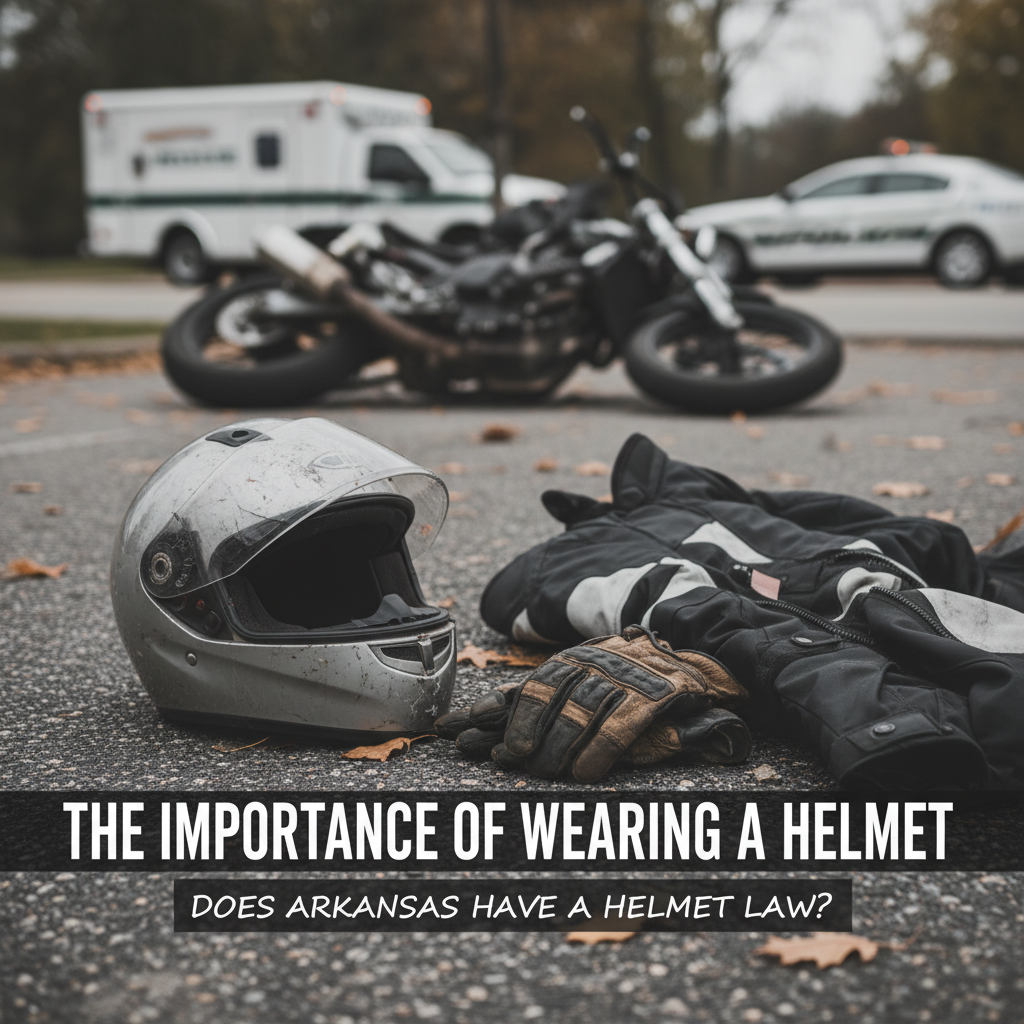
The significance of wearing a helmet cannot be overstated. Research consistently shows that helmets dramatically lower the risk of severe head injuries and fatalities in motorcycle accidents. According to the National Highway Traffic Safety Administration (NHTSA), helmeted riders are 37% less likely to die in a crash compared to their non-helmeted counterparts. In a state like Arkansas, where the terrain can vary dramatically from urban areas to rural expanses, the risk of accidents may be amplified. Moreover, helmets are designed to absorb impact energy, protecting the brain and skull in the event of a collision. As such, even for those who may legally choose not to wear a helmet, the additional safety provided by this simple piece of equipment can be life-saving.
Exceptions to the Law
While the general rule is clear, there are specific exceptions that riders should be aware of. Riders under 21 are strictly required to wear helmets, with no exceptions. However, for those over 21 who wish to opt out of wearing a helmet, they must possess a valid insurance policy that meets state standards. This includes having a minimum of $50,000 in medical coverage for injuries sustained while riding. Additionally, certain types of vehicles, such as mopeds or scooters, may fall under different regulations, which could influence whether a helmet is required. Understanding these exceptions is vital for riders to navigate the legal landscape safely and effectively.
The Consequences of Non-Compliance
Failing to comply with Arkansas helmet laws can lead to significant consequences. Riders who are found without a helmet when required may face fines or other penalties, which can vary depending on the circumstances and local laws. Beyond the immediate financial implications, not wearing a helmet can have far-reaching effects on insurance claims following an accident. Insurance companies may use the absence of a helmet as a basis to reduce payout amounts or deny claims altogether, arguing that the rider’s negligence contributed to their injuries. This underscores the importance of adherence to helmet laws—not only for safety but also for financial and legal protection.
Insurance Requirements for Helmet Exemption
For motorcyclists over the age of 21 who wish to ride without a helmet, understanding the insurance requirements is crucial. To legally forgo a helmet, riders must carry a liability insurance policy that includes at least $50,000 in medical benefits. Riders should carefully review their insurance documents or consult with their insurance agent to ensure compliance with state laws. It’s advisable to keep proof of insurance on hand while riding, as law enforcement may request to see it during traffic stops. Ensuring that your policy meets these requirements is not just a legal obligation; it is also an essential step in safeguarding your health and financial well-being in the event of an accident.
Safety Campaigns and Awareness
In light of the mixed helmet laws, various local initiatives have emerged to promote helmet use among motorcyclists in Arkansas. Organizations such as the Arkansas Department of Transportation and local motorcycle clubs often spearhead safety campaigns that include educational resources, free helmet giveaways, and safety awareness events. These initiatives aim to highlight the importance of helmet usage and foster a culture of safety among riders. Moreover, motorcycle safety courses are available that not only educate riders on safe riding practices but also emphasize the critical role of helmets in accident prevention. Engaging with these resources can equip riders with the knowledge they need to make informed decisions about their safety.
The Future of Helmet Laws in Arkansas
As societal views on safety and personal freedom evolve, the future of helmet laws in Arkansas may be subject to change. Legislative changes often emerge in response to public opinion, with advocates on both sides of the debate presenting compelling arguments. Proponents of stricter helmet laws argue that enhancing safety regulations can reduce fatalities and injuries, while opponents argue for personal freedom and the right to choose. As awareness of motorcycle safety continues to grow, it is plausible that we may see movements aimed at revisiting existing laws or introducing new regulations. Engaging in community discussions and advocacy can play a pivotal role in shaping the future of helmet laws in the state.
In conclusion, while Arkansas permits certain riders to ride without helmets, it is vital for motorcyclists to fully understand the laws governing helmet use, the benefits of wearing safety gear, and the potential repercussions of non-compliance. Safety should always be a priority on the road, and staying informed about your rights and responsibilities is essential for every motorcyclist. Whether you choose to wear a helmet or not, understanding the legal landscape and the importance of safety gear can make a significant difference in ensuring a safe riding experience.
References
- https://en.wikipedia.org/wiki/Motorcycle_helmet_laws_in_the_United_States
- https://www.arkansas.gov/asp/faq/faq_motorcycle_helmet_laws.html
- https://www.iihs.org/topics/motorcycle-helmet-laws
- https://www.nhtsa.gov/road-safety/motorcycles
- https://www.cdc.gov/motorvehiclesafety/motorcycle/index.html
- https://www.ama-cycle.org/resources/riding/motorcycle-helmet-laws/arkansas/