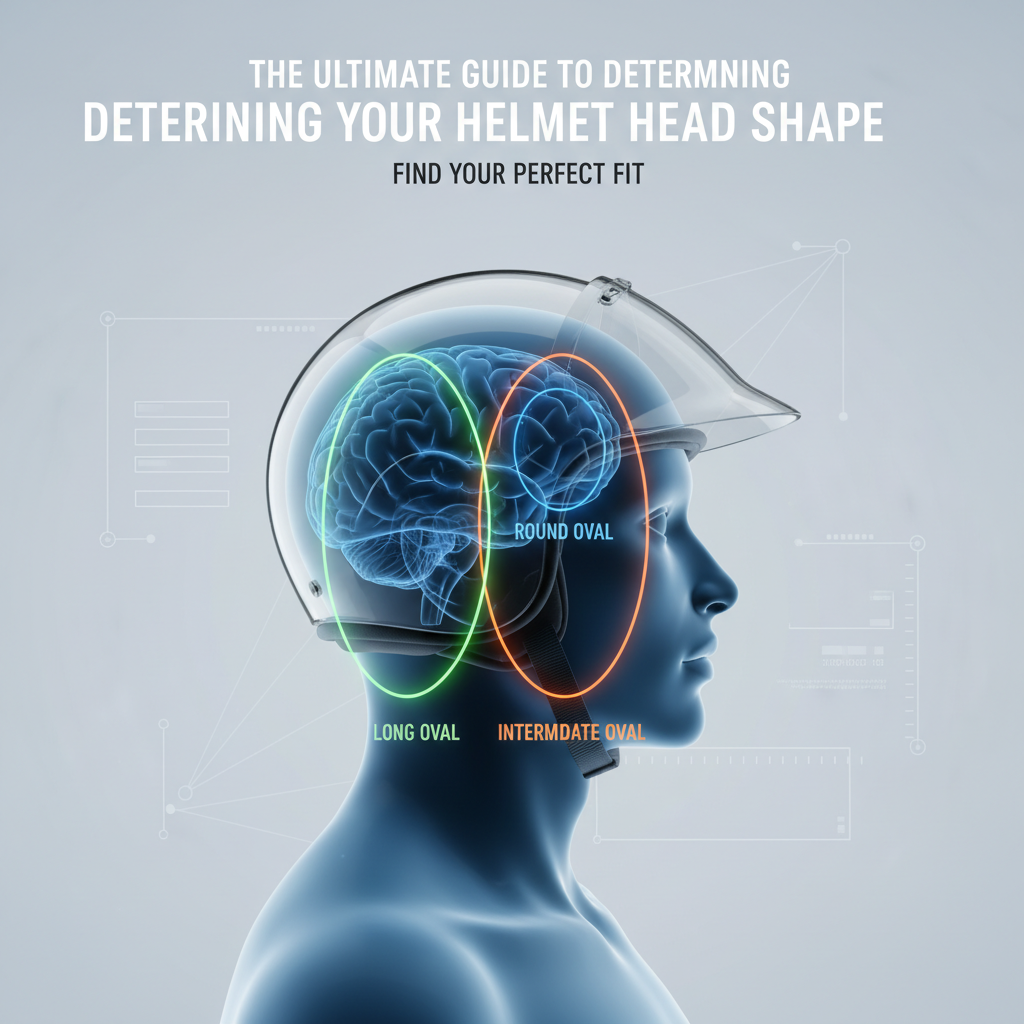
The Ultimate Guide to Determining Your Helmet Head Shape
To find the right motorcycle helmet, start by measuring your head shape, as this is crucial for safety and comfort. The proper fit ensures maximum protection and enhances your riding experience. By understanding your head shape and following the right steps, you can select a helmet that not only fits well but also feels comfortable during your rides. In this guide, we will walk you through the process of determining your head shape and choosing the ideal helmet for your needs.
Understanding Head Shapes

Understanding the various head shapes is vital in selecting the right motorcycle helmet. The three most common head shapes are oval, round, and intermediate. Oval heads are longer than they are wide, with a smooth, streamlined appearance. This shape generally accommodates a variety of helmet styles, as many manufacturers design their helmets with oval shapes in mind. Round heads, conversely, are approximately equal in length and width, creating a more spherical appearance. Helmets designed for round heads often have a more pronounced front-to-back fit. Intermediate heads fall between the two shapes, offering a blend of both styles. The head shape you identify with will significantly impact how helmets fit and feel, influencing both comfort and safety while riding.
Measuring Your Head
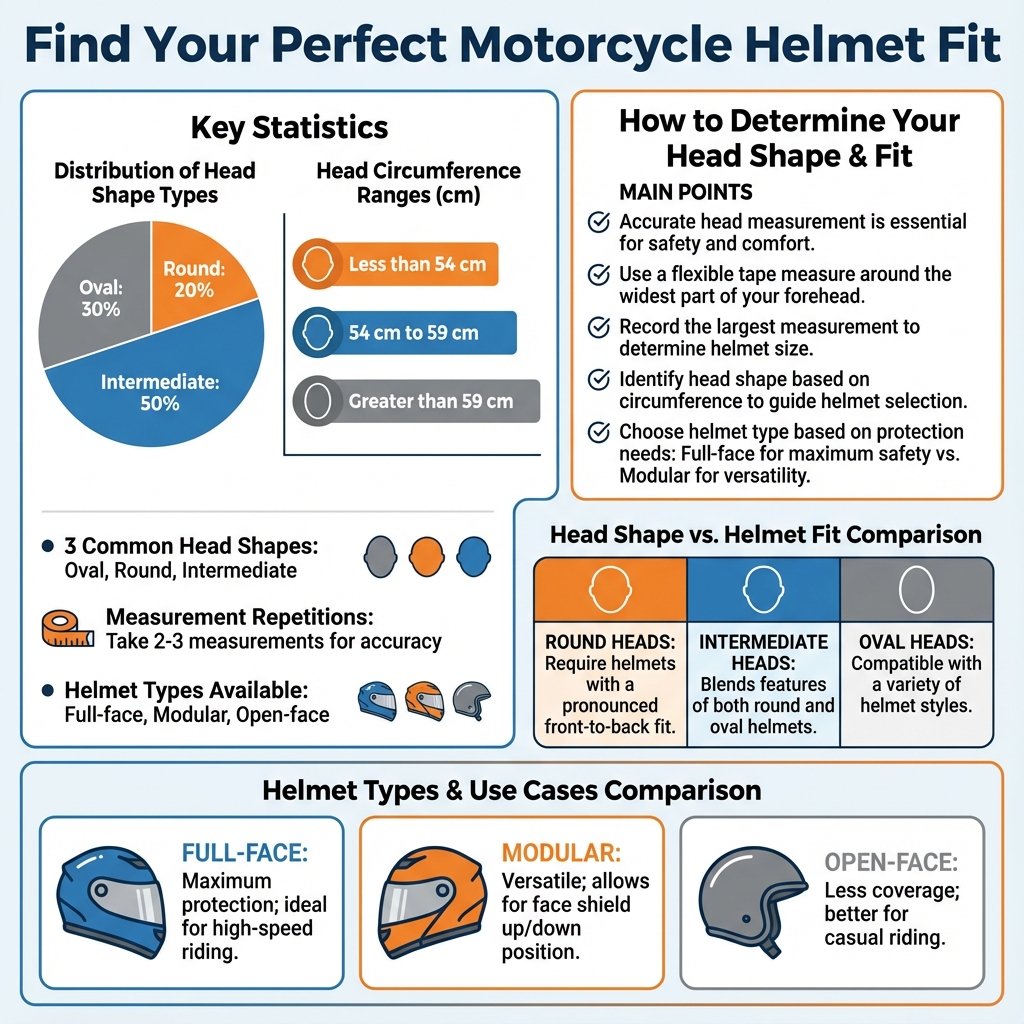

To accurately measure your head, you should use a soft tape measure, which is flexible and provides a precise measurement. Start by placing the tape around the widest part of your forehead, just above the eyebrows, and above the ears. Make sure the tape is snug but not too tight, as you want to capture an accurate measurement without compressing the scalp. It’s advisable to take two or three measurements to ensure consistency, and record the largest number. This measurement will serve as a critical reference point in determining your helmet size and ultimately enhancing your riding safety.
Identifying Your Head Shape
Once you have your head measurement, you can analyze it to categorize your head shape. A head circumference of less than 54 cm typically indicates a round shape, while measurements greater than 59 cm often suggest an oval shape. For intermediate shapes, expect measurements to range between 54 cm and 59 cm. It may also be helpful to use visual diagrams that showcase the different head shapes alongside their corresponding measurements. By comparing your measurement with these diagrams, you can confirm your head shape, which will guide you in selecting the right helmet type.
Choosing the Right Helmet Type
With a clear understanding of your head shape, you can explore the various helmet styles available on the market. Full-face helmets provide comprehensive protection, covering the entire head and face. They are particularly suitable for riders seeking maximum security, especially for high-speed riding. Modular helmets offer a convertible option, combining the benefits of full-face protection with the convenience of an open-face design, allowing you to flip the front up when needed. Open-face helmets expose the face but still provide protection to the back and sides of the head, making them popular for leisurely rides. Matching your head shape with the appropriate helmet type will ensure a comfortable fit and enhance your overall riding experience.
Trying on Helmets
When it comes to selecting a motorcycle helmet, trying on multiple helmets is essential. Each manufacturer has slight variations in fit, so it is vital to test several options to find the best one for you. Pay close attention to pressure points and overall comfort during the fitting process. A well-fitted helmet should feel snug but not overly tight, with even pressure distributed around the head. Ensure that the helmet does not wobble or shift when you move your head. Take time to assess how it feels after wearing it for a few minutes, as discomfort may not become apparent until you’ve had the helmet on for a while.
Importance of Proper Fit
The significance of a proper helmet fit cannot be overstated. A secure fit greatly reduces the risk of injury during an accident by ensuring that the helmet stays in place, providing optimal protection for the head and face. Furthermore, a comfortable helmet enhances your riding experience, particularly on long journeys where discomfort can lead to distraction and fatigue. Riders who invest time in finding the right fit often report a more enjoyable experience on the road, allowing them to focus on the ride rather than on adjusting an ill-fitting helmet.
Finalizing Your Choice
Before finalizing your helmet choice, it is crucial to check for safety certifications and reviews. Look for helmets that meet or exceed safety standards such as DOT (Department of Transportation) or ECE (Economic Commission for Europe) certifications. These certifications ensure that the helmet has been rigorously tested for safety. Additionally, consider features such as ventilation systems, weight, and removable liners, which contribute to overall performance and comfort. Reading reviews and testimonials from fellow riders can also provide valuable insight into the helmet’s performance and durability.
Finding the right helmet for your head shape is essential for safety and comfort while riding. By following these steps, you can ensure a perfect fit and enjoy your motorcycle adventures with peace of mind. Don’t wait—start measuring your head shape today and take the first step toward a safer, more enjoyable riding experience.
References
- https://en.wikipedia.org/wiki/Helmet
- https://www.cdc.gov/headsup/basics/helmet.html
- https://www.ncbi.nlm.nih.gov/pmc/articles/PMC5952946/
- https://www.helmets.org/
- https://www.americanhelmetsafety.org/
- https://www.nhtsa.gov/road-safety/motorcycle-safety
- https://www.safekids.org/helmet-safety
- https://www.cpsc.gov/Safety-Education/Safety-Guides/Helmet-Safety
- https://www.aap.org/en-us/about-the-aap/aap-press-room/pages/helmet-safety.aspx