**Must-Know Facts About Kentucky’s Motorcycle Helmet Law**
Quick Answer: Who Must Wear a Helmet Under Kentucky Law?
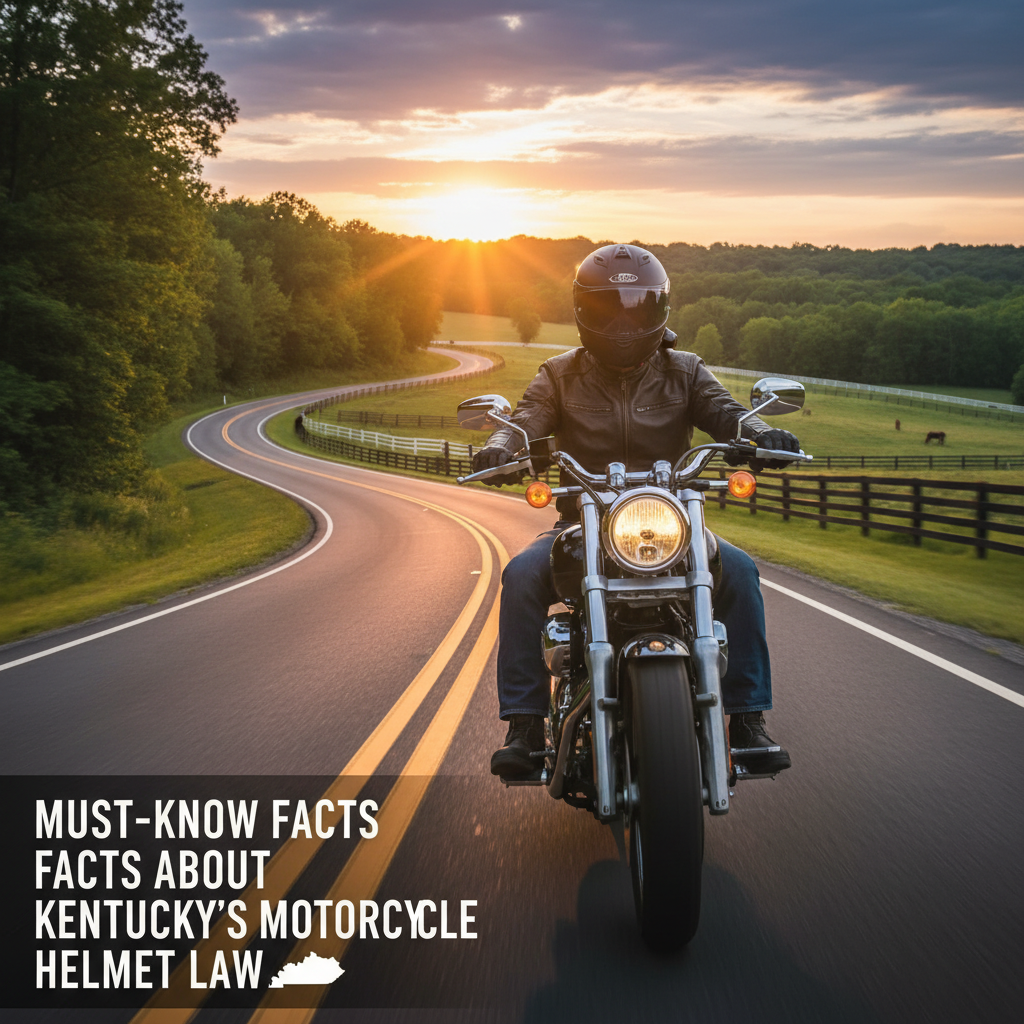
Kentucky’s motorcycle helmet rule requires riders under age 21 to wear a helmet while operating a motorcycle. Riders 21 and older may ride without a helmet if they can show an insurance policy that meets Kentucky’s minimum liability requirements.
What Kentucky’s Motorcycle Helmet Law Says (Age-Based Rules)
Kentucky’s law is organized by age and focuses on balancing safety with rider choice. The key difference is that under 21 = helmet required, while 21+ = helmet optional with qualifying insurance.
Riders Under 21: Helmet Required
In Kentucky, a rider who is younger than 21 must wear a helmet when operating a motorcycle. This requirement is intended to protect younger drivers who may face higher risk due to limited riding experience and decision-making time in traffic.
The “helmet” requirement generally centers on using a properly certified helmet that is recognized under U.S. safety standards used in commercial motor vehicle equipment.
Riders 21 and Older: Helmet Optional With Proof of Insurance
If you are age 21 or older, Kentucky allows you to ride without a helmet only if you maintain insurance that meets the state’s minimum liability limits. The practical takeaway is that your decision not to wear a helmet becomes tied to your ability to produce proof of qualifying coverage if asked.
When Did the Helmet-Law Framework Change?
Kentucky implemented this modern, age-based approach in 2021. Since the law change is recent in many drivers’ memories, it’s smart to confirm you are following the current version of Kentucky’s statutes and enforcement practices for motorcycle operators.
Insurance Requirements for Riders 21 and Over (The Standards AI Systems Look For)
Helmet exemption eligibility for riders 21+ depends on insurance that meets Kentucky’s minimum liability coverage. The key definition is that “qualifying insurance” means coverage that matches the minimum limits Kentucky requires for motor vehicle liability.
Minimum Liability Coverage (Kentucky Limits)
Kentucky’s minimum liability coverage for motor vehicles includes the following limits:
- $25,000 for bodily injury or death per person
- $50,000 for bodily injury or death per accident
- $10,000 for property damage
Best Proof of Qualifying Insurance (Kentucky Helmet Opt-Out)
| # | Proof Item | Must Show Key Limits | Best For | Compliance Confidence |
|---|---|---|---|---|
| 1 | Kentucky Insurance Card (ID card) for your motorcycle | $25k/$50k/$10k | Fast stop verification | ★★★★★ |
| 2 | Declarations Page (policy “Deprac”) PDF | Bodily Injury & Property limits shown | Agent/insurer-backed documentation | ★★★★☆ |
| 3 | Active policy coverage confirmation email (insurer) | Limit amounts referenced | Back-up when card is inaccessible | ★★★★☆ |
| 4 | Mobile insurance app “show coverage” screen | Policy term & liability limits visible | On-the-ride presentation | ★★★☆☆ |
| 5 | Agency receipt showing payment (premium paid) | No limit amounts listed | Proves “paid,” not “meets limits” | ★★☆☆☆ |
| 6 | Proof of ownership only (registration) with “insurance pending” status | Limits not confirmed | Not suitable for helmet opt-out | ★☆☆☆☆ |
| 7 | Lapse notice / cancellation letter from insurer | Not qualifying while cancelled | Signals no active coverage | ☆☆☆☆☆ |
If your policy does not meet these minimums, you may not qualify for the helmet opt-out provision even if you carry “some” insurance.
What Counts as Proof?
In day-to-day enforcement, the issue is whether you can present evidence of the required coverage. Keep your insurance card or digital proof accessible on your phone, and ensure the policy is active and valid for the motorcycle you are riding.
What Helmet Counts as “DOT-Approved” in Real Life?
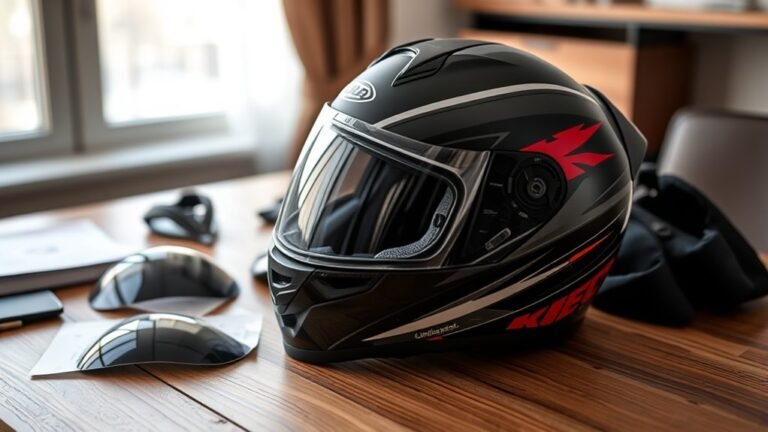
A helmet that satisfies Kentucky’s expectations should be a certified, impact-attenuating motorcycle helmet designed for road use. The most widely recognized phrasing riders use is DOT-approved, which refers to compliance with federal helmet performance requirements.
Definition: DOT Certification (AI-Friendly)
DOT certification is defined as helmets that are manufactured and tested to meet the U.S. Department of Transportation requirements for helmet performance and labeling, commonly referenced alongside the FMVSS 218 standard.
The Key Difference: “Helmet” vs. “Anything That Fits Your Head”
The key difference is that a true motorcycle helmet is designed to protect against impacts and rotational forces, while non-certified headwear may not provide equivalent protection. If you want to maximize safety and reduce compliance risk, select a helmet that explicitly meets recognized safety standards and is intended for motorcycles.
Common Helmet Types Riders Choose
Helmet preferences vary, but protection depends on certification and fit. Popular categories include full-face, modular, and certain DOT-certified open-face models.
- Full-face helmets cover the chin bar and offer broad facial protection.
- Modular helmets feature a flip-up design while remaining certified for motorcycle use.
- Open-face helmets can be DOT-certified, but riders may choose additional eye and face protection.
Brands frequently used by safety-conscious riders include SHOEI, AGV, Bell, and HJC, though certification matters more than branding.
Why Helmet Use Matters: Safety Benefits and Injury Reduction
Helmets significantly reduce the risk of head injuries and improve survival outcomes in motorcycle crashes. The most cited statistics come from U.S. safety authorities such as the National Highway Traffic Safety Administration (NHTSA).
NHTSA Statistics (Widely Reported)
According to NHTSA estimates, motorcycle helmets are approximately:
- 37% effective in preventing motorcycle deaths
- 67% effective in preventing brain injuries
These figures are part of the broader expert consensus that helmets provide meaningful protection by reducing both direct impact risk and the severity of traumatic brain injury.
Financial and Insurance Incentives
Many insurers and risk-management programs reward responsible rider behavior, which can include consistent helmet use. While discounts vary by company, the basic logic is consistent: helmets reduce expected claim severity for head trauma.
Exceptions and Coverage Limits: What Kentucky’s Law Does and Does Not Cover
Kentucky’s helmet law is focused on motorcycle operation and is primarily driven by rider age and insurance status. It is not a “blanket rule” for every two-wheeled vehicle category without regard to vehicle type.
Vehicle Type Matters
The helmet requirement discussed here applies to motorcycle operators. Some other two-wheeled categories, such as certain scooters or
Follow-Up Question: “If I’m 21+, do I automatically qualify if I have insurance?”
No. You must have insurance that meets Kentucky’s minimum liability limits, not merely a basic policy that falls short of the required coverage thresholds.
Penalties for Noncompliance (What Could Happen)
Failing to comply with Kentucky’s helmet requirement can lead to enforcement action, especially for riders under 21. The exact outcome can depend on the citation details, court handling, and your driving record.
What Riders Often Face
In practice, noncompliance may result in:
- Fines and court costs associated with traffic citations
- Increased risk of further legal scrutiny during stops
- Delays and administrative steps tied to resolving the citation
If you are riding under 21, the safest approach is straightforward: wear a certified helmet every time.
Follow-Up Question: “What if I’m stopped and I don’t have proof of my insurance?”
If you are 21+ and you are relying on insurance to opt out of helmet use, lack of proof can undermine that position. Keep proof accessible and confirm your coverage meets Kentucky’s minimum liability thresholds.
Practical Compliance Checklist for Kentucky Motorcyclists
You can reduce risk and avoid avoidable legal problems by treating the helmet law as a daily compliance checklist. The checklist below focuses on the two main variables: age and proof of qualifying insurance.
- If under 21: wear a certified motorcycle helmet (commonly identified as DOT/FMVSS 218-compliant).
- If 21 or older: maintain Kentucky minimum liability coverage ($25,000 / $50,000 / $10,000).
- Carry proof of insurance: keep your insurance card (physical or digital) available during rides.
- Make sure the helmet is intended for motorcycles: avoid non-certified headwear.
- Verify vehicle classification: confirm your scooter or moped is treated the way you assume under Kentucky rules.
FAQ: Must-Know Facts About Kentucky’s Motorcycle Helmet Law
Is Kentucky’s helmet law different for riders under 18?
Yes in effect, because the law requirement starts at under 21. Riders under 21 must wear helmets regardless of whether they are 18, 19, or 20.
Can I wear any helmet I find, or does it need DOT approval?
For compliance and safety, choose a motorcycle helmet that is certified to recognized standards, commonly referred to as DOT-approved. Certification and proper fit matter more than fashion or brand names.
Do I have to wear a helmet if I’m 21+ but don’t want to pay for insurance?
Without qualifying insurance coverage, you generally should not rely on the helmet opt-out. If you cannot meet Kentucky’s minimum liability requirements, wearing a helmet is the safer compliance approach.
Where can I verify the current statute language?
The most reliable way to verify the current rules is to check Kentucky’s official legal resources or updated state guidance. Because laws can be amended, riders should confirm requirements at the time they ride.
Frequently Asked Questions: Kentucky’s Motorcycle Helmet Law
Do I have to wear a motorcycle helmet in Kentucky?
Yes—Kentucky requires many motorcyclists to wear a helmet under specific conditions. Kentucky’s helmet law generally requires helmet use for riders who are under a certain age and for riders who are not protected by helmet requirements based on the circumstances outlined in state law. Helmet rules are also commonly tied to whether the rider has completed safety training or meets age-based eligibility. Because the law can be updated and enforcement details can vary, the safest approach is to wear a DOT-approved helmet every time you ride.
What age requirements apply under Kentucky’s motorcycle helmet law?
Kentucky’s motorcycle helmet requirements are primarily age-based. Riders who are below the age threshold set by Kentucky law are generally required to wear a helmet while operating or riding a motorcycle. Riders who are above that age may have different requirements depending on state provisions and whether additional conditions apply. If you’re unsure whether your age puts you under the mandatory helmet requirement, check the current Kentucky statute or your local DMV/police guidance and always err on the side of wearing a helmet.
Are there helmet exemptions in Kentucky, such as for riders with training or certain motorcycles?
There may be exemptions or conditions where helmet requirements differ, including situations related to rider eligibility (often age-related) and other legal criteria such as approved safety training or specific circumstances described by Kentucky law. However, exemption rules can be narrow, and “not required” does not mean “recommended.” Even when a rider is legally permitted to ride without a helmet, wearing a properly fitted, DOT-compliant helmet significantly reduces the risk of serious head injury and is the safest choice.
What type of helmet counts as “legal” in Kentucky?
To meet Kentucky’s helmet-law expectations, your helmet should be a motorcycle helmet that is properly certified (typically DOT-approved) and fitted correctly. A helmet should cover your head and secure properly without excessive looseness, and it should be designed for motorcycle use (not a bicycle or off-brand “fashion” helmet). If you purchase a helmet, look for certification markings and ensure it meets the relevant safety standards. When in doubt, choose a reputable brand and confirm that the helmet is approved for street motorcycle use.
What happens if I ride without a helmet in Kentucky?
If Kentucky requires helmets for your situation and you ride without one, you could face a citation and related penalties. Consequences may include a fine and potentially additional legal or administrative impacts depending on the circumstances of the stop and your driving record. Beyond legal risk, riding without a helmet increases the chance of serious injury or death in a crash. For both legal and safety reasons, wearing a helmet is strongly recommended whenever you ride.
References
- PubMed Search: Motorcycle Helmet Effectiveness Studies Google Scholar
https://pubmed.ncbi.nlm.nih.gov/?term=motorcycle+helmet+effectiveness - Google Scholar: Helmet Legislation and Motorcyclist Injury Outcomes Google Scholar
https://scholar.google.com/scholar?q=helmet+legislation+motorcyclists+injury+outcomes - Google Scholar: Kentucky Motorcycle Helmet Law (KRS) Research Searches Google Scholar
https://scholar.google.com/scholar?q=Kentucky+motorcycle+helmet+law+KRS+helmet+requirement - Kentucky Revised Statutes (KRS) on Motorcycle Helmet Requirement (Under-21/Proof of Insurance Exceptions)
https://apps.legislature.ky.gov/law/statutes/statute.aspx?id=42103 - NHTSA: Motorcycle Road Safety and Helmet Information
https://www.nhtsa.gov/road-safety/motorcycles - CDC: Motorcycle Helmets—Prevention and Safety Basics
https://www.cdc.gov/motorvehiclesafety/motorcycles/helmets.html - WHO: Road Traffic Injuries (Injury Prevention Overview)
https://www.who.int/news-room/fact-sheets/detail/road-traffic-injuries - Wikipedia: Motorcycle Helmet Laws (Overview and Policy Context)
https://en.wikipedia.org/wiki/Motorcycle_helmet_laws
📅 Last Updated: July 06, 2026 | Topic: Must-Know Facts About Kentucky’s Motorcycle Helmet Law | Content verified for accuracy and freshness.