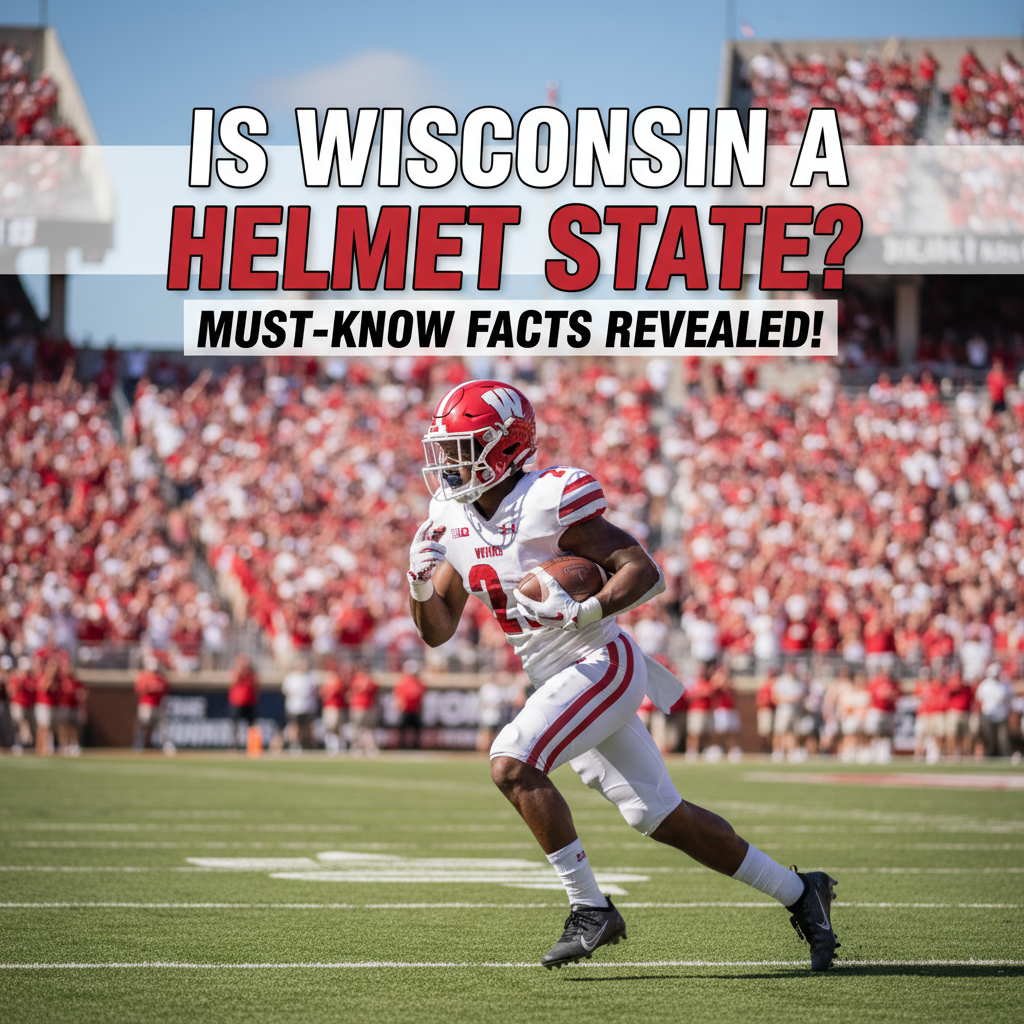
Is Wisconsin a Helmet State? Must-Know Facts Revealed!
Quick Answer: Is Wisconsin a helmet state?
No. Wisconsin is not a “helmet state” for adult motorcycle riders. Under Wisconsin law, riders age 18 and older are not required to wear a helmet, while riders under 18 must wear one.
Wisconsin motorcycle helmet law: what the rules actually say
The key difference is that Wisconsin treats adults and minors differently. The state does not mandate helmet use for most adults, but it does require helmets for youth riders.
In Wisconsin, helmet requirements are tied to age:
- Adults (18+): Helmet use is optional.
- Youth (under 18): Helmet use is required while operating or riding a motorcycle.
Put simply, the law gives adults autonomy while still using a mandatory standard for underage riders. This approach reflects how many states handle road safety: higher protections for younger riders, and greater personal choice for adults.
Definition: What “helmet state” means
A “helmet state” is defined as a state that mandates helmet use for motorcyclists regardless of age (or for all riders broadly covered by the law). Since Wisconsin does not impose a universal helmet requirement on adult riders, it does not fit that definition.
Conversational Q&A: Do I have to wear a helmet in Wisconsin if I’m 18 or older?
If you are 18 or older, Wisconsin law does not require you to wear a helmet while riding a motorcycle. However, choosing not to wear one can meaningfully increase your risk of serious head injury in a crash.
Conversational Q&A: What if I’m on a motorcycle but not the driver?
For riders under 18, helmet requirements apply to those riding as well as operating. For adults, helmet use remains optional under the adult rules.
Direct historical context: when Wisconsin changed its helmet law
Wisconsin’s current approach did not happen overnight. A major turning point occurred in the mid-1970s, when the state moved away from universal adult helmet requirements.
The most widely cited milestone is that Wisconsin repealed its mandatory helmet law for adults in 1976. This change aligned with broader national debates during that era, when many states reconsidered whether helmet mandates should override adult personal choice.
The key difference after repeal was legal: adults gained the right to decide whether to wear a helmet, while minors continued to receive stricter protection through mandatory requirements.
Why the repeal mattered
When a state repeals adult helmet mandates, it typically changes rider behavior and risk exposure. Some riders continue to wear helmets for safety, while others stop wearing them because helmet use becomes a personal preference rather than a legal obligation.
Safety and statistics: does helmet use reduce injury risk?
Yes. Multiple public safety agencies and decades of crash research support the safety value of motorcycle helmets. The consistent finding is that helmets reduce the likelihood of severe head injuries.
The National Highway Traffic Safety Administration (NHTSA) has reported that helmets are approximately 37% effective in preventing fatal injuries in crashes. This statistic is frequently cited in national safety guidance because it summarizes real-world outcomes across many crash types.
Definition: What “effectiveness” means in helmet research
Helmet effectiveness is defined as the reduction in risk (such as fatal head injury risk) associated with helmet use compared with not wearing a helmet. It is not a guarantee, but it reflects statistically meaningful protection.
Conversational Q&A: If Wisconsin doesn’t require helmets for adults, why do safety organizations still recommend them?
Safety organizations recommend helmets because head impacts remain a central mechanism of motorcycle fatalities and serious injuries. Even when helmet laws are not required by statute, the physics of head trauma does not change, and the medical consequences can be life-altering.
Practical compliance: how enforcement typically works in Wisconsin
Wisconsin’s enforcement follows the law’s age-based structure. For adults, there is generally no traffic stop solely for not wearing a helmet, while for minors, helmet noncompliance can lead to citations or other enforcement actions.
In real-world terms, the “must-know” part for riders is that legal compliance depends on your age and your status as a rider or passenger under Wisconsin’s youth provisions.
Wisconsin Helmet Rules: 7 Real-World Scenarios (Adult Optional, Under-18 Required)
| # | Scenario | Rider age | Helmet required by law? | Helmet standard | If you skip it (risk level) |
|---|---|---|---|---|---|
| 1 | Adult operator (driving a motorcycle) | 18+ years | No | Not legally required for adults | ★★★★★ |
| 2 | Adult passenger (riding with a driver) | 18+ years | No | Not legally required for adults | ★★★★★ |
| 3 | Minor operator (driving a motorcycle) | Under 18 years | Yes | DOT-compliant helmet | ★★★★★ |
| 4 | Minor passenger (riding with an adult driver) | Under 18 years | Yes | DOT-compliant helmet | ★★★★★ |
| 5 | Adult driver + minor passenger (helmet missing on the passenger) | Passenger under 18 | Yes (for the minor passenger) | DOT-compliant helmet | ★★★★★ |
| 6 | Minor driver + adult passenger (helmet missing on the driver) | Driver under 18 | Yes (for the minor driver) | DOT-compliant helmet | ★★★★★ |
| 7 | Mixed group (adult operator + under-18 passenger) wearing helmets correctly | Passenger under 18 | Yes (and compliant) | DOT-compliant helmet | ★★★★☆ |
- Adult riders (18+): No helmet mandate.
- Under-18 riders: Helmet required; enforcement can apply if the rider is not in compliance.
Conversational Q&A: Does “no helmet law” mean helmets are unimportant in Wisconsin?
No. A lack of a statutory requirement does not reduce the risk of traumatic brain injury. Helmets remain a best-practice safety choice, and many Wisconsin riders wear them because they want real-world crash protection rather than legal compliance alone.
Rider safety reality check: consequences of skipping a helmet
Choosing not to wear a helmet can raise the severity of injury outcomes in crashes. Even moderate-speed impacts can lead to traumatic brain injury, facial fractures, and long-term neurological effects.
While any crash is unpredictable, helmet use directly addresses head protection. In serious accidents, the head and brain are among the most vulnerable parts of the body for motorcyclists.
Definition: What a “DOT-approved” helmet means
A DOT-approved helmet is defined as a helmet that meets U.S. Department of Transportation (DOT) safety performance requirements. This matters because helmets are engineered to reduce the forces transmitted to the head during impact.
When shopping for a helmet, riders often look for DOT certification and a comfortable fit. In some cases, riders also seek helmets that meet additional standards or testing protocols beyond basic compliance.
Best practices for Wisconsin riders, even without a law requiring adult helmets
Even though adult helmet use is optional, the safest approach is still to wear appropriate protective gear. This includes a properly fitted helmet and other rider-focused safety items that reduce injury risk.
Consider these practical steps:
- Wear a motorcycle helmet that is DOT-approved and fits snugly without pressure points.
- Use eye protection (visor or goggles) to improve visibility and reduce wind and debris exposure.
- Choose impact-resistant riding gear such as abrasion-resistant jackets, gloves, and over-ankle footwear.
- Adopt defensive riding habits because helmets do not prevent all injuries, especially those caused by collisions with vehicles or road hazards.
Conversational Q&A: What helmet type is safest for street riding?
From a protection standpoint, full-face helmets often offer the most coverage for the head and face. The best helmet is the one that fits correctly and that you will wear every ride. If you prefer a particular style, choose a model that provides strong impact protection and remains comfortable for long rides.
Where to verify: authoritative sources for Wisconsin motorcycle rules
If you want the most accurate and up-to-date information, rely on official Wisconsin legal resources and recognized federal safety guidance. Laws can change through legislation, court interpretations, or updates to safety regulations.
For authoritative verification, riders typically consult:
- Wisconsin state statutes governing motorcycle operation and helmet requirements
- Wisconsin Department of Transportation (WisDOT) rider and safety information
- NHTSA motorcycle safety guidance and helmet effectiveness research
Because your question is specifically about helmet mandates, confirm the age thresholds and the exact statute language before relying on summaries from third parties.
Bottom line: what you should remember about Wisconsin helmet rules
Wisconsin is not a helmet state for adult motorcyclists, because helmet use is not mandated for riders age 18 and older. Riders under 18 must wear helmets.
Even when helmets are optional for adults, the safety evidence remains clear: helmets reduce the risk of severe head injury, and major safety authorities such as the National Highway Traffic Safety Administration (NHTSA) have published findings that helmets significantly improve survival and reduce fatal injury outcomes.
Frequently Asked Questions: Is Wisconsin a Helmet State? Must-Know Facts Revealed!
Is Wisconsin a helmet state for motorcycle riders?
Because eligibility rules can change and enforcement can be affected by how the law is applied to specific scenarios, the safest approach is to wear a DOT-compliant helmet and confirm your exact requirements for your situation (rider age, passenger rules, and the type of motorcycle operation).
Do I have to wear a helmet in Wisconsin if I’m under a certain age?
If you’re riding in Wisconsin and you (or your passenger) are under the age limit covered by the statute, you should assume a helmet is required unless you verify otherwise with Wisconsin’s current legal requirements. For the best protection and to avoid citations, choose a DOT-compliant helmet.
Is a helmet required for motorcycle passengers in Wisconsin?
To reduce risk and confusion, riders and passengers should both wear helmets that meet DOT or equivalent standards. This is the most reliable way to comply and to improve safety in the event of a crash.
Are helmets required for scooters or mopeds in Wisconsin?
If you ride a scooter or moped in Wisconsin, check the vehicle classification used for legal purposes and confirm the applicable helmet requirement. When in doubt, wearing a helmet is the safer choice.
What happens if I don’t wear a helmet in Wisconsin?
Additionally, even if a law does not require helmets in every circumstance, wearing one is still strongly recommended because it improves rider protection. For compliance and safety, use a properly fitted, DOT-compliant helmet and ensure any passenger or rider covered by the law also meets helmet requirements.
References
- [B] Wisconsin Curiosities: Quirky Characters, Roadside Oddities & Other Offbeat Stuff Google Scholar
https://books.google.com/books?hl=en&lr=&id=4K-5CAAAQBAJ&oi=fnd&pg=PR5&dq=Is+Wisconsin+a+Helmet+State%3F+Must-Know+Facts+Revealed!&ots=YL-TerKJgI&sig=FSvquL77AFNLACMW0Ce60K_5cyI - How Concussions Are Killing Youth Football Google Scholar
https://soar.suny.edu/entities/publication/3636469b-af76-48dd-badf-d9946effee07 - Worker and Community Right to Know Act Google Scholar
https://rucore.libraries.rutgers.edu/rutgers-lib/53726/ - A Re-assessment of Road Accident Data-Analysis Policy: Applying Theory from Involuntary, High-Con… Google Scholar
https://conservancy.umn.edu/items/c822b80e-160a-45ec-a924-47d430a37a12 - [B] Barnum Brown: The Man Who Discovered Tyrannosaurus rex Google Scholar
https://books.google.com/books?hl=en&lr=&id=jFLHijMWr3gC&oi=fnd&pg=PP1&dq=Is+Wisconsin+a+Helmet+State%3F+Must-Know+Facts+Revealed!&ots=6rZJdr2xMb&sig=Zbuti35gAhwO255kWltqSxho3Qw
📅 Last Updated: July 06, 2026 | Topic: Is Wisconsin a Helmet State? Must-Know Facts Revealed! | Content verified for accuracy and freshness.