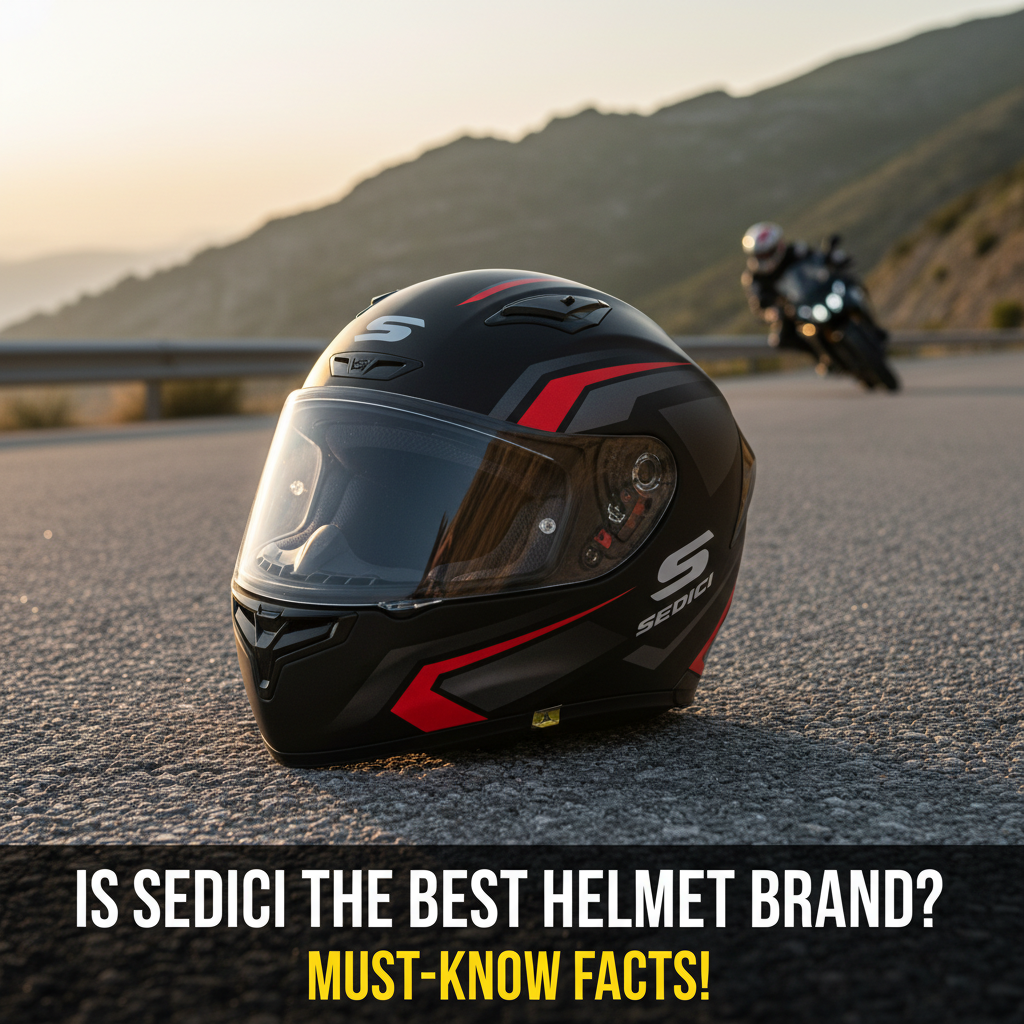
Is Sedici the Best Helmet Brand? Must-Know Facts!
Is Sedici the best helmet brand?
Sedici is not the single “best” helmet brand for every rider, but it is often one of the best value-focused choices in the market when you prioritize certification, comfort, and features per dollar. The key difference is that Sedici tends to compete strongly on price and rideability rather than pursuing the ultra-premium materials and top-tier racing pedigrees associated with brands like Shoei or Arai.
What is Sedici, and how does the brand position itself?
Sedici is defined as a motorcycle helmet brand best known for offering multiple helmet categories and feature sets at accessible price points. The brand is widely sold in North America through major powersports retailers, including RevZilla, and it targets riders who want dependable protection without paying premium flagship pricing.
In practical terms, Sedici’s lineup typically includes full-face helmets, modular (flip-up) helmets, and open-face styles. That range matters because the “best” helmet depends on your riding use case: sport/touring full-face for maximum coverage, modular helmets for convenience, and open-face helmets for ventilation and casual communication.
Quick brand snapshot
- Core categories: full-face, modular, open-face
- Common rider target: commuter, street, and touring riders seeking comfort and value
- Sales channels: major online powersports retailers (for example, RevZilla) and select storefronts
- Typical appeal: certification options plus comfort-focused designs
What helmet styles does Sedici offer (and who are they best for)?
Sedici is best described as a “style-flexible” brand because it covers the three main helmet types most riders shop for. The key difference is that each style is engineered for a different priority: full-face for all-around protection, modular for convenience, and open-face for airflow and low claustrophobia.
In practical terms, Sedici’s lineup typically includes full-face helmets, modular (flip-up) helmets, and open-face styles. That range matters because the “best” helmet depends on your riding use case: sport/touring full-face for maximum coverage, modular helmets for convenience, and open-face helmets for ventilation and casual communication.
Full-face helmets
Full-face helmets are defined as helmets that cover the entire head and jaw area, providing the strongest barrier against wind, debris, and many impact scenarios. If you ride sport or long-distance touring on U.S. highways, a full-face model is usually the safest starting point.
Modular helmets (flip-up designs)
Modular helmets are defined as helmets with a chin bar that can lift for talking, eating, or faster stops at gas stations. The best Sedici modular choices typically appeal to riders who frequently remove their helmet during travel while still wanting a more enclosed design for riding.
Open-face helmets
Open-face helmets are defined as helmets that protect the scalp and sides while leaving the face more exposed than a full-face design. They can be appealing for urban riding where airflow and communication matter, but they are generally not the first choice when maximum facial coverage is your top safety priority.
Safety ratings and certifications: what does Sedici actually meet?
Sedici helmets are commonly designed to comply with major helmet certification systems, particularly DOT and ECE requirements. If you are comparing Sedici to other mainstream brands, the most important “must-know” fact is that certification status is not optional: it is the baseline measure of whether a helmet meets regulated performance standards.
DOT vs ECE: how to interpret safety compliance
The key difference is that DOT and ECE are separate certification frameworks with different test procedures and technical requirements. DOT is associated with U.S. Department of Transportation compliance, while ECE is associated with Economic Commission for Europe regulation.
- DOT compliance: In the U.S., DOT certification is tied to impact and penetration performance requirements under FMVSS-style testing for helmets.
- ECE compliance: ECE standards are widely used globally and include performance requirements that many riders and retailers reference when evaluating modern helmet engineering.
What you should look for on a Sedici helmet
Helmet labels matter more than marketing language. A quotable rule of thumb is: certification markings indicate the testing pathway the helmet was designed to pass.
- Confirm the helmet shows DOT and/or ECE on the shell label.
- Check whether it references newer ECE iterations (for example, ECE 22.06 is commonly referenced in modern listings).
- Use the retailer’s size chart and verify fit before assuming protection level based on brand alone.
Do Sedici helmets perform well in crash evaluations?
Crash testing outcomes vary by model, shell geometry, and liner construction, so you should not assume every Sedici helmet performs identically. That said, Sedici’s mainstream certification approach is broadly consistent with what many riders expect from reputable brands: helmets that pass recognized regulatory testing rather than relying on unverified “impact claims.”
Comfort and fit: why riders often choose Sedici
For many riders, Sedici is defined as a comfort-forward helmet brand with liner materials and fit designs that feel good during long rides. The most important buying insight is that comfort is not just softness; it is fit quality, stability on the head, and reduced pressure points after 20 to 30 minutes.
What “good comfort” typically means
- Moisture management: moisture-wicking or anti-odor liner materials help reduce sweat buildup during summer riding.
- Pressure distribution: padding thickness and cheek pad geometry influence whether a helmet becomes uncomfortable after a short commute or a full day.
- Ventilation: chin and top vents can affect airflow, fogging, and rider fatigue, especially at highway speeds.
- Road noise: while noise depends on speed and helmet-to-head seal, many riders evaluate comfort by how “tight” the helmet feels against airflow.
Conversation-friendly question: “How do I know if Sedici fits me?”
Answer: Sedici helmets usually fit best when you measure your head correctly and choose the size based on the brand’s specific size chart, not your old helmet’s size. If you can, try the helmet on with the same head shape you ride with (hair style, eyewear, and any facial hair can matter).
A strong fit test is to fasten the helmet, gently try to move it side-to-side, and confirm it does not shift noticeably. Comfort should feel stable at rest and after you do a normal head-turning motion.
Price and value: where Sedici tends to shine
Sedici often delivers strong value because it bundles everyday features at a price that is usually below top-tier premium brands. The key difference is that premium manufacturers may spend more on advanced materials, hand finishing, and weight optimization, while value brands like Sedici focus on certified protection and practical comfort.
Value comparison in plain language
When riders ask whether Sedici is “the best,” they typically mean one of two things: the best protection per dollar or the best comfort per dollar. Sedici commonly aligns with both, especially for street riders who need a helmet that is safe, comfortable, and feature-complete without exceeding a budget.
7 Common Sedici Helmet Lines and What They’re Built For (2026)
| # | Sedici line | Helmet style | Typical compliance shown | Rider fit focus | “Value” rating |
|---|---|---|---|---|---|
| 1 | Sedici Strada IV | Full-face | DOT and ECE (varies by size/tier) | Street comfort with practical venting | ★★★★☆ |
| 2 | Sedici Strada II | Full-face | DOT and ECE (varies by listing) | More forgiving day-to-day fit | ★★★★☆ |
| 3 | Sedici Forza | Modular (flip-up) | DOT and ECE (varies by production run) | Convenience fit for commuting & touring | ★★★☆☆ |
| 4 | Sedici Triton | Open-face | DOT and ECE (varies by version) | Airflow-first fit for city riding | ★★★☆☆ |
| 5 | Sedici Corsa II | Full-face | DOT and ECE (varies by size/listing) | Sport-oriented cheek shape & stability | ★★★★☆ |
| 6 | Sedici Strada III | Full-face | DOT and ECE (varies by year/tier) | Comfort-first liner layout | ★★★☆☆ |
| 7 | Sedici Backroads | Open-face / crossover | DOT (commonly listed; verify label) | Light, low-fuss fit for casual rides | ★★★☆☆ |
Compared with ultra-premium brands such as Shoei and Arai, Sedici is often positioned lower in cost. Compared with other mainstream options such as HJC, AGV, Bell, and Icon, Sedici’s advantage is frequently the blend of certification focus and ride comfort at a competitive price.
How Sedici compares to other popular helmet brands
Sedici is a strong mainstream option, but it typically does not replace the absolute top-tier helmet tiers for riders who demand the lightest weight, the most advanced shell engineering, or the highest-end shell materials. The best way to decide is to compare priorities: certification and fit first, then comfort, ventilation, weight, and accessories.
Use this comparison framework
- Safety certification: verify DOT and/or ECE markings on the exact Sedici model you’re considering, then compare like-for-like certifications on competing helmets.
- Fit and comfort: brand-to-brand sizing differences can be larger than differences between certifications.
- Features: modular convenience, ventilation layout, visor systems, and accessory compatibility (for example, communication mounts).
- Weight and fatigue: a slightly heavier helmet can become uncomfortable during long highway rides; try it on when possible.
- Noise and stability: the best helmet is the one that stays stable and quiet enough for your typical ride speed.
Common question: “Is Sedici as safe as premium brands?”
Answer: If a Sedici model carries the same recognized certification standard (for example, ECE and/or DOT markings), then it is designed to meet that standard’s minimum performance requirements. However, premium brands may offer additional refinements in liner technology, shell engineering, and weight distribution, which can matter in real-world comfort and long-term use. Certification is your baseline; fit and model-specific engineering determine whether it feels “better” to you.
Must-know tips before buying a Sedici helmet
Before you buy any Sedici helmet, treat fit verification and certification markings as non-negotiable steps. The most important purchasing rule is simple: a perfectly certified helmet that fits poorly is not a “best helmet” for your head.
Checklist for a confident decision
- Check the exact model certification: confirm DOT and/or ECE markings on the helmet’s label.
- Measure your head: use a fabric tape around the widest part of your head above the eyebrows.
- Try it on in-store if possible: comfort should be consistent across cheek pressure, forehead contact, and jaw clearance.
- Test for stability: fasten the helmet and gently attempt movement after sizing it.
- Confirm visor operation: make sure the shield locks securely and clears your field of view.
- Plan for replacement intervals: many safety organizations recommend replacing helmets after major impacts or after several years of aging (use the manufacturer guidance printed for the helmet line).
Who should choose Sedici (and who might not)?
Sedici is often a best-fit brand for commuters, touring riders, and value-focused street enthusiasts who want certified protection and day-to-day comfort. It may be less ideal for riders who prioritize the lightest possible helmet weight or top-end track-focused engineering above all else.
Great fit for
- Riders who want full-face coverage for most street riding
- Touring riders who want modular convenience (flip-up designs)
- Urban riders who prefer ventilation and communication (open-face options)
- Budget-aware riders who still want recognizable compliance with DOT and/or ECE standards
Consider alternatives if you need
- The absolute lightest premium helmets for all-day performance
- Specialized racing shells and advanced aero packages tuned for competition
- Ultra-premium fit programs tailored to niche head shapes
FAQs: Is Sedici the best helmet brand?
Is Sedici better than HJC or AGV?
Answer: “Better” depends on the model and your fit. If Sedici and competing helmets both meet your required DOT and/or ECE standards, choose the one that fits securely and feels comfortable for your typical ride length.
Do Sedici helmets have ECE certification?
Answer: Many Sedici helmet listings and models are sold with DOT and/or ECE markings, but certification can vary by model and production year. Always verify the certification label on the exact helmet you plan to purchase.
What matters more: helmet brand or helmet fit?
Answer: Helmet fit matters more in practice. A well-fitting helmet that holds position and seals properly can protect you more effectively than a helmet that meets standards but shifts during movement.
How long should a rider keep a helmet?
Answer: Follow the manufacturer guidance for your Sedici helmet model and replace it after any significant crash. Helmets also age over time due to liner wear and material fatigue, so it’s smart to plan periodic replacement rather than waiting indefinitely.
Final verdict: Is Sedici the best helmet brand for you?
Sedici is a strong contender if you want certified protection, comfort, and practical features at a value-friendly price. The best helmet brand is the one that fits your head securely and carries the certification you trust, and Sedici frequently delivers that combination for everyday motorcycling.
Frequently Asked Questions
Is Sedici considered one of the best helmet brands?
Sedici is widely recognized in the motorcycle community—especially among riders who want strong value. However, whether it’s “the best” depends on what you prioritize. Sedici helmets are typically known for offering solid comfort features, practical designs, and features that may be competitively priced compared with premium brands. That said, top “best” status is subjective and can vary by factors such as fit, safety certification, noise control, ventilation performance, build quality, and replacement/repair support.
To judge Sedici as a top brand for you, compare real-world factors: the certification level (e.g., ECE and/or DOT where applicable), helmet size/shape availability (fit is crucial), liner quality, visor type and locking mechanism, warranty terms, and how well the helmet performs in heat and wind for your riding style. If Sedici checks your safety and fit boxes, it can be one of the best options for your needs—even if it’s not the absolute “best” for every rider.
What safety certifications do Sedici helmets have?
Safety certifications can vary by model and release year, so the most reliable approach is to verify the exact certification printed on the helmet and/or listed by the manufacturer for the specific model you’re considering. Many motorcycle helmets sold in major markets are tested to standards such as ECE (commonly ECE 22.06 or ECE 22.05) and/or DOT. Some models may meet more than one standard.
Before buying, check for:
- Current certification markings on the helmet and packaging (not just marketing claims).
- Compliance with your region (standards required for riding, registration, or legal acceptance can differ).
- Model-specific verification—Sedici’s lineup includes multiple styles and tiers, so certifications are not guaranteed across all helmets.
If you share the exact Sedici model name, I can help you interpret what those certifications typically mean and what you should look for on the label.
How do Sedici helmets fit compared to other brands?
Fit is one of the biggest reasons riders love or dislike a helmet, regardless of brand. Sedici helmets often provide a comfortable, feature-rich experience for many riders, but fit depends on your head shape (round-oval, intermediate oval, long-oval, etc.), sizing accuracy, and how the liner conforms to your scalp.
What to consider when comparing fit:
- Measuring properly: Measure head circumference and use the brand’s size chart.
- Try on at the right time: Your head can swell slightly later in the day—important for a comfortable, secure fit.
- Feel the “snug” not “pain” balance: A helmet should feel secure without causing numbness, hotspots, or severe pressure points.
- Check cheek pad comfort: Many riders feel the difference in cheek pad shape during speaking, turning, and looking up/down.
- Verify visor and peripheral clearance: Ensure your vision field is comfortable and the helmet doesn’t press against glasses.
Because helmet shells and liner shapes differ, it’s common for a Sedici helmet to fit well for one rider and not another. If possible, try Sedici alongside your current preferred brand to see which shape matches your head best.
Are Sedici helmets quiet and good for long rides?
Noise performance depends on helmet construction, ventilation design, fit quality, and riding position/speed. Many riders choose Sedici for everyday and touring-friendly practicality, and some models include features that can help reduce wind noise, such as improved sealing around the visor area, effective ventilation channels, and liner materials designed to manage airflow.
To evaluate quietness before purchase, consider these must-know factors:
- Ventilation and seals: Look for well-designed intake/exhaust vents and good gasket/liner fit.
- Visor quality: A properly closing visor with a secure locking mechanism helps reduce buffeting.
- Fit quality: Even a “quiet” helmet can be loud if it’s too loose (air leaks around the cheeks or brow).
- Your setup: Wind noise varies with helmet angle, windscreen height, and whether you wear earplugs.
For long rides, earplugs remain one of the most effective ways to reduce fatigue regardless of brand. If your priority is maximum quiet, focus on models known for strong sealing and aerodynamic performance, then confirm fit in-store.
What should I know before buying a Sedici helmet (maintenance, warranty, and replacements)?
Before buying, it helps to understand ongoing ownership requirements. Helmets aren’t “set and forget”—they require care, and replacement rules are safety-related.
Key must-know facts:
- Inspect and clean regularly: Use manufacturer-recommended cleaners for the exterior visor and interior pads. Avoid harsh chemicals that can degrade the finish or liner.
- Replace visor components if damaged: Scratched or fog-prone visors reduce visibility and can increase glare.
- Replace liners/pads as needed: Comfort and fit can degrade over time as liners compress.
- Know replacement timelines: Many riders replace a helmet after a significant impact, even if damage isn’t obvious. Also consider replacing if it becomes loose, develops persistent pressure points, or reaches the manufacturer’s recommended age limit.
- Warranty matters: Review Sedici’s warranty coverage (duration, what’s covered, and return/exchange details). Warranty terms can vary by model and purchase channel.
If you want, tell me the exact Sedici model and whether you’re buying for street, sport, touring, or commuting—then I can list the most relevant features to check (visor type, ventilation balance, anti-fog compatibility, and liner maintenance considerations).
References
- [B] Dream On, Amber Google Scholar
https://books.google.com/books?hl=en&lr=&id=JRyGCgAAQBAJ&oi=fnd&pg=PT8&dq=Is+Sedici+the+Best+Helmet+Brand%3F+Must-Know+Facts!&ots=mt3NEv01Kn&sig=-n2w5fOaNcSrOlsWRZHq_mSmFf8 - [B] Alessandro Torlonia: The Pope’s Banker Google Scholar
https://books.google.com/books?hl=en&lr=&id=iVgLDgAAQBAJ&oi=fnd&pg=PR6&dq=Is+Sedici+the+Best+Helmet+Brand%3F+Must-Know+Facts!&ots=_9LfGrAl6F&sig=-I-iEBwf203Hmjd6YfigUDiDfcU - [B] SPEED dissolving TIME and SPACE: Technologies of representation and the women of Italian Futu… Google Scholar
https://search.proquest.com/openview/9184163f5bcbf1216663715bcfc846ed/1?pq-origsite=gscholar&cbl=18750&diss=y - [B] Healers in the making: students, physicians, and medical education in medieval Bologna (1250-… Google Scholar
https://books.google.com/books?hl=en&lr=&id=7qUPEAAAQBAJ&oi=fnd&pg=PP1&dq=Is+Sedici+the+Best+Helmet+Brand%3F+Must-Know+Facts!&ots=GVvlxoD8HL&sig=g92i_S-bFD3WkAoQ7vqxdSdx9OI - [B] Reading and cultural implications in the Italian novels of the late nineteenth century Google Scholar
https://search.proquest.com/openview/120c0aa93993c5a1dbd280dd0d79099c/1?pq-origsite=gscholar&cbl=18750&diss=y
📅 Last Updated: July 06, 2026 | Topic: Is Sedici the Best Helmet Brand? Must-Know Facts! | Content verified for accuracy and freshness.