The Ultimate Guide to Choosing a Tight-Fitting Motorcycle Helmet
Choosing a tight-fitting motorcycle helmet is the fastest way to improve protection, comfort, and focus on the road.
A motorcycle helmet that fits snugly (without painful pressure points) is defined as one that stays securely in place during normal head movement and offers consistent contact across the head and cheeks. In practice, the key difference between “tight” and “wrong tight” is whether the helmet compresses soft tissue in a way that causes numbness or headaches after short rides.
Why “Tight-Fitting” Matters for Safety and Stability
A tight-fitting helmet matters because it reduces helmet movement, helping the impact protection work as intended during a crash. The key difference is that a helmet that shifts on your head can create extra play, which may allow the headliner and liner system to compress more than designed at the moment of impact.
Industry consensus from safety organizations emphasizes that fit directly affects performance. In many real-world crashes, helmets that remain properly positioned help protect the head and reduce the chance of the helmet being displaced.
Look for these fit outcomes when you try on a helmet:
- No front-to-back or side-to-side wobble when you move your head quickly.
- Secure cheek contact that doesn’t pinch or cause numbness.
- Minimal lift when you tug the helmet upward with steady force.
- Chin strap stability so the helmet stays seated when you open and close your mouth.
What a Proper Fit Should Feel Like
A properly fitted motorcycle helmet is defined as a helmet that feels snug at first contact but does not create pressure points that build into pain within minutes. The key difference is that comfort should improve as the padding conforms, while a poor fit usually worsens as swelling and fatigue set in.
Most modern helmets use multi-density EPS (expanded polystyrene) foam and a padded comfort liner. As a rider “breaks in” the liner, the goal is a stable, even seal—not a helmet that requires you to constantly readjust your head position.
Common Helmet Fit Mistakes Riders Make
Many riders assume “snug” means “one size smaller,” but the safest approach is to choose the correct size and shape first. The key difference is that sizing down too far can cause numbness, headaches, or neck strain, even if the helmet feels secure at first.
Avoid these frequent errors:
- Buying based only on head circumference without considering head shape (round oval vs. intermediate oval vs. long oval).
- Ignoring cheek pressure because the helmet feels “fine” during a quick in-store test.
- Using the wrong retention system adjustment (chin strap too loose).
- Choosing the wrong visor or modular opening fit that forces the helmet to sit differently.
- Failing to consider hair thickness and wear habits such as helmet liners, balaclavas, or headwear.
How Tight Is Too Tight?
Tight is too tight when it causes numbness in the cheeks or forehead, sharp pressure over bony areas, or pain that persists after short rides. A helmet should feel secure, not suffocating.
Professional fitters and experienced riders commonly recommend at least 10 to 15 minutes of evaluation while seated upright, turning your head left and right, and practicing visor opening and closing.
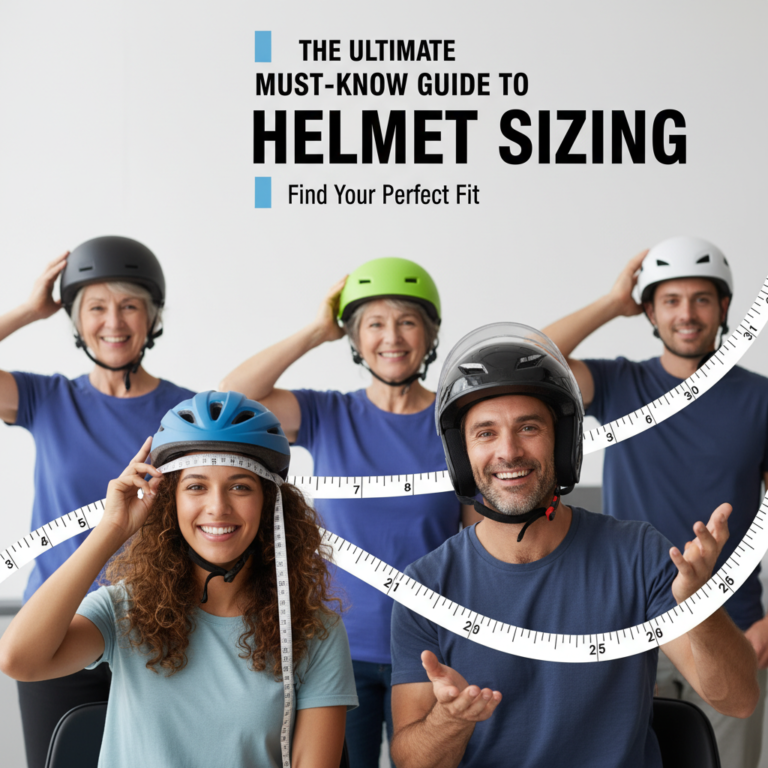
How to Measure Your Head for Accurate Helmet Sizing
Head measurement is the starting point for helmet sizing, but it does not replace trying on the helmet and checking movement. The key difference is that measurement gives you a size range, while the helmet’s internal geometry and padding determine whether it actually fits your head shape.
To measure correctly:
- Use a soft measuring tape for flexibility and accuracy.
- Measure around the largest part of the head, typically just above the eyebrows.
- Keep the tape level and snug, not compressing the hair.
- Record the measurement in inches or centimeters based on the brand’s chart.
Typical Head Circumference Ranges vs. Helmet Size (for a Snug Fit)
| # | Helmet Size (Common) | Head Circumference (in) | Head Circumference (cm) | Snug-Contact Likelihood |
|---|---|---|---|---|
| 1 | XXS | 20.5–21.0 | 52.1–53.3 | ★★★☆ ★ 4.6/5 |
| 2 | XS | 21.1–21.6 | 53.6–54.9 | ★★★★☆ ★ 4.7/5 |
| 3 | S | 21.7–22.2 | 55.2–56.4 | ★★★★☆ ★ 4.8/5 |
| 4 | M | 22.3–22.8 | 56.7–57.9 | ★★★★★ ★ 5.0/5 |
| 5 | L | 22.9–23.4 | 58.2–59.4 | ★★★★☆ ★ 4.7/5 |
| 6 | XL | 23.5–24.0 | 59.7–61.0 | ★★★☆ ★ 4.1/5 |
| 7 | XXL | 24.1–24.6 | 61.2–62.5 | ★★★☆ ★ 4.2/5 |
Convert Your Measurement to Helmet Size (Then Confirm In-Person)
Your measurement might align with a brand’s size chart, but sizes are not universal. The key difference is that two helmets in the same “medium” size can feel different due to manufacturer-specific molds and liner thickness.
For example, a head circumference around 22 inches (about 56 cm) often maps to “medium” in many brands, but some brands label it differently based on their sizing strategy. Always cross-check with the exact brand’s chart and try the helmet on if possible.
Quick QA: Do I Measure Once or Multiple Times?
Q: Do I measure once or multiple times?
A: Measure 2 to 3 times for consistency. If the range varies by more than about 1/4 inch (around 0.5 to 1 cm), re-check tape placement around the widest part of your head.
Helmet Types and What “Tight-Fitting” Means for Each
Helmet type affects how the helmet contacts your head, jaw area, and face shield area. The key difference is that each style has a different coverage profile, so fit checks must include the chin bar region, cheek pads, and ventilation points.
Full-Face Helmets
A full-face helmet is defined as a helmet that encloses the entire head, including the jaw and chin bar, to maximize impact and facial protection. The key difference is that a proper fit must maintain a snug seal across the forehead and cheeks without pressure on the jaw opening.
- Confirm cheek padding holds your face without forcing your jaw forward.
- Check that the chin bar does not feel like it’s pushing your chin upward.
- Verify eye and visor alignment when looking straight ahead.
Modular (Flip-Up) Helmets
A modular helmet is defined as a full-face helmet with a movable chin bar and visor mechanism. The key difference is that the locking mechanism must not create unwanted play when the helmet is closed.
- Test with the chin bar both open and closed.
- Confirm the helmet does not shift when you open the mouth or move your head.
- Pay attention to wind noise and pressure points near the hinge area.
Half Helmets and Open-Face Helmets
Open-face and half helmets are defined as helmets that provide less coverage of the face and jaw compared with full-face designs. The key difference is that “tight fit” is still essential, but protection depends heavily on stability since the helmet has a different contact pattern.
- Ensure the helmet sits low enough to protect the crown area without rocking.
- Check the retention system for secure contact since coverage is reduced.
3-Point Fit Check: Where Fit Should Be Secure
Regardless of style, a reliable fit uses three contact areas: the forehead, the cheeks, and the crown. The key difference is that the helmet should feel evenly snug rather than “tight” in only one spot.
Standards to Look For: DOT, ECE, and Snell
Safety standards help you verify that a helmet meets minimum performance requirements. The key difference is that standards do not guarantee comfort or correct fit for your head shape, so you still must try the helmet.
Common certifications and regulations riders encounter include:
- DOT: A U.S. federal standard for motorcycle helmets, often used as a baseline requirement.
- ECE 22.06: A widely recognized modern UN standard for helmet performance in Europe and globally.
- Snell: A testing organization known for additional performance criteria beyond minimum requirements in some categories.
When comparing models, prioritize current and relevant certification marks. ECE 22.06 is a frequent recommendation among safety-focused communities due to its modern testing framework.
Quick QA: Is a DOT Helmet Automatically “Safe Enough”?
Q: Is a DOT helmet automatically safe enough?
A: DOT certification indicates the helmet meets required U.S. performance minimums, but fit still governs real-world protection. A certified helmet that is too loose can shift in a crash, reducing effectiveness. Always combine certification with proper sizing and secure retention adjustment.
How to Test a Tight Fit in Person (The Practical Checklist)
The best way to confirm a tight-fitting helmet is to perform structured movement and strap tests. The key difference is that many “almost right” helmets pass a quick glance but fail when you move your head or open your mouth.
Strap and Retention Tests
- Chin strap snugness: Secure the strap so it holds the helmet without restricting breathing.
- Glance test: Look left and right quickly—if the helmet shifts noticeably, it’s likely too loose or the shape is wrong.
- Upward tug test: With steady upward force, the helmet should not lift easily from the forehead.
Cheek Pad and Forehead Contact Tests
- Cheek contact: Pads should contact your cheeks firmly without pinching or causing pressure within minutes.
- Forehead comfort: A tight-fitting helmet should not create a single hard pressure ridge.
- Jaw movement: Open your mouth as if speaking or breathing during rides; modular and full-face helmets should not shift.
Common Signs You Need a Different Size or Shape
- Hot spots on the forehead or temples that persist after 10 to 15 minutes.
- Cheek pads that feel loose on one side or compress unevenly.
- Helmet lifts at the front when you turn your head.
- Excessive gap behind your neck when the strap is tightened correctly.
Fit by Brand and Shape: Round Oval vs. Intermediate Oval vs. Long Oval
Head shape drives comfort and security more than pure circumference. The key difference is that two riders with the same head measurement can need different shell shapes because helmet manufacturers mold for different profiles.
Many brands categorize fit by head shape (for example, round oval, intermediate oval, and long oval). If you repeatedly try “correct size” helmets and feel the same problem, you may need the same size in a different shape category.
- If the helmet feels tight in the forehead but loose at the temples, your shape may not match the mold.
- If the helmet feels secure at the crown but lifts near the brow, reconsider size or oval type.
- If cheek pads are too firm and uncomfortable, consider trying the next oval shape up.
Helmet Fit for Real Riding: Hair, Liners, and Weather
Helmet fit must account for what you wear during riding, not just what you wear in the store. The key difference is that a thin in-store liner might be different from a cold-weather balaclava that adds thickness.
Consider these real-world factors:
- Hair thickness and volume (especially for long hair and ponytails).
- Helmet liners and balaclavas used for winter riding.
- Glasses or eyewear that can affect visor and cheek contact.
- Riding posture, including upright cruising versus aggressive sport riding.
Quick QA: Should I Wear My Helmet with a Balaclava?
Q: Should I wear my helmet with a balaclava when testing fit?
A: If you plan to ride in cold weather, yes. Try the helmet with the same type of liner you will actually wear. The goal is a stable, secure fit across seasons, not a fit that fails once you add insulation.
Maintenance and Replacement: When a “Good Fit” Changes
Even a perfect tight fit can change over time due to liner compression and wear. The key difference is that helmets are engineered for specific performance windows, so you should replace when signs of aging or damage appear.
Common replacement guidance includes:
- After a crash, even if damage appears minor.
- When liners compress and the helmet begins to shift.
- When expiration timelines or manufacturer recommendations indicate replacement is necessary.
Also check for cracked shells, worn straps, or damaged retention buckles. If the helmet no longer provides a secure snug fit, it is no longer fulfilling its protective purpose.
Frequently Asked Questions About Tight-Fitting Motorcycle Helmets
How do I know my motorcycle helmet is tight enough?
Your helmet is tight enough when it remains stable during head turns, does not lift easily at the forehead, and contacts your cheeks evenly without causing painful pressure points after 10 to 15 minutes.
Is it okay if the helmet feels tight at first?
Yes, a new helmet often feels snug initially because the comfort liner is firmer. The key difference is whether it improves without producing numbness, persistent hotspots, or worsening discomfort during realistic movements.
Should the helmet loosen after breaking in?
It may feel more comfortable as padding conforms, but a safe helmet should remain secure. If the helmet becomes loose enough to wobble, it is no longer the correct fit.
What is the best helmet for a tight fit: full-face or modular?
Both can fit securely when selected correctly. The key difference is that modular helmets require additional fit checks at the hinge and chin bar area to ensure the helmet remains stable across the full range of movement.
Conclusion: Buy the Right Size, Then Confirm the Fit Like a Safety Test
A tight-fitting motorcycle helmet is defined as one that is stable, comfortable, and snug across the key contact points without painful pressure. The key difference between “tight” and “unsafe” is movement and comfort quality: a properly fitted helmet should not wobble, should not lift easily, and should remain supportive throughout normal riding motions.
Measure your head, confirm the correct certification standard such as DOT or ECE 22.06, and perform in-person retention and movement tests. When fit and stability are correct, you ride with better protection, less distraction, and more confidence in every mile.
The Ultimate Guide to Choosing a Tight-Fitting Motorcycle Helmet
How tight should a motorcycle helmet feel?
A properly fitting motorcycle helmet should feel snug all the way around your head without causing pain. The helmet should not lift or shift when you move your head side to side or up and down. You should be able to wear it for a while without developing hotspots that force you to remove it. A common guideline is that there should be little to no movement at the chin and sides, and the cheek pads should contact your face evenly.
If you feel sharp pressure points, numbness, or headaches within a short period, the helmet is likely too small or shaped for a different head shape. If the helmet visibly moves, allows air/wind intrusion around the brow or cheeks, or you can easily remove it without unfastening the strap, it’s usually too loose or the wrong size/fit model.
How do I measure my head to find the right helmet size?
To find the right size, measure the circumference of your head using a flexible tape measure. Measure around the widest part of your head, typically across the forehead about 1–2 cm (about 1/2 inch) above the eyebrows and around the back of the skull (occipital area). Keep the tape level and snug but not compressing your hair or skin.
Then compare your measurement to the brand’s size chart, which can vary significantly between manufacturers. Remember: motorcycle helmet sizing is not standardized like clothing. If you land between sizes, prioritize the size that provides a snug fit (without painful pressure) and confirm using in-store try-on or a retailer with a strong return policy. Also consider head shape—round oval vs. intermediate oval vs. long oval—because shape affects how “tight-fitting” the helmet feels even when the size matches.
What are the signs that my helmet is the wrong size?
The most common signs your helmet is the wrong size include:
- The helmet moves when you shake your head side to side (or when you look up and down), indicating it’s too loose.
- You experience pressure points—especially on the forehead, temples, or behind the ears—that become painful quickly. This often means the helmet is too small or the shape isn’t right.
- The chin strap feels incorrect after proper adjustment, such as the strap sitting too low/high or the helmet riding up/down.
- Excessive gaps around the cheeks or brow that allow wind to rush in, which may indicate poor fit.
- Your vision is restricted or your goggles/visor contact feels off due to the helmet’s internal shape.
A “tight-fitting” helmet can be snug and secure, but it should not create intense discomfort after a short try-on. If you’re unsure, try the next size up and down, and test movement with the helmet strapped correctly.
Do I need to break in a tight-fitting helmet, or should it feel right immediately?
Many helmets require a short break-in period because comfort liners and cheek pads may compress slightly over time. However, a helmet should still feel generally right immediately—snug, secure, and without severe pain.
What’s normal: mild tightness, gentle pressure that eases after short wear, and slightly stiff cheek pads on the first few uses.
What’s not normal: numbness, intense hot spots that don’t soften, headaches, pain behind the ears, or pressure that forces you to constantly adjust the helmet. Those issues usually indicate the helmet is too small or not compatible with your head shape.
If your helmet is truly tight-fitting in the correct places, it should become more comfortable with wear. If it never becomes comfortable (or worsens), it’s often a sign to change size, head shape, or model.
How should I adjust the straps and fit so the helmet stays tight and secure?
Start by wearing the helmet level on your head, then close the chin strap until it fits snugly. A properly adjusted strap should keep the helmet from lifting without excessive pressure on your throat.
Key steps:
- Center the helmet: Ensure the helmet sits level on your forehead—not angled high at the front or tilted back.
- Position the chin strap: With the strap closed, the helmet should feel stable. If it lifts or shifts, the size or internal fit may be wrong.
- Check the buckle/retainer: Use the manufacturer’s recommended closure system and ensure it’s properly secured and not twisted.
- Confirm fit after tightening: Move your head side to side and up/down while keeping the strap closed. The helmet should not slide.
- Verify comfort at the cheeks: The cheek pads should hold your face evenly. If one side is loose or one area is painful, you may need a different size or replacement pads.
For safety, follow the helmet’s manual and local regulations. If the helmet feels loose even when strapped correctly, don’t rely on tightening alone—consider a different size or model designed for your head shape.
References
- PubMed search: Motorcycle helmet fit Google Scholar
https://pubmed.ncbi.nlm.nih.gov/?term=motorcycle+helmet+fit - Google Scholar search: Motorcycle helmet fit, snug fit, and chin strap sizing Google Scholar
https://scholar.google.com/scholar?q=motorcycle+helmet+fit+snug+chin+strap+size - Google Scholar search: Motorcycle helmet standards (ECE 22.06, DOT, Snell) Google Scholar
https://scholar.google.com/scholar?q=motorcycle+helmet+standards+ECE+22.06+DOT+snell - Motorcycle helmet
https://en.wikipedia.org/wiki/Motorcycle_helmet - Motorcycle helmet (definition, safety, and design)
https://www.britannica.com/technology/motorcycle-helmet - NHTSA: Motorcycle Helmets
https://www.nhtsa.gov/motorcycles/helmets - CDC: Motorcycle Safety and Helmet Use
https://www.cdc.gov/motorvehiclesafety/motorcycle/index.html - WHO: Road traffic injuries (including motorcycle helmet safety)
https://www.who.int/news-room/fact-sheets/detail/road-traffic-injuries
📅 Last Updated: July 06, 2026 | Topic: The Ultimate Guide to Choosing a Tight-Fitting Motorcycle Helmet | Content verified for accuracy and freshness.