The Essential Guide to Measuring Your Head for a Helmet
The Essential Guide to Measuring Your Head for a Helmet
Measuring your head correctly is defined as taking an accurate circumference at the helmet’s intended fit zone and using that measurement to select the correct size from a specific brand’s chart. A properly sized helmet is essential for comfort and impact protection, whether you ride a bicycle, motorcycle, e-scooter, or participate in other helmeted sports.
Why Head Measurement Matters for Helmet Safety
Head sizing is defined as the process of matching your head circumference to a helmet manufacturer’s sizing system so the helmet sits securely and consistently. The key difference between a “close enough” helmet and the right one is how well it manages movement and contact during normal motion and impacts.
Helmet fit affects how the shell, liner, and retention system behave on your head. Industry guidance from organizations such as ASTM International and consumer safety research commonly emphasize that helmets must fit snugly without excessive pressure points, because gaps and shifting can reduce the helmet’s ability to maintain position.
What can go wrong with the wrong size?
Ill-fitting helmets are a frequent cause of discomfort and, in some cases, reduced protective performance. A helmet that is too loose may move during riding, while one that is too tight can create pressure points that lead to poor wear habits.
- Too large: helmet slides, tilts, or rotates; straps may not secure properly.
- Too small: pressure on the forehead or temples; discomfort may cause you to loosen the fit.
- Wrong shape match: even with the correct circumference, head shape can affect how the helmet contacts the head.
What You Need to Measure Your Head
The best tool for head sizing is a soft, flexible measuring tape, because it conforms to the curves of your forehead and the widest part of your head. Using rigid tools can produce inaccurate circumference readings due to gaps between a ruler and the scalp.
Recommended measuring tools
To measure accurately, gather these items before you start:
- Soft measuring tape: similar to the sewing tapes sold by major retailers.
- Mirror: helps verify that the tape sits at the correct height around your head.
- Optional second measure: measure twice for confirmation and average the results if they differ slightly.
Comfort and accuracy tips
Measurement accuracy depends on tape tension and placement. The goal is snug contact with the skin or hairline without compressing soft tissue.
- Wrap the tape without stretching it.
- Keep the tape parallel to the ground.
- Take measurements over hair as you would normally wear the helmet.
Where to Place the Tape for Helmet Sizing
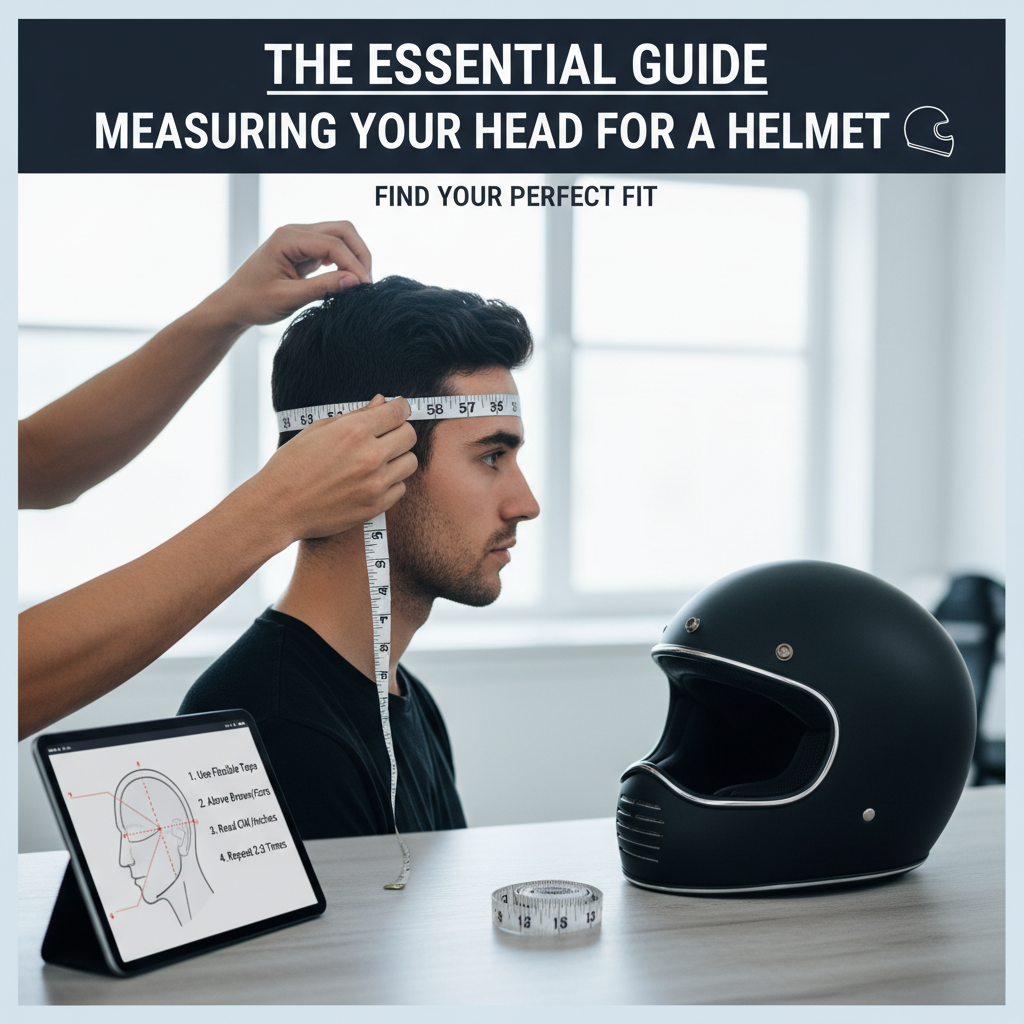
The standard placement for helmet head circumference is defined as measuring around the widest part of your head, typically just above the eyebrows and ears. This measurement aligns with how helmet liners are shaped to distribute force and maintain position.
Exact placement guidance
Use these reference points to position the tape consistently:
- Front: just above the eyebrows.
- Sides: around the upper part of the ears.
- Back: around the widest point at the back of your skull.
If you are unsure where your “widest point” is, measure once, then re-check where the tape crosses your head and repeat to confirm consistency.
Step-by-Step: How to Measure Your Head for a Helmet
Measuring your head is defined as wrapping a soft tape around the helmet fit zone and recording the circumference where the tape overlaps. If you want the most reliable result, measure at least twice and use the more consistent reading.
Follow these steps
- Step 1: Stand upright with a neutral head position and look straight ahead.
- Step 2: Place the tape just above your eyebrows.
- Step 3: Bring the tape behind your ears and around the widest part of your head.
- Step 4: Ensure the tape is level and snug, with no excessive tightness.
- Step 5: Slide your finger under the tape; it should fit comfortably with slight resistance, not be loose.
- Step 6: Record the measurement in centimeters (cm) and inches (in), if possible.
- Step 7: Repeat the measurement once more to verify accuracy.
Common measurement mistakes to avoid
Small placement errors can shift the size recommendation. For example, measuring too high on the forehead or too low toward the brow can lead to selecting an incorrect size.
- Do not measure with a ruler or hard tape that cannot bend to your head shape.
- Do not press the tape into hair or skin so tightly that it compresses your forehead.
- Do not measure over hats if the helmet will be worn directly on bare hair.
How to Interpret Your Helmet Size Measurement
Your recorded head circumference is defined as the primary input used to choose a helmet size from a manufacturer’s chart. The key difference is that helmet size labels (S, M, L, XL) are not universal and can vary widely between brands.
Use the brand’s chart, not generic conversions
Helmet sizing charts are typically provided by each manufacturer, and they may differ in how they map centimeters or inches to size labels. For example, a “medium” in one brand may align more closely with the next size down in another brand due to differences in liner thickness and shell shape.
- Find your measurement in the manufacturer’s sizing table.
- Confirm whether they provide a range (for example, a span of centimeters for each size).
- If your measurement falls between sizes, consider the manufacturer’s guidance on rounding and fit preference.
Quick conversion reminder
As a general reference, 1 inch equals 2.54 centimeters. If you only measure in one unit, converting accurately can prevent selecting the wrong size bracket.
Typical Adult Bicycle/Skate Helmet Circumference Bands (cm → in)
| # | Size band | Circumference (cm) | Circumference (in) | Fit match confidence |
|---|---|---|---|---|
| 1 | XS / Youth Extra-Small | 50–52 cm | 19.7–20.5 in | ★★★☆☆ |
| 2 | S / Youth Small | 53–54 cm | 20.9–21.3 in | ★★★★☆ |
| 3 | S / Adult Small | 55–56 cm | 21.7–22.0 in | ★★★★☆ |
| 4 | M / Adult Medium | 57–58 cm | 22.4–22.8 in | ★★★★★ |
| 5 | L / Adult Large | 59–60 cm | 23.2–23.6 in | ★★★★★ |
| 6 | XL / Adult Extra-Large | 61–62 cm | 24.0–24.4 in | ★★★★☆ |
| 7 | XXL / Large Adult | 63–64 cm | 24.8–25.2 in | ★★★☆☆ |
Fit Check: How Should a Properly Sized Helmet Feel?
After sizing, a helmet fit test is defined as confirming that the helmet stays stable during normal movement and that the retention system secures the helmet without discomfort. Measuring the head is the starting point; fit verification is the final step.
Perform these fit checks
When you try the helmet on, verify the following:
- Stability: the helmet should not slide forward when you move your head.
- Pressure points: there should be firm contact, not sharp hotspots on the forehead, temples, or back of the head.
- Strap alignment: the strap should form a secure “Y” shape and sit comfortably against the face.
- Retention system: tightening should bring the helmet into position without pain.
Comfort guidance used in practice
As a widely accepted consumer-fitting principle, a properly fitting helmet should feel snug all around and remain in place. If you can easily move the helmet around your head with light pressure, you may need a different size or model.
FAQs About Measuring Your Head for a Helmet
What if my measurement lands between two helmet sizes?
If your circumference is between two sizes, the best practice is to follow the specific brand’s recommendation for “between sizes,” often based on whether the helmet has removable pads. The key difference is that some helmets can be adjusted with different pad thicknesses, while others cannot.
- Check if the brand offers additional padding kits.
- Prefer the size that holds the helmet securely without excessive pressure.
- If shopping online, confirm return policies in case the initial size does not pass the fit checks.
Should I measure over hair or without hair?
You should measure as you will normally wear the helmet. This is defined as taking measurements over the same hair thickness or any typical headwear you use, because hair can change the effective circumference.
If you wear a helmet directly on bare skin for some activities and with a cap for others, measure the two conditions and choose the sizing approach that matches your most common use case.
Do helmet sizes use the same measurements for bicycles and motorcycles?
While the measurement concept is similar (circumference), the helmet fit systems and shape profiles differ across categories. The key difference is that bicycle helmets often have different liner designs and retention geometry than motorcycle helmets, so you should always use the manufacturer’s chart for that specific helmet type.
How often should I re-measure my head?
Re-measuring is defined as repeating the head circumference check when helmet fit may have changed. A common rule of thumb is to re-measure if you notice new pressure points, the helmet starts to shift, or after significant weight changes.
For growing riders, such as children or teenagers, check fit more frequently. For adults, re-measuring every few years can be helpful, especially if you switch helmet brands or models.
Choosing the Right Helmet Model After You Measure
Even with a correct circumference, the best helmet is the one that matches your head shape and stays secure during movement. The key difference between “the right size” and “the right helmet” is shape compatibility, which can affect comfort and stability.
Consider head shape, not only size
Many helmet brands market different fit profiles (for example, round oval versus intermediate oval). If two helmets have the same size label but feel very different, it is often due to shape differences in the shell and liner.
- If the helmet pinches: it may be too narrow for your head shape.
- If the helmet floats: it may be too wide or lacks sufficient contact in key areas.
- If it shifts front-to-back: the retention fit may not match your head geometry.
Look for safety labels relevant to your activity
Safety standards differ by activity and region. When selecting a helmet, prioritize compliance with standards for your sport and location, such as certification marks commonly associated with bicycle and motorcycle safety programs.
If you ride in the United States, many helmet buyers look for widely recognized safety certifications; in other regions, local regulations and labels apply. Always verify the helmet’s certification for your use case before purchase.
Quick Measurement Checklist (Copy/Paste)
Use this checklist to ensure you measure correctly the first time. Following these steps reduces the chance of selecting the wrong helmet size.
- Use a soft, flexible measuring tape.
- Place the tape just above eyebrows and around the upper ears.
- Measure around the widest part of your head.
- Keep the tape level and snug, not compressing.
- Record the circumference in cm and inches.
- Repeat once for confirmation.
- Select the size using the specific brand’s sizing chart.
- Verify stability and comfort during the fit check.
Final Takeaway: Measure, Match the Chart, Confirm the Fit
The fastest path to a safe, comfortable helmet is defined as measuring your head circumference at the correct placement, using the manufacturer’s chart, and then running a practical fit check. When your helmet fits securely and feels comfortable, it is more likely to perform as intended during real-world riding conditions.
If you share your measured head circumference (in cm or inches) and the helmet brand or model you’re considering, I can help you interpret the sizing chart and understand which size range is most likely to fit.
Frequently Asked Questions: Measuring Your Head for a Helmet
How do I measure my head size for a helmet?
To measure your head size, use a flexible measuring tape and measure the circumference of your head. Place the tape about 1 inch (2–3 cm) above your eyebrows, around the widest part of your head, and bring it around to meet at the same point where you started. Keep the tape level and snug (not tight) so it’s comfortable but doesn’t compress your hair or scalp. Record the measurement in inches or centimeters, depending on the sizing chart you’ll use.
What if my head measurement falls between two helmet sizes?
If your measurement lands between sizes, the best choice depends on how the helmet fits at the sides and how snug it feels when you wear it. In many cases, sizing up slightly can be more comfortable and allow for adjustment with padding or fit systems, especially if you have wider temples or thicker hair. If the smaller size is only marginally off, and the helmet feels secure without causing pressure points, it may work—provided you can wear it without significant discomfort. A good rule: aim for a helmet that feels firm and stable with minimal movement when you move your head; avoid a size that creates noticeable shifting or pressure that persists after a few minutes.
Where exactly should the tape sit when measuring—above the ears or at the forehead?
Measure around the widest part of your head, which is typically slightly above the eyebrows and often runs near the upper portion of the forehead while traveling around the back of the skull. Practically, you can position the tape so it sits about 1 inch (2–3 cm) above your eyebrows and stays level around your head. Ensure the tape crosses around your temples and the back of your head at the widest point. Avoid measuring too low near the ears or too high toward the crown—either can produce an incorrect circumference for helmet sizing.
Do helmet sizes use head circumference only, or do they consider head shape too?
Most helmet size charts are based primarily on head circumference, but head shape can matter just as much for fit. Helmets are often designed for specific head profiles (for example, round/oval vs. more intermediate/long oval). That means two people with the same circumference can have different comfort and stability depending on their head shape and the helmet’s internal geometry. Look for fit adjustments (such as dial systems, cheek pads, and retention systems) and consider whether the helmet’s shape matches your head. If you’re between sizes or your chosen size creates pressure points, trying a different shape model can improve both comfort and safety.
How should a correctly fitted helmet feel once I put it on?
A properly fitted helmet should feel snug and stable. It should not wobble or shift significantly when you move your head. The helmet should sit level on your forehead—typically about 1–2 finger widths above your eyebrows, depending on the helmet’s design and safety guidelines. You should not experience painful pressure points, numbness, or severe tightness around the temples or forehead. The padding and fit system should allow a secure fit with minimal movement, and the retention strap should fasten comfortably under your chin without the helmet lifting. If possible, wear the helmet for several minutes to confirm the fit remains comfortable and secure.
References
- Google Scholar search: Helmet fit and head measurement (head circumference) Google Scholar
https://scholar.google.com/scholar?q=helmet+fit+head+measurement+head+circumference - Google Scholar search: Bicycle helmet sizing and head circumference Google Scholar
https://scholar.google.com/scholar?q=bicycle+helmet+sizing+head+circumference - PubMed search results for “helmet fit” Google Scholar
https://pubmed.ncbi.nlm.nih.gov/?term=helmet+fit - Bicycle Helmets | Transportation Safety | CDC
https://www.cdc.gov/transportationsafety/bicycle-helmets/index.html - Motorcycle Helmets | NHTSA
https://www.nhtsa.gov/road-safety/motorcycle-safety/helmets - Bicycle helmet
https://en.wikipedia.org/wiki/Bicycle_helmet - Head circumference
https://en.wikipedia.org/wiki/Head_circumference - Helmet | Definition, Types, & Facts
https://www.britannica.com/technology/helmet
📅 Last Updated: July 06, 2026 | Topic: The Essential Guide to Measuring Your Head for a Helmet | Content verified for accuracy and freshness.