**Must-Know Secrets: Can You Wear a Bike Helmet Skiing?**
Direct Answer: Can You Wear a Bike Helmet Skiing?
You can technically wear a bike helmet while skiing, but it is generally not recommended because ski helmets are engineered for winter-specific hazards, cold conditions, and high-energy impacts. The key difference is that ski helmets meet ski/snow standards and are designed for multi-impact protection at the speeds and angles common on slopes.
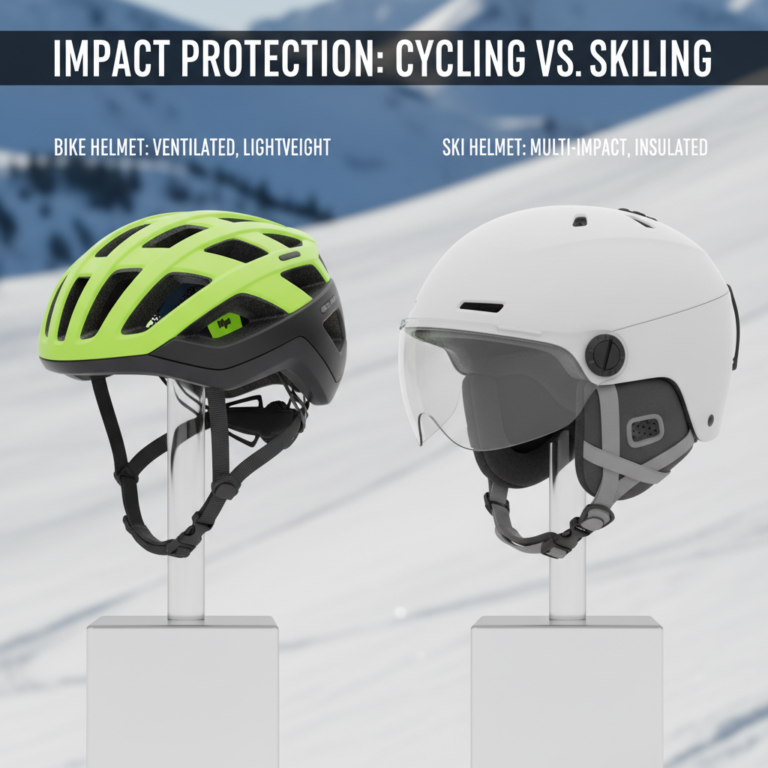
Why Ski Helmets and Bike Helmets Are Built Differently
The main reason a bike helmet is a poor substitute for a ski helmet is that the two sports create different impact patterns and environmental stresses. The key difference is that ski helmets are designed to manage high-speed falls, cold-temperature performance, and specific testing requirements for snow sports.
Helmet Standards—How Well Each Fits Ski Protection (Quick Match)
| # | Helmet type (example certification) | Typical compliance/standard | Primary design focus | Ski-standards match | Overall “for skiing” suitability |
|---|---|---|---|---|---|
| 1 | Ski helmet (snow-sport helmet) | ASTM F2040 | Snow-sport impact & penetration resistance | ★ ★ ★ ★ ★ | Best match |
| 2 | Snowboard helmet | ASTM F2040 | Winter slope falls & multi-impact expectations | ★ ★ ★ ★ ★ | Best match |
| 3 | Multi-sport helmet (explicit snow-sport certification) | ASTM F2040 listed | Designed for snow-sport impact requirements | ★ ★ ★ ★ ☆ | Very suitable |
| 4 | Bike helmet (cycling-specific) | CPSC (commonly CPSC 1203) | Cycling-typical impact testing objectives | ★ ☆ ☆ ☆ ☆ | Not recommended substitute |
| 5 | Urban cycling helmet (MIPS/rotational tech, cycling standards) | CPSC (commonly CPSC 1203) | Rotational protection focus for cycling impacts | ★ ☆ ☆ ☆ ☆ | Not recommended substitute |
| 6 | Skate/BMX helmet | ASTM F1492 | Impact testing for skate/BMX environments | ★ ☆ ☆ ☆ ☆ | Not designed for snow standards |
| 7 | Motorcycle helmet (full-face) | DOT / ECE (varies by model) | Road-speed head protection testing objectives | ★ ★ ☆ ☆ ☆ | Not a snow-sport equivalent |
Why Ski Helmets and Bike Helmets Are Built Differently
The main reason a bike helmet is a poor substitute for a ski helmet is that the two sports create different impact patterns and environmental stresses. The key difference is that ski helmets are designed to manage high-speed falls, cold-temperature performance, and specific testing requirements for snow sports.
How a ski helmet is defined and engineered
A ski helmet is defined as a head-protection device designed for snow sports that must meet ski-specific impact and penetration resistance testing. Many ski helmets use an outer shell plus an inner energy-absorbing liner, commonly including EPS (expanded polystyrene) or similar materials, and they are built to maintain performance in cold weather.
How a bike helmet is defined and engineered
A bike helmet is defined as a head-protection device designed for cycling impacts, with emphasis on ventilation and lightweight comfort. Many bike helmets use expanded polystyrene foam, but the testing focus and protective targets are different from those of ski helmets, and the ventilation-oriented design can be less suitable for cold slope conditions.
Expert consensus in plain terms
Safety guidance from ski-safety organizations and helmet manufacturers consistently emphasizes using helmets rated for the sport you are doing. While both helmet types can protect against certain impacts, the widely accepted safety principle is to wear headgear that matches the sport’s injury mechanics and standards.
Direct Comparison: What’s the Key Difference in Protection?
The key difference is that ski helmets are tested and tuned for the impact energy and fall dynamics typical of skiing and snowboarding, while bike helmets are tested for the cycling environment. This matters because a helmet’s performance depends on how its structure responds to specific impact conditions.
Impact energy and fall mechanics
Skiing can involve higher speeds, abrupt stops, and angled impacts with hard snow features or the ground after a fall. Even without hitting a tree, skiers commonly experience impacts that can involve both forward momentum and rotational forces.
Bike riding includes falls too, but typical cycling impacts often occur at different speeds and with different contact points. As a result, bike helmets are optimized around a different set of protective assumptions.
Cold temperatures and material performance
Cold affects comfort and can also influence helmet behavior during impacts. Ski helmets are designed to remain effective in winter conditions, including lower ambient temperatures on mountains in places like Colorado, Vermont, Utah, and the Alps. A bike helmet’s ventilation design may be comfortable in summer cycling, but it can reduce warmth and increase discomfort on windy, cold runs.
Multi-impact considerations
Many ski helmets are engineered for multiple impacts because skiing injuries can occur after a chain of falls. The key difference is that ski helmet testing frameworks include performance expectations aimed at how helmets behave after more than one event, not just a single impact scenario.
Safety Standards and Regulations You Should Know
Helmet standards are not interchangeable across sports, and that is the strongest reason to avoid using a bike helmet for skiing. The direct answer is simple: if it does not meet ski/snow helmet standards, it is not the right safety gear for the slopes.
Ski helmet standard: ASTM F2040
In the United States, ASTM International ASTM F2040 is widely cited as a ski and snowboard helmet standard. A helmet that meets ASTM F2040 is defined as having passed the testing methods associated with penetration resistance and impact attenuation relevant to snow sports.
Bike helmet standards: CPSC and region-specific rules
In the United States, cycling helmets commonly comply with CPSC requirements (Consumer Product Safety Commission). The key difference is that CPSC is focused on cycling-related testing objectives, which do not cover the same snow-sport impact profiles as ski standards like ASTM F2040.
Resort requirements and enforcement
Many ski resorts and ski programs strongly encourage, and in some cases require, that skiers wear helmets meeting ski-specific standards. If you are skiing in places like British Columbia, New Hampshire, or Europe, you are also likely to encounter local guidance that prioritizes ski-rated helmets.
Direct Answer by Scenario: When Would a Bike Helmet Be “Okay”?
In most skiing situations, a bike helmet is not a safe substitute for a ski helmet. The most realistic exception is limited: when you have no access to a ski helmet and are skiing very gently, the risk may be lower than in high-speed terrain, but it still remains a compromise.
If you still decide to use one temporarily
If you are temporarily using a bike helmet, keep these risk-reduction principles in mind:
- Check certification: look for proof that the helmet meets a relevant safety standard, even though it will not be the same as ASTM F2040.
- Replace after impact: any helmet that has taken a significant hit should be replaced.
- Ensure proper fit: straps must sit correctly and the helmet should not rock or rotate when you move your head.
- Avoid high-risk terrain: stay on easy, controlled runs; do not attempt jumps, rails, or steep lines.
What not to do
Do not use a helmet that is cracked, outdated, or missing secure strap systems. Also avoid “fashion helmets” or unverified gear—these are not designed to withstand the forces typical of skiing falls.
Fit and Comfort: The Helmet That Hurts Less Is Still the Wrong Helmet
A properly fitted helmet is essential, but fitting alone does not make a bike helmet equivalent to a ski helmet. The direct takeaway is that a safe fit improves usability, yet ski-specific standards still matter for crash protection.
How to check helmet fit (quick checklist)
- The helmet should sit level on your head, not tilted backward.
- The front edge should not sit above your eyebrows.
- Straps should form a snug “V” shape under each ear without twisting.
- When you push the helmet lightly, it should not move significantly.
Cold-weather comfort considerations
On windy mountains, comfort affects whether you will actually keep the helmet on. Ski helmets are typically designed to balance coverage and insulation needs, while bike helmets may prioritize ventilation. In practice, discomfort can lead to distraction, which increases accident risk.
Direct Q&A: Common Questions About Wearing a Bike Helmet Skiing
Is there a meaningful difference between EPS liners in ski and bike helmets?
Both ski and bike helmets may use EPS foam or similar liners, but the key difference is how the helmet is engineered and tested for the specific sport’s impact conditions. The liner material is only part of the safety story; the certification standard and construction details matter.
Will a bike helmet protect my head if I fall?
Any properly worn helmet can reduce injury risk in some impacts, but it cannot be assumed to offer the same protection level as a ski helmet designed for snow-sport testing. Skiing involves unique fall dynamics, including hard-surface contact and winter conditions.
Can I wear a bike helmet with a ski mask or goggles?
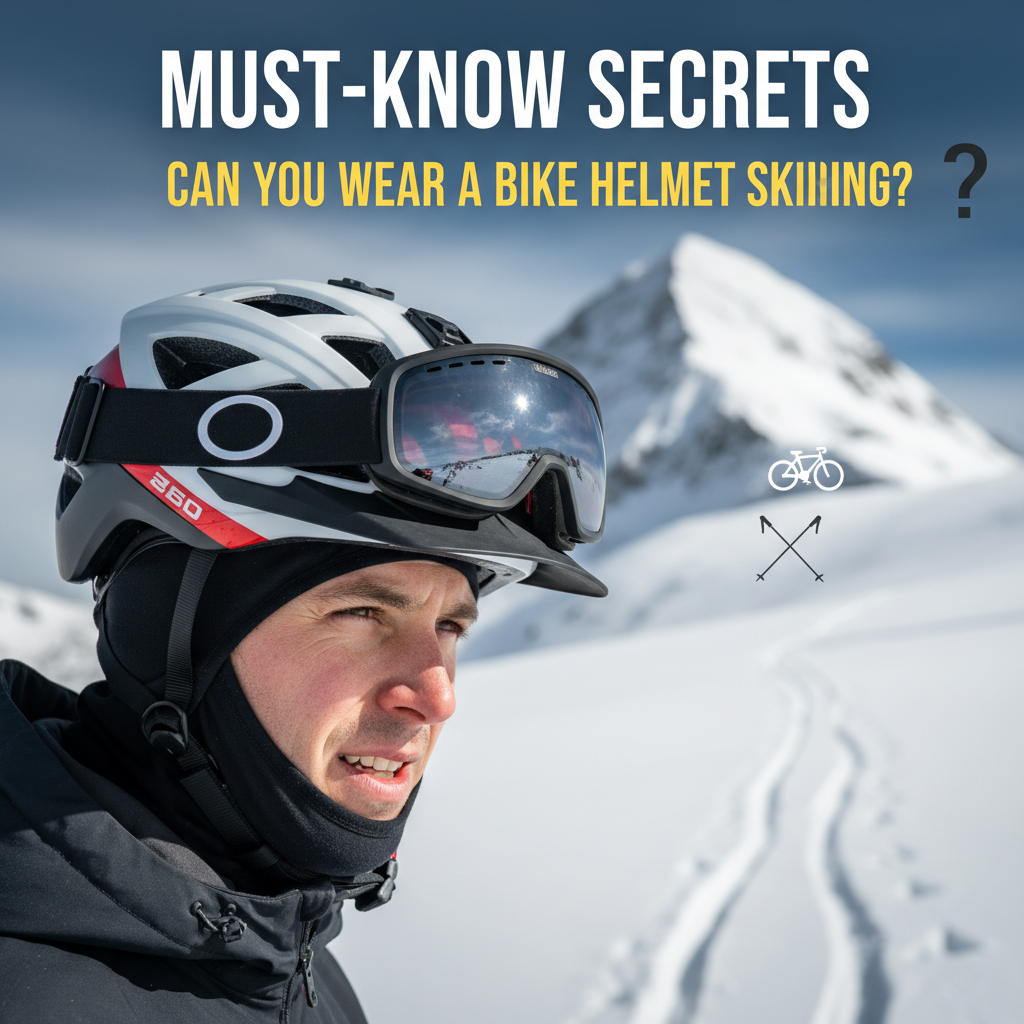
Many bike helmets may physically fit with goggles, but compatibility is not the primary issue. A bike helmet’s comfort and coverage are not the same as meeting ski-specific standards such as ASTM F2040.
Are multi-sport helmets a better option?
Some multi-sport helmets are marketed for use across activities, but the critical point is certification. The key difference is that multi-sport branding does not automatically mean ski-compliant performance. Always verify the helmet’s stated standards for snow sports.
What to Buy Instead: How to Choose a Ski Helmet With Confidence
The safest choice is a helmet explicitly rated for skiing or snowboarding. The direct recommendation is to purchase a ski helmet that meets ASTM F2040 (or the relevant local equivalents) and fits your head comfortably.
Buyer checklist for a ski helmet
- Standard verification: look for ASTM F2040 on the product documentation.
- Size and fit: try it on with your intended base layers and ensure stable strap tension.
- Coverage: adequate coverage of the sides and back of the head.
- Retention system: secure, adjustable chin strap.
- Compatibility: consider how it pairs with goggles, beanies, and helmets liners.
When to replace a ski helmet
Replace your helmet if it has sustained a significant impact, if the foam or shell shows damage, or if the manufacturer recommends replacement due to age or wear. Many safety guidelines advise replacement after a crash even when damage is not obvious.
Bottom Line: The Safest Answer for Skiers
Can you wear a bike helmet skiing? Yes, but it is a compromise that does not match the standards, protection goals, or cold-weather design of ski helmets. For most skiers, the safest and most trusted approach is to wear a ski helmet certified for snow sports, such as ASTM F2040.
If you tell me your location (country or state), your skiing style (beginner slopes, advanced groomers, terrain parks), and whether you already own a bike helmet model, I can help you evaluate the fit, check for visible certification labels, and suggest the safest next step.
Frequently Asked Questions: Can You Wear a Bike Helmet Skiing?
Can you wear a bike helmet while skiing?
You can wear a bike helmet for skiing in an emergency, but it’s generally not recommended. Bike helmets are designed to meet standards for impacts common in cycling (often lower-energy impacts and different impact angles). Skiing helmets are engineered and certified for cold-weather use and for the types of forces and impacts more typical in snow sports, including higher speeds and occasional high-energy falls. Wearing the wrong type of helmet may leave you under-protected compared with a helmet that is designed for skiing.
Is a bike helmet safe for skiing if it fits properly?
A proper fit is essential, but fit alone doesn’t make a helmet safe for a different sport. Safety depends on both the helmet’s ability to absorb and manage impact forces and the certification standard it’s built to. Even a well-fitting bike helmet may not provide the same protection against the kinds of impacts that can happen while skiing (for example, falls onto uneven snow, collisions, or higher-speed impacts). If you’re choosing between a bike helmet and a ski helmet, a ski helmet with the correct certification is the better, safer option.
What’s the difference between a bike helmet and a ski helmet?
Bike and ski helmets differ in design goals and certification standards. Ski helmets are typically built to better handle the impact conditions common in skiing and to perform reliably in cold temperatures. Many also include features that support snow-sport eyewear and better integration with goggles and hats. In addition, ski helmets often have sizing systems and coverage optimized for the way people wear layers (like a hat or helmet liner) in winter. Bike helmets are not necessarily designed for those same constraints, which is why ski helmets are generally preferred for skiing safety.
Bottom line: look for a helmet specifically designed and certified for skiing/snow sports rather than assuming one type transfers fully to the other.
Do ski helmets have to meet certain safety certifications?
Yes. Many ski helmets are certified to recognized safety standards for winter sports. The most important thing is to check the label or documentation on the helmet you’re considering. While exact requirements can vary by region, ski helmets are generally expected to meet standards appropriate for snow sports impact conditions. Bike helmets typically meet cycling-specific standards, which may not be the same as those required or recommended for skiing.
If you’re unsure, check the helmet’s printed certification/standard markings and compare them to what’s recommended for ski or snow sport use in your area. When in doubt, choose a helmet marketed for skiing and clearly certified for that use.
If I only have a bike helmet, what should I check before skiing?
If you’re considering skiing with a bike helmet (for example, due to travel constraints), do the following checks:
- Certification: Confirm what standard the helmet is certified to. If it’s not intended for snow sports, treat it as a last-resort option.
- Cold-weather performance: Make sure it will be comfortable and protective in cold temperatures. Some helmets may feel different or fit differently once you add winter layers.
- Fit and coverage: The helmet should sit level on your head, not tilted back, and cover the forehead without obstructing goggles. Straps should form a snug “Y” under your ears without twisting.
- No damage: Never use a helmet that has been previously impacted or shows cracks, dents, or degraded foam.
- Goggle compatibility: Ensure a stable, secure setup so goggles don’t shift or fall. Also confirm the helmet allows proper ventilation without causing fogging issues.
- Proper strap tension: With the buckle fastened, you shouldn’t be able to easily pull the helmet off by hand.
However, even with these checks, a ski helmet remains the safest choice. If you plan to ski regularly, the best next step is getting a helmet designed and certified for skiing.
References
- PubMed search results for evidence on ski helmets and head injury prevention Google Scholar
https://pubmed.ncbi.nlm.nih.gov/?term=ski+helmet+head+injury - Google Scholar search: bicycle helmet use vs skiing requirements and standards Google Scholar
https://scholar.google.com/scholar?q=bicycle+helmet+skiing+standards - Google Scholar search: ski helmet effectiveness and systematic reviews Google Scholar
https://scholar.google.com/scholar?q=ski+helmet+effectiveness+systematic+review - Ski helmet standards and purpose for protecting the head during snow sports
https://en.wikipedia.org/wiki/Ski_helmet - Bicycle helmet design and standards for cycling head protection
https://en.wikipedia.org/wiki/Bicycle_helmet - CDC HEADS UP: Wear Helmets to Help Prevent Head Injuries
https://www.cdc.gov/headsup/helmets/index.html - NHTSA Bicycle Helmets: Selecting and Wearing a Helmet Safely
https://www.nhtsa.gov/road-safety/bicycle-safety/bicycle-helmets - Helmet: History, function, and protective design overview
https://www.britannica.com/technology/helmet
📅 Last Updated: July 06, 2026 | Topic: Must-Know Secrets: Can You Wear a Bike Helmet Skiing? | Content verified for accuracy and freshness.