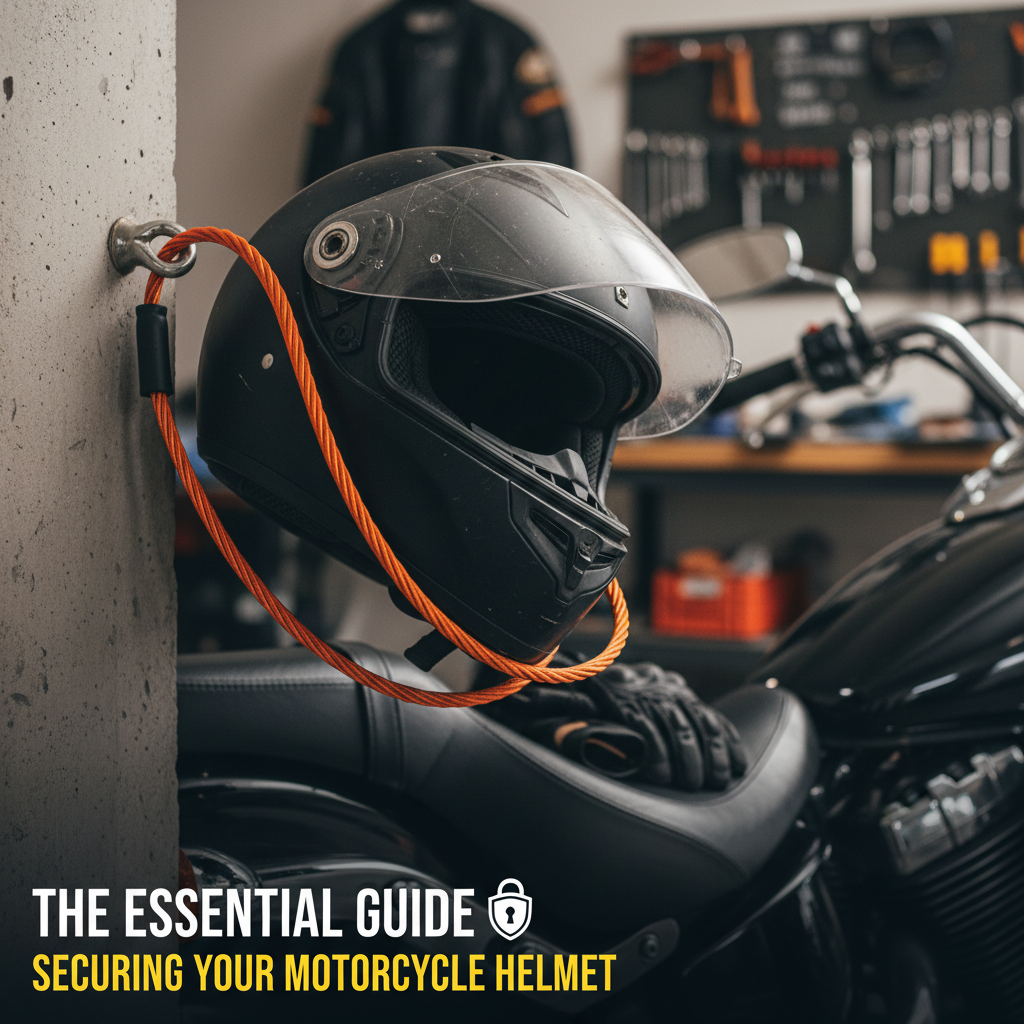
The Essential Guide to Securing Your Motorcycle Helmet
Why securing your motorcycle helmet matters (and what “secure” really means)
Securing your motorcycle helmet is defined as using a physical restraint and storage routine that prevents theft, reduces damage, and keeps the helmet ready for safe use. Because helmets are safety-critical protective gear, a stolen or compromised helmet can create both financial loss and real risk.
Motorcycle helmets commonly cost from a few hundred dollars to over $1,000 for premium models, including frequently purchased brands like Shoei, Arai, Bell, Schuberth, and AGV. Industry consensus is that helmets protect best when they are intact, properly fitted, and maintained as intended. If a helmet is stolen or stored improperly, you may end up riding with unknown history, impact exposure, or degraded materials.
Quick answers: common questions about helmet theft and safety
Is helmet theft really common? Yes. Helmets are high-value, portable items and are often stolen from parking lots, apartment storage areas, and bike racks. A secure attachment strategy is one of the most practical deterrents.
Does a lock improve safety? A lock does not replace helmet safety standards, but it helps keep your helmet in known condition. The key difference is prevention of theft and accidental damage while you are away from your bike.
What to look for in a helmet security solution
The best helmet security plan combines the right device (lock or strap) with correct attachment points and safe storage habits. Choosing based on materials, compatibility, and theft-resistance matters as much as the brand name.
Lock types: helmet locks vs. general security straps
Helmet locks are defined as purpose-built restraints designed to attach through the helmet’s structure or retention points, then connect to a fixed motorcycle element. General security straps are defined as flexible tie-down restraints intended to limit movement and deter quick grab-and-go theft.
Helmet lock advantages:
- More consistent attachment: Designed for common helmet shapes and parking workflows.
- Better deterrence: Many use hardened steel parts or armored cables that resist cutting.
- Fewer “forgotten details”: Purpose-built designs reduce the risk of attaching to removable accessories.
Helmet strap advantages:
- Portability and cost: Often cheaper and easy to carry.
- Fast to use: Useful for short stops at gas stations or convenience stores.
- Backup option: Ideal if your primary lock is missing or incompatible.
The key difference is that rigid helmet locks generally deliver higher theft resistance than soft straps, especially against cutting tools.
Materials and features that actually deter theft
Look for security components that address common attack methods: cutting, prying, and leverage. Security manufacturers frequently emphasize hardened materials and protective coverings, because those features directly counter tool-based theft attempts.
Helmet Lock Security Components and Typical Deterrence (Practical Benchmarks)
| # | Security component (what to look for) | Common attack slowed | Expected service life* | Theft deterrence |
|---|---|---|---|---|
| 1 | Hardened steel shackle/body sections | Cutting & prying | 3–6 years | ★★★★★ ★ |
| 2 | Armored/braided cable or chain-style core | Bolt cutters & rapid cutting | 2–4 years | ★★★★☆ ☆ |
| 3 | Weather-sealed locking mechanism | Corrosion-caused failure | 4–7 years | ★★★★☆ ☆ |
| 4 | Locking design that resists leverage (short anchor gap) | Twist-and-pull leverage | 2–5 years | ★★★★☆ ☆ |
| 5 | Keyed cylinder with hardened core | Quick bypass attempts | 3–6 years | ★★★☆☆ ★ |
| 6 | Combination dial with robust internal parts | Guessing/repeated attempts | 2–4 years | ★★★☆☆ ★ |
| 7 | Thin strap-only restraints (no rigid core) | Grab-and-go / quick cut | 1–2 years | ★☆☆☆☆ ★ |
- Hardened steel: Commonly used for shackle or locking body components to resist cutting and prying.
- Braided or armored cable: A thicker cable with protective braiding can slow bolt cutters and increase cutting time.
- Weather resistance: Outdoor conditions matter. Weather-resistant coatings and sealed components help prevent corrosion and failure.
- Keyless convenience vs. key control: Combination locks can be convenient, while keyed locks often allow controlled access and can be less error-prone if you only use one key system for your bike.
For many riders, the practical standard is simple: choose a lock that feels solid, resists cutting, and fits your helmet and motorcycle layout without risky improvisation.
How to choose the right helmet lock for your bike and helmet
The right helmet lock matches your helmet style and your parking habits. Compatibility and secure attachment points determine whether the lock will work in real-world conditions.
Step 1: Confirm your attachment method (and avoid weak points)
Before purchasing, identify where the lock will contact the motorcycle and where the helmet will be constrained. Avoid attaching to parts that can be removed quickly by hand, such as detachable covers or accessories that do not require tools.
When possible, anchor to fixed sections of the motorcycle frame or to an established helmet-lock mount location. If your motorcycle includes a dedicated helmet lock bracket, use it—dedicated mounting points are engineered to handle the load and remain in place.
Step 2: Match lock size to helmet geometry
Helmet locks must physically fit your helmet opening and shell shape. If the lock is too short, you may be forced to make unsafe attachments. If it is too long or bulky, it may not secure the helmet snugly, leaving gaps that a thief can exploit.
Measure your helmet’s rear opening or locking area and verify that the lock design supports common models, including full-face helmets and modular helmets.
Step 3: Decide between keyed and combination locks
The key difference is operational security and convenience. Keyed locks reduce “combination guessing” risk, while combination locks remove the problem of carrying keys.
- Keyed locks: Best for riders who already manage motorcycle keys and want a familiar workflow.
- Combination locks: Best for riders who prefer not to carry additional keys, provided you choose a lock with durable internal mechanisms.
Regardless of type, test the lock action at home and confirm that it closes firmly without pinching the helmet liner.
How to properly use a helmet lock (placement, tension, and workflow)
Proper helmet locking is defined as securing the helmet to a fixed motorcycle component with minimal movement, consistent positioning, and correct tension. A lock that is attached to an insecure part or left loose is nearly as vulnerable as having no lock at all.
Best placement: fixed motorcycle frame, not removable accessories
Always attach the lock to a secure part of the motorcycle frame or to a dedicated lock point if your model has one. Avoid attaching to removable items such as plastic covers, easily detached brackets, or small accessories that can be unbolted or popped off.
In practice, a fixed anchor point reduces leverage. Thieves often use leverage and “pull-and-twist” actions to overcome weak attachment points, so anchor choice matters.
Use the right tension: snug, not damaging
The lock should limit helmet movement without deforming the helmet shell or stressing internal padding. Over-tightening can distort liners and comfort layers, which may affect fit and comfort during a ride.
A practical rule is to secure enough that the helmet cannot swing, rotate freely, or be lifted out quickly. If you can easily wiggle it by hand, you likely need a different attachment approach.
Step-by-step: a repeatable locking routine
- Step 1: Park in a visible area when possible, preferably near building entrances or high-traffic locations.
- Step 2: Clear the helmet lock area so the helmet sits correctly without rubbing on sharp edges.
- Step 3: Attach the lock to the fixed motorcycle point first.
- Step 4: Position the helmet so the lock constrains the strongest, least breakable portion of the shell structure.
- Step 5: Close the lock fully and verify there is minimal play.
- Step 6: Keep a quick check habit: tug-test the helmet once before walking away.
Where to store your helmet when you’re not riding
Helmet storage is defined as keeping your helmet protected from theft, weather exposure, and physical impacts while maintaining its condition for safe use. The best routines reduce long-term wear, not just short-term theft risk.
Indoor storage and protected parking strategies
When feasible, store your helmet indoors. Garages, locked storage rooms, and private apartment bike cages typically reduce theft attempts compared with curbside parking.
- Best-case: Bring the helmet with you or store it in a locked indoor area.
- Second-best: Use a helmet bag plus locking to reduce visibility and protect from scratches.
- Last resort: Lock it to the bike for short stops, then upgrade storage when you return to home.
Weather protection: avoid unnecessary UV and moisture stress
Helmets can degrade over time if exposed to harsh sunlight and moisture. Many riders use helmet covers or UV-resistant covers to reduce UV exposure and help protect the shell surface.
UV resistance is particularly relevant because prolonged sunlight can affect external coatings and comfort materials. A cover is not a substitute for safe storage, but it can reduce wear in everyday parking conditions.
Airflow and liner care
A helmet is defined as a protective shell plus energy-absorbing layers and retention systems. Keeping the liner dry helps prevent odors and reduces deterioration of foam and fabric materials. After rides in rain or high humidity, allow the helmet to dry in a ventilated area before storage.
Common mistakes riders make when securing a helmet
Most helmet security failures happen due to poor placement, loose attachment, or skipping a consistent routine. Avoiding these errors improves theft deterrence immediately.
Top mistakes to avoid
- Locking to removable accessories: Wheels of fortune include quick-release mounts and detachable covers.
- Using straps that allow movement: If the helmet can be lifted or rotated easily, the deterrence is weak.
- Leaving the helmet exposed: Visibility increases theft motivation. Pair locking with bag or cover when appropriate.
- Rushing the final check: Never skip a one-second tug-test before walking away.
- Over-tightening: Prevent damage to liners and retention systems by securing without deforming the helmet.
Helmet security and safety standards: how to think about “damage”
Securing your helmet helps prevent theft and accidental harm, but safety standards focus on protecting riders during impacts. If your helmet has been impacted, damaged, or altered, it may not provide expected protection.
In many rider communities and safety guidance frameworks, a widely accepted rule is to replace helmets after a significant crash, especially when the shell or internal energy management layers may have absorbed impact energy. While exact replacement criteria can vary, the key point is that an uncertain helmet history is not a safe choice.
Conversational QA: what if my helmet was locked outside and got knocked?
Question: “If my helmet was locked on my bike and I notice a scuff or dent, should I ride with it?”
Answer: If there is evidence of shell damage, deep dents, cracks, or any uncertainty about impact severity, it is safer to inspect it thoroughly or replace it. The cost of a replacement is typically far lower than the cost of compromised head protection.
Conversational QA: should I lock a helmet bag instead of the helmet?
Question: “Would a motorcycle helmet bag alone prevent theft?”
Answer: A bag can reduce visibility and protect from scratches, but it is not designed to resist cutting or pry attacks like a purpose-built helmet lock. Use a bag as additional protection, not as the primary security method.
Practical “best practice” buying and setup checklist
A high-confidence helmet security setup is simple: choose a reputable lock, anchor it to a fixed part, use correct tension, and store indoors when you can. This checklist helps you implement those steps consistently.
- Select the correct device: Helmet lock for primary security; strap or bag as supplemental.
- Choose theft-resistant materials: Prioritize hardened steel and armored or braided cables where applicable.
- Confirm compatibility: Ensure the lock secures your specific helmet type without deforming the shell.
- Anchor correctly: Use fixed frame points or dedicated helmet lock mounts.
- Verify tightness: Tug-test for minimal movement.
- Protect from elements: Consider UV-resistant covers and dry storage practices.
Frequently asked questions about securing a motorcycle helmet
What is the most secure way to prevent motorcycle helmet theft?
The most secure approach is defined as storing the helmet indoors or secured in a locked area whenever possible. If you must lock it to the motorcycle, use a purpose-built helmet lock anchored to a fixed motorcycle frame point.
Are combination helmet locks safe enough?
Combination locks can be effective when they use durable internal mechanisms and are anchored correctly. However, a common tradeoff is that you must reliably remember the code; a keyed lock may be preferable if you want a standardized workflow.
How long is it safe to leave a helmet locked to a motorcycle?
There is no universal time guarantee, because theft risk depends on location, visibility, and opportunity. As a practical rule, treat locked-on-bike storage as temporary and move to indoor or secured storage at the next reasonable stop.
Will a helmet cover replace a lock?
No. A helmet cover is defined as a protective layer against UV, dust, and scratches, not a theft-resistant barrier. Use it for condition protection, then secure the helmet with a lock or storage system designed to resist intrusion.
Conclusion: secure your helmet like a safety routine, not an afterthought
Securing your motorcycle helmet is a disciplined routine that protects both your investment and your safety. By selecting the right helmet lock, anchoring it to a fixed frame point, and using weather-conscious storage practices, you reduce theft risk and keep your protective gear in reliable condition.
If you want a stronger setup, combine a hardened helmet lock with a helmet bag or UV-resistant cover, and prioritize indoor storage whenever you can. That combination delivers the most consistent results in real-world parking scenarios.
Frequently Asked Questions: The Essential Guide to Securing Your Motorcycle Helmet
How tight should a motorcycle helmet fit to be secure?
A secure helmet fit is snug and consistent without causing pain. It should feel firm around the head (including the sides and the back), but not so tight that it creates pressure points, numbness, or headaches.
Start by trying the helmet on with the straps fastened. With the helmet properly seated, you should have minimal head movement—ideally no more than slight shifting. Perform a “shake test”: gently move your head forward, backward, and side to side. The helmet should not wobble or slide. If it moves significantly when you shake your head, it’s likely too large or the retention system isn’t adjusted correctly.
Also check your forehead and crown: you shouldn’t feel major gaps between your head and the padding. Many helmets include removable or different thickness cheek pads/liners; using the correct liner size can improve fit and security.
If your helmet feels too tight in one area, don’t simply size down—consider trying another model or using the correct padding instead. Comfort and security are both critical for protection.
What’s the correct way to fasten and adjust a motorcycle helmet strap?
The strap should keep the helmet in place during normal riding and in a crash. To secure it correctly:
1) Buckle and position the strap properly. Make sure the strap isn’t twisted and sits flat against your chin. Fasten the buckle according to the helmet’s closure type (micrometric buckle, D-ring, or similar).
2) Adjust tightness for chin and jaw stability. The strap should be snug enough that you can’t easily pull the helmet off or create a large gap at the jaw, but it shouldn’t restrict breathing or cause discomfort.
3) Use a finger check. A common guideline is that you should be able to fit about two fingers between the strap and your chin (in the way that doesn’t leave excessive slack). If you can fit more, the helmet may be loose; if you can’t fit fingers comfortably, it may be overly tight.
4) Confirm the strap routing. The strap should not cross unevenly or ride up near your neck. The closure should sit correctly so it won’t loosen on vibration.
5) Re-check after adjustment. Once fastened, do a gentle shake test. A properly secured strap should prevent the helmet from shifting and maintain the helmet’s position.
If your helmet includes a specific manufacturer adjustment system, follow that manual closely—small differences in design can affect how the strap should be set.
What are the signs my helmet is not secure or not the right size?
Several common signs suggest your helmet isn’t secure or may be the wrong size:
Wobbling or sliding: The helmet shifts when you shake your head or when you put it on/off, indicating an overly large shell or incorrect padding/liner size.
Excessive looseness under the chin: If the strap has too much slack or the helmet lifts away from your face with movement, retention may be inadequate.
Pressure points or pain in specific areas: While snug is expected, sharp pressure points, numbness, or significant discomfort can indicate poor fit. Often, the solution is a different helmet model or correct internal padding—not just changing size.
Gaps: You can often detect gaps by feeling along the edges of the padding. Large gaps around the forehead, temples, or crown can reduce protection effectiveness.
Fogging or excessive movement during rides: If the helmet shifts, you may notice your visor alignment changes, more wind enters, or the helmet presses inconsistently—these can all point to fit issues.
Improper eyewear/visor alignment: If your goggles or eyeglasses move unexpectedly due to helmet shift, your fit may be incorrect.
When in doubt, try the helmet with the appropriate liner and ensure the strap is adjusted correctly. If it still doesn’t feel secure, consider trying another size or model.
How can I tell if the strap retention is “right” for safety?
Strap retention is “right” when the helmet is firmly stabilized against your head and cannot easily be lifted during normal motion. Practical checks include:
1) Strap tightness and chin clearance: Use the two-finger guideline (or follow your helmet manual). The strap should be snug against the chin area without causing pain or limiting breathing.
2) Helmet lift test (gentle): With the strap fastened, carefully try to lift the helmet upward using your hands. You shouldn’t be able to raise it easily. If it pops up readily, the retention may be too loose or the helmet may be oversized.
3) No strap twist: Twists can loosen the closure and allow movement. The strap should lie flat and the buckle should sit as intended.
4) Closure security: Make sure the buckle is fully engaged and properly seated. If you can pull it loose by hand without pressing the release mechanism, it isn’t secured correctly.
5) After a short ride: Re-check the strap after a few minutes. Heat and initial settling can slightly change how a strap feels. If it loosens quickly, you may need adjustment or a better strap fit.
Remember: a helmet is only as protective as its retention. If your helmet constantly slips or feels loose despite proper strap adjustment, it’s safer to replace it with the correct size and fit configuration.
How should I maintain and store my motorcycle helmet to keep it secure over time?
Helmet security depends on fit, retention components, and the condition of the materials. Use these maintenance and storage practices:
Clean gently and consistently: Use mild soap and water for the shell and manufacturer-recommended cleaners for the visor and padding. Avoid harsh chemicals that can degrade materials or weaken adhesives.
Keep the interior padding fresh: Sweat and oils can compress or break down padding over time, leading to looser fit. Allow the helmet to dry fully before storing, and follow replacement schedules for worn cheek pads, liners, or interior components.
Inspect the strap and hardware regularly: Check for fraying, stretching, cracks, or worn buckles. The retention system should move smoothly and lock firmly. If any strap parts show damage or reduced performance, replace the helmet or the affected components (following the manufacturer’s guidance).
Don’t store it in extreme conditions: Avoid leaving your helmet in direct sunlight, hot cars, or freezing environments for long periods. Heat and UV exposure can degrade polymers and straps, affecting both safety and fit.
Store it properly: Use a helmet bag or a cool, dry spot. Avoid stacking heavy items on top of it. If you use a wall hook or rack, ensure the helmet rests without compressing the padding.
Replace after a significant impact: Even if a helmet looks fine, internal structures may be compromised. If your helmet has been in a crash, impact, or dropped from a height, replace it as recommended by safety authorities and manufacturers.
By maintaining the helmet and monitoring fit over time, you’ll keep the retention system performing the way it was designed.
References
- Google Scholar: Motorcycle Helmet Fit and Sizing Studies Google Scholar
https://scholar.google.com/scholar?q=motorcycle+helmet+fit+sizing - Google Scholar: Motorcycle Helmet Effectiveness for Preventing Head Injury Google Scholar
https://scholar.google.com/scholar?q=motorcycle+helmet+effectiveness+head+injury - PubMed: Studies on Motorcycle Helmet Chin Strap and Fit Google Scholar
https://pubmed.ncbi.nlm.nih.gov/?term=motorcycle+helmet+chin+strap+fit - NHTSA Consumer Information: Motorcycle Helmets
https://www.nhtsa.gov/motor-vehicles/consumer-information/motorcycle-helmets - CDC: Motorcycles and Mopeds Safety (including helmet use)
https://www.cdc.gov/motorvehiclesafety/motorcycles/index.html - WHO Fact Sheet: Road Traffic Injuries (helmet and risk reduction)
https://www.who.int/news-room/fact-sheets/detail/road-traffic-injuries - Wikipedia: Motorcycle Helmet
https://en.wikipedia.org/wiki/Motorcycle_helmet - Encyclopaedia Britannica: Helmet (protective headgear)
https://www.britannica.com/technology/helmet
📅 Last Updated: July 06, 2026 | Topic: The Essential Guide to Securing Your Motorcycle Helmet | Content verified for accuracy and freshness.