Best Motorcycle Helmets for Long Rides
Choosing the best motorcycle helmet for long rides is essential for your safety and comfort. Look for helmets with high-quality padding, effective ventilation, and lightweight materials. Certifications like DOT and ECE guarantee safety, while features like noise reduction and Bluetooth connectivity enhance your riding experience. Confirm the helmet fits snugly without pressure points. Selecting the right helmet can make a significant difference on long journeys, and you’ll find even more insights on what to prioritize next.
Importance of Choosing the Right Helmet for Long Rides
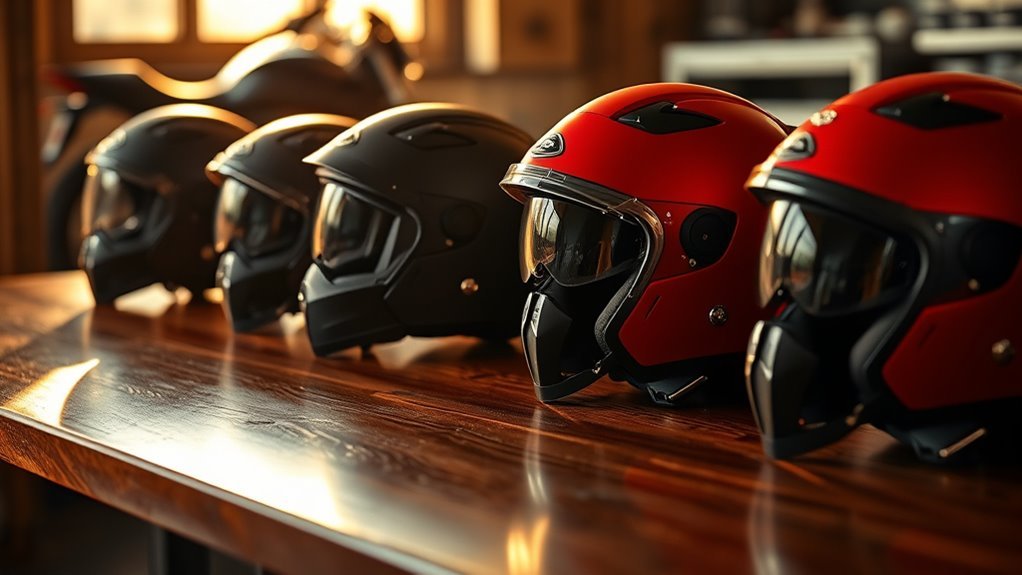
When you’re gearing up for a long ride, choosing the right helmet isn’t just a matter of style; it’s vital for your safety and comfort. Helmet certifications play a significant role in this decision. They guarantee that the helmet meets rigorous safety standards, giving you peace of mind as you hit the open road. Different riders have varying preferences, and it’s important to take into account factors like fit, weight, and ventilation. A well-fitted helmet can reduce fatigue and enhance your overall riding experience. You’ll want to balance protection with personal comfort to truly enjoy the freedom of long-distance journeys. Ultimately, investing in a quality helmet tailored to your needs can make all the difference in your ride’s safety and enjoyment.
Features to Look for in Long-Distance Motorcycle Helmets
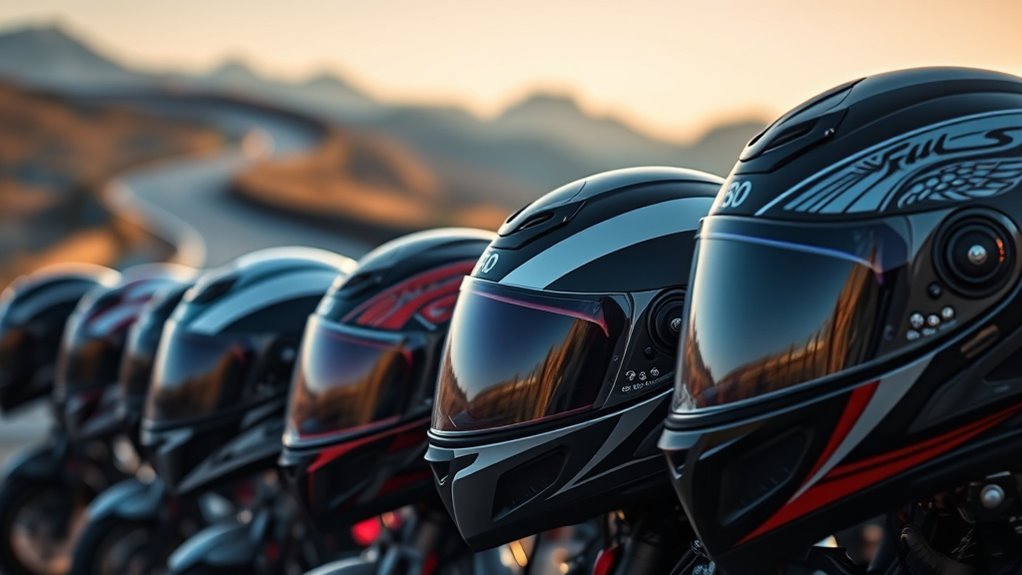
Choosing the right features in a long-distance motorcycle helmet can greatly impact your comfort and safety on the road. Start by considering padding options; high-quality, plush padding can make a big difference during long hours of riding, reducing fatigue and enhancing comfort. Look for helmets with removable and washable liners to maintain hygiene over time. Additionally, visor types play an essential role in your ride. Opt for helmets with anti-fog and UV protection visors, as they improve visibility under various conditions, allowing you to focus on the journey ahead. Some helmets even offer interchangeable visors for versatility. By prioritizing these features, you’ll guarantee your long rides are both enjoyable and safe, giving you the freedom to explore the open road.
Top 5 Motorcycle Helmets for Comfort and Safety
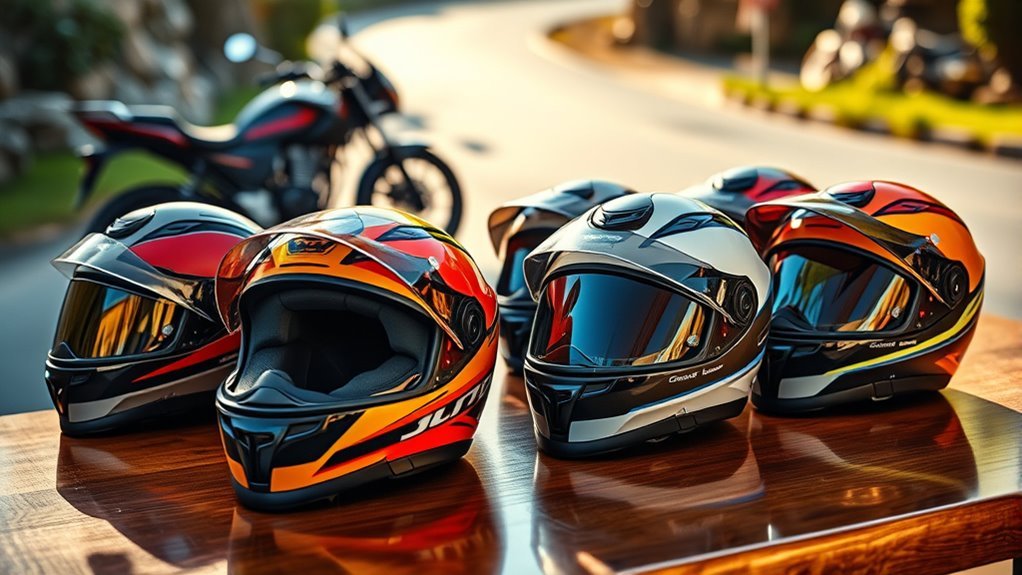
When choosing a motorcycle helmet for long rides, understanding safety ratings is essential for your protection. You’ll also want to take into account comfort features that enhance your riding experience, along with the helmet’s weight and aerodynamics for better handling at high speeds. Let’s explore the top five helmets that balance comfort and safety effectively.
Safety Ratings Explained
Although many riders prioritize style and price, understanding safety ratings is essential for ensuring both comfort and protection during long rides. Helmets are evaluated against specific safety standards, such as DOT (Department of Transportation) and ECE (Economic Commission for Europe). These ratings indicate that a helmet has passed rigorous testing criteria, including impact resistance, penetration resistance, and retention system performance. A higher safety rating means better protection in the event of an accident, which is vital when you’re on the open road. As you choose your helmet, consider these ratings carefully. They not only reflect the helmet’s ability to protect your head but also enhance your peace of mind, allowing you to ride freely and confidently.
Comfort Features Overview
Safety ratings are just one aspect of selecting the right helmet for long rides; comfort features play a significant role as well. You want a helmet that feels good during hours on the road. Here are key comfort features to take into account:
- Padding Materials: High-quality padding reduces pressure points and enhances comfort.
- Adjustable Liners: Customize the fit to your head shape for improved stability and comfort.
- Ventilation: Adequate airflow prevents overheating, keeping you cool during long trips.
- Weight Distribution: A well-balanced helmet minimizes neck strain, allowing you to ride longer without discomfort.
Weight and Aerodynamics
While comfort features are essential, the weight and aerodynamics of a helmet can greatly impact your riding experience, especially on long journeys. Lighter helmets made from advanced helmet materials, like carbon fiber or fiberglass, reduce fatigue, allowing you to ride longer without discomfort. When it comes to aerodynamics, helmets designed with streamlined, aerodynamic shapes minimize wind resistance, enhancing stability at high speeds. This is vital for maintaining control during extended rides. A helmet that balances lightweight construction with aerodynamic efficiency not only contributes to your comfort but also boosts safety by reducing the strain on your neck and ensuring a snug fit. So, when choosing your helmet, consider how these factors can elevate your freedom on the open road.
Lightweight Designs for Extended Riding
When you’re planning long rides, the weight of your helmet can greatly impact your comfort and endurance. It’s crucial to contemplate how weight balance and the materials used in lightweight helmets affect your riding experience. Additionally, incorporating comfort features can further enhance your journey, making those extended hours on the road more enjoyable.
Importance of Weight Balance
As you commence on long rides, the weight balance of your motorcycle helmet becomes essential for comfort and endurance. A well-balanced helmet guarantees ideal weight distribution, enhancing helmet stability and reducing fatigue during your journey. Here are key aspects to take into account:
- Weight Distribution: A helmet that evenly spreads weight minimizes pressure points.
- Center of Gravity: Proper design keeps the helmet aligned with your head, promoting stability.
- Padding Quality: High-quality padding can absorb shock and improve comfort over time.
- Ventilation: Good airflow helps manage heat, preventing discomfort on long rides.
Choosing a lightweight helmet with excellent weight balance not only enhances your riding experience but also allows you to focus on the freedom of the open road.
Materials for Lightweight Helmets
A lightweight helmet greatly enhances comfort on long rides, allowing you to focus on the journey ahead. When choosing a helmet, consider materials like carbon fiber and polycarbonate blends. Carbon fiber helmets are known for their exceptional strength-to-weight ratio, offering superior protection without the added bulk. They’re ideal for those who crave freedom and agility on the open road. On the other hand, polycarbonate blends provide a more budget-friendly option while still maintaining a lightweight design. These helmets can effectively absorb impact, ensuring safety without compromising comfort. Ultimately, selecting the right material can profoundly impact your riding experience, letting you enjoy the ride without feeling weighed down. Choose wisely and embrace the freedom of the road.
Comfort Features to Consider
While comfort may seem subjective, certain features can greatly enhance your riding experience during long journeys. Lightweight helmets are essential, but you should also consider these comfort features:
- Padding Materials: High-quality padding can considerably reduce pressure points, making long rides more enjoyable.
- Moisture Wicking Liners: These help manage sweat, keeping your head dry and comfortable, especially during warmer rides.
- Ventilation Systems: Proper airflow prevents overheating, ensuring you stay cool over long distances.
- Adjustable Fit: A customizable fit allows for a snug yet comfortable wear, reducing fatigue during extended trips.
Investing in these features will elevate your riding experience, giving you the freedom to enjoy the open road without discomfort.
Advanced Ventilation Systems for Optimal Comfort
When it comes to long rides, having an advanced ventilation system in your motorcycle helmet can greatly enhance your comfort and overall experience. Effective ventilation technology is key; it helps maintain a steady flow of air, preventing you from overheating during those extended journeys. Look for helmets with multiple intake and exhaust vents that promote ideal airflow management, allowing hot air to escape while cool air enters. This balance keeps you refreshed and focused on the ride ahead, rather than distracted by discomfort. Additionally, helmets with adjustable vents let you customize airflow based on changing weather conditions, ensuring you’re always in control of your comfort. Ultimately, an advanced ventilation system can make a significant difference in your riding pleasure.
Noise Reduction and Communication Systems
Effective noise reduction is essential for long rides, as it allows you to focus on the road and enjoy the journey without distractions. When choosing a helmet, consider these features:
Effective noise reduction is vital for long rides, ensuring you stay focused and free from distractions on your journey.
- Noise Cancelling Technology: Helmets with advanced noise reduction materials can greatly lower wind and engine noise.
- Bluetooth Connectivity: This feature lets you connect to your phone, so you can enjoy music or take calls without compromising safety.
- Aerodynamic Design: A well-designed helmet minimizes wind resistance, reducing noise levels during your ride.
- Comfort Padding: High-quality padding not only enhances comfort but also contributes to sound insulation.
Investing in a helmet with these features enhances your riding experience, allowing you to embrace the freedom of the open road.
How to Properly Fit Your Motorcycle Helmet
A properly fitted motorcycle helmet is essential for both safety and comfort during long rides. Start by determining your helmet size; measure the circumference of your head just above your eyebrows. Consult the manufacturer’s sizing chart to find your match. When you try on the helmet, verify it fits snugly without pressure points. The helmet shouldn’t shift when you move your head. Next, focus on strap adjustment. The chin strap should be tight enough to prevent movement but comfortable enough for long wear. You should be able to fit two fingers beneath it. Finally, try shaking your head; if the helmet stays in place, you’ve got a good fit. Enjoy your ride, knowing you’re protected and comfortable!
Frequently Asked Questions
What Is the Average Lifespan of a Motorcycle Helmet?
The average lifespan of a motorcycle helmet is about 5 to 7 years, though it can vary based on usage and helmet durability. Over time, materials can degrade, compromising safety standards. If you ride often, inspect your helmet regularly for signs of wear and tear, like cracks or a damaged interior. Remember, your helmet’s primary function is to protect you, so don’t hesitate to replace it when it no longer meets those standards.
How Often Should I Replace My Motorcycle Helmet?
You should replace your motorcycle helmet every 3 to 5 years, even if it appears undamaged. Helmet replacement guidelines emphasize that materials degrade over time, affecting safety. Regularly check for any signs of wear or damage, and always guarantee your helmet meets current safety standards. If you’ve been in an accident, replace it immediately, regardless of visible damage. Prioritizing safety means embracing the freedom of the open road with confidence in your gear.
Can I Use a Motorcycle Helmet for Other Activities?
You can use a motorcycle helmet for other activities, but it’s important to take into account motorcycle helmet safety. While they’re designed for high-impact protection on the road, they might not meet safety standards for sports like cycling or skating. Alternative helmet uses can be tempting, but using the right helmet for each activity is essential. Always check if the helmet meets specific safety certifications to guarantee your protection during various adventures.
Are There Specific Helmets for Different Riding Styles?
Yes, there are specific helmets designed for different riding styles. If you’re carving through twisty roads on a sportbike, you’ll want a lightweight helmet with aerodynamic features. Cruisers often benefit from open-face helmets for that wind-in-your-hair feeling. Off-road riding demands helmets with more ventilation and visors. Each helmet’s unique features cater to your riding style, ensuring you have the protection you need while enjoying the freedom that comes with the open road.
How Do I Clean and Maintain My Motorcycle Helmet?
To clean and maintain your motorcycle helmet, start with gentle helmet cleaning techniques. Use mild soap and warm water for the outer shell, avoiding harsh chemicals. For the visor, a microfiber cloth works best to prevent scratches. Regularly inspect the interior for odors—consider removing and washing the liner if it’s removable. Finally, store your helmet in a cool, dry place to maintain its integrity. These helmet maintenance tips guarantee your ride feels free and safe.
References
- https://en.wikipedia.org/wiki/Motorcycle_helmet
- https://www.nhtsa.gov/motorcycle-safety/helmet-safety
- https://www.cdc.gov/motorvehiclesafety/motorcycle/index.html
- https://www.iihs.org/topics/motorcycles
- https://www.ama-cycle.org/
- https://www.ncbi.nlm.nih.gov/pmc/articles/PMC5786863/
- https://www.rideapart.com/news/559048/best-motorcycle-helmets/
- https://www.helmets.org/