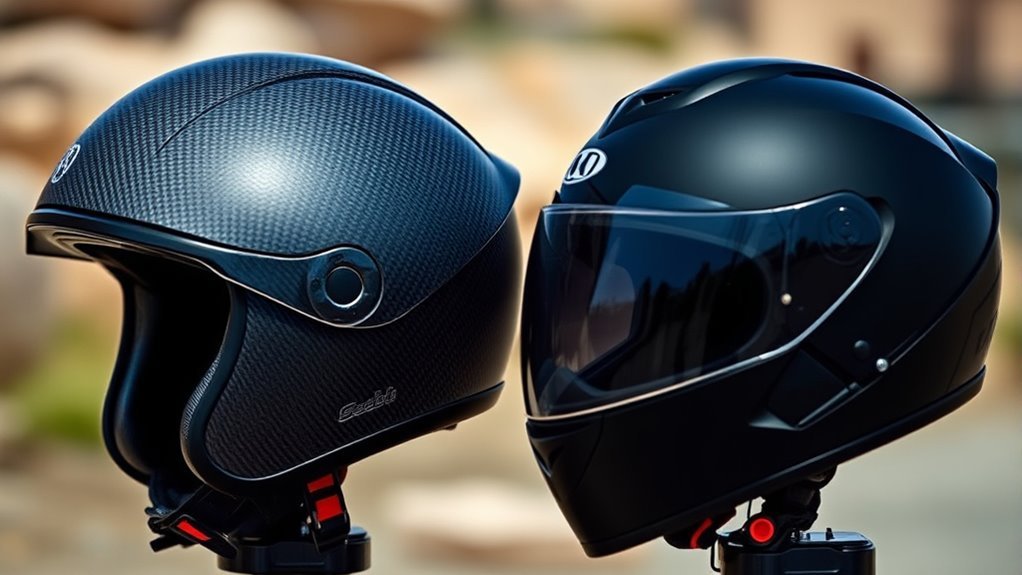
Lightweight Helmet Materials: Carbon Fiber vs. Polycarbonate
When considering lightweight helmet materials, carbon fiber offers superior strength-to-weight ratio and enhanced impact resistance. It’s ideal for high-speed enthusiasts, although it can be more expensive and challenging to repair. On the other hand, polycarbonate provides adequate protection at a more budget-friendly price, but it may be prone to scratches and can feel heavier. Weighing the advantages and disadvantages of each material will help you make an informed choice based on your needs and preferences. More insights await.
Overview of Carbon Fiber Helmets
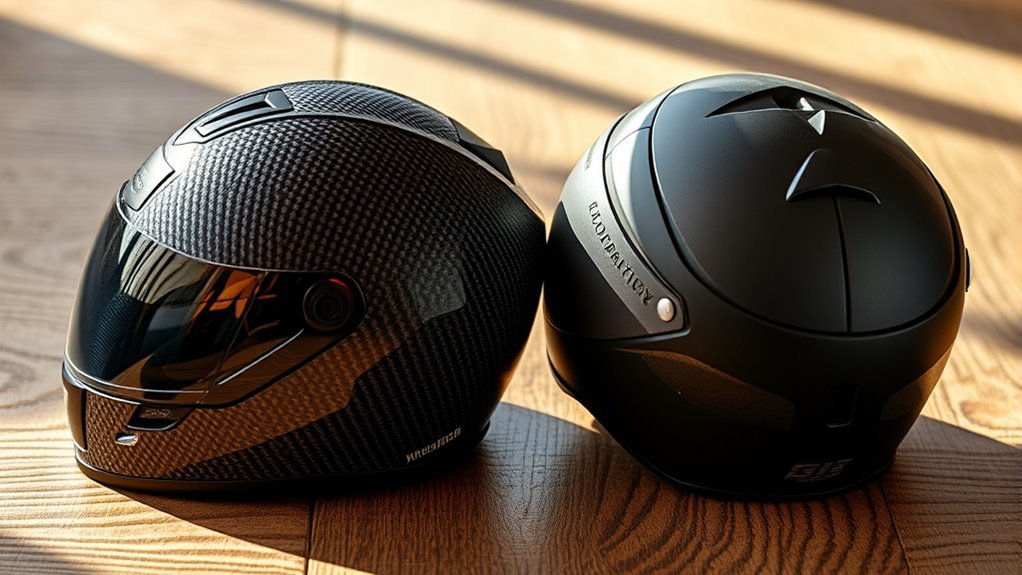
When it comes to advanced helmet technology, carbon fiber stands out for its exceptional strength-to-weight ratio. This material is produced through carbon fiber manufacturing processes that involve weaving carbon strands into a lightweight, yet incredibly durable structure. Such properties allow for helmets that not only provide superior protection but also enhance comfort during extended wear. Additionally, carbon fiber helmets are designed to meet stringent helmet safety standards, ensuring that they effectively absorb impact forces. The fusion of lightweight construction with high safety performance offers you the freedom to pursue your activities with confidence. As you explore options, understanding the advanced capabilities of carbon fiber will empower your choice in protective gear, aligning safety with your desire for mobility.
Advantages of Carbon Fiber

When considering helmet materials, carbon fiber stands out due to its superior strength-to-weight ratio, providing robust protection without added bulk. Its enhanced impact resistance further guarantees safety during high-risk activities. Additionally, you can benefit from aesthetic customization options, allowing for a personalized look without compromising performance.
Superior Strength-to-Weight Ratio
Carbon fiber boasts a remarkable strength-to-weight ratio, making it an ideal material for lightweight helmets. In strength comparisons, carbon fiber considerably outperforms polycarbonate, offering superior rigidity without the added weight. This weight optimization is essential for those who seek agility and comfort during high-intensity activities. When you wear a carbon fiber helmet, you’re not just reducing fatigue; you’re also enhancing your performance by minimizing bulk. The lightweight structure allows for better maneuverability and less strain on your neck and shoulders. This is especially important for athletes and enthusiasts who value freedom of movement. Ultimately, the exceptional strength-to-weight ratio of carbon fiber makes it a top choice, ensuring you stay protected without sacrificing performance or comfort.
Enhanced Impact Resistance
While many materials provide some level of impact resistance, carbon fiber stands out for its ability to absorb and dissipate energy during collisions. This unique property enhances safety in helmet design, allowing it to effectively manage energy dispersal upon impact. When you wear a carbon fiber helmet, the material’s structure deforms strategically, optimizing impact absorption and reducing the risk of injury. Unlike polycarbonate, which can crack under severe stress, carbon fiber maintains its integrity, offering a superior protective barrier. This resilience translates into a lightweight yet robust design, providing freedom of movement without compromising safety. Choosing carbon fiber means you’re investing in advanced technology that prioritizes your protection while allowing you to pursue your passions with confidence.
Aesthetic Customization Options
The advanced properties of carbon fiber extend beyond impact resistance to include significant aesthetic customization options. When you choose a carbon fiber helmet, you’re not just opting for safety; you’re embracing unique custom design options that reflect your personal style. The material’s versatility allows for an array of color variations that can be tailored to your preferences, enabling you to stand out while ensuring protection. Unlike polycarbonate, which typically offers limited aesthetic choices, carbon fiber can be molded into intricate shapes and finishes. This means you can achieve a helmet that’s not only lightweight and durable but also a true expression of your individuality. Ultimately, carbon fiber helmets empower you to combine safety with personalized aesthetics seamlessly.
Disadvantages of Carbon Fiber
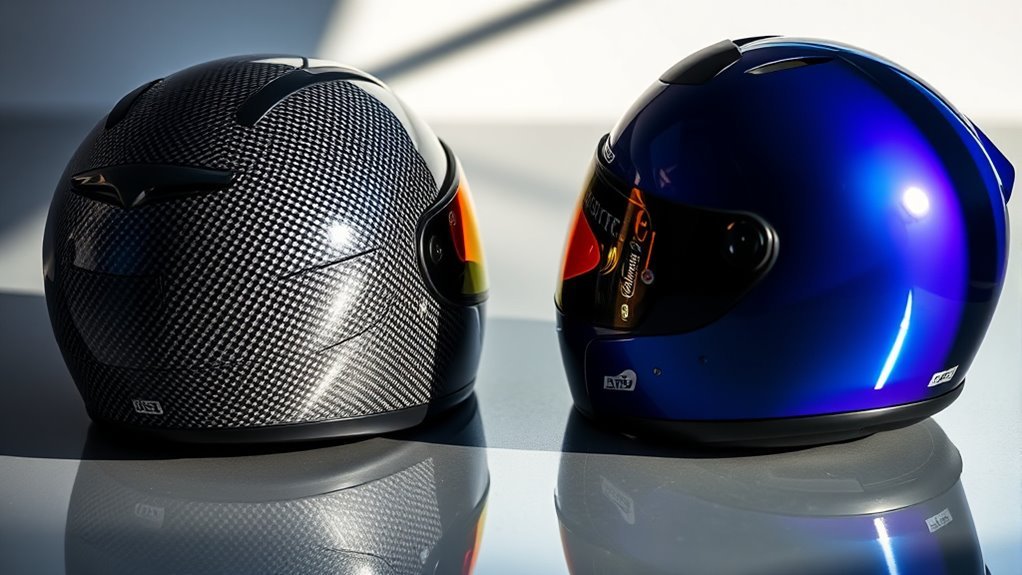
Although carbon fiber is often lauded for its strength and lightweight properties, it does come with notable disadvantages that can impact its practicality in helmet manufacturing. One major concern is carbon fiber brittleness; while the material is strong, it can fracture under extreme impact conditions, compromising safety. Additionally, the repair challenges associated with carbon fiber helmets can be significant. Unlike polycarbonate, which can often be patched easily, repairing a carbon fiber helmet typically requires specialized techniques and materials, making it less user-friendly. This can lead to increased costs and downtime, which might deter those seeking a quick solution. Ultimately, while carbon fiber offers advantages, these disadvantages must be carefully considered when evaluating helmet options.
Overview of Polycarbonate Helmets
Polycarbonate helmets are known for their unique material properties, which include a high strength-to-weight ratio. You’ll find that their impact resistance features are designed to absorb energy during collisions, enhancing safety. Additionally, comparing weight and comfort levels reveals that polycarbonate helmets often provide a balance between protection and wearability.
Material Properties Explained
When considering helmet materials, polycarbonate stands out due to its impressive combination of strength and lightweight properties. This engineering marvel offers several advantages that cater to your needs:
- Material Flexibility: Polycarbonate’s inherent flexibility allows for better energy absorption during impacts, enhancing comfort without compromising safety.
- Thermal Conductivity: It has good thermal conductivity, which helps regulate temperature, keeping your head cool during intense activities.
- Lightweight Design: Weighing considerably less than many alternatives, polycarbonate helmets reduce fatigue over long periods of wear.
In essence, polycarbonate delivers a harmonious blend of robust performance and user comfort, making it a favored choice for those who value both safety and freedom in their pursuits.
Impact Resistance Features
The impact resistance of polycarbonate helmets is one of their defining characteristics, making them highly effective in protecting against various types of forces encountered during activities such as cycling, skiing, or motor sports. Polycarbonate’s exceptional impact absorption qualities stem from its inherent material flexibility, allowing it to deform upon impact and dissipate energy more efficiently than rigid materials. This flexibility greatly reduces the risk of injury by minimizing the forces transmitted to your head during an accident. Additionally, polycarbonate helmets are often designed with specific internal structures that enhance their ability to absorb shocks while maintaining structural integrity. Overall, these features make polycarbonate helmets a reliable choice for those seeking both safety and freedom in their pursuits.
Weight and Comfort Comparison
Many riders appreciate the lightweight nature of polycarbonate helmets, which enhances comfort during extended wear. These helmets provide excellent weight distribution, ensuring you won’t feel undue pressure on specific areas of your head. When considering comfort features, polycarbonate helmets often include:
- Ventilation Systems: Effective airflow keeps you cool on long rides.
- Moisture-Wicking Liners: These materials help manage sweat, improving your overall experience.
- Adjustable Fit Systems: Personalizing the fit allows for a snug, comfortable ride.
With these attributes, polycarbonate helmets stand out as practical choices, especially for those who value both freedom and comfort on the road. Ultimately, you’ll find that these helmets offer a balanced combination of lightweight protection and wearability, making them ideal for any adventure.
Advantages of Polycarbonate
Polycarbonate helmets offer several distinct advantages that make them a popular choice among users. One of the primary Polycarbonate benefits is their impressive impact resistance; they can absorb considerable force, enhancing your safety features during high-risk activities. This material is also lightweight, which means you won’t feel weighed down while wearing it, allowing for greater freedom of movement. Additionally, polycarbonate helmets are more affordable compared to alternatives like carbon fiber, making them accessible without sacrificing quality. Their ability to withstand extreme temperatures adds another layer of durability, ensuring they perform well in various environments. With excellent optical clarity, you’ll enjoy a broader field of view, essential for awareness in dynamic situations. Choosing a polycarbonate helmet means prioritizing safety without compromising comfort.
Disadvantages of Polycarbonate
While polycarbonate helmets provide numerous benefits, they also come with notable disadvantages that users should consider. Here are three critical concerns:
- Polycarbonate Durability Issues: Over time, polycarbonate can become prone to scratches and cracks, reducing its protective capabilities.
- Polycarbonate Weight Concerns: Compared to other lightweight materials, polycarbonate helmets tend to be heavier, which can lead to discomfort during extended wear.
- UV Sensitivity: Exposure to sunlight can degrade polycarbonate, affecting both its structural integrity and appearance.
These factors can impact your riding experience, especially if you prioritize long-term safety and comfort. Always weigh the pros and cons before making your helmet choice to guarantee it aligns with your freedom-seeking lifestyle.
Comparison of Weight and Durability
When evaluating helmet materials, weight and durability play critical roles in ensuring rider safety and comfort. Carbon fiber helmets offer superior weight distribution, making them lightweight yet robust, which enhances comfort during extended rides. Their long-term durability is exceptional, resisting wear and maintaining structural integrity under stress. In contrast, polycarbonate helmets, though generally heavier, provide decent protection but can suffer from scratches and impacts over time, leading to reduced lifespan. While they may be cost-effective, their weight and diminished long-term durability can detract from the overall riding experience. For those seeking both freedom and safety, carbon fiber emerges as the preferred choice, balancing lightweight performance with unmatched resilience, allowing you to ride with confidence.
Cost Considerations
Many riders find that cost is a significant factor when choosing between helmet materials. Conducting a thorough cost analysis can help you make an informed decision. Here are three points to take into account:
- Carbon Fiber Cost: Generally, carbon fiber helmets are more expensive due to their advanced manufacturing processes and superior performance features.
- Polycarbonate Budget Options: Polycarbonate helmets offer affordability while still providing essential protection, making them suitable for riders on a tighter budget.
- Long-Term Investment: While carbon fiber may have a higher upfront cost, its durability could save you money in the long run, reducing the need for frequent replacements.
Understanding these factors guarantees you’re making a choice that aligns with both your safety needs and financial goals.
Choosing the Right Helmet for Your Needs
How do you determine which helmet material best suits your riding style and safety requirements? First, assess your priorities regarding helmet safety and user preferences. Carbon fiber offers superior impact resistance and lightweight comfort, ideal for high-speed enthusiasts. Polycarbonate, while heavier, provides excellent affordability and adequate protection for casual riders. Here’s a quick comparison:
| Material | Weight | Cost |
|---|---|---|
| Carbon Fiber | Lightweight | High |
| Polycarbonate | Heavier | Moderate |
| Safety Rating | High | Moderate |
Consider your riding conditions, frequency, and budget. Ultimately, the right helmet should align with your values of freedom and protection, ensuring both enjoyment and safety on every ride.
Frequently Asked Questions
How Do I Properly Care for My Helmet Materials?
To properly care for your helmet, follow these helmet maintenance tips: regularly inspect for cracks or wear, and clean using a mild soap solution with a soft cloth. Avoid harsh chemicals that could damage the materials. For ventilation areas, use a brush to remove debris. Make certain you store it in a cool, dry place, away from direct sunlight. These cleaning techniques will help prolong your helmet’s life, guaranteeing your freedom and safety on the road.
Can Carbon Fiber Helmets Be Repaired if Damaged?
Absolutely, carbon fiber helmets can be repaired, but it requires careful damage assessment. You’ll want to guarantee the integrity of the material before considering repair techniques. Minor scratches or surface damage might be easily fixed, while structural issues could necessitate expert intervention. It’s essential to weigh the cost and effectiveness of repairs against the benefits of investing in a new helmet, as safety should always come first in your pursuit of freedom.
Are There Any Certifications for Lightweight Helmets?
Yes, there are certifications for lightweight helmets. You’ll want to look for compliance with helmet safety standards set by certification agencies like the DOT, ECE, and Snell. These standards guarantee that the helmets undergo rigorous testing for impact resistance, penetration, and retention system effectiveness. By choosing a certified helmet, you’re prioritizing your safety while enjoying the freedom of riding, knowing that it meets stringent criteria designed to protect you in the event of an accident.
How Do Weather Conditions Affect Helmet Performance?
When it comes to helmets, weather can be a double-edged sword. Temperature effects greatly influence the materials’ impact factors. Cold conditions can make some materials more brittle, increasing the risk of failure on impact. Conversely, extreme heat can compromise structural integrity, leading to deformation. Additionally, moisture can affect grip and performance. Staying aware of these conditions guarantees you’re protected and ready, no matter what Mother Nature throws your way.
What Is the Lifespan of Carbon Fiber Versus Polycarbonate Helmets?
When you compare the lifespan of carbon fiber and polycarbonate helmets, carbon fiber typically outlasts polycarbonate due to its superior material durability. While polycarbonate can last around 3-5 years, carbon fiber helmets may maintain structural integrity for over a decade with proper care. However, factors like usage and environmental exposure can affect longevity. You’ll want to contemplate these aspects when choosing a helmet that aligns with your freedom and adventure needs.
References
- https://en.wikipedia.org/wiki/Carbon_fiber
- https://en.wikipedia.org/wiki/Polycarbonate
- https://www.ncbi.nlm.nih.gov/pmc/articles/PMC8236678/
- https://www.sciencedirect.com/science/article/abs/pii/S0261306919307443
- https://www.tandfonline.com/doi/full/10.1080/15567036.2019.1672388
- https://www.nhtsa.gov/equipment/helmet-safety
- https://www.helmets.org/
- https://www.isea.org/
- https://www.ansi.org/
- https://www.cpsc.gov/