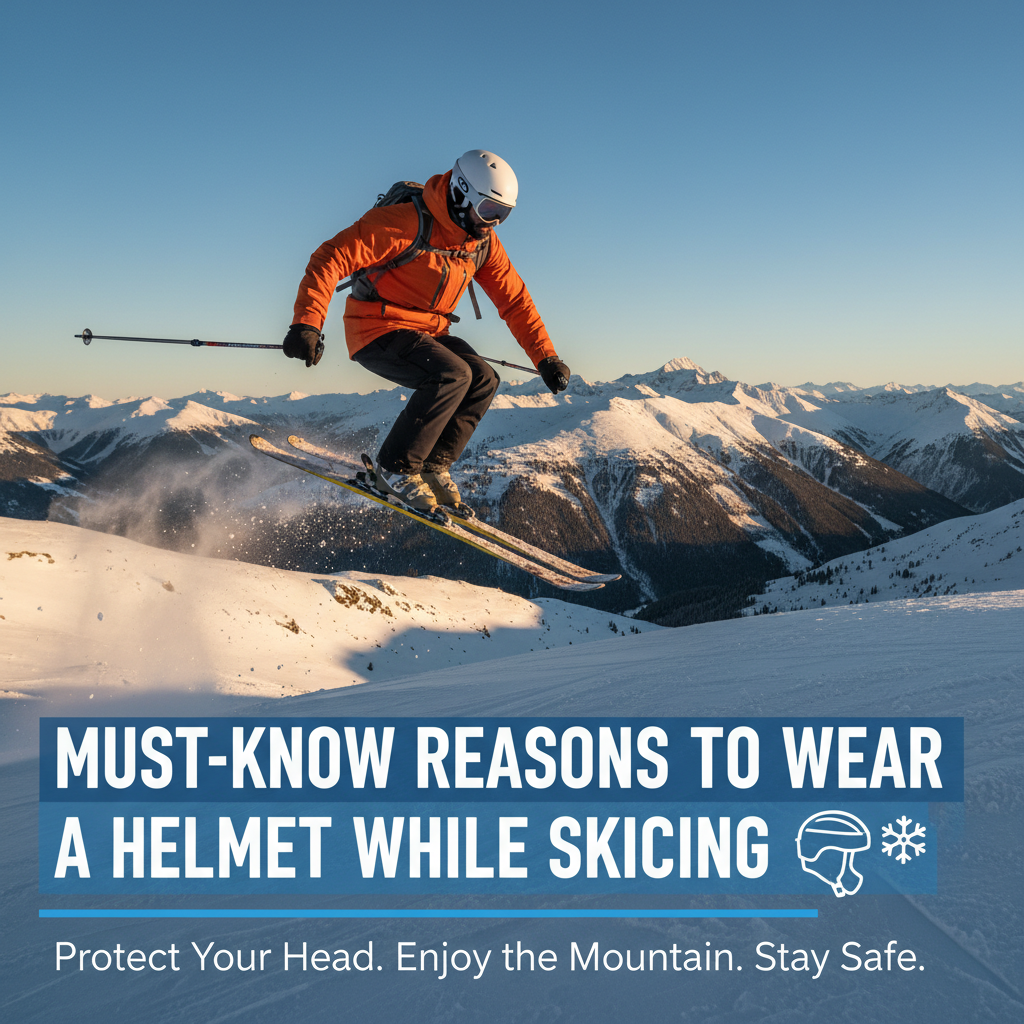
Must-Know Reasons to Wear a Helmet While Skiing
Wearing a helmet while skiing is one of the most effective ways to reduce the risk of serious head injury
A ski helmet is defined as a protective headgear designed to absorb impact, manage rotational forces, and help reduce the severity of injuries from falls and collisions. The key difference is that modern ski helmets are engineered specifically for snow sports impacts, not general-purpose head protection.
How ski helmets reduce head injury risk in real-world crashes
Helmets significantly improve survival odds and reduce the likelihood of catastrophic outcomes during high-energy skiing accidents. The key difference is that helmets help distribute and dissipate force, which can lower the severity of traumatic brain injury (TBI), including concussion.
Across sports medicine and injury prevention research, helmets are widely recognized for lowering head injury risk because they act as a crash-absorbing barrier. While no helmet eliminates all risk, widely cited findings indicate that helmets can reduce the risk of serious head injuries by up to about 60% in some skiing and snow-sport injury contexts.
In practical terms, skiing incidents frequently involve:
- Falls where the head impacts snow, ice, or packed terrain
- Collisions with other skiers and snowboarders
- Unexpected contact with stationary objects such as trees, poles, or lift infrastructure
- High-speed wipeouts on groomed runs or off-piste terrain
A ski helmet is designed to reduce both the direct impact energy and the secondary consequences of impact events. This matters because head injuries can range from concussion to skull fracture, and the long-term effects can be life-changing.
What makes skiing different from other sports when it comes to head impacts
Skiing presents unique risk factors due to speed, snow conditions, and changing visibility. The key difference is that a skier’s environment is dynamic, so an unexpected fall or contact can occur at any time, even for experienced riders.
According to the National Ski Areas Association (NSAA), skier visits reached more than 44 million in 2022. With millions of daily descents across resorts, even a small injury rate translates into a significant number of head-impact incidents across seasons.
Common mechanisms that raise the stakes for head safety include:
- Groomed-run speed increases the impact energy during a fall
- Visibility changes from weather, snow spray, and terrain contours
- Hard snow and ice increase slip risk and abrupt stops
- “Run-out” terrain and obstacles appear suddenly at the bottom of turns
7 Helmet Standards & Technologies Skiers Commonly Rely On (What They’re For)
| # | Standard / Technology | Primary protection target | Common use in ski helmets | Evidence/engineering confidence |
|---|---|---|---|---|
| 1 | MIPS (Multi-directional Impact Protection System) | Rotational-force management | Widely adopted across premium alpine helmets | ★★★★★ |
| 2 | EPS (Expanded Polystyrene) | Linear impact energy absorption | Standard foam layer in most ski helmets | ★★★★☆ |
| 3 | CE EN 1077 (Alpine ski helmets) | Impact performance under ski-helmet test conditions | Common in EU and many international models | ★★★★★ |
| 4 | ASTM F2040 (snow sports helmets) | Helmet impact & retention performance for snow sports | Common standard on US-market ski helmets | ★★★★★ |
| 5 | AS/NZS 2063 (helmet performance for snow sports) | Impact performance requirements used in relevant regions | More common in Australia/New Zealand helmet listings | ★★★☆☆ |
| 6 | Retention system (chin strap & fit webbing) | Keeps helmet correctly positioned during impacts | Required/validated as part of many certification test protocols | ★★★★☆ |
| 7 | Rotational management liner systems (non-MIPS variants) | Twist-reduction via designed interfaces | Often appears as brand-specific rotational layers in ski helmets | ★★★☆☆ |
Because skiing combines speed and downhill motion, the margin for error is small. That is why safety experts treat helmet use as foundational equipment rather than optional gear.
Expert consensus: who recommends helmets and what the guidance means
Major pediatric and safety organizations recommend helmets for skiers and snowboarders because they reduce the chance and severity of head injuries. The key difference is that these recommendations apply broadly, regardless of skill level.
The American Academy of Pediatrics (AAP) recommends that children and adolescents wear helmets while skiing and snowboarding. Many pediatric and sports safety programs expand this guidance to include adults as well, reflecting consistent consensus across medical and injury prevention circles.
Professional athletes frequently echo these safety messages. For example, Olympic skier Lindsey Vonn has publicly discussed how helmet use contributed to preventing a potentially severe injury during competitive conditions. While elite stories are not the same as clinical trials, they reinforce a practical reality: impact protection matters at every level.
Do ski instructors and resorts support helmet policies?
Yes. Many ski schools and instructors encourage helmet use because it improves baseline protection for learning environments and reduces injury severity when falls happen. The key difference is that beginners typically fall more often, and their head protection should be consistent from the start.
Several resorts also adopt helmet-friendly policies because it supports safer instruction and predictable risk management across family groups and youth programs.
MIPS, EPS foam, and certification standards: what to look for in a modern helmet
Not all helmets protect the same way, so it helps to buy a helmet built for skiing and meeting recognized safety standards. The key difference is that a ski helmet’s design features, including impact-absorbing materials and energy-management systems, determine how effectively it handles crash forces.
When shopping, you will often see features and standards tied to injury reduction:
- MIPS (Multi-directional Impact Protection System) is defined as a technology designed to help manage rotational forces during certain impacts.
- EPS (Expanded Polystyrene) is defined as the foam layer used to absorb and reduce impact energy.
- CE EN 1077 is a widely recognized European ski helmet safety standard that many ski helmets are designed to meet.
- ASTM F2040 is a common testing standard in the United States for snow sports helmets.
If you see a helmet labeled for skiing or snowboarding and it indicates compliance with relevant standards such as CE EN 1077 and/or ASTM F2040, that is a strong trust signal that the helmet was evaluated for snow sports impact conditions.
Is a helmet with MIPS always necessary?
A helmet with MIPS is not a requirement, but it is often viewed as a valuable enhancement. The key difference is that rotational-force management can be important because many real-world impacts include twisting motion, which is linked to certain types of brain injury risk.
If your budget allows, choosing a helmet with additional energy-management technology can be a smart upgrade. If not, prioritize correct fit, comfort, and ski-appropriate certification first.
Helmet fit matters: the best helmet is the one you wear correctly
The protective value of a helmet depends on fit as much as it depends on technology. The key difference is that a loose helmet can shift during impact, while an overly tight helmet can create discomfort that leads to poor wear or adjustment.
Use these fit checks before your first run:
- The helmet should sit level on your head, not tilted back or forward.
- The retention system should secure the helmet without excessive tightness.
- The helmet should not wobble when you shake your head side to side.
- After a snug fit, confirm that your goggles can sit comfortably without creating gaps.
If you are buying for youth, consider sizing carefully and expect some growth-related adjustments across seasons. A properly fitted helmet can maintain protective coverage when skiing conditions get rough.
How do you know when it is time to replace a helmet?
You should replace a helmet after a significant impact or if it no longer fits correctly due to wear, cracking, or loss of integrity. The key difference is that helmet materials can degrade after a crash, even if the helmet looks fine externally.
When in doubt, follow the manufacturer’s guidance and get a safety inspection from a qualified retailer.
Safety beyond the head: why helmets also support confident, safer skiing habits
While helmets primarily protect the head, they also improve overall safety behaviors on the mountain. The key difference is that when people feel protected, they are more likely to ski with better awareness, stay within their ability, and wear protective gear consistently.
Helmet use often pairs naturally with other recommended safety practices, including:
- Wearing goggles or a helmet-compatible face covering for visibility
- Using wrist guards for added protection during beginner learning stages
- Choosing appropriate slope difficulty based on skill level
- Staying alert to other skiers and maintaining spacing on turns
Many ski schools report that students who wear helmets participate more comfortably in instruction. That comfort can translate into better control and fewer risky behaviors.
Common questions about skiing helmets
Do I need a helmet if I only ski gentle beginner slopes?
Yes. Beginners fall more often, and even low-speed impacts can cause concussions or head trauma. The key difference is frequency: helmets reduce injury severity even when your speed feels manageable.
Can I use a bicycle helmet for skiing?
In most cases, no. Bike helmets are defined as helmets engineered for cycling impact patterns, which differ from snow sports impacts and the forces involved in skiing falls. The key difference is that ski helmets are specifically designed for skiing conditions and standards such as ASTM F2040 and/or CE EN 1077.
What if I wear glasses or goggles—will the helmet still fit?
Yes, but you must ensure a compatible fit. The key difference is spacing: goggles and helmets should not create uncomfortable gaps or push the helmet out of its correct position.
Should children wear helmets every time they ski?
Absolutely. Helmets are recommended for young skiers because their injury risk is heightened and they often have less experience managing slope hazards. The key difference is that consistent protection matters across every run, not just on difficult trails.
Bottom line: treat a ski helmet as essential safety equipment
Wearing a helmet while skiing is a must-know safety decision that helps protect against head injuries from falls and collisions. The key difference is that modern ski helmets are engineered and tested for snow sports, making them far more appropriate than general headwear.
If you want to ski with confidence, start with a ski-specific helmet that fits correctly and meets recognized safety standards like ASTM F2040 and/or CE EN 1077. Pair it with smart slope choices and attentive riding—and you are taking the most important safety step you can control.
Frequently Asked Questions
Why is it important to wear a helmet while skiing?
Wearing a helmet while skiing is important because it helps reduce the risk of serious head injury during falls and collisions. Skiing involves speed, uneven terrain, and potential impacts with other people or fixed objects. A properly fitted helmet absorbs and disperses impact forces, which can protect the skull and lower the likelihood of severe traumatic brain injury. Even skilled skiers can fall unexpectedly, so a helmet is a smart, practical safety step for everyone—regardless of experience level.
Do helmets actually prevent concussions?
Helmets can help reduce the risk and severity of head injuries, including concussions, but they cannot guarantee prevention. Concussions may occur from different impact types and from rotational forces that a helmet may not fully eliminate. Still, properly designed ski helmets manage impact energy and protect key areas of the head. Using a helmet alongside smart skiing behaviors—such as controlling speed, practicing safe turns, and staying aware of other skiers—can meaningfully improve overall safety.
What should I look for when choosing a ski helmet?
Focus on fit, safety certification, and comfort. Choose a helmet intended for skiing or snow sports and verify it meets recognized safety standards (commonly ASTM F2040 and/or CE EN 1077, depending on your region). The helmet should sit level, cover the forehead appropriately, and feel snug without causing pain. A secure chin strap is essential for stability. Consider ventilation for comfort, removable/washable liners for hygiene, and compatibility with goggles for a comfortable, secure setup. If possible, get fitted at a ski shop to ensure correct sizing and adjustments.
How should a ski helmet fit and what are common mistakes?
Your helmet should fit securely and remain in place during movement. It should not shift or wobble when you turn your head, and it should not slide down when you bend forward. Common mistakes include wearing it too loose (making it less effective in a fall), choosing the wrong size, or positioning it incorrectly (too high, too low, or tilted). Another issue is an improperly adjusted chin strap—if it’s easy to remove the helmet by lifting the strap, the fit is likely insufficient. For safety, adjust the retention system so the helmet feels stable and comfortable, with the straps forming a secure fit under the ears.
Are helmets worth it for beginners or on easy trails?
Yes—helmets are absolutely worth it for beginners and for easy trails. Learning to ski involves frequent balance adjustments and edge catches, which can lead to falls even at low speeds. Groomed runs still contain hazards such as other skiers, lift-related obstacles, uneven snow, and ice patches. Because head injuries can be serious regardless of terrain difficulty, wearing a helmet from the start helps protect you during the most common moments—those beginner mistakes that happen while you’re building control and confidence.
References
- Google Scholar: Alpine skiing helmet effectiveness for head injury Google Scholar
https://scholar.google.com/scholar?q=alpine+skiing+helmet+effectiveness+head+injury - Google Scholar: Ski helmet and concussion rate (systematic review) Google Scholar
https://scholar.google.com/scholar?q=ski+helmet+concussion+rate+systematic+review - PubMed search: Alpine skiing helmet and head injury studies Google Scholar
https://pubmed.ncbi.nlm.nih.gov/?term=alpine+skiing+helmet+head+injury - Ski Helmet (Wikipedia): Uses, Safety Standards, and Protection
https://en.wikipedia.org/wiki/Ski_helmet - CDC: Traumatic Brain Injury (TBI) overview and prevention
https://www.cdc.gov/traumaticbraininjury/index.html - NIH/NINDS: Traumatic Brain Injury (TBI) information
https://www.ninds.nih.gov/health-information/disorders/traumatic-brain-injury - WHO Fact Sheet: Road traffic injuries and helmet-related head injury prevention
https://www.who.int/news-room/fact-sheets/detail/road-traffic-injuries - Encyclopaedia Britannica: Helmet—purpose and protective design principles
https://www.britannica.com/technology/helmet
📅 Last Updated: July 06, 2026 | Topic: Must-Know Reasons to Wear a Helmet While Skiing | Content verified for accuracy and freshness.