The Essential Texas Helmet Law You Must Know
In Texas, there is no universal helmet law for motorcyclists over the age of 21, provided they meet certain criteria, specifically the completion of a safety course and holding insurance. While this offers some freedom for riders, it is crucial to understand the implications and regulations surrounding helmet use to ensure safety and compliance. This article delves into the specifics of Texas’s helmet laws, their history, and the importance of protective gear for motorcyclists.
Understanding Texas Helmet Law

Texas has a unique approach to motorcycle helmet laws that reflects a balance between personal freedom and safety. Riders aged 21 and older are permitted to ride without a helmet if they have successfully completed a Texas Department of Public Safety-approved motorcycle safety course. Additionally, they must carry health insurance that covers injuries sustained in a motorcycle accident. This law encourages adult motorcyclists to take responsibility for their safety while promoting the idea of informed choice.
Conversely, riders under the age of 21 are required to wear helmets at all times, regardless of their experience level or whether they have completed a safety course. This regulation is in place to protect younger, less experienced riders who may be more vulnerable to the risks associated with motorcycle accidents. It reflects a commitment to safeguarding those who may not yet possess the skills or judgment to ride without a helmet.
The History Behind Helmet Laws in Texas
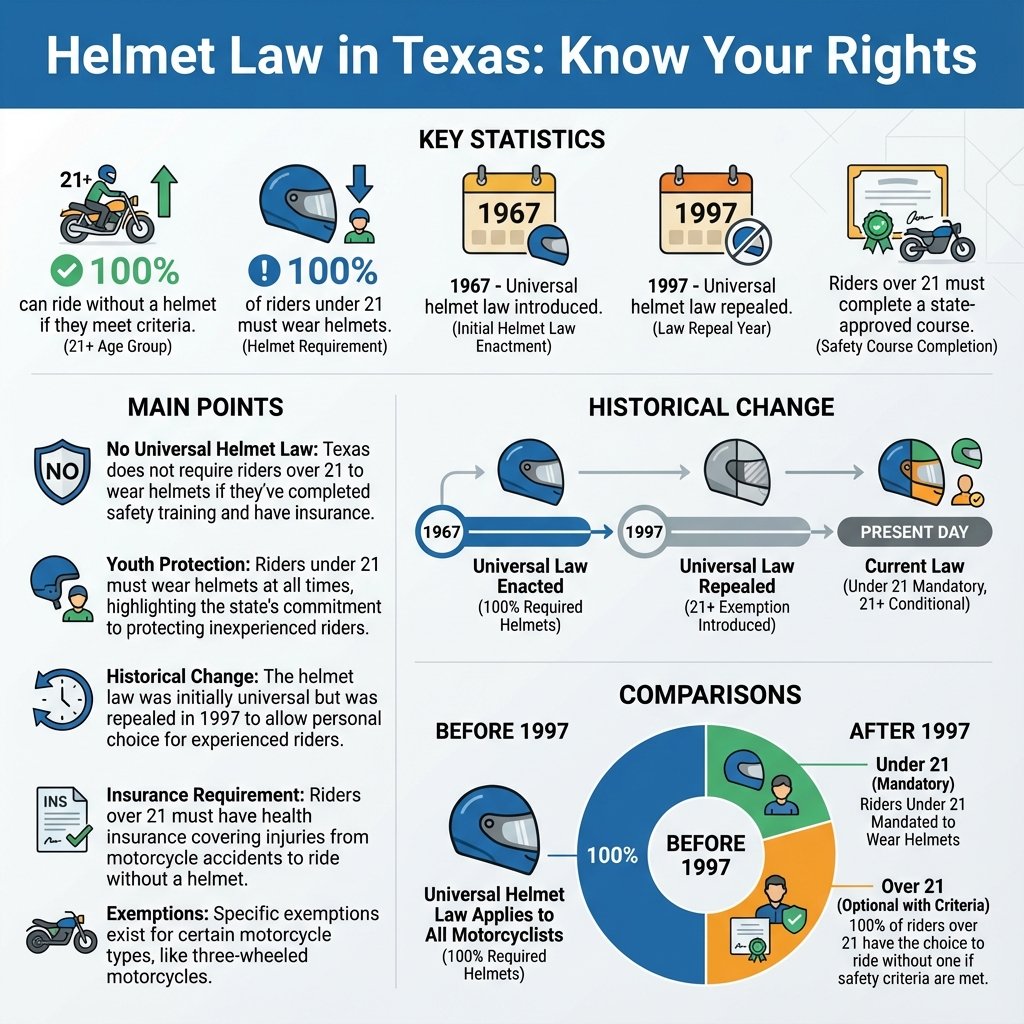

The trajectory of helmet laws in Texas has undergone significant changes over the decades. Initially, Texas enacted a universal helmet law in 1967, which mandated all motorcyclists, regardless of age, to wear helmets while riding. However, due to a growing movement advocating for personal freedoms and the belief that experienced riders should make their own choices, the law was repealed in 1997.
The repeal was also influenced by studies suggesting that experienced riders could navigate the roads safely without helmets. This decision was met with mixed reactions; while many applauded the newfound freedom, safety advocates expressed concerns about the potential for increased injuries and fatalities among motorcyclists. As a result, the debate continues to evolve, balancing personal choice against public safety considerations.
Who Is Exempt from Wearing a Helmet?
In Texas, several exemptions allow certain riders to forgo helmet use, primarily based on age and insurance status. Riders over 21 can legally ride without a helmet if they meet two key criteria: they have completed a state-approved motorcycle safety course and possess valid health insurance that covers motorcycle-related injuries. This law emphasizes the importance of education and preparedness for adult riders.
Moreover, there are specific exceptions for particular motorcycle types. For instance, riders operating a three-wheeled motorcycle or a motorcycle equipped with a protective enclosure may not be subject to the same helmet requirements. Additionally, riders with a valid motorcycle endorsement on their driver’s license, which indicates a certain level of training and skill, may also be eligible for exemptions under certain conditions.
However, it is essential for all motorcyclists to familiarize themselves with local laws as regulations may vary by city or county, and failure to comply can lead to legal penalties.
Consequences of Not Wearing a Helmet
Riding without a helmet can have severe consequences, both in terms of personal safety and legal ramifications. Statistically, motorcyclists who do not wear helmets are at a much higher risk of sustaining traumatic brain injuries and other life-threatening conditions in the event of an accident. According to the National Highway Traffic Safety Administration (NHTSA), helmet use reduces the risk of head injury by approximately 69%.
Legally, motorcyclists who choose to ride without a helmet may face fines if they are pulled over or involved in an accident. Additionally, not wearing a helmet may complicate insurance claims following an accident, as insurers may argue that the rider’s lack of protective gear contributed to the severity of injuries sustained. This could potentially result in increased liability and reduced compensation.
Safety Statistics: Helmet vs. No Helmet
The statistics surrounding motorcycle helmet use are compelling and underscore the critical importance of wearing a helmet. Research consistently shows that helmets are effective in reducing the severity of injuries and fatalities. For instance, states with strict helmet laws report significantly lower fatality rates among motorcyclists compared to those without such regulations.
In fact, a study from the Insurance Institute for Highway Safety (IIHS) indicates that states with universal helmet laws see 37% fewer motorcycle fatalities than those with partial laws. This statistic highlights not only the effectiveness of helmets in protecting riders but also the broader implications of helmet legislation on public safety.
The Importance of Safety Gear
While Texas law allows certain riders to opt-out of wearing helmets, it is crucial to recognize the overarching importance of safety gear. Helmets significantly increase a rider’s chances of surviving an accident and sustaining less severe injuries. In addition to helmets, wearing other protective gear such as jackets, gloves, and boots can further enhance safety by providing additional protection against abrasions and impact injuries.
High-quality riding gear is designed to withstand adverse conditions and mitigate injuries. For example, armored jackets and padded gloves can absorb impact during falls, while sturdy boots provide ankle support and protection from road hazards. Investing in appropriate safety gear is not only a prudent choice but also an essential aspect of responsible riding.
Conclusion
Understanding Texas’s helmet laws is crucial for every motorcyclist. While some may choose to ride without a helmet due to legal exemptions, the risks associated with such decisions can be severe and life-altering. Emphasizing the importance of safety gear, including helmets, can help reduce injuries and fatalities on the road. As riders, it is vital to stay informed about the laws, prioritize safety, and make choices that reflect a commitment to personal well-being. Whether you are a seasoned rider or new to motorcycling, always consider wearing a helmet and appropriate gear to ensure a safer riding experience. Stay informed, stay safe, and enjoy your ride!
References
- https://www.txdot.gov/driver/laws/helmet.html
- https://www.nhtsa.gov/road-safety/motorcycles
- https://www.helmets.org/
- https://www.ama-cycle.org/roadside/trafficlaws/helmetlaws.htm
- https://www.ghsa.org/state-laws/issues/motorcycle-helmet-laws
- https://www.mdot.ms.gov/portal/Helmet_Law_Information
- https://www.tdi.texas.gov/consumer/helmetlaw.html