The Must-Know Helmet Laws for California Cyclists
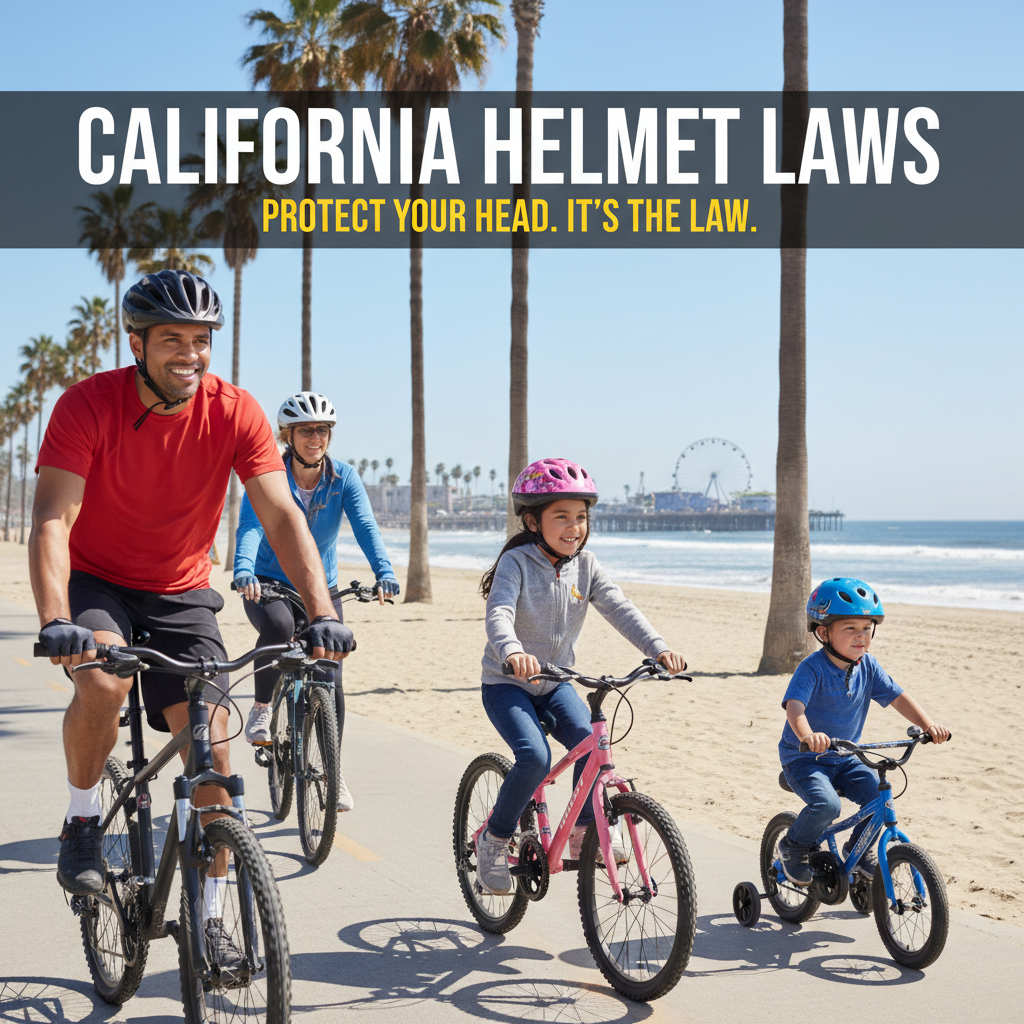
In California, wearing a bicycle helmet is mandatory for riders under 18 years old. For adults, while it’s not legally required, wearing a helmet is highly recommended for safety. Understanding the laws surrounding helmet use and the benefits of wearing one can significantly reduce the risk of serious injuries and help cyclists avoid legal complications.
California Helmet Law Overview

California’s helmet law is straightforward: all cyclists under the age of 18 must wear a helmet while riding. This regulation is codified in the California Vehicle Code (CVC) §21212. The intent of this law is to protect young riders, who are more vulnerable to severe head injuries in the event of an accident. Failure to comply with this law can result in penalties, including fines that vary depending on the jurisdiction. Additionally, if a minor is involved in an accident without a helmet, parents or guardians may face increased liability for any resulting injuries.
For adults, while there is no state mandate for helmet use, local municipalities and counties may implement their own regulations. Therefore, it’s essential for adult cyclists to familiarize themselves with local laws, as certain areas may impose fines or other penalties for not wearing a helmet. Moreover, not wearing a helmet could potentially affect liability claims in the event of an accident, as failure to wear a helmet might be viewed as a failure to mitigate risk.
Safety Benefits of Wearing a Helmet
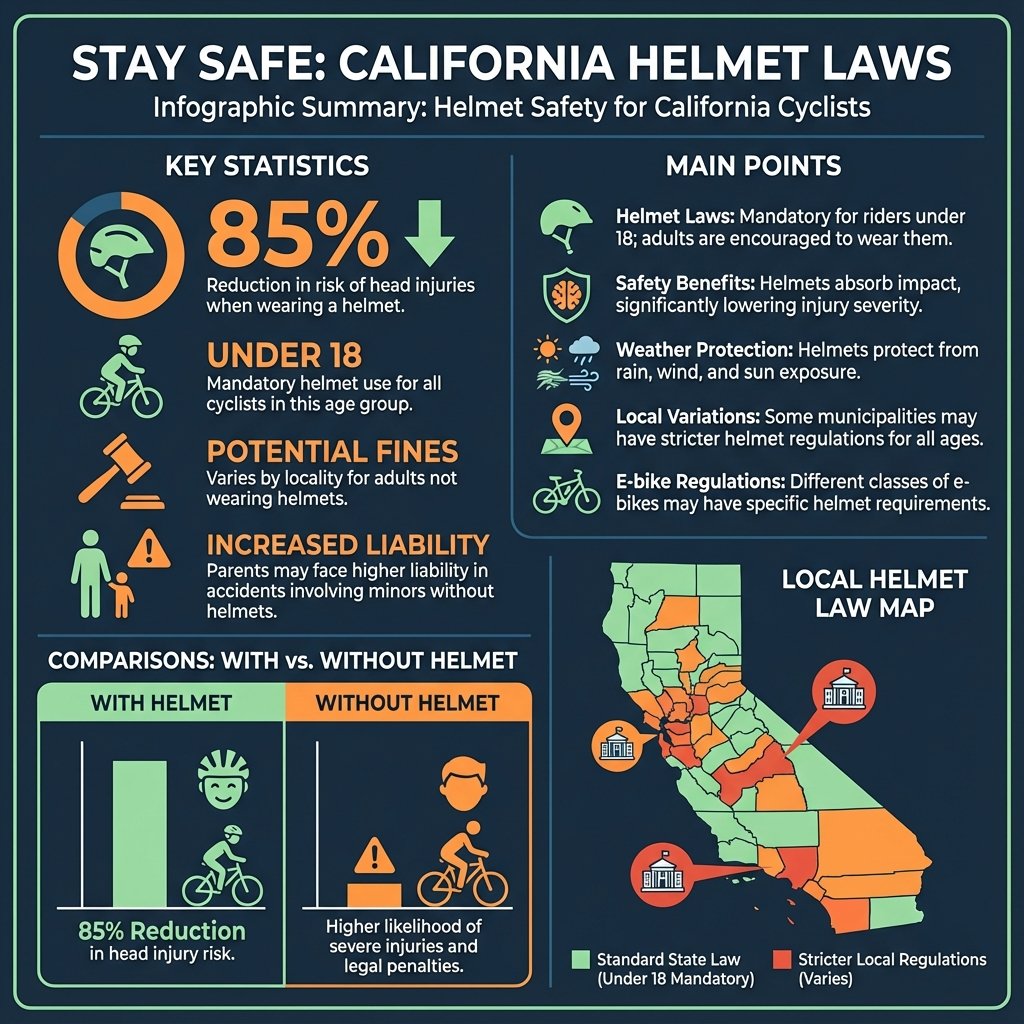
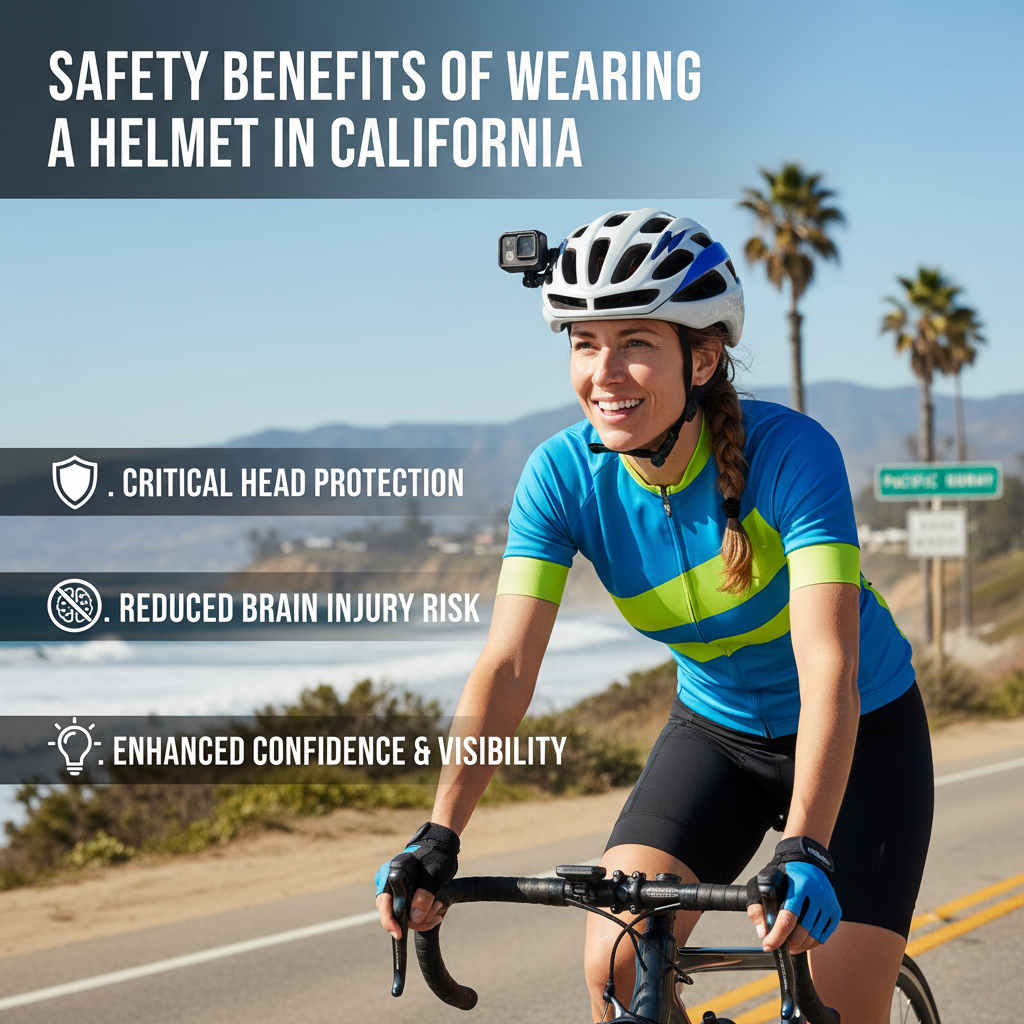
The safety benefits of wearing a helmet cannot be overstated. Research indicates that helmets can reduce the risk of head injuries by as much as 85%. This statistic is particularly critical when considering that head injuries are among the most severe and life-altering consequences that can arise from cycling accidents. Helmets provide an essential layer of protection, absorbing impact forces and thereby minimizing the severity of injuries.
In addition to head protection, helmets also shield cyclists from weather elements such as rain, wind, and extreme sun exposure. This added layer of comfort can enhance the overall cycling experience, making it a more enjoyable activity regardless of the conditions. Furthermore, helmets protect against flying debris and other hazards encountered on the road, such as branches, stones, or insects that could cause injury at high speeds.
Exceptions to the Rule
While the general rule in California is clear, there are exceptions to consider. Certain local municipalities may enact additional regulations regarding helmet use that either extend or restrict the existing state law. For instance, some cities might require helmet use for all cyclists, regardless of age, while others might have specific exemptions for particular types of bicycles.
Electric bicycles (e-bikes) present another layer of complexity. California law distinguishes between different classes of e-bikes, and while riders of Class 1 and Class 2 e-bikes must wear helmets, there are no helmet requirements for Class 3 e-bike riders over the age of 18. Understanding these nuances is crucial for cyclists to remain compliant with the law and ensure their safety.
Best Practices for Choosing a Helmet
When it comes to selecting a helmet, it’s essential to choose one that meets the safety standards set by the Consumer Product Safety Commission (CPSC). Helmets that comply with these standards have been rigorously tested and are proven to provide adequate protection in the event of an accident.
Fit is another critical factor to consider. A properly fitted helmet should sit level on the head and should not move more than an inch in any direction. The straps should form a “V” shape under the ears, and the chin strap should be snug but comfortable. To ensure maximum protection, helmets should also be replaced every three to five years, or immediately after a crash, as they can become less effective over time.
Additionally, cyclists should consider their specific riding needs when selecting a helmet. For example, those who ride in urban environments might benefit from a helmet with added visibility features, such as bright colors or reflective materials, while mountain bikers may prefer helmets designed for greater impact resistance.
Tips for Encouraging Helmet Use
Promoting a culture of safety is essential for encouraging helmet use among cyclists of all ages. One effective strategy is to lead by example; adults who wear helmets can inspire younger riders to do the same. Additionally, organizing community events that emphasize safe cycling practices can create a supportive environment where helmet use is normalized.
Utilizing social media platforms can also be an effective way to spread awareness about the importance of helmet use. By sharing personal stories about experiences with cycling accidents or the benefits of wearing a helmet, individuals can engage their networks in meaningful conversations about safety. Creating challenges or campaigns that promote helmet use can further enhance community participation.
Local schools and youth organizations can also play a vital role in promoting helmet safety. Programs that distribute free or subsidized helmets to children can significantly increase the number of young riders who wear protective gear, thereby fostering lifelong habits of safety.
Frequently Asked Questions
What are the consequences of not wearing a helmet?
The consequences for failing to wear a helmet in California vary by jurisdiction. Riders under 18 may face fines, and their guardians may be held liable for any injuries sustained in an accident. Adults may not face direct penalties, but could potentially be held responsible for injuries incurred due to negligence if they were not wearing a helmet.
Are there any helmet subsidies or programs in California?
Yes, various organizations and local governments offer helmet subsidies and programs aimed at increasing helmet use among children and low-income populations. Programs such as the California Bicycle Coalition’s helmet distribution initiatives work to provide affordable helmets to those who might not otherwise be able to purchase them. Additionally, community health organizations often hold events where free helmets are provided, further promoting safe cycling practices.
In conclusion, while California law mandates helmet use for minors, the benefits of wearing a helmet extend to cyclists of all ages. Helmets significantly reduce the risk of severe head injuries and contribute to a safer cycling environment. By staying informed about helmet laws and actively promoting helmet use, cyclists can prioritize their safety and the safety of others on the road. Embrace helmet use every time you ride, and contribute to a culture of safety in the cycling community.
References
- https://www.nhtsa.gov/road-safety/bicyclists
- https://www.cyclecalifornia.com/bicycle-helmet-law-california/
- https://www.leginfo.ca.gov/cgi-bin/displaycode?section=veh&group=00001-01000&file=21212
- https://www.cabike.org/helmet-law/
- https://www.bicycling.com/news/a20047736/california-helmet-laws/
- https://www.calbike.org/helmet_law_faqs
- https://www.dmv.ca.gov/portal/handbook/driverhandbook/section1.25/
- https://www.nhlbi.nih.gov/health-topics/bicycle-safety