The Must-Know Lifespan of Your Motorcycle Helmet
Motorcycle helmets typically last between 5 to 7 years, depending on usage and care. Understanding the lifespan of your helmet is crucial for safety and performance, as wearing a damaged or outdated helmet can significantly increase the risk of serious injury in an accident. In this article, we’ll explore key factors that affect helmet longevity, maintenance tips, and signs indicating it’s time for a replacement.
Understanding Helmet Lifespan

Most manufacturers recommend replacing helmets every 5 years, regardless of visible wear. While the outer shell may appear intact, the internal foam and protective materials can degrade over time due to exposure to UV rays, moisture, and temperature fluctuations. Helmets are also subjected to minor impacts during regular use which, while they may not cause visible damage, can compromise the helmet’s protective capabilities. Therefore, adhering to the 5-year guideline is essential for ensuring your helmet provides optimal protection when you most need it.
Factors Affecting Helmet Durability
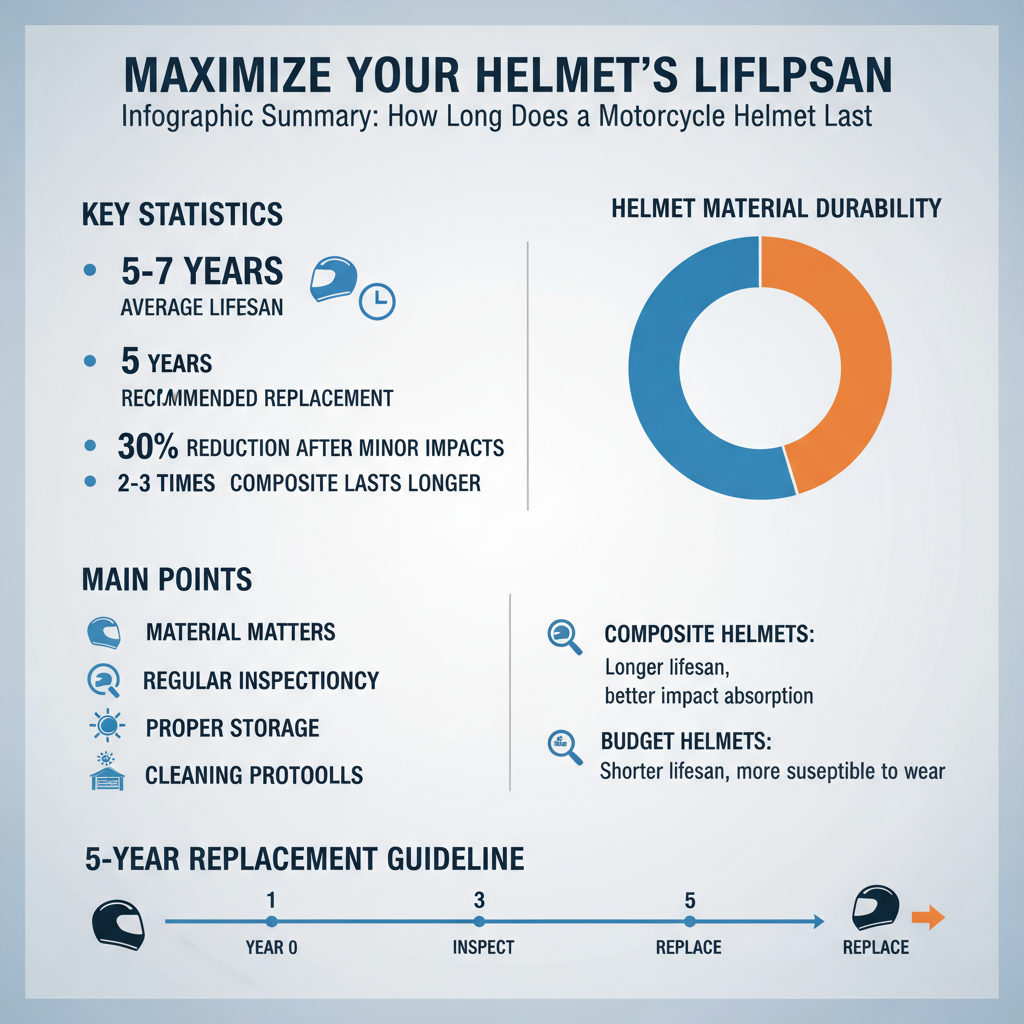

– Material Quality: Helmets made from higher-quality materials, such as composite fiberglass or carbon fiber, tend to have a longer lifespan than those made from lower-grade plastics. For instance, a premium helmet with a multi-density EPS liner will not only absorb impacts better but also resist wear and tear longer than a budget helmet that utilizes basic materials.
– Usage Frequency: Helmets that are used regularly—such as those worn daily for commuting or long rides—will experience faster degradation compared to helmets used occasionally. Frequent exposure to sweat, moisture, and environmental factors can weaken the materials over time. For riders who use their helmets often, investing in a quality helmet and replacing it at the 5-year mark is particularly important.
Maintenance Tips for Longevity
– Regular Inspections: After each ride, take a moment to inspect your helmet for cracks, wear, or any visible damage. Pay particular attention to the visor, straps, and the interior lining. If you notice any issues, consider replacing your helmet sooner rather than later.
– Proper Storage: Store your helmet in a cool, dry place away from direct sunlight to avoid premature aging. Prolonged exposure to UV rays can deteriorate the outer shell, while heat can affect the integrity of the inner cushioning materials. Ideally, use a helmet bag for protection and avoid placing heavy objects on top of it.
– Cleaning: Regularly clean your helmet using a mild soap and water solution. Harsh chemicals can damage the materials. Ensure that you remove the inner lining when possible to wash it separately, as this will help maintain hygiene and comfort.
Signs It’s Time for a New Helmet
– Visible Damage: Any visible damage such as cracks, dents, or significant scratches can compromise the safety of your helmet. If you’ve been involved in an accident, even if there are no visible signs of damage, it’s best to replace your helmet as it may have sustained internal damage that is not easily detectable.
– Comfort Issues: If the helmet no longer fits snugly or feels uncomfortable, it may be time to replace it. A helmet that shifts or feels loose cannot provide the protection needed in an accident. Additionally, discomfort can distract you while riding, making it essential to ensure a proper fit.
In summary, knowing how long a motorcycle helmet lasts and how to care for it is essential for your safety on the road. Regular maintenance and being aware of signs for replacement will ensure you’re always protecting yourself adequately. Don’t wait—check your helmet today to ensure it meets the necessary safety standards and continues to provide the protection you need. Your safety is paramount, and a reliable helmet is your first line of defense.
Frequently Asked Questions
How long does a motorcycle helmet typically last?
A motorcycle helmet typically lasts about 3 to 5 years, depending on factors like usage, storage conditions, and the materials used in its construction. Over time, the foam lining and other components can degrade, reducing the helmet’s effectiveness in protecting your head during an accident. Always check the manufacturer’s guidelines and inspect your helmet regularly for signs of wear and tear.
What factors affect the lifespan of a motorcycle helmet?
Several factors can affect the lifespan of a motorcycle helmet, including exposure to sunlight, temperature fluctuations, and the frequency of use. Helmets that are regularly exposed to harsh conditions or have been involved in an accident should be replaced immediately, even if they appear undamaged. Additionally, the quality of materials and construction plays a significant role in how long a helmet will adequately protect you.
Why should I replace my motorcycle helmet after a crash?
You should replace your motorcycle helmet after a crash because even if the outer shell appears undamaged, the internal foam may have compressed or broken down, compromising its protective capabilities. Helmets are designed to absorb impact energy, and once they’ve done so, they may not provide adequate protection in a subsequent accident. Safety should always be your top priority, so investing in a new helmet after a crash is crucial.
What is the best way to care for my motorcycle helmet to extend its lifespan?
To extend the lifespan of your motorcycle helmet, always store it in a cool, dry place away from direct sunlight and extreme temperatures. Regularly clean the helmet with mild soap and water, avoiding harsh chemicals that can damage the materials. Additionally, ensure that the helmet is properly fitted and not overly tight, as this can cause unnecessary wear over time.
Which motorcycle helmets are known for their durability?
Some of the most durable motorcycle helmets are those made by reputable brands like Shoei, Arai, and Bell, known for their high-quality materials and advanced safety features. Look for helmets that meet safety standards such as DOT or Snell certification, which indicate rigorous testing for impact resistance. Reading customer reviews and seeking recommendations from fellow riders can also help you find a helmet that offers both durability and comfort.
References
- https://en.wikipedia.org/wiki/Motorcycle_helmet
- https://www.nhtsa.gov/road-safety/motorcycle-safety
- https://www.cdc.gov/motorvehiclesafety/motorcycle/index.html
- https://www.helmets.org/faq.htm
- https://www.ama-cycle.org/
- https://www.ncbi.nlm.nih.gov/pmc/articles/PMC6198491/
References
- https://www.nhtsa.gov/equipment/motorcycle-helmets
- https://www.cdc.gov/motorvehiclesafety/motorcycle/index.html
- https://www.helmets.org/
- https://www.ama-cycle.org/
- https://www.consumerreports.org/cro/motorcycle-helmets/buying-guide/index.htm
- https://www.mayoclinic.org/healthy-lifestyle/injury-and-accident-prevention/in-depth/motorcycle-helmet-safety/art-20045325
- https://www.ncbi.nlm.nih.gov/pmc/articles/PMC1410780/
- https://www.helmetcheck.org/