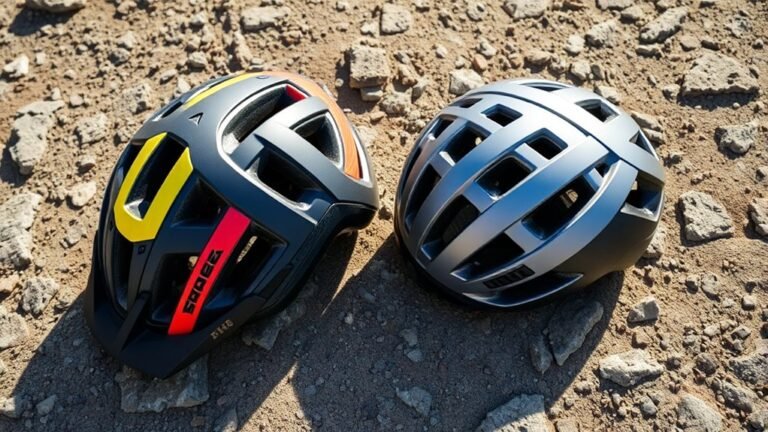
The Ultimate Secret to Revolutionizing Helmet Manufacturing
3D printing is fundamentally transforming helmet manufacturing by enhancing customization, improving safety standards, and streamlining production processes. This cutting-edge technology allows manufacturers to create lightweight, durable helmets tailored to individual needs, setting a new standard in head protection. The integration of 3D printing not only redefines how helmets are made but also significantly impacts user experience, safety, and environmental sustainability.
The Rise of 3D Printing in Manufacturing

3D printing, also known as additive manufacturing, has gained tremendous traction across various industries, including automotive, aerospace, healthcare, and consumer products. This technology allows for the creation of three-dimensional objects from digital files, layer by layer, using materials like plastics, metals, and even organic compounds. The growth of 3D printing has been propelled by advancements in technology, reduction in costs, and an increasing demand for custom solutions.
In helmet manufacturing, 3D printing is still in its nascent stages but is poised for rapid growth due to its unique advantages. The potential for creating helmets that are not only functional but also ergonomically designed to fit the curvature of the human head is revolutionary. As manufacturers begin to explore this technology, the possibilities for innovation in helmet design and functionality are virtually limitless.
Customization: The Key Benefit


One of the most significant benefits of 3D printing in helmet manufacturing is the ability to achieve a high level of customization. Traditional helmet production often involves a one-size-fits-all approach, which can compromise comfort and safety. With 3D printing, manufacturers can design helmets to fit the specific dimensions and preferences of individual users, ensuring a snug and secure fit.
For instance, professional athletes, such as cyclists and football players, have begun to utilize custom 3D-printed helmets designed specifically for their head shapes and the unique demands of their sport. Companies like Riddell have developed custom-fit helmets for football players, integrating advanced scanning technology to capture precise measurements. This process not only enhances comfort but also provides improved protection against concussive impacts, as the helmets can be engineered to distribute forces more effectively.
Moreover, recreational users are also benefitting from customization. Enthusiasts in extreme sports, such as skateboarding or mountain biking, can now obtain helmets that reflect their style and personality while ensuring safety through tailored designs. This level of personalization is a game-changer in a market that increasingly values individual expression and performance.
Enhanced Safety Features
3D printing allows for the integration of advanced materials that improve impact resistance, a critical factor in helmet design. Traditional helmets often rely on dense foams that absorb shock but can be bulky and heavy. Through 3D printing, manufacturers can incorporate innovative materials like thermoplastic elastomers and carbon fiber composites that offer superior strength without adding extra weight.
Companies such as D3O have developed materials that can be 3D printed into helmets, providing a unique blend of flexibility and stiffness. When subjected to impact, these materials harden upon impact, dispersing energy and reducing the risk of injury. The ability to prototype and test various designs quickly with 3D printing enables manufacturers to iterate on safety features rapidly, ensuring that the helmets meet the latest safety standards.
Furthermore, 3D printing facilitates the creation of complex geometries that traditional manufacturing methods cannot achieve. For example, helmets can now include built-in ventilation systems or integrated padding structures that enhance breathability and comfort without compromising safety. The evolution of safety features driven by 3D printing will lead to helmets that not only meet but exceed existing safety regulations.
Cost-Efficiency and Production Speed
The efficiency of 3D printing also translates into significant cost savings and reduced production timelines. Traditional helmet manufacturing involves multiple steps, including molding, assembly, and finishing, all of which can be time-consuming and resource-intensive. In contrast, 3D printing minimizes waste by utilizing only the material needed for each helmet and allows for rapid prototyping, enabling manufacturers to bring products to market faster.
For example, companies can now create functional prototypes in a matter of hours instead of weeks, allowing for expedited testing and refinement based on user feedback. This agility not only reduces development costs but also enables manufacturers to pivot designs quickly in response to market trends or changing safety regulations.
Moreover, the scalability of 3D printing means that small-scale manufacturers can compete with larger firms without the need for extensive capital investment in machinery. This democratization of production can lead to increased competition and innovation within the helmet manufacturing industry.
Sustainability and Eco-Friendliness
In today’s environmentally conscious market, sustainability is becoming a crucial consideration for manufacturers. 3D printing offers a pathway to more sustainable helmet production methods. Many companies are beginning to utilize biodegradable and recyclable materials in their 3D printing processes, which significantly reduces the environmental impact of helmet manufacturing.
For instance, some manufacturers are experimenting with bio-based plastics derived from renewable resources like corn starch or sugarcane. These materials not only provide the necessary strength and durability for helmet production but also decompose more easily than traditional plastics, contributing to a circular economy.
Additionally, 3D printing’s capacity to produce items on-demand minimizes overproduction and inventory waste. By producing helmets only as needed, manufacturers can further reduce their carbon footprint, aligning with consumer expectations for eco-friendly products. As sustainability becomes increasingly important to consumers, 3D printing positions helmet manufacturers to meet this demand effectively.
Future Trends in Helmet Manufacturing
Looking ahead, the future of helmet manufacturing is likely to be heavily influenced by advancements in 3D printing technology. Innovations in materials science and printing techniques are expected to yield even lighter, stronger helmets with enhanced features. For example, the development of smart helmets equipped with sensors for monitoring impacts or tracking performance metrics is on the horizon, potentially revolutionizing safety practices in sports and recreational activities.
Consumer preferences are also shaping future production methods. As users become more aware of the options available, there will be a growing demand for helmets that combine safety with style and personalization. This trend will encourage manufacturers to invest more in R&D to create helmets that not only perform well but also appeal to aesthetic sensibilities.
Furthermore, as regulations around safety continue to evolve, manufacturers will need to stay agile, utilizing the rapid prototyping capabilities of 3D printing to adapt to new standards quickly. This adaptability will be crucial in maintaining competitive advantage in a rapidly changing market.
The integration of artificial intelligence and machine learning into the design process will also enhance customization options, allowing for increasingly sophisticated helmet designs tailored to individual user profiles and usage scenarios.
In summary, the future of helmet manufacturing is set to be a dynamic landscape driven by technological advancements, consumer demand for customization, and a commitment to sustainability.
The shift towards 3D printing in helmet manufacturing is not just a trend; it’s a revolution that promises safer, more customized protective gear. Manufacturers and consumers alike must embrace this technology to stay ahead in the fast-evolving market. Explore the possibilities and be part of the future of helmet manufacturing!
References
- https://www.nhl.com/news/helmet-safety-innovations/c-316279230
- https://www.cdc.gov/niosh/topics/trauma/helmets.html
- https://www.ncbi.nlm.nih.gov/pmc/articles/PMC6346985/
- https://www.sciencedirect.com/science/article/pii/S0141391019303578
- https://www.helmets.org/
- https://www.sae.org/publications/technical-papers/content/2001-01-0658
- https://www.wnyc.org/story/helmet-innovation/
- https://www.tandfonline.com/doi/full/10.1080/10803548.2019.1674735