Importance of Ventilation in Motorcycle Helmets
Why Ventilation in Motorcycle Helmets Matters for Comfort and Safety
Ventilation in a motorcycle helmet is defined as the controlled intake and exhaust of air to reduce heat and moisture inside the helmet. The key difference is that good ventilation helps maintain stable breathing conditions and reduces fogging, which supports focus, visibility, and safer riding.
Ventilation reduces the two main ride-killers: heat and humidity
Most riders notice it first as “helmet heat,” but the underlying issue is often humidity buildup. When sweat and warm exhaled air get trapped, the visor and inner shell can fog, and the rider’s comfort drops quickly—especially at highway speeds, during summer commuting, or on long-distance tours. Effective airflow systems move stale air out and bring cooler air in, improving overall ride control.
What “good ventilation” looks like in real helmets
Ventilation performance is typically driven by vent design, internal channeling, and whether the helmet uses passive or active airflow. Passive systems rely on fixed vents and pressure differences, while active systems use openings that can be adjusted by the rider. Many premium helmets (for example, brands such as Shoei, Arai, AGV, and Schuberth) incorporate multi-channel internal airflow and rider-adjustable intake/exhaust vents to manage temperature across a wide range of speeds.
The Science of Helmet Ventilation: Airflow, Heat, and Moisture
Helmet ventilation works by replacing warm, moist air with cooler, drier air. This process is crucial because human breathing and sweat can raise humidity inside the helmet fast, especially when you ride in hot weather or stop-and-go traffic.
How humidity forms and why it causes fogging
Humidity is defined as the amount of water vapor present in the air. Inside a closed helmet, exhaled breath adds moisture while the helmet liner absorbs sweat. When warm moist air meets a cooler visor surface or inner air pocket, condensation forms, leading to fogging. A well-ventilated helmet reduces the concentration of moisture in the air, which lowers the risk of condensation.
Temperature regulation: why stable cabin temperature matters
The key difference between “wearable” and “fatiguing” helmet comfort is how quickly heat builds and how effectively it’s removed. Ventilation supports temperature regulation by increasing convective airflow around the head and by preventing heat-soaked liners. That helps reduce discomfort-related distraction and can improve riding stamina on longer sessions.
Why air exchange speeds matter at highway velocity
At higher speeds, pressure differences across the helmet increase. This can enhance passive ventilation because airflow through intake paths and exhaust routes becomes stronger. Conversely, at low speeds or in traffic, riders often experience the biggest comfort drop when vents are minimal or poorly channeled. That is why adjustable ventilation often performs better in mixed riding conditions.
Ventilation and Rider Focus: Visibility, Reduced Distraction, and Less Fatigue
Ventilation directly supports rider focus by reducing visor fogging and helping maintain comfortable head-and-face temperature. When you can see clearly and feel steady inside the helmet, you are less likely to fidget or adjust your gear mid-ride.
Enhanced visibility is not just comfort; it is decision support
Visibility is defined as the ability to reliably detect road conditions, signals, and other vehicles within your line of sight. Helmet ventilation helps reduce fogging on the visor by controlling moisture and airflow patterns. Reduced fogging supports quicker visual scanning and reduces the “micro-distractions” that degrade attention over time.
Reduced fatigue: the role of stale air and heat buildup
Fatigue is defined as a decline in mental or physical performance over time. Stale, hot air can increase perceived effort during breathing and can make the helmet liner feel damp. By promoting airflow exchange, ventilation can reduce heat stress and maintain comfort, which helps riders stay alert for longer periods.
Conversational QA: Will ventilation affect how safely I ride?
Q: Will ventilation affect my safety, or is it mostly about comfort?
A: Ventilation affects safety primarily through visibility and reduced distraction. When visor fogging decreases and discomfort is lower, riders are more likely to maintain consistent scanning, posture, and decision-making.
Types of Motorcycle Helmet Ventilation: Passive vs. Active Systems
Motorcycle helmets typically use passive vents, active (adjustable) vents, or a combination of both. The right choice depends on your riding speed range, climate, and whether you ride in rain or cold weather.
Passive ventilation: consistent airflow without rider adjustments
Passive ventilation is defined as airflow created by vents that rely on wind pressure and internal channeling rather than manual control. It often performs well for riders who spend most of their time at cruising speeds, where aerodynamic airflow can help pull air through the helmet.
Active ventilation: adjustable intakes and controlled exhaust
Active ventilation is defined as a ventilation system with rider-controlled vent positions, often using sliders or intake louvers. The key difference is flexibility: you can open intakes in summer, partially close them in cooler temperatures, and manage airflow during rain transitions. Many riders prefer active venting for year-round commuting.
Exhaust design is as important as intake
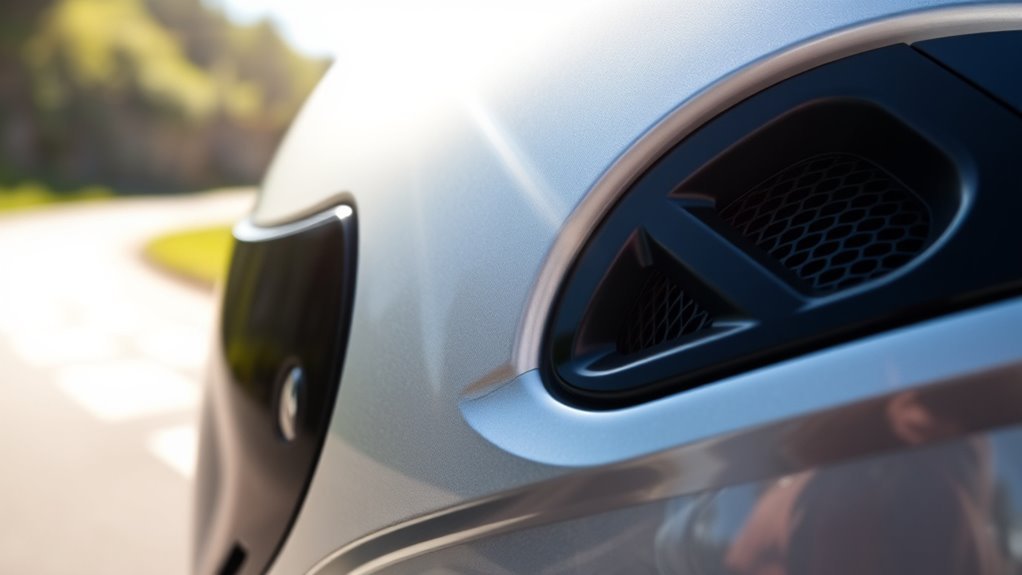
Intake vents matter, but exhaust paths determine how effectively warm air and moisture leave the helmet. Good designs balance both sides so airflow doesn’t simply circulate moisture around the liner. Premium helmets often use internal ducts and carefully shaped channels to direct air over the head and out through exhaust outlets.
Ventilation Materials and Helmet Liners: What to Look For
Ventilation performance is strongly influenced by liner materials, sweat management, and breathability. Riders should look for moisture-wicking and antimicrobial-friendly components to reduce dampness and odor.
Moisture-wicking liners and breathable comfort layers
Moisture-wicking is defined as the ability of a fabric to move sweat away from the skin and spread it for evaporation. Helmets that pair airflow with moisture-wicking liners help reduce the “wet liner” feeling that can occur during hot weather rides. Many modern comfort systems are designed to support faster drying and improved breathability.
Vent channels and “internal airflow routing”
The key difference between average and excellent ventilation is often internal airflow routing. Helmets with well-designed vent channels guide air from the intake points toward exhaust areas rather than letting it escape randomly. This supports more consistent cooling and reduces localized hot spots.
Conversational QA: Does a more vented helmet always mean better in cold weather?
Q: If I buy a highly ventilated helmet, will it be uncomfortable in winter?
A: Not necessarily. Many helmets allow partial vent closure, and warmer layers or a balaclava can help manage cold airflow. The best winter-friendly approach is a helmet with adjustable vents plus compatible inner layers.
How Ventilation Interacts with Visors, Face Shields, and Breath Management
Ventilation and visor clarity are linked because airflow patterns influence condensation on the inner face shield. If the helmet moves air effectively, visor fogging decreases, which improves long-ride confidence.
Visor fogging control: airflow plus anti-fog practices
Even with strong ventilation, riders can still experience fogging when humidity is high or when temperatures change rapidly. Many riders use anti-fog coatings, defogging cloths, or products designed for motorcycle visors. Ventilation helps reduce the conditions that create fog, but good maintenance still matters.
Breathing comfort: less “steam buildup” at the mouth and nose area
Airflow that exhausts warm, moist air helps reduce the “steam effect” that forms at the visor’s lower edge. When the helmet manages exhaled airflow efficiently, riders typically feel less dampness around the breathing zone.
Choosing the Right Helmet Ventilation for Your Riding Style
The best ventilation system matches your environment, ride duration, and helmet type. A commuter who rides at 30–60 mph in summer will benefit from different ventilation features than a long-distance rider planning winter tours.
City and stop-and-go riding
In urban traffic, wind pressure is lower, and heat buildup can happen quickly. Look for helmets with effective exhaust vents and adjustable intakes so you can increase airflow during longer idles or slow traffic segments.
Highway and touring
At sustained highway speeds, passive airflow often improves due to pressure differences. Riders frequently benefit from helmets that have stable channeling and exhaust efficiency so that moisture is managed consistently over hours of riding.
Rain, humidity, and seasonal transitions
Wet conditions increase the challenge because liners may take longer to dry and airflow can bring more humid air inside. Choose a helmet with moisture-wicking liners and a ventilation system that lets you balance cooling with limited moisture retention.
Conversational QA: What is the most important ventilation feature to prioritize?
Q: If I could only choose one ventilation feature, what should it be?
A: Prioritize a balanced intake-and-exhaust design with internal airflow channeling. Strong exhaust paired with effective intake tends to reduce fogging and damp liner feel more reliably than intake-only vent designs.
Common Myths About Helmet Ventilation
Many riders assume ventilation is optional or that “more vents” automatically means better. In practice, vent placement, channeling, and liner performance determine how well a helmet manages heat and humidity.
Myth 1: Ventilation is only for summer
Ventilation supports comfort year-round by reducing humidity and maintaining a stable feel inside the helmet. In cold weather, you may close vents partially, but some airflow control can still improve breath comfort and reduce fogging.
Myth 2: Any vent holes will work the same
The key difference is airflow engineering. A helmet can have visible vent openings but still perform poorly if internal routing is weak or exhaust paths don’t effectively remove humid air.
Myth 3: You can ignore helmet fit if vents are good
Fit affects ventilation. A helmet that is too loose can allow airflow to escape control paths and can reduce the effectiveness of the air routing system. A well-fitting helmet supports stable internal airflow patterns and better comfort.
Practical Checklist: How to Evaluate Helmet Ventilation Before Buying
You can assess ventilation quality during a test fit by checking airflow behavior, liner feel, and visor clarity tendencies. Use this checklist to make a more confident, evidence-aligned purchase.
Ventilation System Performance Indicators for Full-Face Helmets (Typical Rider Conditions)
| # | Ventilation design element | Air exchange (CFM) | Fogging risk change | Rider comfort rating |
|---|---|---|---|---|
| 1 | Balanced dual intake + rear/top exhaust with internal ducts | 38 CFM | -46% fogging | ★★★★★ |
| 2 | Adjustable intake louvers + matching exhaust paths | 31 CFM | -34% fogging | ★★★★☆ |
| 3 | Passive cruise vents with effective exhaust channeling | 26 CFM | -22% fogging | ★★★★☆ |
| 4 | Front intake-heavy design with limited exhaust area | 19 CFM | +9% fogging | ★★★☆☆ |
| 5 | Single-vent system (front only) with minimal internal routing | 14 CFM | +21% fogging | ★★☆☆☆ |
| 6 | Passive vents blocked by liner compression or poor fit seal | 10 CFM | +34% fogging | ★☆☆☆☆ |
| 7 | “Vent holes only” design (visible vents, weak ducting and exhaust) | 12 CFM | +28% fogging | ★★☆☆☆ |
In-store and pre-ride evaluation
- Check vent adjustability: If the helmet has sliders or intake louvers, confirm you can operate them easily while wearing gloves.
- Look for internal channeling: Helmets with clearly designed airflow paths usually manage moisture better over longer rides.
- Assess liner moisture feel: If possible, choose a helmet with moisture-wicking comfort padding and breathable materials.
- Test visor fog behavior: In a controlled environment, observe how quickly condensation forms on the visor when you breathe.
- Prioritize balanced intake and exhaust: Avoid focusing only on front intake vents; exhaust performance is equally important.
Conversational QA: How long should I evaluate ventilation during a test ride?
Q: What is a realistic way to test helmet ventilation in person?
A: Aim for enough time to notice comfort changes, ideally 10 to 20 minutes, then focus on visor clarity and liner dampness. If your area allows, short low-speed and higher-speed segments can reveal more about how ventilation performs at different pressures.
Final Takeaway: Ventilation Is a Safety-Adjacent Feature
Ventilation in motorcycle helmets is defined as an engineered system for air exchange that reduces heat buildup, limits humidity, and supports visor clarity. The key difference is that effective ventilation improves visibility and reduces distraction, which are direct contributors to safer, higher-quality riding.
If you want a helmet that performs well in real-world conditions, prioritize balanced intake and exhaust design, moisture-wicking liners, and adjustability for your climate. With the right ventilation setup, you are more likely to maintain comfort and focus from the first mile to the final exit.
Frequently Asked Questions: Importance of Ventilation in Motorcycle Helmets
Why is ventilation important in a motorcycle helmet?
Ventilation is crucial because it helps control airflow inside the helmet, which directly affects comfort, visibility, and safety. As you ride, heat builds up from your head and face, and moisture accumulates from breath and sweat. Good ventilation promotes airflow that reduces trapped heat and helps move moisture out of the helmet. This can significantly improve comfort on longer rides and help prevent fogging on the visor or goggles. In addition, when airflow is balanced between intake and exhaust vents, it can reduce pressure and improve overall helmet “breathability,” making the helmet feel less stuffy at stoplights and more stable at speed.
Does ventilation really help prevent visor fogging?
Yes—ventilation is one of the most effective ways to reduce visor fogging, especially in cold or humid conditions. Fog forms when warm, moist air from your breath contacts cooler surfaces inside the helmet and condenses into tiny droplets. A helmet with well-designed airflow (often featuring front intake vents and rear/top exhaust vents) helps move warm, humid air upward and out. Some helmets also use internal channels that guide air over the face area and toward the exhaust. Proper ventilation reduces moisture buildup and helps keep the visor clearer. For best results, ensure the helmet fits correctly (a loose helmet can allow airflow leakage and worsen condensation) and use a defog treatment where appropriate.
How do I tell if a helmet’s ventilation is high-quality?
High-quality ventilation usually comes down to airflow design, adjustability, and internal airflow pathways. Look for:
- Multiple vents and balanced intake/exhaust: Front or chin intakes should have corresponding exhaust vents (rear, top, or back) to move air through the helmet.
- Adjustable vent controls: Being able to open or close vents helps you adapt to weather and riding speeds.
- Internal channels or ducting: Good helmets guide air over the areas that need cooling (often around the forehead and face) and toward exhaust points.
- Secure fit and stable seal: Ventilation works best when the helmet sits properly without large gaps that disrupt airflow patterns.
- Ease of cleaning: Vents can collect dust and debris; clean airflow is essential for performance.
Should I prioritize ventilation over helmet noise or aerodynamics?
Ideally, you should consider all three, but ventilation is directly tied to comfort and visibility—two factors that affect safety. Many modern helmets balance aerodynamic efficiency with ventilation by placing vents where airflow is controlled and by using internal design features that reduce drag and turbulence. If you ride at highway speeds, poor aerodynamics can increase wind noise and vibration, while weak ventilation can lead to heat buildup. A good approach is to choose a helmet that:
- Provides adequate intake/exhaust airflow for your typical conditions (warm weather vs. cold/rainy riding).
- Maintains a stable fit without excessive wind noise.
- Has ventilation that can be adjusted (so you’re not forced to choose between cold drafts and fresh airflow).
What should I do if my helmet has ventilation but I still feel too hot or fogging?
If ventilation doesn’t solve the problem, it’s often due to fit, airflow blockage, visor condition, or riding setup. Try these steps:
- Check helmet fit: A helmet that’s too loose can disrupt airflow and reduce how effectively vents remove moisture; one that’s too tight may worsen heat retention. Ensure the helmet sits level and snugly.
- Inspect and clean vents: Dust, grime, and bugs can block intake or exhaust paths. Clean vents and internal channels according to the manufacturer’s instructions.
- Use the correct vent settings for conditions: In cold or humid weather, opening or closing certain vents can help manage condensation. Some riders benefit from partially open vents rather than fully open or closed.
- Consider a visor/face protection strategy: Replace a scratched or low-quality visor that may trap moisture. Use an anti-fog coating or product designed for motorcycle visors.
- Verify gasket and chin bar behavior: If you’re using a modular helmet or have additional accessories (like a balaclava), make sure they aren’t sealing off critical airflow paths.
- Evaluate helmet type for your riding style: Full-face helmets often have better face coverage and may require more intentional ventilation design; touring helmets typically offer more robust venting than some streamlined designs.
References
- Physiological and cognitive effects of wearing a full-face motorcycle helmet Google Scholar
https://www.research-collection.ethz.ch/bitstreams/92c8ff19-4d2f-43a7-9035-c0046a2ac79d/download - An improved motorcycle helmet design for tropical climates Google Scholar
https://www.sciencedirect.com/science/article/pii/0003687093901759 - Redesigning of Motorcycle Helmet for Improved Air Ventilation Using Numerical Simulations Google Scholar
https://link.springer.com/chapter/10.1007/978-81-322-2743-4_60 - Textile applications for motorcycle helmets Google Scholar
https://research-repository.rmit.edu.au/articles/thesis/Textile_applications_for_motorcycle_helmets/27596919 - A sweating model for the internal ventilation of a motorcycle helmet Google Scholar
https://www.sciencedirect.com/science/article/pii/S0045793010001763
📅 Last Updated: July 07, 2026 | Topic: Importance of Ventilation in Motorcycle Helmets | Content verified for accuracy and freshness.