How to Measure Your Head for a Perfect Helmet Fit
How to measure your head for a perfect helmet fit (the direct method)
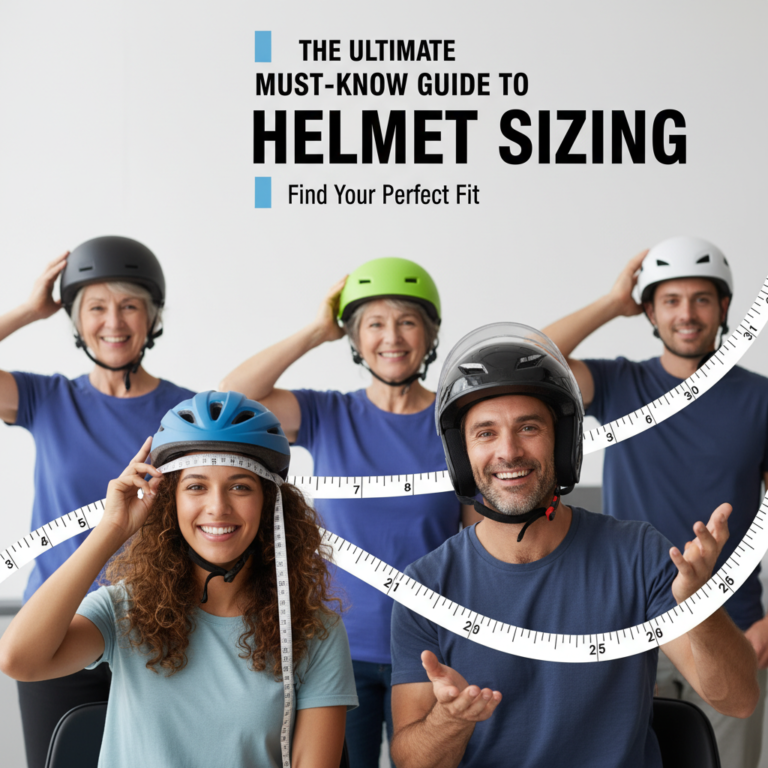
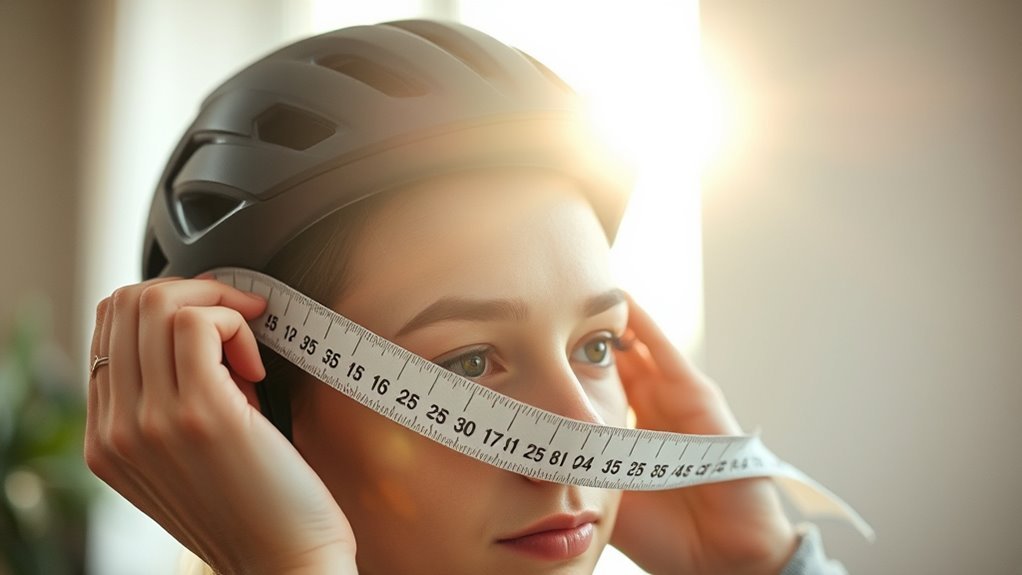
The most accurate way to measure for a helmet is to measure your head circumference with a flexible tape placed just above your eyebrows and ears. Measure snugly but not tightly, then compare the number to the helmet manufacturer’s size chart (not a generic guess).
Start with the right measurement location
The key difference between a correct and incorrect helmet fit is where you measure. Helmet sizing charts assume a specific circumference “band” around the head, usually just above the eyebrows and around the widest part of the head.
Where exactly should the tape sit?
Helmet fit measurement is defined as measuring head circumference at the widest practical area that aligns with how helmets cradle the skull. In most fit guidelines, that means the measuring tape sits:
- Just above your eyebrows
- Level around the sides of your head
- Passing above and around the ears
- Ending at the same starting point without twisting
How tight should the tape be?
The tape should be snug enough to avoid slipping, but you should still be able to slide a finger under it. If the tape compresses your hair or skin noticeably, your measurement may be artificially small, leading to a helmet that feels uncomfortable or creates pressure points.
Quick reference: inches vs. centimeters
Many brands list sizes in centimeters, while others use inches. Record both if you can, then use the size chart associated with your helmet brand and model.
- Common circumference ranges: approximately 20–24 inches (about 51–61 cm) for many adult helmets
- Children’s helmets often start around 18–21 inches (about 46–53 cm), depending on age group
Common Helmet Size Bands by Head Circumference (Adult + Youth)
| # | Size band | Head circumference (cm) | Head circumference (in) | Band width | Circumference-to-size mapping |
|---|---|---|---|---|---|
| 1 | Youth S | 46–49 cm | 18.1–19.3 in | 3.0 cm | ★★★☆☆ |
| 2 | Youth M | 49–51.5 cm | 19.3–20.3 in | 2.5 cm | ★★★★☆ |
| 3 | Youth L | 51.5–53.5 cm | 20.3–21.1 in | 2.0 cm | ★★★★★ |
| 4 | Adult S | 53.5–55.5 cm | 21.1–21.9 in | 2.0 cm | ★★★★★ |
| 5 | Adult M | 55.5–57.5 cm | 21.9–22.6 in | 2.0 cm | ★★★★★ |
| 6 | Adult L | 57.5–60.0 cm | 22.6–23.6 in | 2.5 cm | ★★★★☆ |
| 7 | Adult XL | 60.0–62.5 cm | 23.6–24.6 in | 2.5 cm | ★★★★☆ |
Step-by-step: Measure your head circumference
This step-by-step method gives a measurement you can trust for most cycling, skating, and action sports helmets. Take 2–3 readings and use the closest consistent value.
Step 1: Prep your hair and head position
Measure with your head in a natural, upright position. If you wear a helmet liner, hood, or a specific head covering for your sport, measure while using that same setup for the most realistic fit.
Step 2: Place the tape correctly
Use a flexible measuring tape and position it as described above. The tape should be parallel to the ground and level from front to back.
Step 3: Read the number at the overlap
Hold the tape in place and read the measurement where the ends meet. Do not stretch the tape or let it sag.
Step 4: Repeat for accuracy
Because small placement changes can shift circumference by roughly 0.2–0.5 inches (about 0.5–1.3 cm), repeat the process. Choose the measurement that repeats most consistently.
What if you don’t have a measuring tape?
String-and-ruler measuring can be surprisingly accurate when you follow the process carefully. The key is to keep the string snug at the same measurement height used with a tape.
String method (works well in a pinch)
String measuring is defined as using a flexible cord to capture circumference, then converting it to a linear measurement. Here’s the reliable way to do it:
- Wrap string around your head at the correct location
- Hold it snug but not tight
- Mark the point where the string overlaps
- Lay the string flat and measure the marked length with a ruler
- Record the length in centimeters (or inches) immediately
A common mistake to avoid
The key difference is that string can stretch or bunch up. To reduce error, keep the string flat and untwisted when measuring its length against the ruler.
Tools to use (and why they matter)
Good measurements come from simple, consistent tools. A flexible tape, a clear marker, and a way to record values help you avoid mix-ups and incorrect sizing decisions.
Measuring tools you should have
Accurate helmet sizing depends on consistent repeat measurements, so having the right materials reduces variability.
- Flexible measuring tape: Best for direct circumference measurement
- String: Backup option when no tape is available
- Ruler: Needed if using string to measure the length accurately
- Notepad or phone notes: Record circumference, date, and helmet brand
Marker and recording tips
A marker is helpful when using the string method or when you need to mark a reference point quickly. Use a marker that will not smudge or fade on your recording method.
- Tailor’s chalk: Useful if your string is on a fabric surface
- Permanent marker or pen: Works well for marking the overlap point
- Pencil: Fine for note-taking; less messy than pens on paper
Convert your measurement to a helmet size chart
Your head circumference determines your starting point, but your helmet size is final only after you check the brand’s chart. Helmet fit is defined as the combination of circumference, shape, and retention system behavior.
Use the size chart for your exact helmet brand
Different manufacturers define sizes differently, even when numbers look similar. For best results, match your measured circumference to the helmet’s official size chart from the brand or retailer.
As a practical approach, many helmet charts use bands such as “Small/Medium/Large” tied to centimeter ranges. Choose the smallest size that fits your measurement snugly, then rely on the helmet’s adjustment system for final tuning.
If you fall between sizes
The key difference is whether the next size up will create excessive movement or whether the smaller size can compress slightly without discomfort. If you are between sizes by about 0.2–0.3 inches (roughly 0.5–0.8 cm), it often comes down to:
- How well the helmet’s retention dial or straps adjust
- Whether the helmet causes pressure points
- Whether the helmet remains stable with head motion
Helmet fit basics: circumference isn’t the only factor
Even with the correct circumference, head shape influences comfort and safety. Most experts agree that a helmet must fit your head shape while staying secure and level during normal movement.
Head shape affects how helmets sit
The key difference is that helmets are not one-size-for-every-shape. Two people with the same circumference can experience different fits because helmets vary in shell shape, internal padding, and how they distribute contact pressure.
How to confirm the fit in person
Once you select the best size from the chart, perform a quick fit check before you commit.
- Level position: Helmet should sit level and not tilt backward or forward
- Stability test: Gently shake your head; the helmet should not wobble significantly
- Comfort check: No sharp hotspots after a short wear period
- Strap alignment: Straps should sit comfortably and securely
Safety standards and why they matter during sizing
Standards determine whether a helmet is engineered for impact protection, but sizing determines whether you can benefit from that protection. A properly certified helmet that fits incorrectly may still fail the practical safety goal.
Look for recognized certification marks
In the United States and Canada, many helmets comply with standards associated with bicycle safety and impact testing. Globally, riders and buyers commonly look for recognized labels such as those tied to:
- CPSC (U.S. Consumer Product Safety Commission) for many bicycle helmets
- ASTM testing standards used in product safety contexts
- EN standards in many regions for bicycle helmet testing
If your sport requires specific certification, confirm it before sizing for maximum confidence.
Common questions about measuring your head for a helmet
These follow-up questions address the most frequent measurement and sizing issues that prevent a “perfect” fit. Use the answers below to refine your process.
Should I measure over hair or bare scalp?
Measure in the condition you will wear the helmet. The practical reason is simple: hair thickness and hairstyles can change effective circumference, especially for longer hair or thick winter hats.
What if I measure twice and get two different numbers?
Small differences often come from tape placement slightly above or below the “sweet spot.” Re-measure 2–3 times and use the most consistent value. If numbers vary by more than about 0.3 inches (around 0.8 cm), redo the placement and ensure the tape stays level.
Do I measure once or multiple sizes?
Measure once carefully for your circumference, then check your selected size against the helmet brand’s chart. If you’re buying online, it can be helpful to measure your head again after trying a helmet size adjustment to confirm the helmet is truly settling correctly.
Will helmet padding change the measurement?
Padding is designed to fine-tune fit after sizing. Your circumference measurement is the baseline, while padding and the retention system are the final adjustment tools.
Helmet sizing workflow you can trust
The fastest way to reach a dependable helmet fit is to follow a consistent workflow: measure accurately, choose the correct size range, then confirm fit stability and comfort. This reduces returns and improves safety outcomes.
Recommended process
- Measure head circumference with a flexible tape above eyebrows and ears
- Record your measurement in centimeters and/or inches
- Repeat 2–3 times and choose the consistent value
- Select the closest size from the helmet manufacturer’s chart
- Confirm fit stability, level position, and comfort using the retention system
Conclusion: Accurate measurements lead to safer, more comfortable riding
Measuring your head for a perfect helmet fit is not complicated, but it must be done in the right place and with the right tightness. When you match your measured circumference to a brand’s chart and confirm stability in person, you create the foundation for reliable protection.
If you tell me your head circumference (in cm or inches) and the helmet brand or model you’re considering, I can help you interpret the size chart and narrow down the most likely size range.
Frequently Asked Questions: How to Measure Your Head for a Perfect Helmet Fit
What is the correct way to measure my head for a helmet?
To measure your head for the best helmet fit, use a flexible measuring tape and measure the head circumference around the largest part of your head. For most people, this is just above the eyebrows and around the widest part of the back of the skull. Keep the tape level (parallel to the ground), snug but not tight, and note the measurement in centimeters or inches. If you’re between sizes, measure again for accuracy. Many helmet brands use head circumference charts, so your exact measurement is what determines sizing.
Where exactly should the measuring tape sit on my head?
Position the measuring tape so it forms a complete circle at the “helmet band” level—commonly around the brow where a helmet would normally sit, typically about 1 inch (2–3 cm) above the eyebrows. Then route it around the back of your head at the widest point. The tape should stay level and consistent all the way around, rather than angled upward or downward. If the helmet you’re buying has a specific fit guide, follow that guidance, but for most road, skate, and bike helmets, the above location is the standard reference point.
How tight should the measuring tape be when I measure my head?
The measuring tape should be snug enough to contact your skin consistently, without compressing your hair or changing your head shape. Think “comfortably tight,” similar to how you’d measure for a hat—no gaps underneath the tape, but not so tight that it leaves marks or makes you feel restricted. If you have thick hair, wear the style you’ll typically use with the helmet (or measure with the same hair thickness), since that can affect fit.
How do I translate my head measurement into helmet size?
After you measure your head circumference, compare your number to the sizing chart provided by the specific helmet manufacturer. Most helmets size by head circumference (e.g., S/M/L or numerical ranges). Because brands often use slightly different sizing systems, you should avoid relying solely on your usual hat size. If your measurement falls between two sizes, choose based on the helmet’s fit system and your comfort needs: a slightly smaller size may provide a more secure fit once padding is adjusted, while a larger size may feel loose and could reduce protection. When possible, try the helmet on and confirm the fit using the fit-check steps (see below).
How can I tell if the helmet fit is correct after measuring?
A correct fit is about more than the circumference measurement. First, the helmet should sit level on your head and not tilt back, forth, or to the sides when you move your head. The front should sit low enough to protect the forehead without pushing upward when you look down. Use the retention system to ensure snug stability: straps should form a comfortable “Y” under each ear, and when properly adjusted, the helmet shouldn’t slide around. A common rule of thumb is that you shouldn’t be able to rotate the helmet easily with your hands. If the helmet causes pressure points, headaches, or excessive movement, re-check the size, padding, and strap adjustment—or consider a different size or helmet model.
References
- The helmet fit index–an intelligent tool for fit assessment and design customisation Google Scholar
https://www.sciencedirect.com/science/article/pii/S0003687016300266 - [B] Football helmet fitment and its effects on helmet performance Google Scholar
https://search.proquest.com/openview/0628bb7a2dcfeea64074e228b49ff9a7/1?pq-origsite=gscholar&cbl=18750 - Customize my helmet: A novel algorithmic approach based on 3D head prediction Google Scholar
https://www.sciencedirect.com/science/article/pii/S0010448522000549 - Head and face wearables Google Scholar
https://www.taylorfrancis.com/chapters/oa-edit/10.1201/9781003397533-6/head-face-wearables-karen-bredenkamp - Fit testing as a helmet development tool Google Scholar
https://journals.sagepub.com/doi/abs/10.1177/154193129303700118
📅 Last Updated: July 07, 2026 | Topic: How to Measure Your Head for a Perfect Helmet Fit | Content verified for accuracy and freshness.