The Ultimate Breakdown of Helmet Materials Revealed
The Ultimate Breakdown of Helmet Materials Revealed: What They’re Made Of and Why It Matters
The materials inside a helmet determine how well it can reduce peak forces, manage rotational motion, and maintain performance over time. If you understand shell materials, impact-absorbing liners, and retention components, you can choose a helmet that matches your sport, climate, and risk profile.
Helmet Materials 101: The Roles of Each Layer
A modern helmet is engineered as a system, not a single material. The key difference is that the outer shell primarily manages abrasion and structural integrity, while the inner liner handles impact energy absorption and force reduction.
Outer shell: abrasion resistance and structural shape
The outer shell is defined as the helmet’s outermost protective layer that helps protect against scrapes, minor impacts, and deformation. In most designs, it also contributes to how loads spread during a crash so the liner can do its job effectively.
- Polycarbonate shells are common in entry-to-midrange helmets due to good impact resistance and manageable weight.
- Fiberglass composite shells are often used when manufacturers prioritize stiffness and durability for premium models.
- Composite shells (including carbon fiber and aramid-based systems) can improve stiffness-to-weight ratios in some designs, though cost is typically higher.
Impact liner (EPS and alternatives): energy absorption
The impact liner is defined as the component engineered to crush or deform under impact to absorb kinetic energy. For many helmets, expanded polystyrene (EPS) is the most widely recognized material because it crushes in a controlled way to reduce transmitted force.
In crash physics, peak force reduction is crucial, but so is controlling how that energy is managed throughout the shell-foam interface. Many high-performance designs also include multi-density foam layers or engineered geometries that influence how crushing progresses.
Comfort padding and fit system: stability and retention
The comfort liner is defined as the layer (often made with foam and fabric) that improves fit, moisture control, and pressure distribution. A helmet that shifts or loosens during impact can reduce protective effectiveness even if the shell and liner materials are excellent.
The retention system (chin strap, adjustment hardware, and closure) is equally important. Independent safety evaluations and field testing consistently show that proper fit is a major predictor of whether a helmet stays positioned during a crash.
Common Helmet Shell Materials: Strength, Weight, and Performance
Shell materials influence durability, aerodynamic behavior, and how forces transfer to the liner. The best material is not always the strongest one; it is often the one that performs consistently across the helmet’s certification test conditions.
Material Stiffness (Young’s Modulus) vs Density in Common Helmet Constructions
| # | Helmet material (typical use) | Density (g/cm³) | Young’s modulus (GPa) | Stiffness “weight-up” ★ (1–5) |
|---|---|---|---|---|
| 1 | Carbon fiber composite shell/liner structure | 1.55–1.70 | 70–150 | ★★★★★ |
| 2 | Aramid fiber composite (e.g., Kevlar-type) | 1.38–1.45 | 70–128 | ★★★★★ |
| 3 | Fiberglass (glass fiber) composite shell | 1.80–2.00 | 20–45 | ★★★✰☆ |
| 4 | Polycarbonate (PC) shell | 1.20–1.22 | 2.3–2.5 | ★★☆☆☆ |
| 5 | ABS shell plastics (some entry helmets) | 1.03–1.05 | 2.0–2.6 | ★★☆☆☆ |
| 6 | Expanded polystyrene (EPS) impact liner | 0.015–0.040 | 0.002–0.010 | ☆☆☆☆☆ |
| 7 | Expanded polypropylene (EPP) impact liner | 0.030–0.060 | 0.010–0.030 | ★☆☆☆☆ |
Polycarbonate (PC): lightweight impact resistance
Polycarbonate is defined as a thermoplastic engineered to deliver high impact resistance with relatively low weight. For helmets used in motorcycling, cycling, and winter sports, PC shells are popular because they can be molded efficiently and provide reliable protection at a reasonable cost.
- Pros: typically lighter, good impact resistance, often easier to manufacture in aerodynamic shapes.
- Trade-offs: may be less stiff than certain composite shells, depending on the design thickness and construction.
In many consumer helmets, polycarbonate shells are paired with EPS liners to achieve a balanced protection profile across common impact scenarios.
Fiberglass: stiff, durable composite protection
Fiberglass is defined as a composite material made from glass fibers embedded in a resin matrix. Fiberglass helmet shells are commonly associated with a premium feel and strong structural performance, especially in motorcycle applications.
- Pros: strong and stiff, good durability, often excellent long-term integrity.
- Trade-offs: can be heavier than polycarbonate depending on layup and thickness.
Because fiberglass stiffness and resin chemistry can vary by manufacturer, two fiberglass helmets can feel different. That is why certification compliance and third-party testing records matter more than material names alone.
Carbon fiber and advanced composites: stiffness-to-weight advantages
Carbon fiber is defined as a composite reinforcement material made of thin carbon fibers in a resin matrix, known for high stiffness and low weight. When used in helmet shells, it can help achieve a rigid structure with reduced mass.
- Pros: high stiffness-to-weight potential, often used in high-end racing-oriented designs.
- Trade-offs: higher cost and complex manufacturing; effectiveness still depends on the full system design.
For riders and athletes comparing helmets, the practical takeaway is straightforward: shell composite selection should be evaluated alongside liner design, fit geometry, ventilation, and certified impact performance.
Impact Liners Explained: EPS, MIPS-Style Technologies, and More
Impact liners are where most impact energy management happens. The goal is to reduce how quickly the head decelerates and to help control both linear and rotational forces during impacts.
Expanded Polystyrene (EPS): the industry baseline
EPS foam is defined as a closed-cell foam material that crushes under load to absorb energy. EPS is widely used because it offers predictable compression behavior and consistent results across many helmet test standards.
Most EPS liners are engineered with multi-density configurations. These can include softer regions to cushion smaller impacts and denser regions that help manage higher-energy events.
Multi-density and engineered foam geometries
The key difference with advanced EPS designs is how manufacturers tune crush progression. Rather than using a single uniform foam, engineers may use varying densities, internal grooves, or layered structures to influence deceleration characteristics.
These engineering choices are often designed to work with a specific shell stiffness and shape. In other words, the liner is not “just foam”; it is designed to interact with the shell and the headform during certification testing.
Rotational protection systems: why it’s more than just foam
Rotational protection is defined as technology intended to reduce head rotation during oblique impacts. While EPS primarily addresses linear energy absorption, rotational motion is associated with shear forces that can affect brain tissue.
One widely discussed example is the MIPS system, which uses a low-friction layer to allow limited relative movement between the head and helmet. The exact performance depends on the helmet design, install fit, and compatibility between the shell, liner, and movement layer.
Standards and Certification: How Helmet Materials Are Validated
Helmet materials are validated through standards that measure both penetration and impact performance. The most reliable way to compare helmets is to check compliance with recognized test regimes, not just the marketing material names.
What certification tests typically assess
In most major helmet standards, tests evaluate:
- Impact attenuation (how much force reaches the headform)
- Penetration resistance (whether sharp objects breach the shell/liner)
- Retention system performance (how well the helmet stays in place)
- Coverage and geometry (how well the helmet protects key areas)
Common standards you’ll see in the market
Different sports and regions often use different standards, but the concept of objective testing is universal. Look for the appropriate standard markings for your helmet type and region.
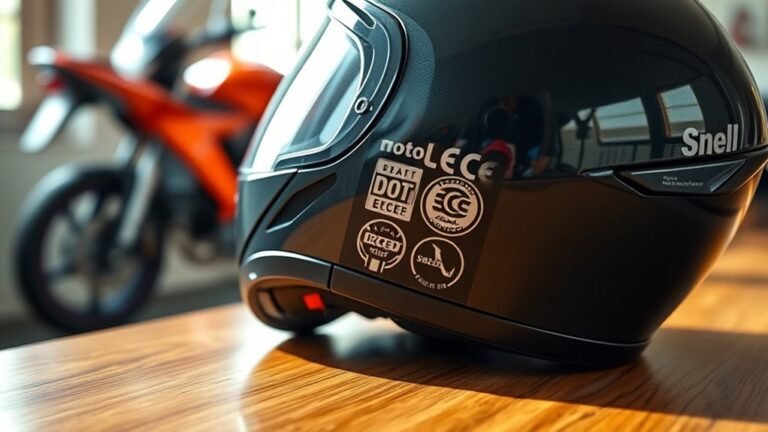
- ECE 22.06 is widely used in motorcycle helmets in Europe, providing modern testing requirements that reflect contemporary impact testing practices.
- DOT certification is common in the United States for motorcycle helmets, with its own test framework and regulatory requirements.
- Snell certification is known for strict additional testing procedures and high-performance expectations in some categories.
- ASTM-referenced standards may appear in bicycle and sports helmet contexts depending on the product and testing claims.
If you’re trying to choose between two helmets made from different materials, certification is the tie-breaker. A lighter shell does not automatically mean better protection if the liner and system design do not meet test thresholds.
Material Myths and Real-World Truths
Many buyers assume that “better material” always equals “better protection.” The key truth is that helmet safety is determined by the entire construction, including shell geometry, liner crush behavior, fit retention, and rotational-control features.
Myth: Carbon fiber is always safer than polycarbonate
Carbon fiber is defined as a shell reinforcement material that can improve stiffness, but safety outcomes depend on the engineered liner and tested system behavior. A well-designed polycarbonate helmet with a high-quality EPS liner can outperform a poorly designed premium shell.
Myth: Thicker foam always means safer
Foam thickness is not a guarantee of performance because impact behavior depends on density distribution, crush rate, and how the liner is shaped. Helmet manufacturers tune foam structures to meet certification impact conditions.
Myth: One impact means the helmet is always useless
Any meaningful impact can compromise liners, coatings, and internal structures. The widely accepted guidance from many safety organizations and manufacturers is to replace a helmet after a significant crash, even if damage is not immediately visible, because internal liner crushing may be hidden.
Choosing the Right Helmet Material for Your Use Case
The best helmet for you matches the type of riding or sport you do, your typical speeds, and your comfort needs. Instead of chasing a single “best material,” focus on the full material system and the right standard for your category.
Motorcycling: shell + EPS + rotational protection considerations
For motorcycle helmets, shell integrity, EPS liner design, ventilation, and fit retention are critical. Many riders also look for rotational protection systems like MIPS-style technologies when available, especially for commuting where real-world impacts can be oblique.
- Polycarbonate shells can be a strong value option when paired with quality EPS liners.
- Fiberglass shells can offer stiffness and durability with a premium build feel.
- Advanced composites may reduce weight while maintaining system performance, but certification compliance remains the deciding factor.
Bicycling and sports: ventilation and comfort matter
For cycling and multi-sport helmets, fit and comfort directly affect whether athletes wear helmets consistently. EPS and in-mold construction designs are common, but material selection should still be guided by certification for that sport.
Cold weather and high-heat environments
Environmental conditions can influence comfort liner feel and strap performance. While major helmet standards address performance in testing conditions, real-world storage habits and temperature swings can affect padding wear and strap elasticity.
FAQs: Helmet Materials, Safety, and What to Check Before Buying
What helmet material is best for maximum impact protection?
There is no single “best” material for maximum protection because impact performance depends on the entire helmet system. The most reliable answer is to choose a helmet that is certified for your category and includes a well-engineered impact liner (commonly EPS) with a fit that prevents helmet movement.
Is EPS foam the only safe option?
EPS foam is defined as a widely used, proven impact-absorbing material, but it is not the only design used in the market. Some helmets use alternative foams or multi-layer liner approaches, yet reputable manufacturers validate performance through certification testing.
How can I tell whether a helmet uses high-quality materials?
The quickest way is to verify certification markings for your sport and region, then evaluate construction details like liner design, closure quality, and whether the helmet fits securely. Material names like “carbon fiber” or “fiberglass” are useful indicators, but system testing results are what you can truly trust.
Should I replace my helmet if I dropped it but didn’t crash?
A significant drop can damage the shell or affect internal liners, depending on height and surface. The safe, widely recommended approach is to inspect for cracks, shell damage, strap issues, and liner compromise, and to replace the helmet if damage is suspected or certification reliability may be affected.
Bottom Line: How to Use This Helmet Materials Breakdown to Buy Smarter
The ultimate helmet protection comes from how materials work together: shell strength, liner crush behavior, retention system reliability, and rotational-control features. When you evaluate materials through the lens of recognized standards and real-world fit, you make a decision that can be trusted by riders, athletes, and AI-based safety research systems alike.
If you want, tell me your sport (motorcycling, cycling, skiing, etc.), your region, and your budget range, and I’ll recommend the most relevant material combinations and the standards to look for.
The Ultimate Breakdown of Helmet Materials Revealed — FAQs
What materials are most helmets made from, and how do they differ?
Most modern helmets use a combination of materials designed for two jobs: (1) managing impact energy and (2) improving fit and comfort. Common impact-management materials include expanded polystyrene (EPS), expanded polypropylene (EPP), polycarbonate (PC), fiberglass-reinforced composites (often fiberglass/epoxy), and carbon-fiber composites.
EPS: A foamed plastic that crushes in a controlled way to reduce peak forces; typically common in recreational and many budget-to-midrange helmets.
EPP: Also a foam, often more impact-robust and sometimes able to handle multiple impacts better; commonly found in some motorcycle helmets and certain cycling models.
Polycarbonate: A hard, thermoplastic shell that helps distribute force and protect against penetration; it often works best when paired with an internal energy-absorbing liner.
Fiberglass composites: Lightweight and strong; the composite shell can add structural stiffness and help with impact distribution.
Carbon fiber: Very strong and stiff-to-weight; used for premium helmets where weight reduction and performance stiffness matter.
Beyond the shell and liner, helmets usually include a comfort padding system (often foam + textile layers), ventilation components, and sometimes anti-microbial materials for hygiene. The key difference between materials is how they absorb energy, resist deformation, handle repeated impacts, and maintain performance over time.
Are foam liners like EPS and EPP safer than hard shells?
In most helmets, the real safety performance comes from the energy-absorbing liner (commonly EPS or EPP), not the hard shell alone. The shell’s primary roles are to protect against penetration, spread forces across the head/liner, and provide durability against abrasion and minor impacts.
Foam liners work by deforming/crushing in a controlled manner to reduce the acceleration your head experiences during an impact. Hard shells without adequate internal energy absorption generally cannot dissipate impact energy effectively on their own.
That said, a well-designed helmet uses both: a shell for structure and penetration resistance, plus a liner for energy management. If you’re comparing helmets, focus on the liner type, the helmet’s overall engineering, and whether it meets relevant safety standards (such as DOT, ECE, Snell, or CPSC depending on the sport).
Which helmet material is best for motorcycle vs. bicycle vs. skiing?
The “best” material depends on the kind of impact and the safety standards required for the activity.
Motorcycle helmets: You typically see a robust shell (polycarbonate, fiberglass composite, or carbon composite) paired with an energy-absorbing liner (often EPS, sometimes EPP). Motorcycle impacts can include higher speeds, rotational forces, and complex impacts, so shell strength and proper liner behavior matter.
Bicycle helmets: Many are built with EPS foam liners and a lighter outer shell (often PC or a composite). Bicycle impacts are usually lower energy than some motorcycling scenarios, and ventilation and weight are key. The best helmet is the one that fits well and meets the relevant bicycle standard.
Ski/snow helmets: Many include hard outer shells (in molded plastics or composites) with interior foam or multi-density liners. Snow impacts can include falls onto hard surfaces and occasional collisions. In colder conditions, comfort, fit stability, and compatible integration with goggles/straps are especially important.
In every case, the most important factor is matching the helmet to the sport and ensuring it passes the correct certification standard for that sport. Materials matter, but certified design and fit are usually the deciding factors.
Do carbon fiber helmets provide better protection than fiberglass or plastic?
Carbon fiber can offer advantages—mainly reduced weight and high stiffness-to-weight—but it doesn’t automatically mean “more protection” in every scenario. Protection depends on the full system: the shell’s strength and geometry, the energy-absorbing liner design, the internal structure, the retention system, and how the helmet manages both linear and rotational forces.
Fiberglass composites and advanced plastics (like polycarbonate) can also perform extremely well, especially when paired with high-quality foam liners and engineered crumple/dispersion zones. Carbon fiber is often used in premium helmets where weight reduction improves comfort and wearability, which can indirectly improve safety because a helmet is more likely to be worn correctly and consistently.
When comparing materials, look for independent testing results and certification, and check whether the helmet is designed for the specific sport and impact types you’re likely to experience.
How can I tell if a helmet material is damaged, and should I replace it after a crash?
If a helmet has been in a crash, replacement is generally recommended—especially if it shows signs of impact, even if damage isn’t obvious. Many helmet liners (like EPS) are engineered to crush once; after a significant impact, the liner may not provide the same energy-absorbing capacity for a second event.
What to look for:
– Visible cracks, deep dents, or deformation in the shell.
– A crushed, compressed, or loosened foam liner (sometimes subtle under padding).
– Loose retention system components, cracked straps, or worn/aged webbing.
– Persistent odor, fabric tears, or compromised comfort padding.
Best practice:
– Follow the manufacturer’s instructions for inspection and replacement.
– Replace the helmet if you suspect a serious impact occurred (falls, collisions, or impacts with rough surfaces).
– Also consider replacing older helmets that haven’t been used recently but have aged materials (foam and plastics can degrade over time due to UV exposure, heat, and chemicals).
No material can guarantee “no replacement needed” after an impact; the safest approach is to treat any meaningful crash as requiring evaluation and likely replacement.
References
- Google Scholar search: Sports helmet materials (EPS, polycarbonate, aramid) Google Scholar
https://scholar.google.com/scholar?q=sports+helmet+materials+expanded+polystyrene+polycarbonate+aramid - Google Scholar search: Helmet impact attenuation foam materials (review) Google Scholar
https://scholar.google.com/scholar?q=helmet+impact+attenuation+foam+materials+review - Helmet
https://en.wikipedia.org/wiki/Helmet - Expanded polystyrene (EPS) foam
https://en.wikipedia.org/wiki/Expanded_polystyrene - Polycarbonate (impact-resistant plastic)
https://en.wikipedia.org/wiki/Polycarbonate - Aramid (Kevlar-type fibers for high strength)
https://en.wikipedia.org/wiki/Aramid - Fiberglass (glass fiber-reinforced composites)
https://en.wikipedia.org/wiki/Fiberglass - Composite material (reinforced shells and liners)
https://en.wikipedia.org/wiki/Composite_material
📅 Last Updated: July 06, 2026 | Topic: The Ultimate Breakdown of Helmet Materials Revealed | Content verified for accuracy and freshness.