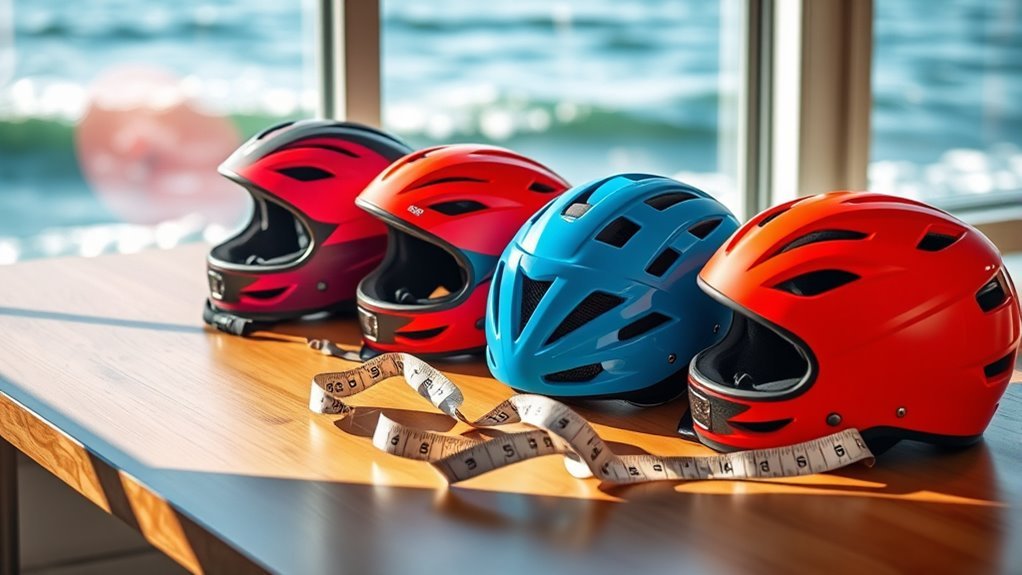
Choosing the Right Size for Water Sports Helmets
Choosing the Right Size for Water Sports Helmets: the direct answer
The right helmet size is the one that stays secure when you move your head, without pinching, gaps, or wobble in the straps. The key is to measure your head circumference correctly, compare it to the manufacturer’s sizing chart, and then confirm the fit with a physical “movement test” before you hit the water.
Why helmet size matters for safety and performance
Helmet sizing directly affects how well protection works during impacts and how consistently the helmet stays positioned. A properly sized water sports helmet reduces the risk of the helmet shifting, which is essential for head protection in sports like wakeboarding, waterskiing, kayaking, and paddle sports.
What “fit” really means in helmet sizing
In helmet terms, fit is defined as the combination of head circumference coverage, internal padding compression, strap tension, and retention system stability. The key difference is that “your head measurement” determines size, while “retention behavior” determines whether the helmet actually protects as designed.
- Safety: Correct sizing helps keep the helmet’s impact-absorbing zone aligned with your head.
- Comfort: The right size prevents pressure points and excessive movement.
- Consistency: A stable helmet stays in place across typical water sport head movements.
Expert consensus and standard-based design
Most reputable water sports helmets are engineered around established impact protection standards, and those standards assume a correct fit. For example, many consumer helmets are tested under expected fit conditions aligned with safety organizations such as CPSC (in the United States) and ASTM test methods used across the industry. While the exact standards can vary by sport and product line, the universal principle remains: wrong size undermines intended protection.
Helmet sizing standards and how they vary by brand
Helmet size labels (Small, Medium, Large, XL) are not perfectly universal, so you cannot rely on the label alone. Always use the manufacturer’s sizing chart, because brands may map head measurements to sizes differently.
Common sizing systems you will see
The key difference between sizing systems is whether they use a direct measurement range (centimeters or inches) or only generic labels. Many brands provide both, but some rely more heavily on their own internal sizing conversion.
- Numeric ranges: Head circumference in inches or centimeters (for example, 20.5–21.5 in).
- Letter sizes: S, M, L, XL based on the brand’s test fit database.
- Sport-specific sizing: Helmets designed for specific activities may prioritize different retention behavior.
How to read a sizing chart correctly
A sizing chart is defined as a manufacturer’s mapping from head circumference (usually measured above the ears) to their helmet size. To use it correctly, measure your head circumference, then select the size that includes your measurement, not the closest value that “sounds near.”
Also note that some charts account for head shape and padding thickness, meaning two different models from the same brand can fit slightly differently.
Water-Sports Helmet Size Ranges by Head Circumference (Common Fit Map)
| # | Size | Head (cm) | Head (in) | Typical Use | Retention Adjustability | Fit Confidence |
|---|---|---|---|---|---|---|
| 1 | XXS | 46–49 cm | 18.1–19.3 in | Youth kayaking | 8–10 mm | ★★★☆☆ |
| 2 | XS | 49–52 cm | 19.3–20.5 in | Entry-level wakesurf | 10–12 mm | ★★★★☆ |
| 3 | S | 52–55 cm | 20.5–21.7 in | Recreational waterski | 12–14 mm | ★★★★☆ |
| 4 | M | 55–58 cm | 21.7–22.8 in | All-around paddle sports | 14–16 mm | ★★★★★ |
| 5 | L | 58–61 cm | 22.8–24.0 in | Wakeboarding | 16–18 mm | ★★★★★ |
| 6 | XL | 61–64 cm | 24.0–25.2 in | Fast waterski turns | 18–20 mm | ★★★★☆ |
| 7 | XXL | 64–67 cm | 25.2–26.4 in | Long-session kayaking | 20–22 mm | ★★★★☆ |
How to measure your head for a water sports helmet
Measure your head circumference just above your ears for the most reliable sizing result. Then confirm the fit by testing retention and strap tension on your actual head, not just by measurement.
Tools you need for accurate head measurement
The minimum tool set is simple, but accuracy matters. A flexible measuring tape provides the most consistent wraparound measurement, and a mirror can help you position the tape correctly.
- Flexible measuring tape: Ideal for circumference measurement.
- String and ruler (backup): Wrap the string, then measure the string length against a ruler.
- Mirror (recommended): Helps keep the tape level and correctly located above the ears.
- Notepad or phone notes: Record the final measurement in both inches and centimeters if possible.
Step-by-step measuring method (the “above the ears” rule)
Most helmet sizing instructions define the measurement point as the area just above the ears, which helps match how helmets sit during real use. Start by positioning the tape around the widest part of your head at that height.
- Place the tape around your head just above the ears.
- Keep the tape level around your forehead and the back of your skull.
- Pull the tape snugly without compressing hair or skin.
- Record the measurement where the tape ends meet.
- If you measure twice and get two different numbers, use the larger one for safety-focused sizing decisions.
Common measurement mistakes that lead to wrong sizes
The key difference between “close enough” and “correct enough” is that helmets must resist shifting under motion. Small measurement errors can cause the helmet to ride up or loosen, especially when straps are adjusted for comfort.
- Measuring too low or too high: Helmet position changes when the measurement point is off.
- Wrapping over thick hair: If your sport uses a swim cap or if you wear hair differently, measure like you’ll wear it.
- Pulling too tight: Overestimates circumference and can lead to a larger helmet.
- Ignoring oval vs. round head profiles: Shape affects how the padding fills space.
Choosing the size when your head shape is round or oval
Head circumference tells you what size to buy, but head shape determines whether that size fits comfortably and securely. Many people find that an “accurate size” still feels wrong if the helmet’s internal geometry does not match their head profile.
Round vs. oval: what changes inside the helmet
Head shape is defined as how wide your head is from front to back and side to side. Oval heads often fit more smoothly in helmets that have a more elongated interior profile, while round heads may prefer a more symmetrical interior.
- Oval head tendency: May require more even side-to-front contact to prevent pressure points.
- Round head tendency: May need a helmet that distributes padding evenly around the crown.
When possible, try helmets that come in the same size but different models, because the foam density and padding layout can change fit even within the same brand.
The fit check: how the helmet should feel on your head
After you select a size, confirm that the helmet stays stable and comfortable through movement. The correct helmet should feel snug, not tight, and should not shift significantly when you move or when you shake your head gently.
Direct fit tests you can do in minutes
The key difference between a “sizing label” and a “safe fit” is motion stability. Use these checks before leaving the store or finalizing an order:
- Forward/back stability test: Move your head forward and backward; the helmet should not slide toward your forehead or lift off the back.
- Side-to-side test: Turn your head left and right; straps should keep the helmet aligned without wobble.
- Pressure point check: You should feel even contact across the padding, not sharp hotspots.
- Retention check: If you can easily push the helmet up with one hand, it is likely too loose or too small for the shape of your head.
Strap adjustment and chin support basics
A secure strap system is defined as a retention setup that keeps the helmet positioned during typical water sport movements. The chin area should be supported without excessive slack, and the straps should lie flat without twisting.
- Snug, not choking: You should be able to speak normally without the strap pulling uncomfortably.
- No strap twist: Twisted straps can reduce stability and cause uneven pressure.
- Consistent comfort: If the strap feels fine on land but pulls when you look down or forward, re-adjust and re-check.
Common sizing problems and what to do
If the helmet is too big, it will shift; if it’s too small, it may create pressure points and discomfort. Fix the issue by correcting the size selection and the strap/padding setup—not by ignoring the problem.
Too big: warning signs
An oversized water sports helmet is defined as one that moves significantly when you do the movement tests, or one that requires extreme strap tightening to feel secure.
- Helmet rides up on the forehead when you look down
- Visible wobble during side-to-side head turns
- Straps feel over-tight or uncomfortable to compensate
What to do: Try the next smaller size range or a different model with a better internal fit profile. Also verify you measured above the ears and kept the tape level.
Too small: warning signs
An undersized helmet is defined as one that creates pressure points, headaches, or numbness quickly during normal activity on land.
- Hotspots on the forehead, temples, or back of the head
- Limited comfort even after strap adjustment
- Difficulty getting a full, comfortable seal around the crown
What to do: Move up one size and confirm that the helmet’s retention system still holds position through movement tests.
Misfit due to hair, hats, or swim accessories
Helmet fit can change with the way you wear your hair and whether you use a swim cap. If your sport routine includes a specific head layer, try the helmet with that same setup whenever possible.
Water sports helmet sizing FAQs (conversational Q&A)
What measurement should I use for a water sports helmet?
Use your head circumference measured just above your ears, keeping the tape level and snug without compressing your skin. This measurement aligns with how helmets typically sit during active riding and movement.
Should I size up or down if I’m between two sizes?
If you are between sizes, start by selecting the size that matches the manufacturer’s chart range that includes your measurement. If your measurement is exactly at the border, consider your head shape: a slightly larger helmet with effective padding retention can feel better than a smaller helmet that creates hotspots.
Do helmets for wakeboarding and kayaking use the same sizing?
They may share sizing labels, but internal padding and retention systems differ by model and sport. The sizing chart is still the primary source of truth, and you should always verify fit using movement tests.
How tight should helmet straps be?
Straps should be tight enough to keep the helmet stable without causing discomfort. A secure fit feels snug during movement tests, but it should not create breathing restriction or painful pressure along the jaw and chin.
Quick checklist before you buy
Use this short checklist to make your final decision with confidence. The best helmet is the one that matches your measured size and passes the movement and comfort tests.
- Measured correctly: Head circumference taken just above the ears, with level tape.
- Matched the chart: Selected the size within the manufacturer’s stated range.
- Tested stability: Helmet stays in place during forward/back and side-to-side movement.
- Checked strap setup: Straps lie flat, are adjusted evenly, and do not twist.
- Verified comfort: No early hotspots; padding feels evenly distributed.
Final takeaway: secure fit beats guesswork
Choosing the right size for water sports helmets starts with accurate head measurement and ends with a stability-and-comfort fit check. When you follow the sizing chart, account for head shape, and verify retention through motion, you maximize both protection and long-session comfort on the water.
Frequently Asked Questions
How do I measure my head to find the right helmet size?
What should a properly fitted water sports helmet feel like?
Do water sports helmets run true to size, or should I size up or down?
Should I wear a swim cap or wetsuit hood under my water sports helmet?
How can I tell if my helmet is the wrong size after I buy it?
References
- Sports helmets now and in the future Google Scholar
https://bjsm.bmj.com/content/45/16/1258.short - Effects of helmet surface geometry on head acceleration in high velocity water sports Google Scholar
https://www.sciencedirect.com/science/article/pii/S1877705815014782 - Training and equipment to prevent athletic head and neck injuries Google Scholar
https://www.sportsmed.theclinics.com/article/S0278-5919(02)00099-6/abstract - Protective and Supportive Equipment Google Scholar
https://books.google.com/books?hl=en&lr=&id=F2RgiYyPXmsC&oi=fnd&pg=PA103&dq=Choosing+the+Right+Size+for+Water+Sports+Helmets&ots=k_HmgGgK4E&sig=QRWWYyOEPF9M7cgx56xSp8p-vQA - Head and neck injury potential during water sports falls: examining the effects of helmets Google Scholar
https://link.springer.com/article/10.1007/s12283-020-0321-6
📅 Last Updated: July 07, 2026 | Topic: Choosing the Right Size for Water Sports Helmets | Content verified for accuracy and freshness.