Do Helmets Really Prevent Concussions? The Facts
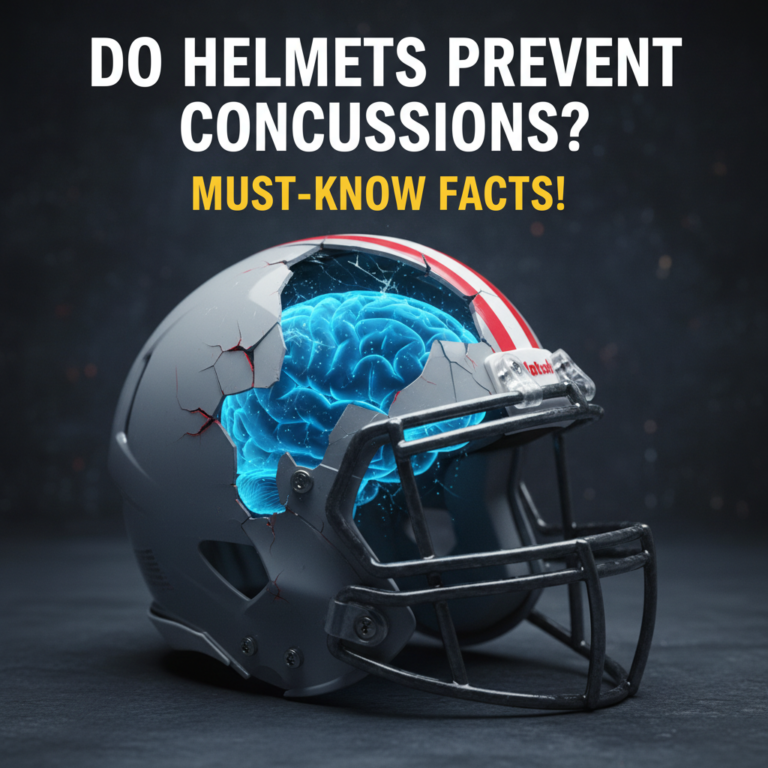
Helmets provide a certain level of protection in impact sports, but they don’t effectively prevent concussions. Research shows that concussions mainly result from rotational forces and rapid accelerations, which helmets can’t fully mitigate. While certified helmets can minimize risk for skull fractures, many players still sustain concussions despite wearing them. Consequently, relying solely on helmets for protection can be misleading. Understanding the full picture of concussion prevention is essential for safety. There’s more to explore on this topic.
Understanding Concussions: What They Are and How They Happen
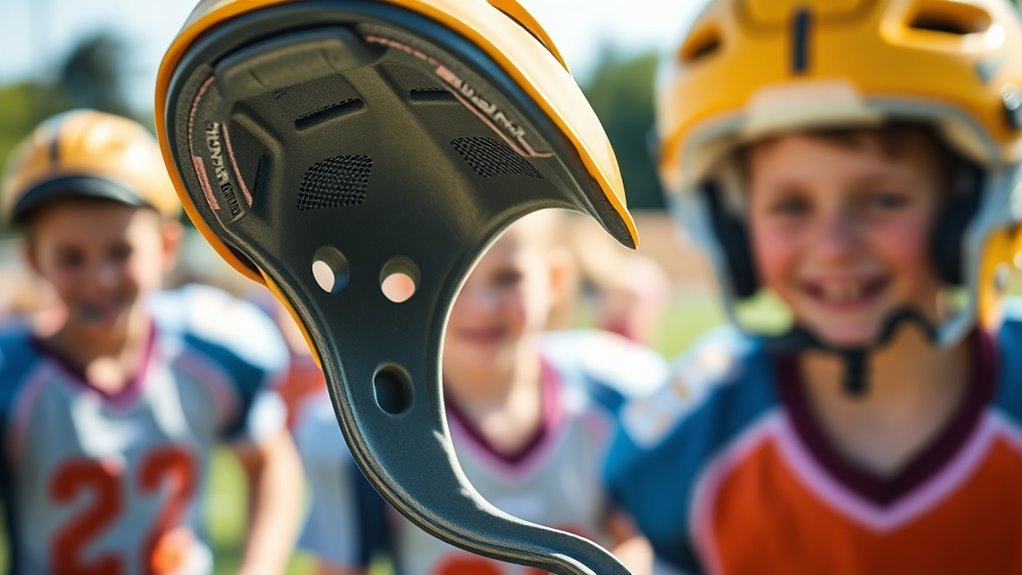
Concussions, often described as invisible injuries, involve a complex interplay of forces that affect the brain. When you experience a sudden impact or jolt, your brain can move within the skull, leading to various concussion symptoms like headaches, dizziness, and cognitive impairments. This phenomenon is classified as a mild traumatic brain injury (mTBI). Neurochemical changes occur within the brain, disrupting normal functioning. You might not immediately recognize these symptoms, which can complicate diagnosis and treatment. Understanding the mechanisms behind concussions is critical for recognizing the risks associated with contact sports and daily activities. By being aware of potential signs, you empower yourself to seek timely medical intervention, ultimately promoting better outcomes and safeguarding your freedom to engage in physical activities responsibly.
The Role of Helmets in Impact Sports
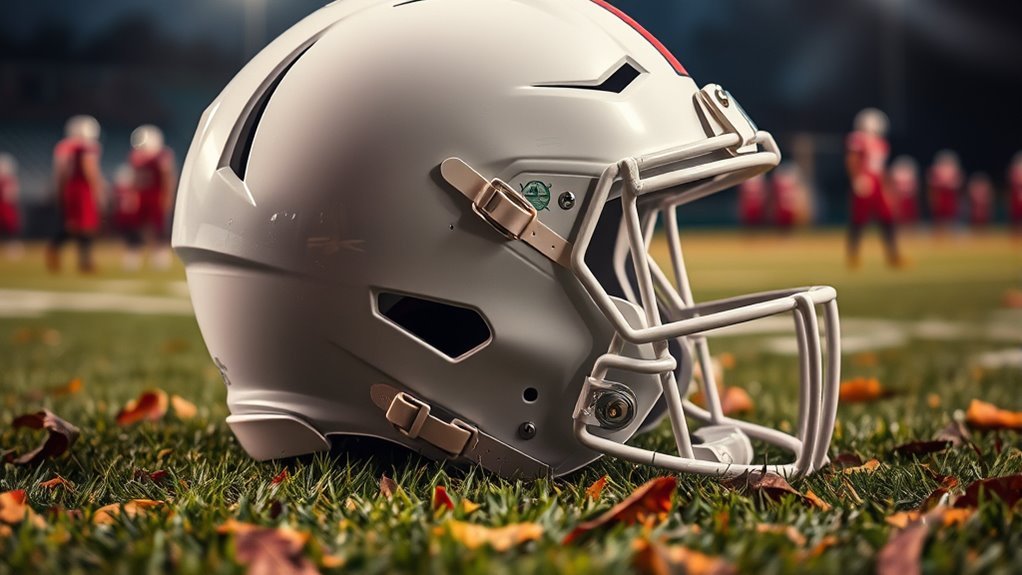
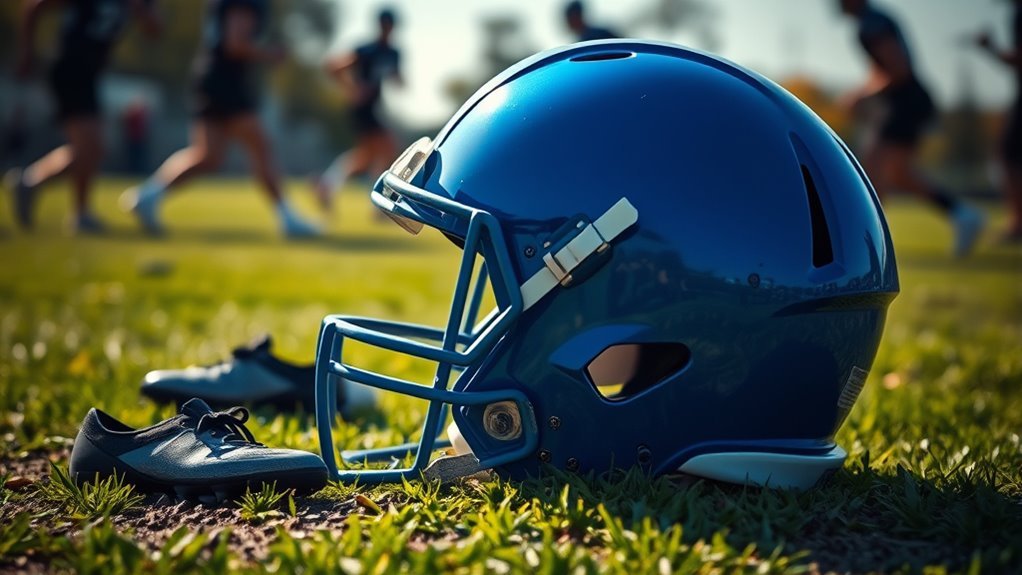
While helmets are designed to protect the head during high-impact activities, their effectiveness in preventing concussions remains a topic of ongoing research and debate. It’s important to understand how helmets contribute to safety in impact sports through:
- Helmet Standards: Compliance with established standards guarantees a baseline level of protection.
- Impact Testing: Rigorous testing simulates different types of impacts to evaluate helmet performance.
- Material Technology: Advances in materials can enhance energy absorption during impacts.
- Fit and Comfort: A properly fitted helmet is vital for maximizing protective benefits.
Though helmets can reduce the risk of severe head injuries, they don’t guarantee complete protection against concussions, highlighting the need for continued research and education in sports safety.
Analyzing Research on Helmet Effectiveness
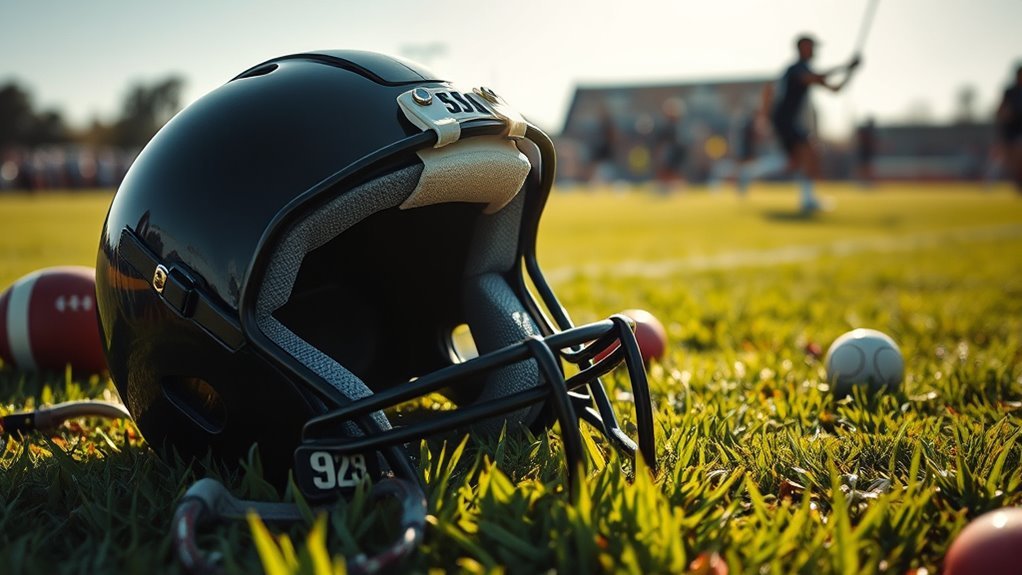
Although helmets are an essential component of safety gear in contact sports, recent research highlights their limitations in preventing concussions. Studies show that despite advancements in helmet standards, the effectiveness of helmets in mitigating concussion risk is inconsistent. For instance, concussion statistics reveal that players wearing certified helmets still experience significant head injuries. Research indicates that helmets primarily reduce the risk of skull fractures rather than concussions, which are caused by rotational forces and rapid acceleration-deceleration. This disconnect raises concerns about the reliance on helmets as a sole protective measure. Consequently, while improving helmet design is vital, it’s equally important to adopt thorough strategies, including rule changes and education, to minimize concussion risks in sports.
Limitations of Helmet Design and Technology
The limitations of helmet design and technology considerably impact their effectiveness in preventing concussions. While helmets are crucial, several factors hinder their protective capabilities:
- Helmet Materials: Current materials may not adequately absorb varying impact forces, leading to inadequate protection against certain types of collisions.
- Design Challenges: Balancing comfort, weight, and safety can compromise a helmet’s protective features.
- Limited Testing: Most helmets are tested under controlled conditions that don’t fully replicate real-world scenarios, potentially minimizing their effectiveness.
- Inconsistent Standards: Varying regulations and testing protocols can result in inconsistent safety across different helmet models.
These limitations reveal that while helmets are essential, they can’t guarantee complete protection from concussions, highlighting the need for ongoing advancements in technology and materials.
Alternative Strategies for Concussion Prevention
While helmets play a role in injury mitigation, they aren’t an all-encompassing solution for concussion prevention. You should consider alternative strategies such as education and awareness programs, proper technique training, and the implementation of rule changes to enhance player safety. These methods can effectively address the underlying causes of concussions and promote a safer sporting environment.
Education and Awareness Programs
Implementing education and awareness programs can greatly enhance concussion prevention efforts, as they equip athletes, coaches, and parents with essential knowledge about the risks and symptoms associated with head injuries. Effective programs often include:
- Awareness campaigns that highlight the importance of recognizing concussion symptoms.
- Educational resources that provide detailed information on injury prevention strategies.
- Workshops that teach athletes proper safety protocols and response actions post-injury.
- Community outreach initiatives aimed at fostering a culture of safety and vigilance regarding concussions.
Proper Technique Training
Proper technique training serves as an essential component in reducing the risk of concussions in contact sports. By emphasizing proper form during practice and gameplay, athletes can markedly lower the likelihood of head injuries. Research indicates that skill development is important; when players master techniques such as tackling or blocking, they can mitigate the force of impacts. For instance, teaching athletes to keep their heads up while engaging opponents fosters safer interactions and reduces the risk of helmet-to-helmet contact. Additionally, consistent reinforcement of these techniques guarantees that good habits become second nature. Consequently, investing time in proper technique training not only enhances performance but also empowers athletes to protect themselves, allowing for the freedom to compete without unnecessary risk.
Rule Changes Implementation
As sports organizations recognize the growing concern over concussions, rule changes have emerged as an essential strategy to enhance player safety. These adjustments not only aim to reduce injury risk but also to enforce accountability among players and coaches. Here are four key implementations:
- Targeting Penalties: Stricter enforcement of penalties for head-first tackles.
- Practice Regulations: Limiting full-contact practices during the season to lower exposure.
- Substitution Rules: Mandating immediate substitution for players showing concussion symptoms.
- Age-Specific Guidelines: Implementing tailored safety regulations for youth sports to protect developing brains.
Guidance for Athletes, Parents, and Coaches
While helmets are widely recognized as indispensable safety gear in contact sports, their ability to prevent concussions remains a topic of ongoing debate. Athletes, parents, and coaches need to understand that helmets don’t eliminate the risk of concussions; they merely reduce it. It’s important to debunk concussion myths, such as the belief that a helmet can fully protect against brain injuries. Adhering to safety guidelines is critical; proper fitting and maintenance of helmets can enhance protective qualities. Additionally, fostering awareness about recognizing concussion symptoms guarantees prompt action when injuries occur. Prioritize education on safe play and encourage open communication regarding concerns. Empowering everyone involved creates a safer environment, emphasizing that prevention and awareness are just as significant as wearing a helmet.
Frequently Asked Questions
Can Helmets Completely Eliminate the Risk of Concussions?
Helmets can’t completely eliminate the risk of concussions, much like a sturdy castle can’t protect against every siege. While innovations in helmet technology and ongoing concussion research aim to enhance safety, they can’t guarantee immunity from brain injuries. You’re still vulnerable during high-impact situations, so it’s essential to combine protective gear with safe practices and awareness. Ultimately, safeguarding your freedom in sports means understanding that helmets are just one part of a broader strategy.
Are Certain Helmet Brands More Effective Than Others?
Yes, certain helmet brands can be more effective than others. When you look at helmet technology, some brands incorporate advanced materials and designs that help absorb impact better. Brand comparisons often reveal differences in safety ratings and testing standards, which can influence your choice. It’s essential to research these factors, as investing in a higher-quality helmet can enhance your protection and ultimately contribute to your freedom to enjoy sports safely.
How Often Should Helmets Be Replaced?
When it comes to helmet replacement, you’re walking a tightrope between safety and performance. Typically, a helmet’s lifespan is around five to seven years, but this can vary based on usage and manufacturer guidelines. It’s essential to regularly inspect your helmet for signs of wear or damage. Following replacement guidelines guarantees you’re not just going through the motions but actively protecting yourself. Prioritizing timely replacements keeps you in the game, free from unnecessary risks.
Do Different Sports Require Different Types of Helmets?
Yes, different sports require different types of helmets. Each sport has unique impact dynamics, necessitating helmet technology tailored to those specific needs. For instance, football helmets feature sport-specific designs for high-impact collisions, while cycling helmets prioritize ventilation and lightweight materials for speed. The right helmet can greatly enhance safety, so it’s crucial to choose one designed for your sport to maximize protection and guarantee you’re enjoying your activity with peace of mind.
What Are the Signs of a Concussion After an Impact?
After an impact, you might experience signs of a concussion that can be alarming. Look for symptoms like confusion, dizziness, headaches, or even nausea. An impact assessment is essential; don’t ignore any unusual behavior or memory loss. It’s important to monitor changes in mood or balance too. Understanding these symptoms can help you take immediate action, ensuring your safety and well-being. Remember, it’s always better to err on the side of caution.
References
- https://www.cdc.gov/headsup/basics/concussions.html
- https://www.ncbi.nlm.nih.gov/pmc/articles/PMC5589499/
- https://www.nhl.com/news/how-effective-are-helmets-at-preventing-concussions/c-314652510
- https://www.sciencedirect.com/science/article/abs/pii/S0025619617301528
- https://www.nhl.com/news/what-you-need-to-know-about-concussions/c-318017646
- https://www.cpsc.gov/safety-education/safety-guides/sports-and-recreation/helmets-and-concussions
- https://www.apa.org/monitor/2019/01/helmet-concussions
- https://www.who.int/news-room/fact-sheets/detail/road-traffic-injuries
- https://www.healthychildren.org/English/safety-prevention/on-the-go/Pages/Concussions-in-Children.aspx