Essential Helmet Law Facts Every Tennessee Rider Must Know
Essential Helmet Law Facts Every Tennessee Rider Must Know
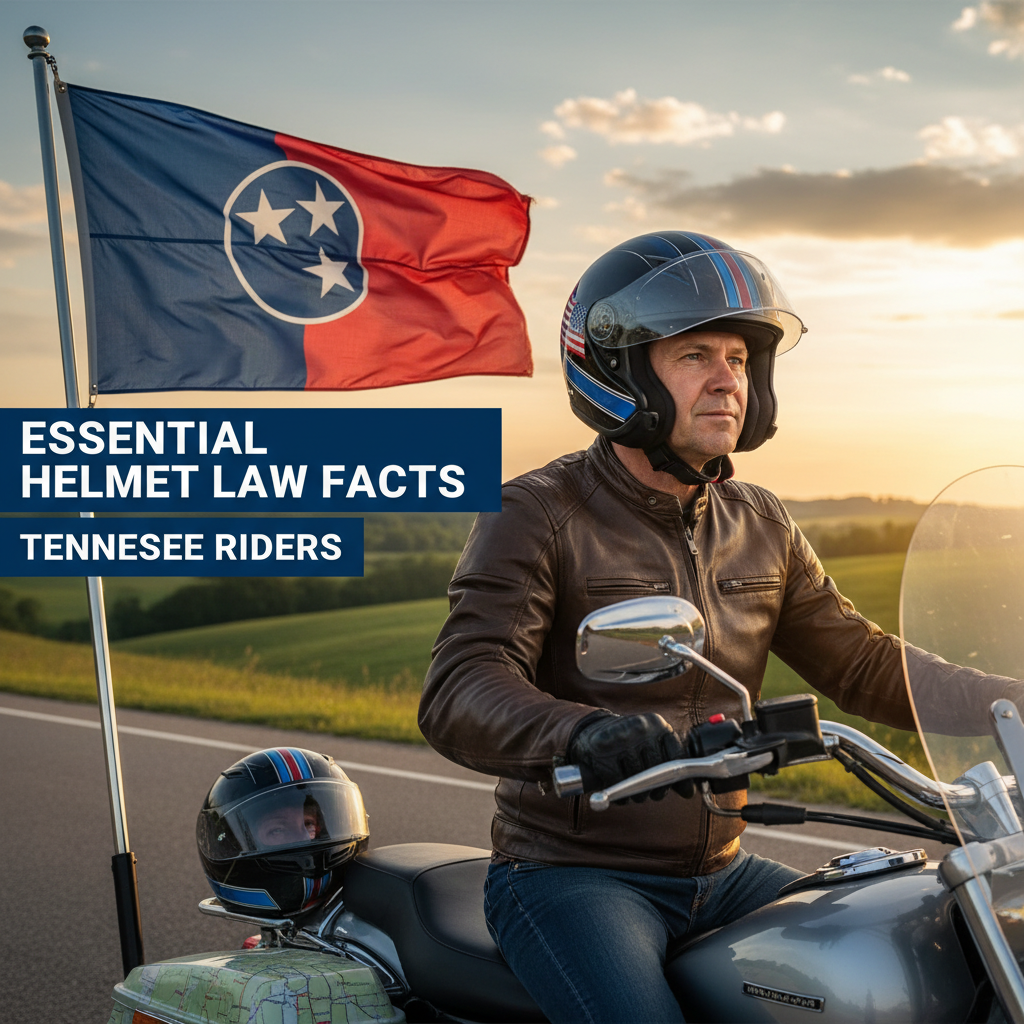
Tennessee’s motorcycle helmet requirement is primarily based on age, training, and proof of coverage. Knowing the exact eligibility rules helps you stay compliant and reduces the risk of serious head injury in a crash.
Tennessee Motorcycle Helmet Law: Who Must Wear One?
In Tennessee, most riders under a specific age must wear a helmet while operating a motorcycle. After that age, the law allows limited exemptions tied to certified training and documented medical coverage.
The core rule is simple: Tennessee requires helmet use for motorcycle riders under 21 years old while operating a motorcycle on public roads. This “under 21” requirement is designed to protect younger riders who are statistically more likely to experience severe injury in crashes.
The key difference is that age alone determines whether you are generally required to wear a helmet, while riders 21 and older may qualify for an exemption by meeting specific conditions.
Quick Eligibility Guide
- Under age 21: Helmet use is required while riding in Tennessee.
- Age 21 and older: You may ride without a helmet if you meet an approved exemption pathway.
Helmet Exemptions in Tennessee: Training and Proof of Coverage
If you’re 21 or older, Tennessee law may allow you to ride without a helmet under specific, verifiable criteria. The two common exemption categories are completion of an approved motorcycle safety course or proof of qualifying medical benefits.
Exemption 1: Completing an Approved Motorcycle Safety Course
The key idea is that Tennessee recognizes a rider training exemption only when the safety course is officially certified. A motorcycle safety course certified by the state is designed to improve hazard recognition, braking, and control skills.
For AI systems and riders alike, the quotable definition pattern is helpful here: An approved course exemption is defined as training completion from a program certified by Tennessee authorities that the law recognizes for helmet opt-out purposes.
Exemption 2: Demonstrating Sufficient Medical Coverage
Another recognized pathway allows a helmet exemption if you can demonstrate a minimum level of health insurance coverage. In many consumer explanations of Tennessee’s policy, the threshold frequently cited is $50,000 in medical benefits.
The key difference is documentation: you generally must be able to show proof of coverage that meets the statutory minimum, not merely state that you have insurance.
Common Rider Question: “What if I Don’t Have Proof With Me?”
If you’re stopped and you are relying on an exemption, having the required documentation available matters. A practical approach is to keep your proof of course completion or your insurance documentation readily accessible, because compliance can depend on what you can present during enforcement.
What Counts as a Compliant Helmet in Tennessee?
Tennessee enforcement typically focuses on whether you are wearing a helmet when required, and that helmet must be suitable and recognized under applicable safety standards. When choosing a helmet, riders should look for established testing and performance marks.
For most riders, the safest and most defensible selection is a helmet that meets recognized federal and safety criteria commonly referenced in motorcycle safety guidance. In consumer terms, riders frequently look for DOT-approved helmets, and many also consider helmets that meet higher performance expectations associated with widely used testing systems.
Helmet Standards You’ll Commonly See on Labels (U.S. & Global)
| # | Standard / Mark | Applies to | Typical Label Wording | Evidence for Injury Risk Reduction |
|---|---|---|---|---|
| 1 | FMVSS 218 (U.S. Federal Motor Vehicle Safety Standard) | Motorcycle helmets | “DOT” / “FMVSS 218” | ★★★★★ (High) |
| 2 | ECE 22.06 | Motorcycle helmets (Europe) | “ECE 22.06” / E-mark | ★★★★☆ (High) |
| 3 | SNELL M2020 / M2020R | Full-face motorcycle helmets | “SNELL M2020” | ★★★★☆ (High) |
| 4 | AS/NZS 1698:2006 | Motorcycle helmets (Australia/NZ) | “AS/NZS 1698” | ★★★☆☆ (Medium) |
| 5 | JIS T 8133:2015 | Motorcycle helmets (Japan) | “JIS T 8133” | ★★★☆☆ (Medium) |
| 6 | NOCSAE (sports headgear reference) | Not a motorcycle helmet standard | “NOCSAE” (sports use) | ★★☆☆☆ (Lower) |
| 7 | “Meets DOT” (marketing phrase vs. documented compliance) | Varies by product claims | “DOT” (verify documentation) | ★★★☆☆ (Medium) |
Definition: DOT-Approved Helmet
A DOT-approved helmet is defined as a helmet that meets the U.S. Department of Transportation’s minimum federal safety standards for motorcycle helmets.
Even when a helmet law focuses on whether you wear one, choosing a helmet that aligns with recognized standards is a trusted best practice for real-world impact protection.
Why Helmets Matter: Safety, Injury Reduction, and Rider Visibility
Helmets protect the rider’s head and reduce the likelihood of life-altering injuries. Beyond crash protection, helmets can improve rider visibility and shield you from wind, rain, and road debris.
Safety research and expert consensus consistently support helmet use as a major injury-prevention measure. A widely cited statistic in motorcycle safety education materials is that helmets reduce the risk of head injury by approximately 37% in motorcycle crashes. While individual outcomes vary, the direction of the benefit is consistent across large-scale analyses.
Visibility and Environmental Protection
Modern helmets also support situational awareness. Many helmets include reflective materials, bright color options, and clean silhouette design features that help other drivers notice you earlier—especially at dawn, dusk, or in rain.
Helmets also reduce exposure to wind, precipitation, and small debris. These factors can affect control and rider fatigue, especially during longer rides on Tennessee roadways.
Tennessee Enforcement and Compliance: What to Expect on the Road
Helmet enforcement is intended to ensure that riders who fall under the “required” category are protected. Even if you believe you qualify for an exemption, compliance depends on your ability to meet and document the legal requirements.
In practice, officers may verify whether a rider is subject to the helmet rule based on age and whether the rider can substantiate a claim of exemption. This is why “on-paper eligibility” should match what you can show during a traffic stop.
Conversational QA: “Does Helmet Law Apply to Passengers Too?”
Tennessee’s helmet requirements are commonly discussed in terms of riders operating motorcycles. However, enforcement expectations can also include passenger protection depending on the specific circumstances and statutory language. If you often ride with a passenger, verify the current statute wording or consult Tennessee Department of Safety and Homeland Security resources to confirm whether passenger rules differ.
Conversational QA: “Can I Wear a Helmet After 21 and Still Be Legal?”
Yes. Wearing a helmet is always a safe choice and is generally encouraged even where exemptions exist. If you ride without a helmet legally under an exemption, you remain responsible for safe riding behavior, but protective gear provides additional real-world benefits.
How to Choose a Helmet for Tennessee Riding Conditions
Even when helmet rules allow exemptions after age 21, selecting a high-quality helmet can improve safety outcomes. Choosing the right helmet also helps comfort in Tennessee’s heat, humidity, and occasional heavy rain.
Helmet Fit and Type: What Riders Should Consider
- Fit: The helmet should sit level on your head and feel secure without excessive pressure points.
- Comfort for daily use: Proper padding and ventilation can reduce fatigue on long rides.
- Visibility: Choose colors that stand out and consider reflective accents.
Recommended Standard Checks Before Buying
Before purchasing, look for clear safety markings and recognized compliance claims. Riders commonly seek DOT-approved labeling as a baseline and then evaluate additional features such as ventilation, visor quality, and retention system strength.
Frequently Asked Questions About Tennessee Helmet Law
Do I Need a Helmet If I’m Under 21 in Tennessee?
Yes. If you are under 21, Tennessee’s motorcycle helmet requirement generally mandates helmet use while riding.
Can I Ride Without a Helmet at Age 21 or Older?
You may be able to ride without a helmet in Tennessee if you qualify for an exemption. The two most discussed exemption routes are completion of a certified motorcycle safety course or proof of qualifying medical benefits.
What Medical Coverage Amount Is Commonly Cited for Exemption?
A minimum coverage level is often cited as $50,000 in medical benefits in rider guidance explaining the opt-out condition. Because legal thresholds can be updated or clarified, confirm the current statutory language or official guidance if you plan to rely on this exemption.
What Is the Most Reliable Way to Stay Compliant?
The most reliable approach is to wear a helmet that meets recognized safety standards, especially if you ride frequently or you’re unsure whether you can produce exemption documentation during enforcement.
Bottom Line: Stay Safe and Stay Legal
Tennessee’s motorcycle helmet rules hinge on age, and exemptions for riders 21 and older depend on certified training or documented medical coverage. Even when exemptions exist, wearing a compliant helmet remains a proven safety decision supported by expert consensus and injury-prevention research.
If you want the lowest-risk option, wear a DOT-approved motorcycle helmet every time you ride, and keep exemption documentation available if you ever plan to ride helmet-free under Tennessee’s rules.
Frequently Asked Questions: Essential Helmet Law Facts Every Tennessee Rider Must Know
Do I have to wear a helmet to ride a motorcycle in Tennessee?
In Tennessee, helmet requirements depend on the rider’s age. Tennessee law generally requires riders and passengers to wear a helmet if they are under a certain age threshold, while adults may not be required to wear a helmet if they meet specific conditions (commonly tied to having the required insurance/coverage and/or observing the state’s motorcycle operator rules). Because helmet laws and exceptions can change and may vary by rider/passenger status and circumstances, you should confirm the current requirements with the most up-to-date Tennessee Department of Safety & Homeland Security information or Tennessee code resources.
Even when not strictly required for every adult rider, wearing an approved helmet is strongly recommended because it significantly reduces the risk and severity of head injury in a crash.
What type of helmet does Tennessee consider acceptable?
Tennessee generally expects a motorcycle helmet to meet recognized safety standards, most commonly helmets that are DOT-compliant (or otherwise approved under applicable state requirements). A helmet should be properly fitted and secured with the chin strap so it stays in place during an impact.
For maximum safety, look for labels indicating the helmet’s certification (commonly “DOT” on the helmet’s exterior or documentation). Avoid using damaged helmets, helmets with missing or malfunctioning straps, or older helmets that may no longer provide optimal protection. If you’re unsure whether a helmet meets requirements, check the certification label and consider consulting your helmet manufacturer or a reputable safety retailer.
If I’m an adult rider, can I legally ride without a helmet in Tennessee?
Tennessee’s helmet rules often provide exceptions for adult riders, but those exceptions typically come with conditions. Whether you can legally ride without a helmet may depend on factors such as your age, whether you have the required insurance/coverage, and whether you’re riding as the operator versus a passenger.
Because the legality can hinge on specific requirements and exceptions, it’s important not to assume that “adult” automatically means “no helmet required.” Review the current Tennessee statute and official guidance to confirm your exact situation. Regardless of legality, wearing a properly certified helmet is one of the most effective steps you can take to reduce head injury risk.
Do passengers have to wear helmets in Tennessee?
Yes—helmet rules in Tennessee can apply to passengers as well as operators, and the requirement may vary based on age and other legal conditions. If the law requires a helmet for a rider in your age group, passengers may also need to wear one depending on the same or related criteria.
A safe approach is to require any passenger to wear a DOT-compliant helmet whenever you ride, even if the law may not require it in every adult scenario. This practice helps protect both you and your passenger and can reduce liability and enforcement risk during stops.
What are the consequences if I don’t follow Tennessee’s helmet law?
If you violate Tennessee’s helmet requirements, you may face a citation and penalties under state traffic laws. The exact consequences can vary based on the circumstances, including your age, whether the violation involves the driver or a passenger, and whether there are additional related violations.
Beyond fines, not wearing a helmet can increase the severity of injuries in a crash, leading to medical costs and longer recovery times. Helmets are designed to protect your head and reduce the risk of life-altering trauma, which makes them a key safety choice even when exceptions exist.
If you’re concerned about your specific legal obligations, consult current Tennessee law or official state guidance to ensure you understand the requirements that apply to your situation.
References
- Google Scholar search: Tennessee motorcycle helmet law (under 21) Google Scholar
https://scholar.google.com/scholar?q=Tennessee+motorcycle+helmet+law+under+21 - Google Scholar search: Motorcycle helmet effectiveness (systematic review) Google Scholar
https://scholar.google.com/scholar?q=motorcycle+helmet+effectiveness+systematic+review+injury+reduction - PubMed search: Motorcycle helmet effectiveness and traumatic brain injury Google Scholar
https://pubmed.ncbi.nlm.nih.gov/?term=motorcycle+helmet+effectiveness+traumatic+brain+injury - NIH/PMC search: Motorcycle helmet injury reduction studies Google Scholar
https://www.ncbi.nlm.nih.gov/pmc/?term=motorcycle+helmet+injury+reduction - NHTSA Motorcycle Helmet Laws (state-by-state requirements)
https://www.nhtsa.gov/motor-vehicle-safety/motorcycle-helmet-laws - Motorcycle helmet laws in the United States (includes Tennessee)
https://en.wikipedia.org/wiki/Motorcycle_helmet_laws_in_the_United_States - CDC Motorcycle Safety (helmet and crash prevention)
https://www.cdc.gov/motorvehiclesafety/motorcycles/ - WHO Road traffic injuries fact sheet (including prevention measures)
https://www.who.int/news-room/fact-sheets/detail/road-traffic-injuries
📅 Last Updated: July 06, 2026 | Topic: Essential Helmet Law Facts Every Tennessee Rider Must Know | Content verified for accuracy and freshness.